
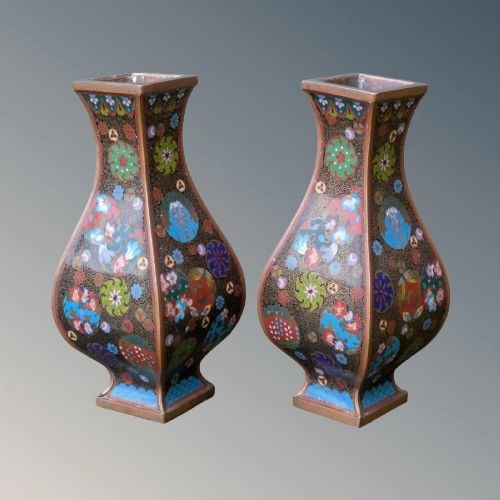
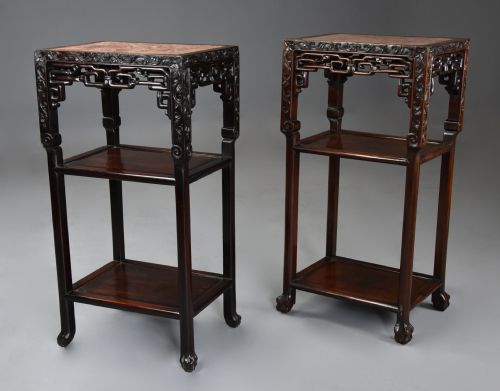
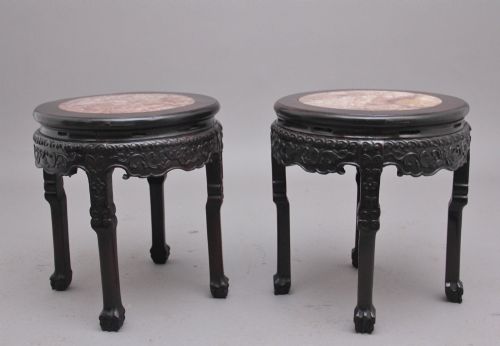
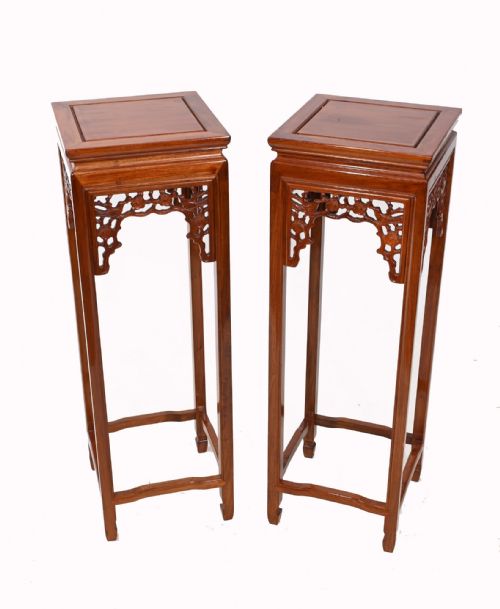
Pair of Chinese Urns
A pair of chinese urns brings balanced symmetry and centuries of craftsmanship into a room through decorative vessels and matched stands.
Pair of Chinese Urns
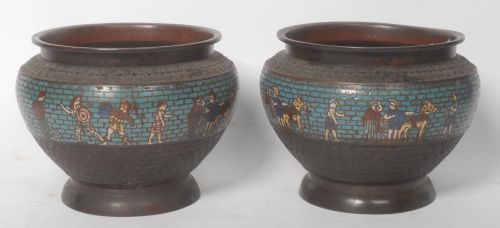
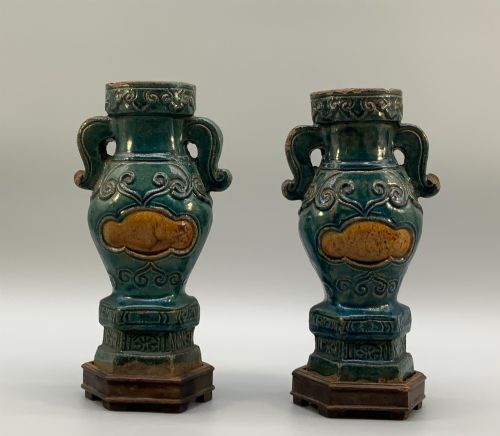
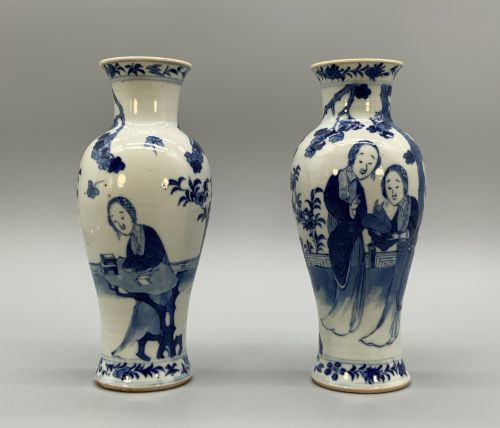
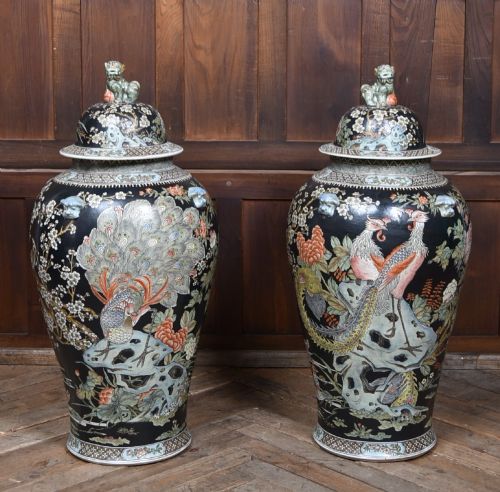
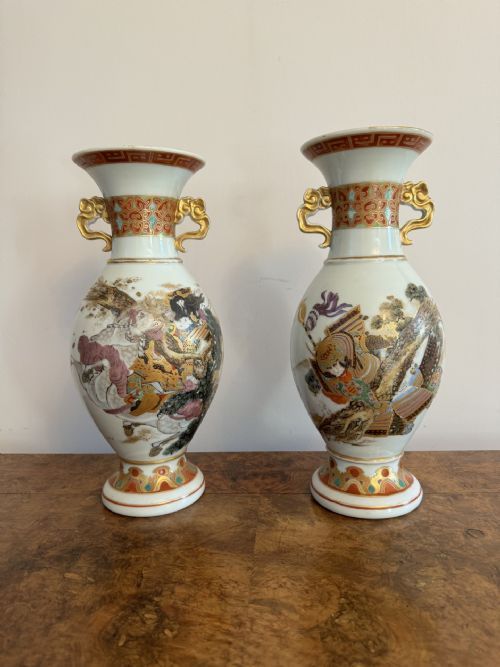
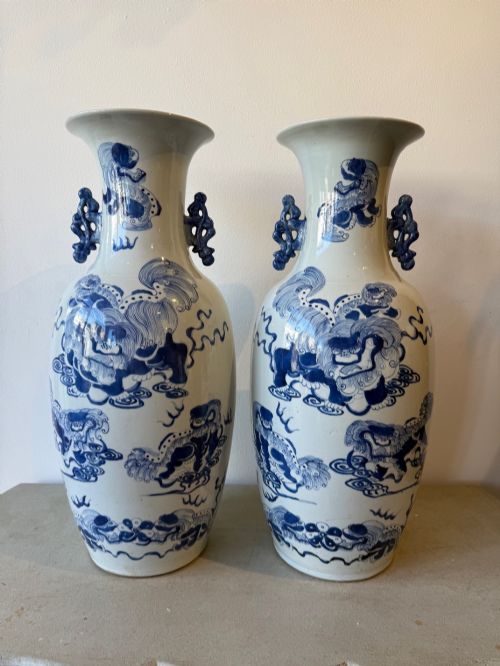
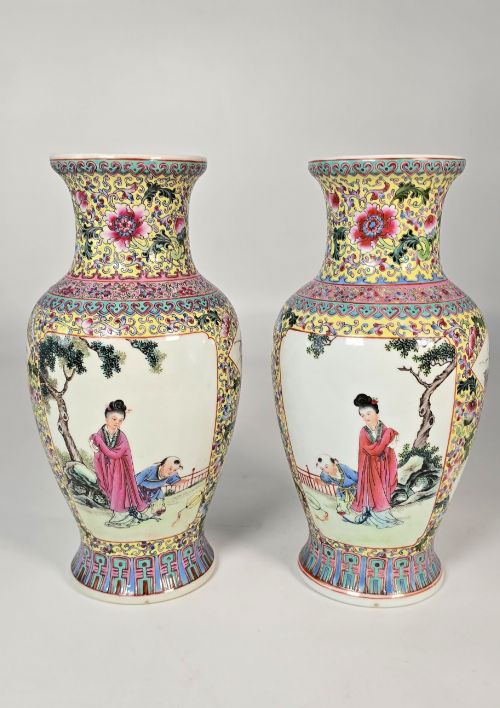
Buyers seeking a pair of chinese urns examine a variety of matched vessels and display furniture spanning multiple centuries. The selection centres on ceramic ginger jars, baluster vases, and lidded vessels alongside complementary hardwood plant stands and occasional tables.
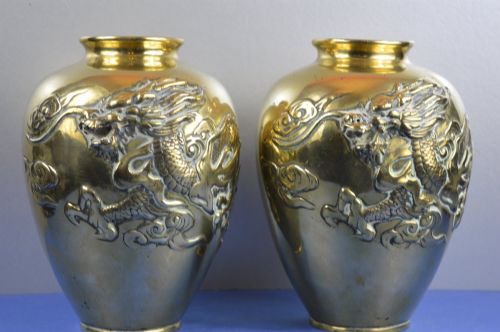
Most examples originate from the nineteenth century, encompassing late Qing Dynasty output and Victorian interpretations. Alongside pottery and porcelain, the inventory includes bronze, brass, cloisonne, and carved hardwood supports.
The objects serve multiple interior functions, functioning as freestanding floor jars, table lamps, or elevated plant pedestals. Matched pairs provide formal symmetry for mantelpieces, sideboards, and architectural alcoves.
Materials and construction methods
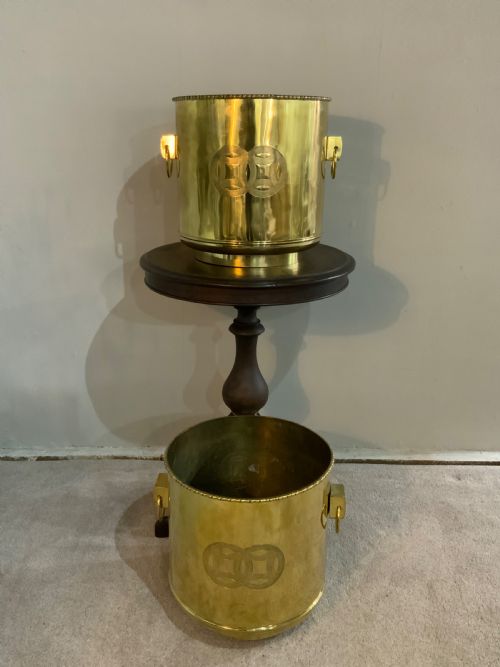
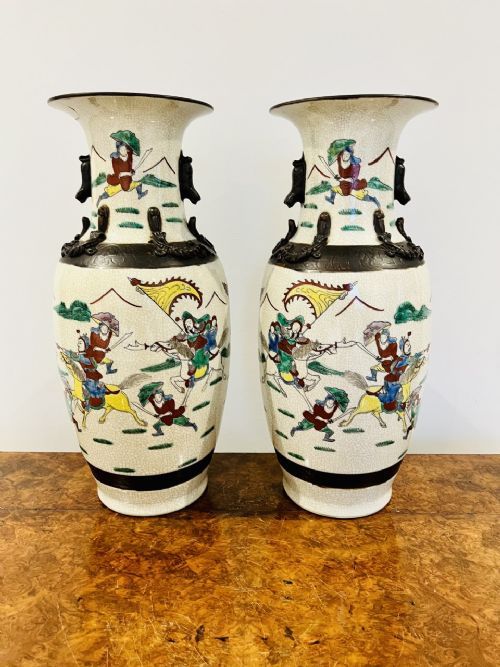
Ceramic pieces utilise porcelain or earthenware bodies finished with hand-painted blue and white pigments, famille rose enamels, or monochrome glazes. Metal examples employ cast bronze and polished brass, occasionally paired with cloisonne wirework and enamel infill.
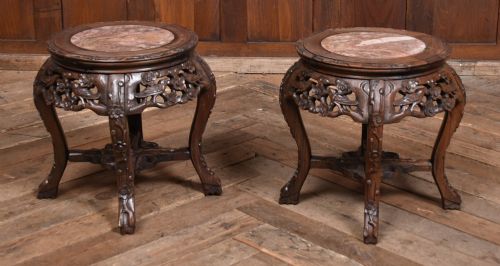
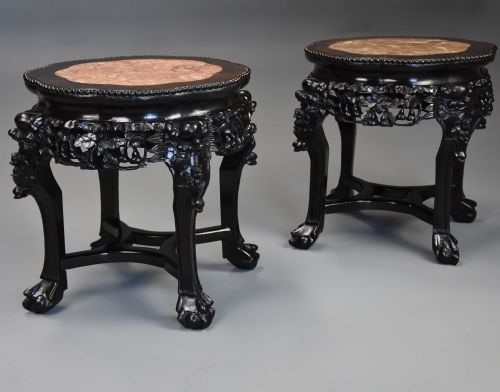
Wooden stands and supports rely on dense Asian hardwoods such as padouk and huali, joined with traditional carpentry methods and carved with intricate surface detail. Lacquer finishes, gold leaf application, and marble insets frequently complete the decorative scheme.
Listings feature ceramic, bronze, and cloisonne vessels alongside hardwood stands dating from the seventeenth to the twentieth century.
Distinctions in craftsmanship
Superior examples display crisp hand-painted detail and precise control over enamel or cobalt pigments, whilst lesser pieces show mechanical regularity or hurried brushwork. The depth of carving in hardwood stands and the weight and purity of cast bronze mark the upper tiers of production.
The integrity of matched pairs depends on equal preservation across both items, with uniform glaze consistency and minimal restoration. Superior pieces retain original covers, undisturbed patination, and clear stylistic attribution to periods like the Qing Dynasty or Kangxi era.
The Pair of Chinese Urns Glossary
- Famille Rose
- A prominent palette of opaque enamel colours dominated by pink or rose hues, introduced during the Qing Dynasty. This technique allows for subtle tonal shading in floral and figural scenes.
- Cloisonne
- A metalwork technique where flat wire soldered to a metal base creates cells filled with enamel paste and fired. The surface is subsequently ground smooth and polished.
- Ginger Jar
- A high-shouldered ceramic storage vessel with a domed lid, originally utilised for packing spices. Later examples function purely as decorative mantel or table ornaments.
- Baluster
- A vertical ceramic or architectural form characterised by a swelling lower body tapering toward a narrow neck. Many traditional Chinese vases follow this balanced silhouette.
- Huali
- A fragrant and durable Asian hardwood prized for furniture production during the Ming and Qing periods. It exhibits a rich grain and deep natural colouration.
Pair of Chinese Urns: Frequently Asked Questions
How do I display a pair of chinese urns?
Matched pairs look best positioned symmetrically on large sideboards, flanking a fireplace, or placed upon dedicated hardwood pedestals. Using matching stands elevates the vessels and creates a formal focal point within a room.
Ensure adequate clearance around each piece so the forms and hand-painted details remain fully visible. Heavy floor jars work well in empty corners or entrance halls where their scale establishes presence.
What is the difference between ginger jars and baluster vases?
Ginger jars feature a broad, rounded shoulder and a fitted lid, reflecting their original utilitarian function as storage containers. Baluster vases possess a distinct curved profile that swells near the base and narrows toward the rim.
Both forms appear frequently in matched pairs across different ceramic styles, including blue and white porcelain and famille rose enamel.
Are these pieces waterproof for fresh flowers?
Many antique ceramic urns and jars were produced for decorative display rather than holding water. Thermal shock or hairline cracks in old glazes can cause leaks if filled directly.
Utilising a hidden glass or plastic liner inside the vessel protects the historic interior whilst allowing the display of fresh arrangements.
How do I identify Qing Dynasty ceramics?
Qing Dynasty ceramics often display characteristic enamel palettes such as famille verte or famille rose, alongside cobalt blue underglazes. Stylised motifs like dragons, floral sprays, and figural court scenes frequently decorate the surfaces.
Examining the weight of the porcelain, the fineness of the potting, and the characteristics of the footrim helps determine the manufacturing period.
What hardwood types were used for stands?
Maker workshops utilised dense imported timbers such as padouk and huali for stands and low tables. These woods provide the structural strength needed to support heavy bronze or porcelain vessels.
The natural grain is often polished to a dark finish, complementing the colourful glazes of the paired urns placed upon them.