

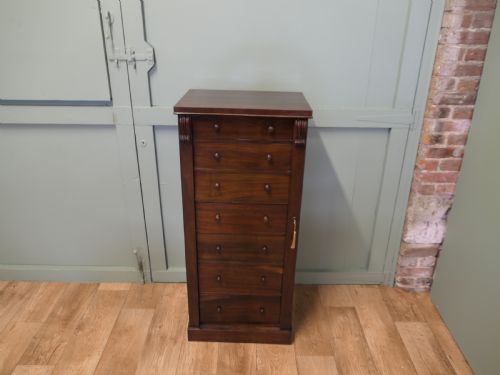
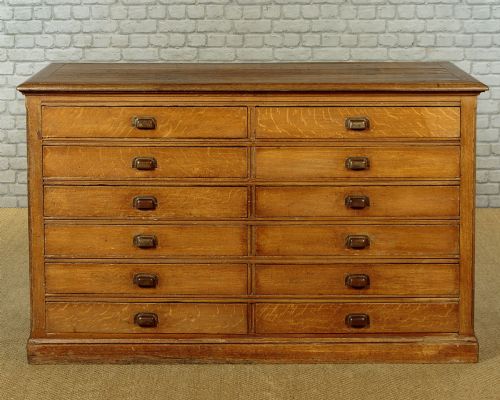
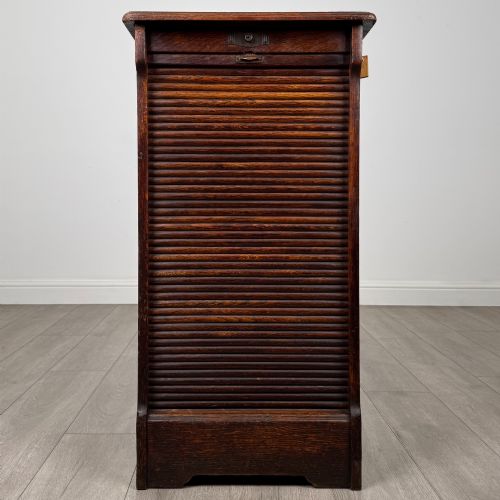
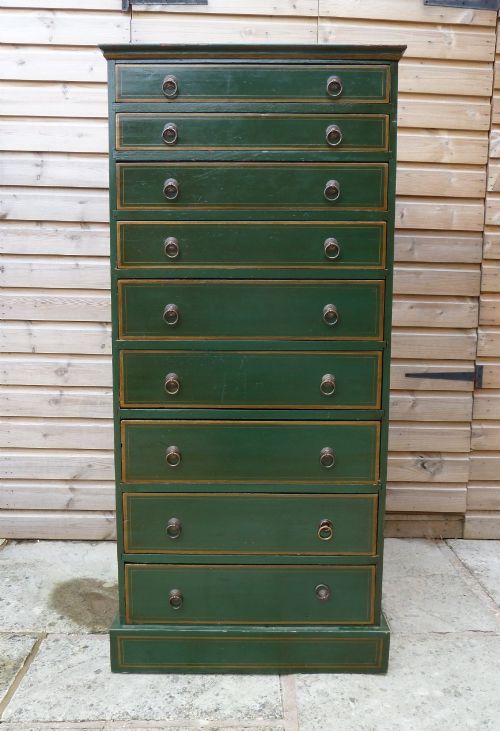
Antique Office Filing Cabinet
An antique office filing cabinet brings practical organisation and period character into a workspace, using robust timbers and clever mechanisms.
Antique Office Filing Cabinet
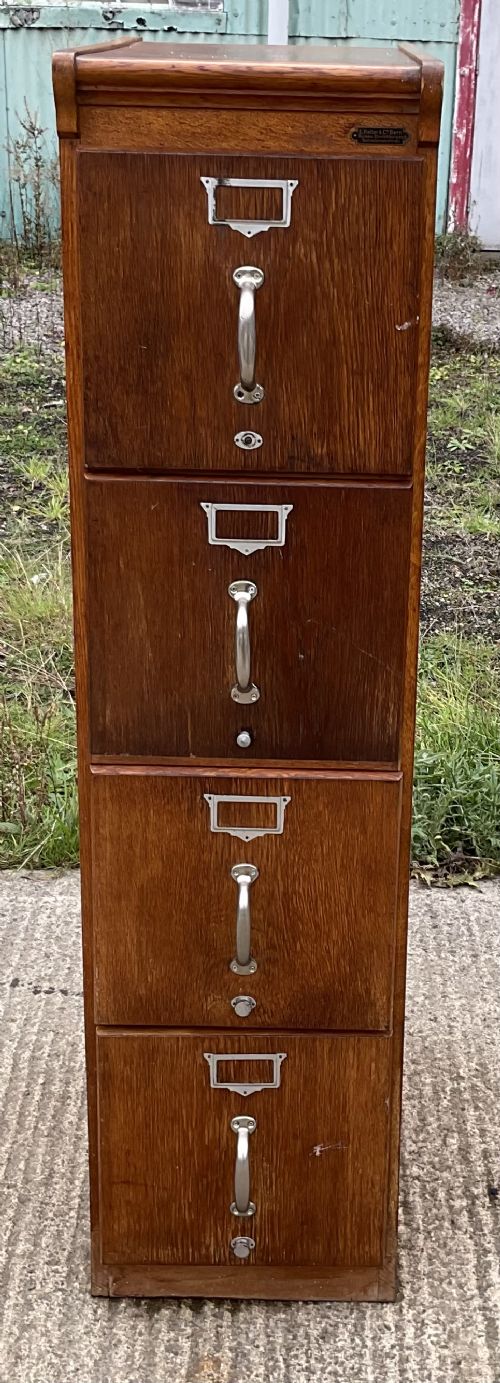
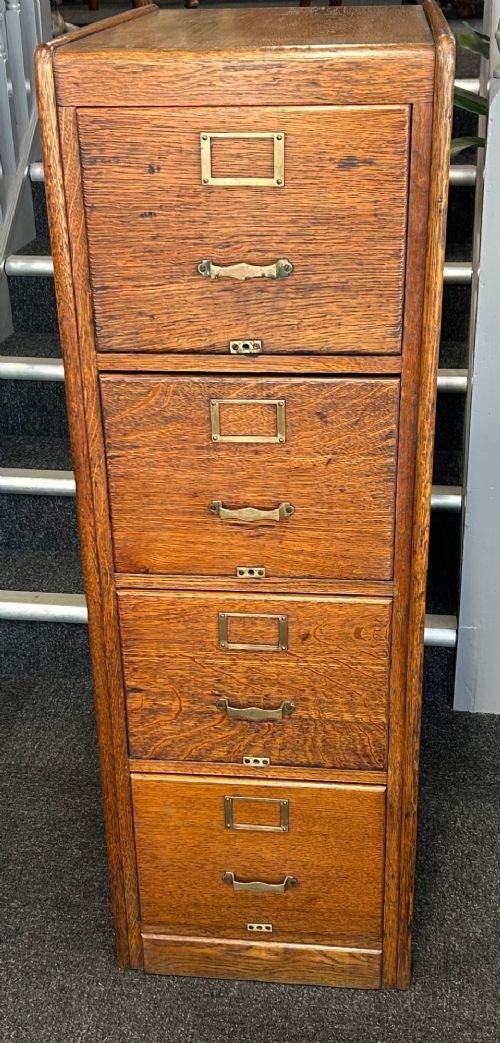
When searching for an antique office filing cabinet, you encounter sturdy storage pieces designed for workspace organisation across the nineteenth and early twentieth centuries. These range from substantial banks of drawers to compact desktop organisers.
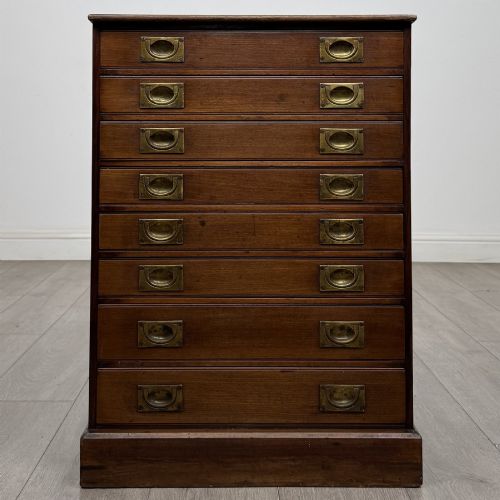
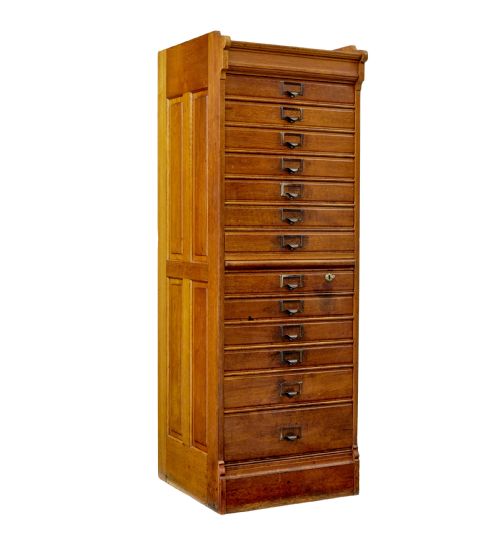
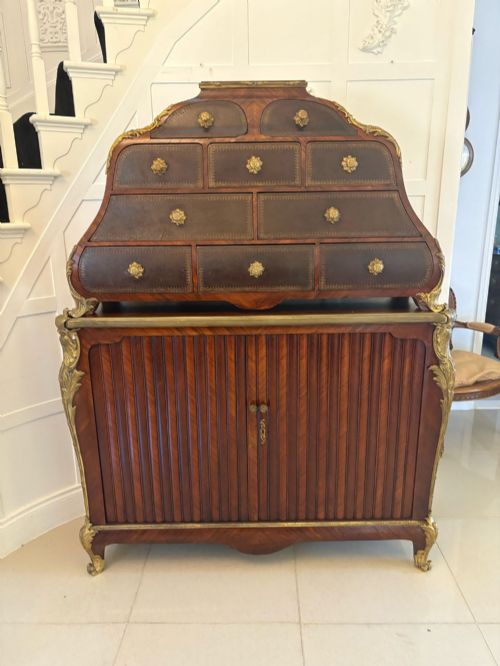
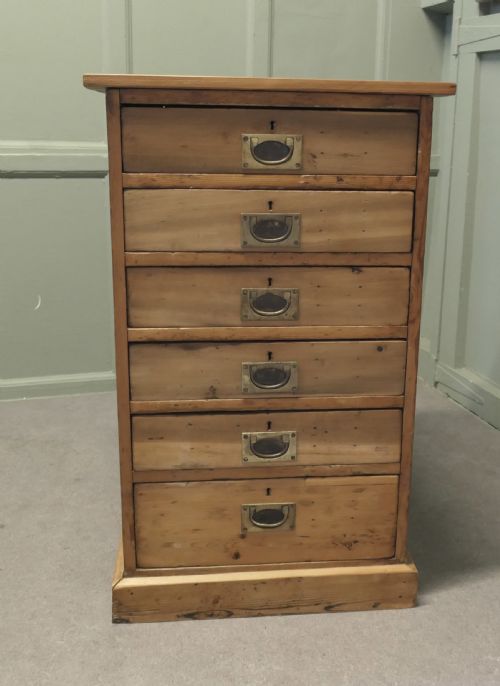
Beyond standard vertical files, you find specialised formats such as card catalogues, music cabinets, campaign styles with recessed brass fittings, and French cartonnier chests. Each serves a distinct filing purpose while maintaining period aesthetics.
How they were made
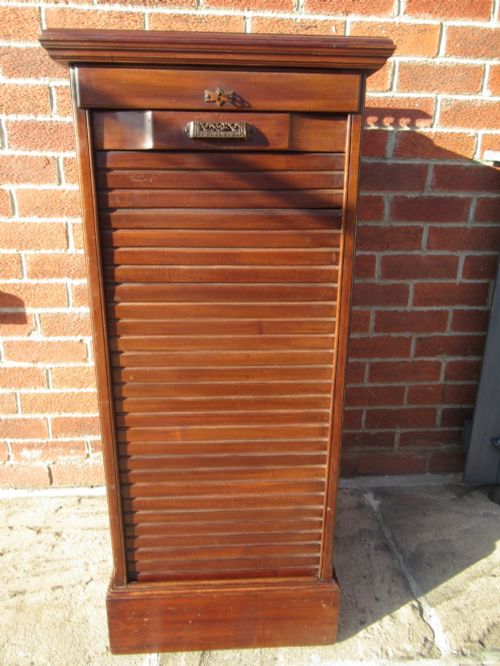
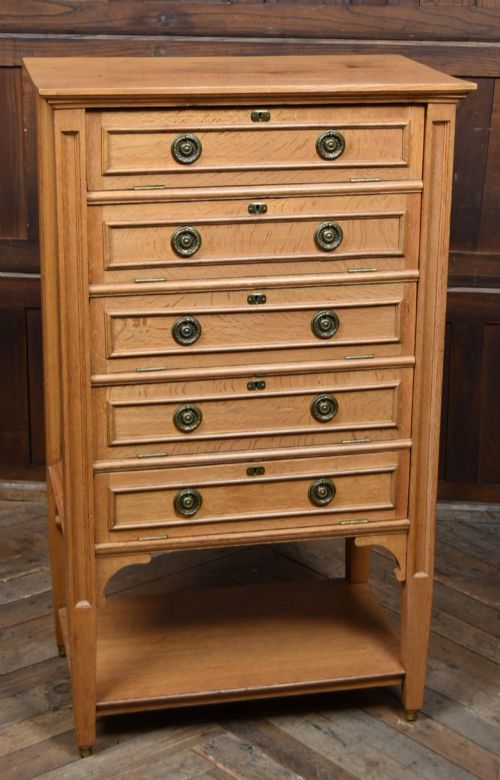
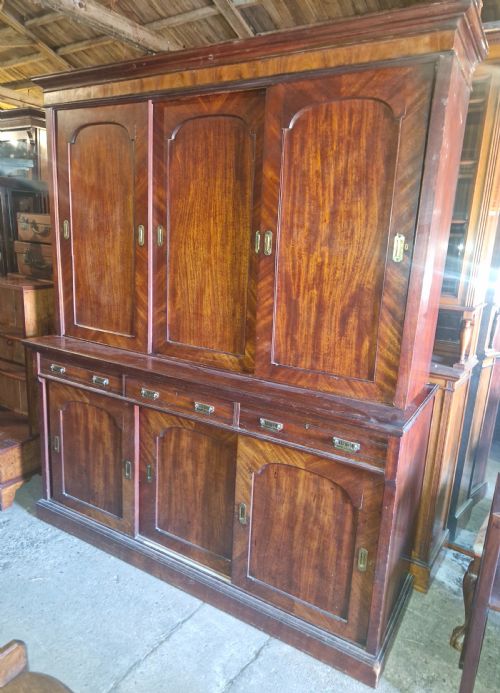
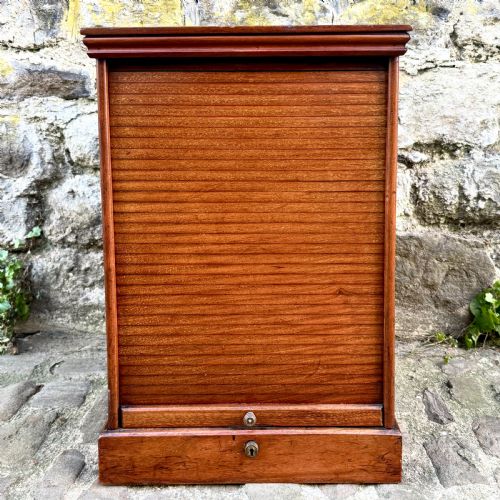
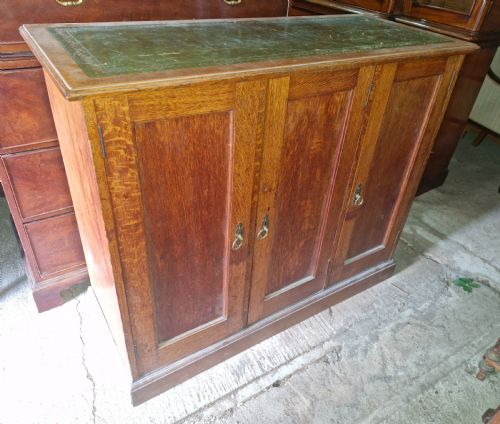
Cabinetmakers built these pieces primarily using solid oak, mahogany, and pine, frequently pairing them with brass handles, label holders, and shell pulls. Tambour doors required individual slats of wood glued to canvas backings to achieve flexible movement.
Construction relied on traditional joinery methods like dovetailing for drawer boxes and panelled sides to withstand heavy daily office use. Finishes typically involved polishes or varnishes that highlighted the natural grain of the timber.
Antique Office Filing Cabinet Retail Price Guide 2026
Typical asking prices for office filing cabinet among the pieces listed under this phrase on Sellingantiques today, from the lower quarter to the upper quarter. They describe what is for sale here now, not the wider market.
Listings feature pieces spanning the nineteenth century through the 1940s, constructed predominantly in oak, mahogany, and pine with brass hardware.
What varies in quality
The standard of timber selection and internal mechanism performance defines the grade of a piece. Fine examples utilise dense quarter-sawn oak or figured mahogany with precise joinery that keeps drawers running true over decades.
Original hardware such as brass label holders and shell pulls contribute significantly to a piece's integrity. Smooth operation of tambour slats and well-fitted internal partitions separate standard utility furniture from finer workspace items.
The Antique Office Filing Cabinet Glossary
- Tambour
- A flexible door made of narrow wooden slats attached to a fabric backing, designed to slide horizontally or vertically around a curved track. This mechanism conceals office files while saving exterior space.
- Campaign
- A style of portable furniture fitted with recessed brass handles and corner brackets designed for easy transport. These pieces originated for military use.
- Cartonnier
- A piece of furniture fitted with multiple open compartments or shallow drawers specifically designed to hold loose papers and documents. They frequently appear in French nineteenth-century designs.
- Shell pull
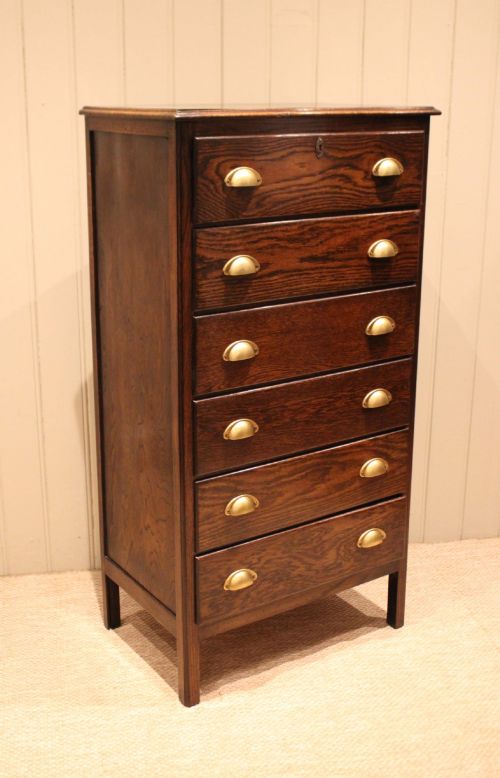
- A semi-circular metal handle shaped like a seashell that incorporates a small window for paper index labels. They commonly appear on early office drawer fronts.
- Quarter-sawn
- A method of cutting logs that produces timber with prominent radial growth rings. This technique yields stable boards with attractive figuring, often seen in quality oak office furniture.
Antique Office Filing Cabinet: Frequently Asked Questions
How do tambour doors work?
Tambour doors consist of thin wooden slats glued to a canvas backing that slides along a grooved track inside the cabinet frame. This allows the door to curve around the sides or back of the unit and disappear entirely when opened.
Over decades, dust or dryness can cause the slats to stick within their tracks. Regular gentle cleaning and occasional waxing keep the mechanism moving smoothly.
What is a campaign filing cabinet?
Campaign filing cabinets feature durable timber construction reinforced with brass corners and flush-fitting inset handles. These design choices protected the corners during travel and prevented snagging.
They offer a distinct military aesthetic that suits modern studies and home offices while providing deep, secure drawer storage.
How do I date an office cabinet?
Dating relies on observing material choices, hardware types, and overall construction styles. Pieces from the Victorian era often feature rich mahogany with heavy brass pulls, whereas Edwardian and 1910s examples frequently utilise oak and flexible tambour shutters.
Patent plaques, maker stamps inside drawers, and the presence of original paper label holders also help narrow down the decade of manufacture.
Can these cabinets hold modern paper sizes?
Many early filing cabinets and card catalogues were built for specific historical card sizes, foolscap, or quarto documents rather than modern A4 dimensions. Drawer depths and interior widths vary considerably across different Victorian and early twentieth-century models.
Checking internal drawer dimensions before purchase ensures your documents or office supplies will fit comfortably inside.