
Antique Document Storage Cabinet
An antique document storage cabinet organises papers with sturdy craftsmanship, bringing period character and practical pigeon holes or drawers into a room.
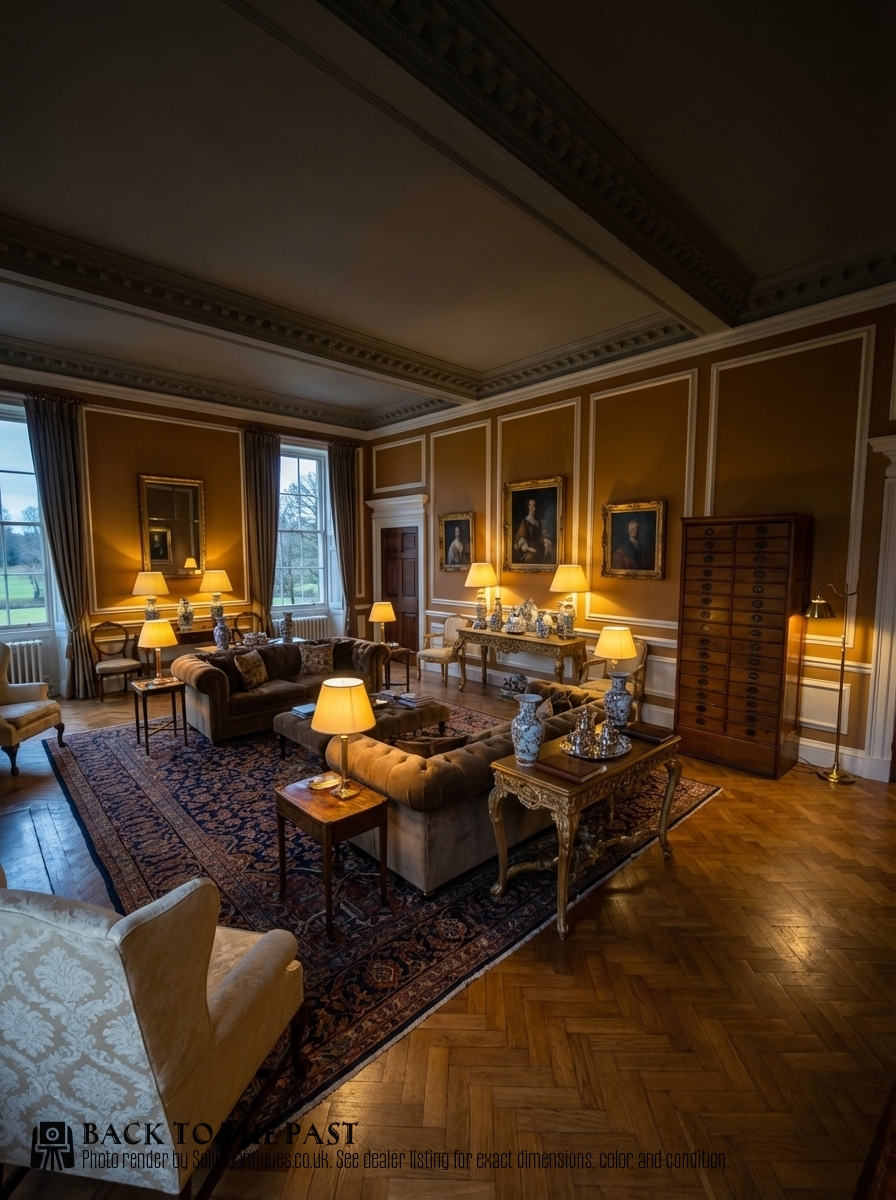
Antique Document Storage Cabinet
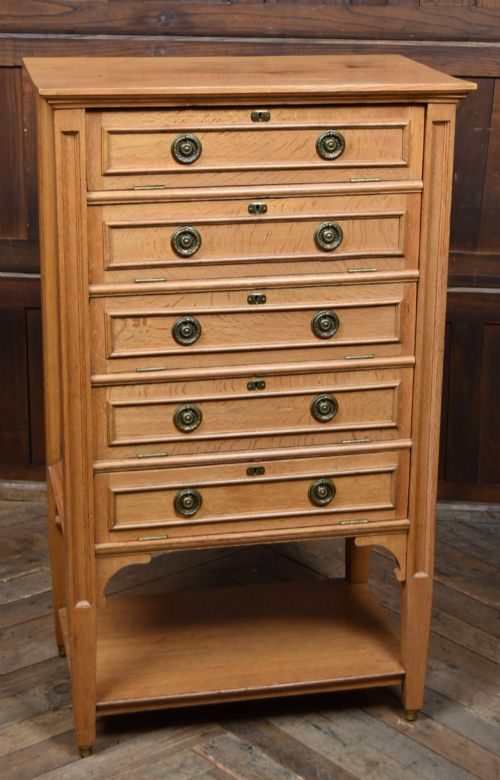
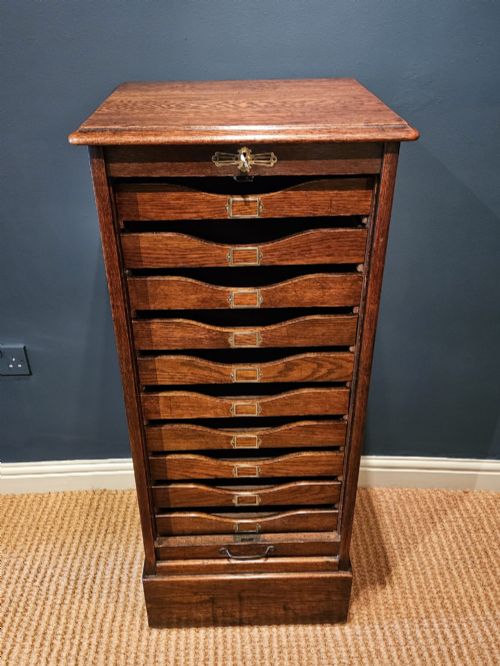
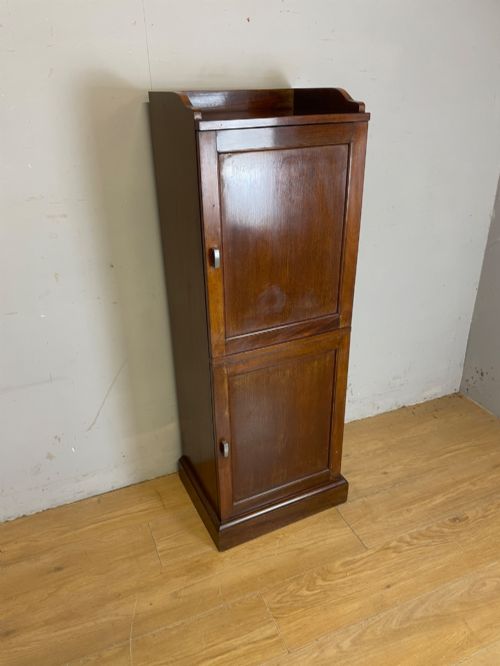
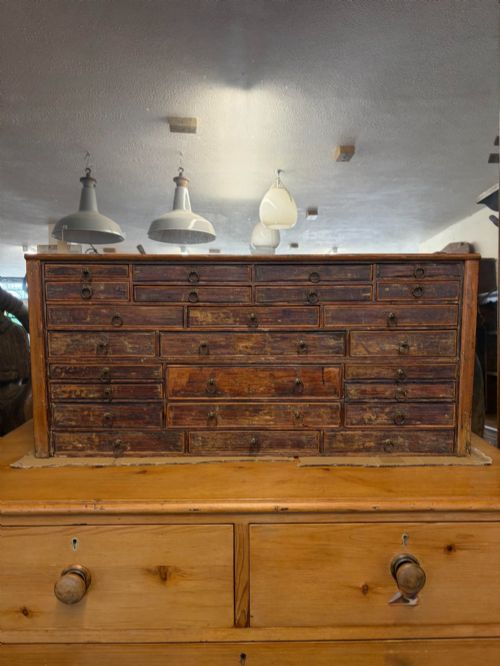
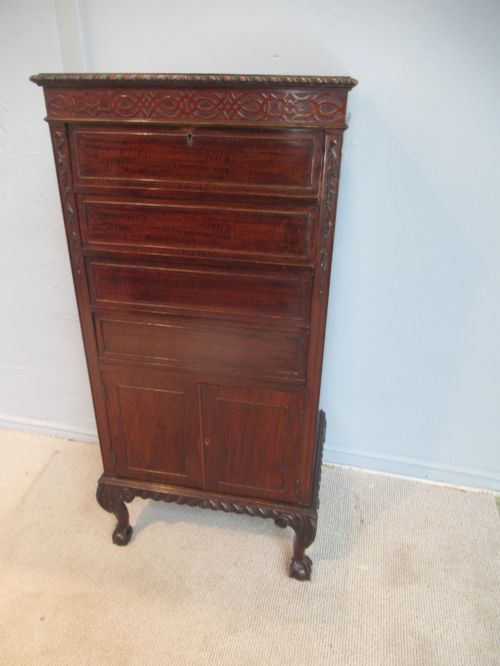
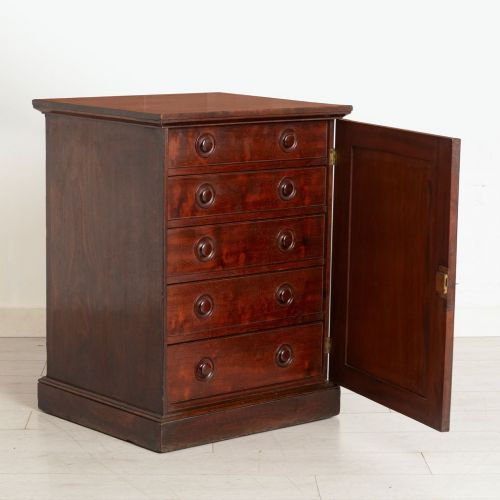
An antique document storage cabinet serves as a dedicated vessel for papers, letters, and files, appearing in forms such as tall filing drawers, compact desktop collector cases, and multi-drawer banks. Buyers searching for an antique document storage cabinet encounter pieces built for rigorous clerical use in offices, studies, and archives.
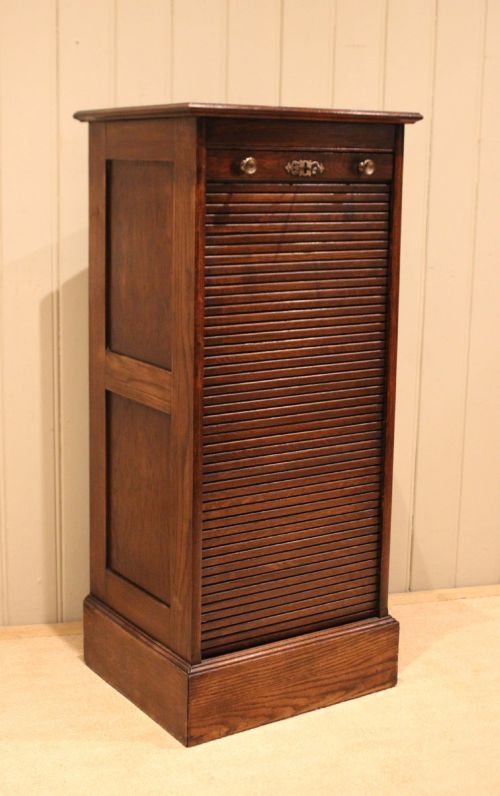
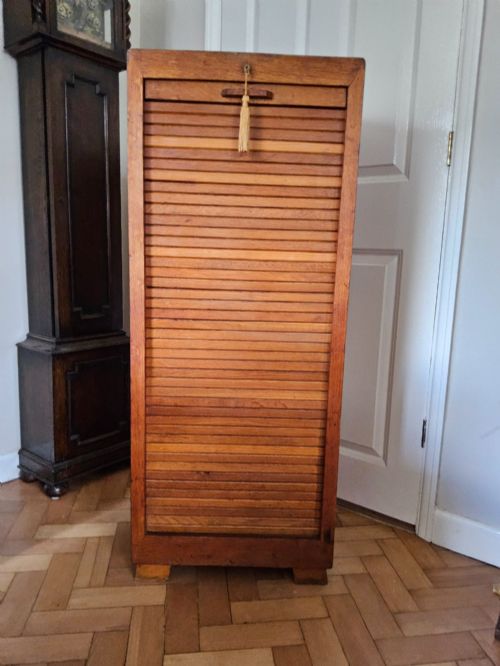
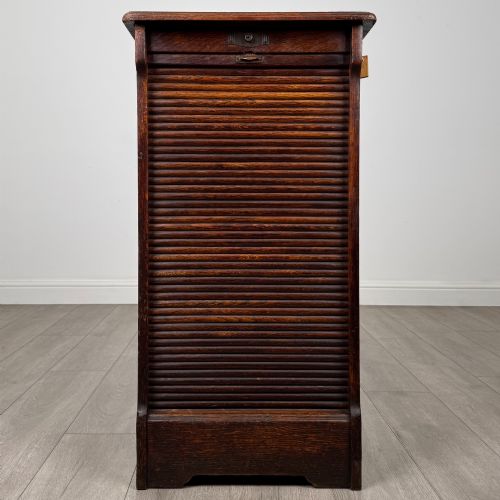
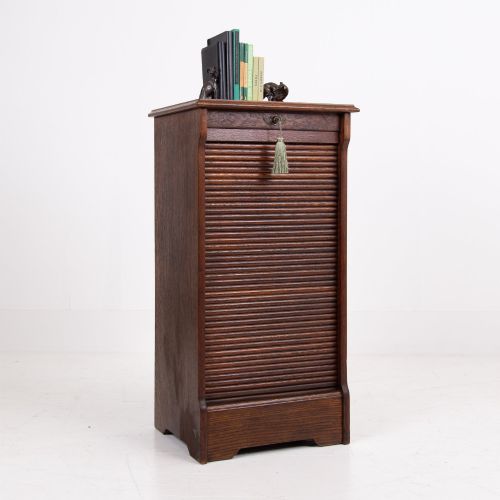
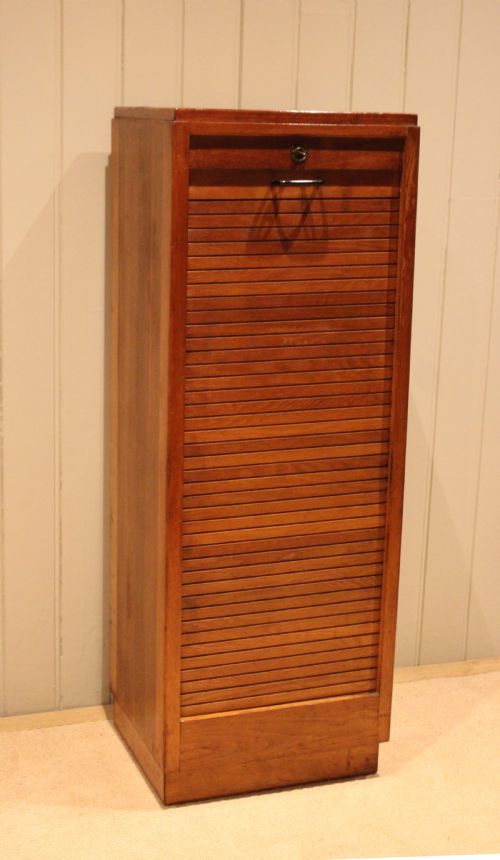
The version most commonly met on this page is the oak or mahogany tambour front cabinet from the Edwardian era and the early twentieth century. These pieces combine slatted roll-down wooden doors with internal pigeon holes or shallow drawers designed specifically for correspondence.
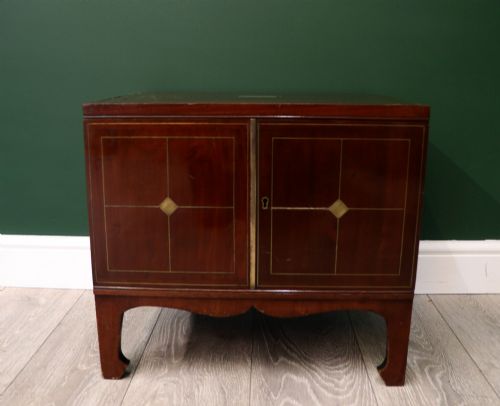
Beyond standard office furniture, the selection includes specialised items like French cartonnieres, campaign style cabinets with brass inlays, and industrial banks of drawers. Origins span English workshops, French provincial sources, and Flemish cabinetmakers utilising hardwoods like mahogany, oak, and walnut.
Materials and construction methods
Cabinetmakers built these pieces primarily using solid oak, mahogany, and pine, often pairing them with brass handles, shell pulls, and label holders. Tambour doors required painstaking construction from numerous narrow wooden slats glued to canvas or fabric backings, allowing the door to slide smoothly around a curved track.
Drawer construction relied on traditional dovetail joints to withstand daily pulling and pushing in busy offices and surgeries. Secondary timbers appeared in drawer linings and backs, while finishes ranged from polished mahogany and dark or light oak to painted industrial metal and iron.
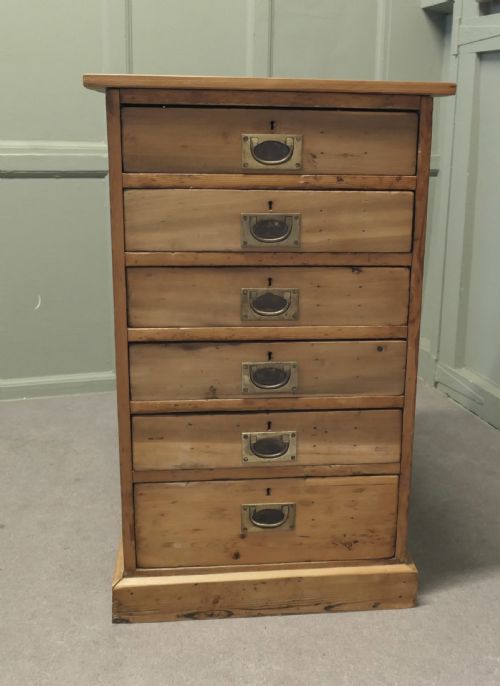
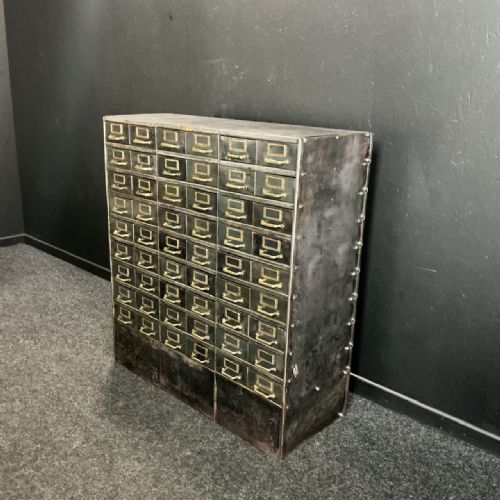
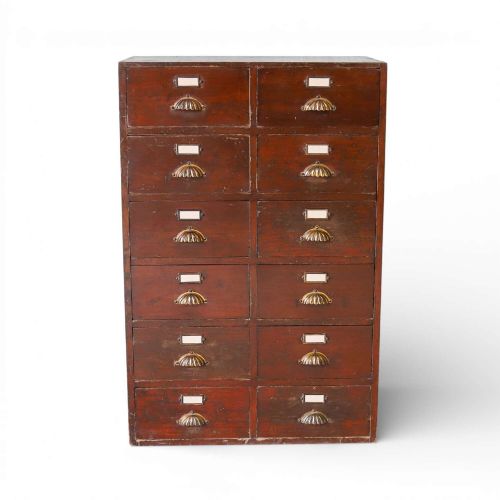
Storage formats range from multi-drawer filing banks and tambour fronts to French cartonnieres and campaign cases.
Distinctions in quality
Quality in these cabinets rests upon the selection of timber, the precision of the joinery, and the integrity of the operating mechanisms. Superior examples feature well-figured mahogany or quarter-sawn oak with smooth-running tambour doors that glide without catching, alongside original brass hardware and working locks.
Simpler workshop pieces or utilitarian office furniture display plain pine carcasses, standard iron pulls, and heavier proportions built strictly for utility rather than display. The presence of patent mechanisms, such as Amberg systems, or maker-stamped brass fittings elevates a piece from standard office utility to collectible engineering.
Gillows·Amberg
The Antique Document Storage Cabinet Glossary
- Tambour
- A flexible door constructed from narrow strips of wood attached to canvas or linen backing. This allows the door to slide along a recessed track to conceal internal shelving or drawers.
- Cartonnier
- A freestanding cabinet or desktop structure fitted with tiers of open compartments or drop-front boxes designed to hold loose papers and folios. These originated in France and often feature leather accents and ormolu mounts.
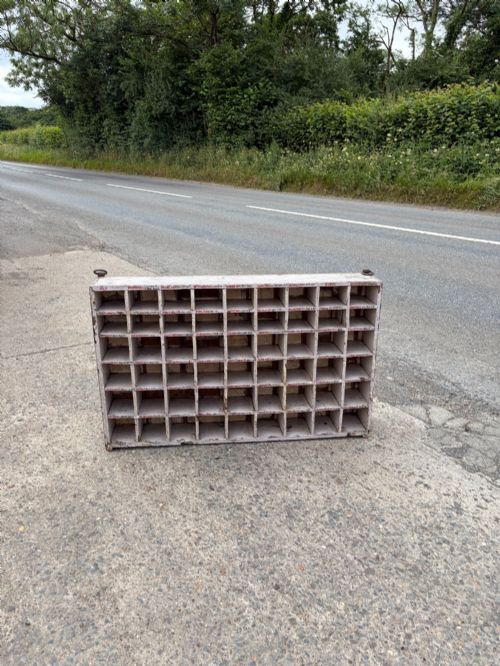
- Pigeon hole
- A small, open compartment within a desk or cabinet used for sorting letters and documents. They form the internal grid behind tambour doors or open shelving.
- Campaign style
- Portable furniture designed for military officers on the move, characterised by recessed brass handles, reinforced corners, and timber selected to withstand travel. These pieces dismantle or fold easily.
- Plan chest
- A wide, shallow multi-drawer cabinet built to store architectural drawings, maps, and large sheets of paper flat. The generous width distinguishes them from standard filing cabinets.
Antique Document Storage Cabinet: Frequently Asked Questions
How do tambour doors work?
Tambour doors consist of many small wooden slats glued side by side onto a flexible canvas or fabric backing. This construction lets the entire door bend around a tight curve inside the cabinet carcass.
When opened, the door slides smoothly along side tracks and disappears into the body of the cabinet. Keeping the tracks clean and lightly waxed ensures the slats move without jamming.
What is the difference between a cartonnier and a filing cabinet?
A cartonnier is a traditional French piece featuring open compartments or heavy pasteboard boxes designed for loose documents and folios. They often incorporate decorative leather and gilt details suitable for a formal library.
Standard filing cabinets use enclosed drawers or tambour fronts intended for vertical file storage and business correspondence. Cartonniers emphasise decorative presentation alongside paper organisation.
Can these cabinets hold modern paper sizes?
Many early twentieth century cabinets accommodate standard modern paper sizes within their drawers or pigeon holes, particularly those built for commercial office use. However, older collector cases and desktop boxes were designed for historical paper dimensions and smaller letters.
Checking internal drawer or slot measurements before purchase ensures contemporary files and folders will fit comfortably. Some specialised plan chests easily handle oversized documents.
How should I care for the wood finish?
Protect the timber by keeping the cabinet away from direct sunlight and away from radiators that cause wood to dry out and split. Occasional applications of a quality beeswax nourish the grain and maintain the surface sheen.
Avoid using modern silicone sprays, which build up residue over time and dull the antique polish. Gentle dusting with a dry microfibre cloth prevents grit from scratching the surface.