


Victorian Oak Office Cabinet
These Victorian oak office cabinets offer the honest utility and heavy timber construction that modern workspaces lack.
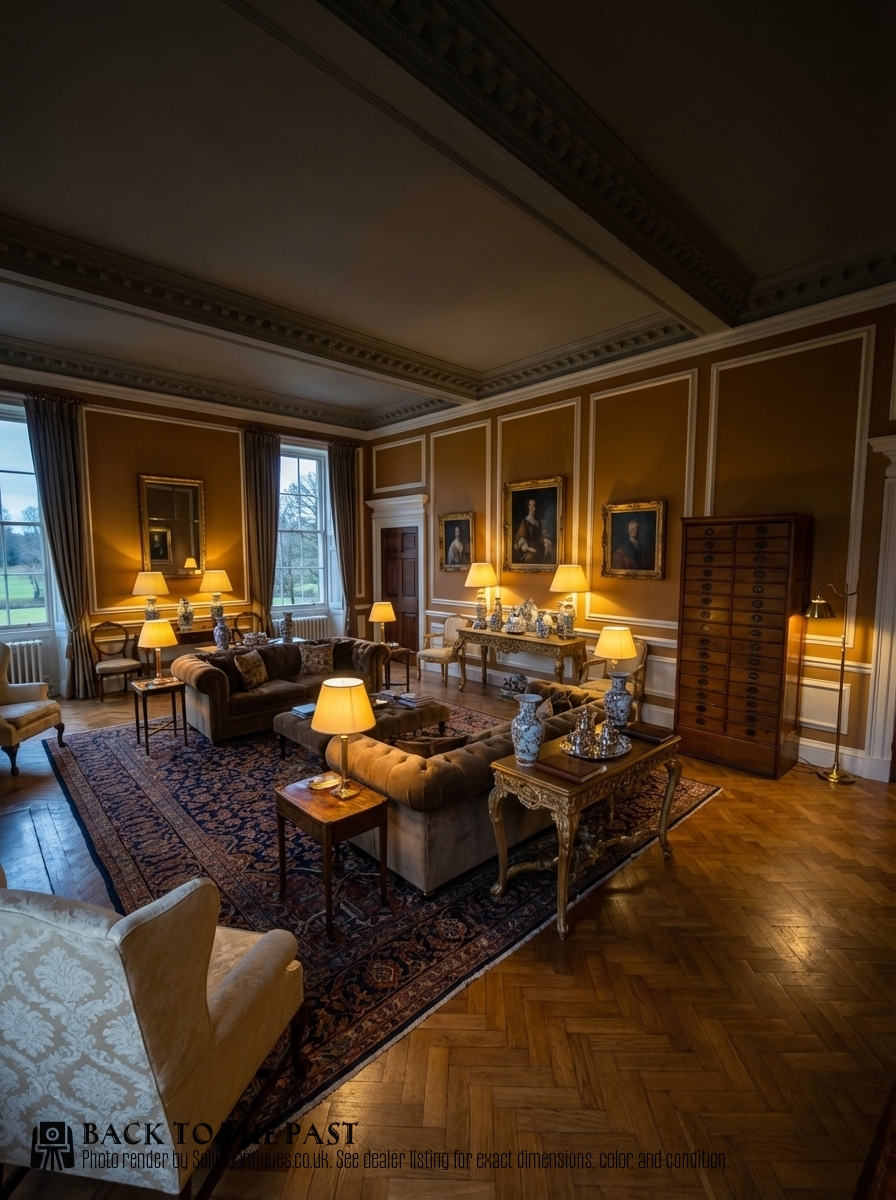
Victorian Oak Office Cabinet
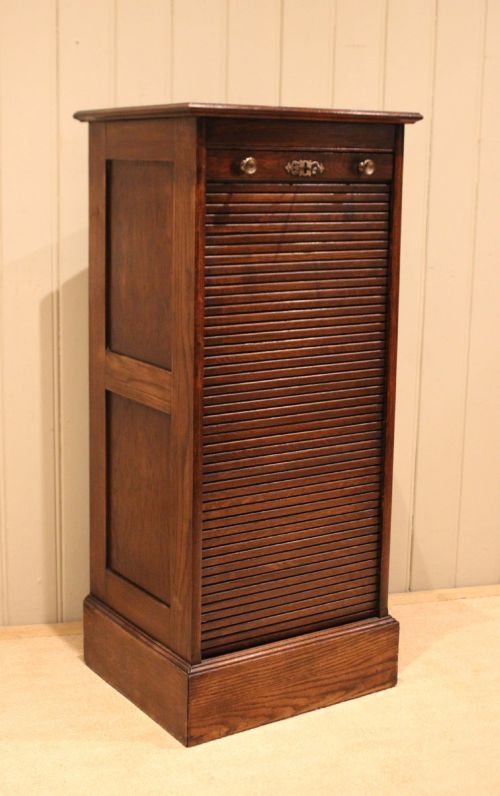
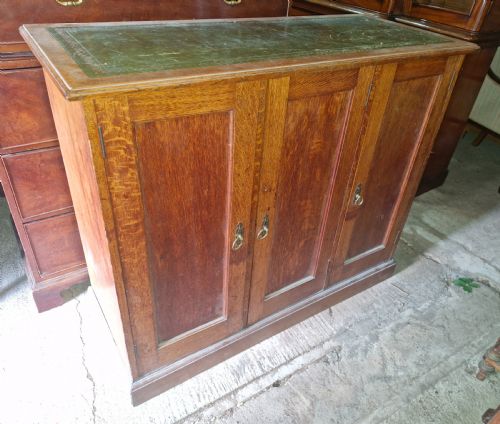
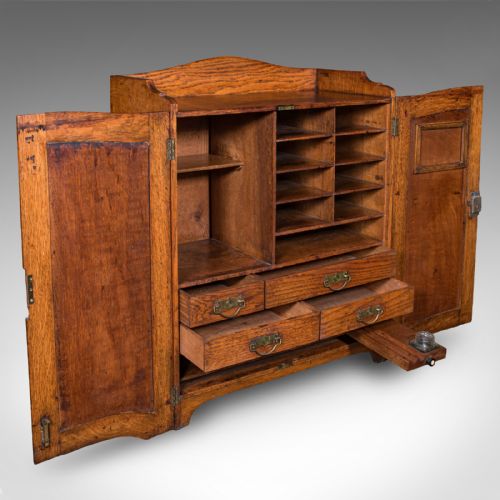
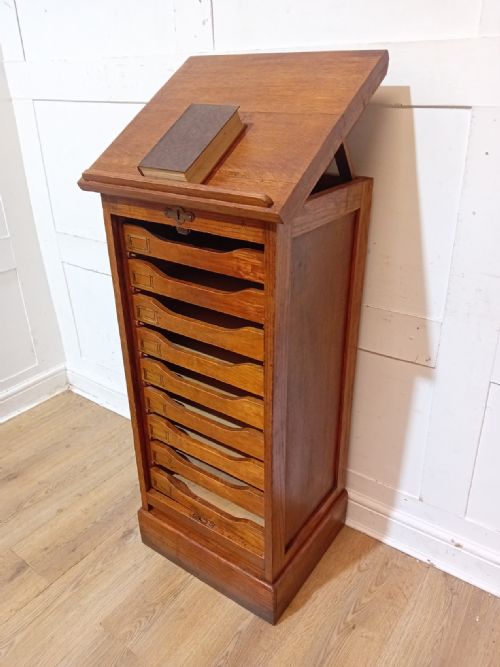
A victorian oak office cabinet serves as a practical storage piece designed for paperwork, letters and books in a traditional study or workspace. These functional furnishings range from tall filing units with tambour doors to smaller desk cabinets and letter files.
Buyers will most frequently encounter dark oak finishes on these functional items, alongside specific mechanisms like Amberg patent letter files. The forms reflect the clerical and organisational needs of nineteenth and early twentieth century commerce.
Materials and construction
Oak forms the primary structural timber for these items, selected for its durability and strong grain. Secondary materials like brass and metal appear in handles, hinges, and patented locking mechanisms, whilst leather and canvas occasionally line interior components.
Cabinet makers utilised traditional joinery to build pieces capable of withstanding heavy daily use in busy offices and estates. Tambour doors, sliding fronts and fitted interior drawers required precise carpentry to ensure smooth operation over decades of service.
Gamekeepers needed filing systems too, as surviving estate cupboards prove.
Assessing quality in office storage
Quality in a victorian oak office cabinet rests on the integrity of the timber selection and the complexity of the internal mechanism. Units featuring proprietary filing systems or complicated tambour fronts demonstrate a higher tier of period manufacture than simple cupboards.
The refinement of the hardware, from heavy brass pulls to specialised locking mechanisms, distinguishes standard utility furniture from finer workshop production. Original patination on the oak and intact internal fittings preserve the integrity of the piece.
Maple and Co·Amberg
The Victorian Oak Office Cabinet Glossary
- Tambour
- A flexible door formed of narrow wooden slats glued to a canvas backing, allowing it to slide smoothly around a curved track. This clever mechanism saves space in tight office environments.
- Book press
- A heavy mechanical device used to flatten paper or bind books, often integrated into wooden cabinetry. These pieces utilise a large metal screw press to apply uniform pressure.
- Patent letter file
- An organisational system designed to hold correspondence securely using spring-loaded clips or indexed boards. Amberg produced notable examples of these mechanical filing systems.
- Tallboy
- A tall chest of drawers standing upright to maximise vertical storage space whilst maintaining a compact floor footprint. They were frequently utilised in banking and estate offices.
Victorian Oak Office Cabinet: Frequently Asked Questions
How do I date an oak office cabinet?
Dating relies on examining the construction methods, hardware materials, and any patent stamps or maker labels found within the drawers. Pieces from the mid nineteenth century often display hand-cut dovetails and simpler internal layouts compared to later patented filing systems.
The progression from basic cupboards to specialised letter files and card index drawers tracks the evolution of business administration.
Can I use these cabinets for modern paperwork?
Many of these pieces accommodate modern paper sizes, particularly those designed with specific filing drawers or compartments. Standard letter and A4 documents often fit well within surviving nineteenth century internal frameworks.
Buyers should check internal drawer dimensions carefully if intending to store modern office supplies rather than displaying the cabinet as furniture.
How should I care for antique oak furniture?
Antique oak benefits from occasional applications of traditional beeswax to nourish the timber and maintain a soft sheen. Keeping the wood away from direct heat sources and sudden humidity changes prevents the solid oak panels from splitting.
Regular dusting with a dry cloth protects the finish and preserves the natural patination built up over a century of use.