
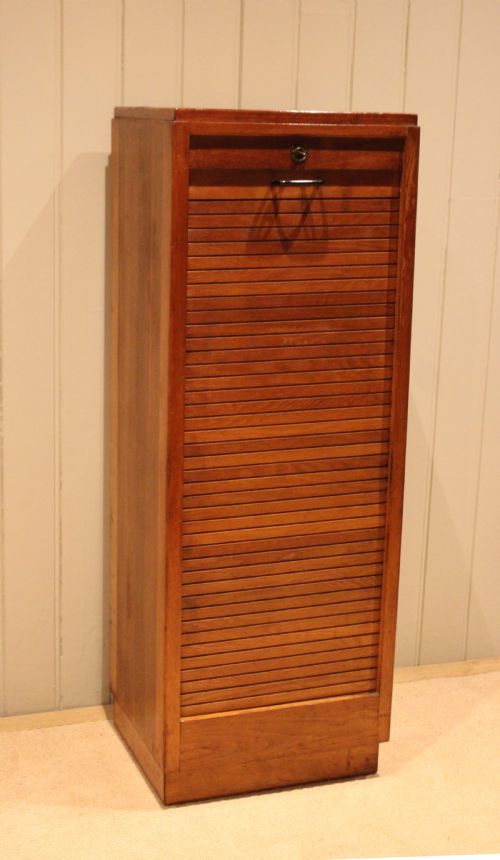
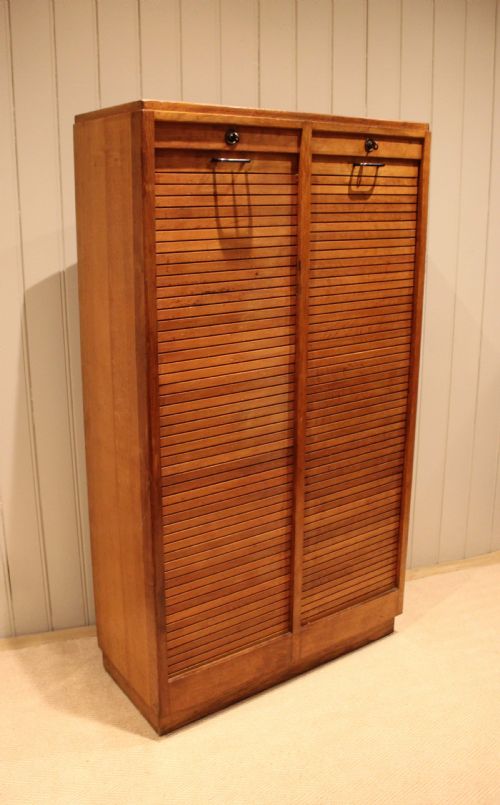


Oak Roll Front Cabinet
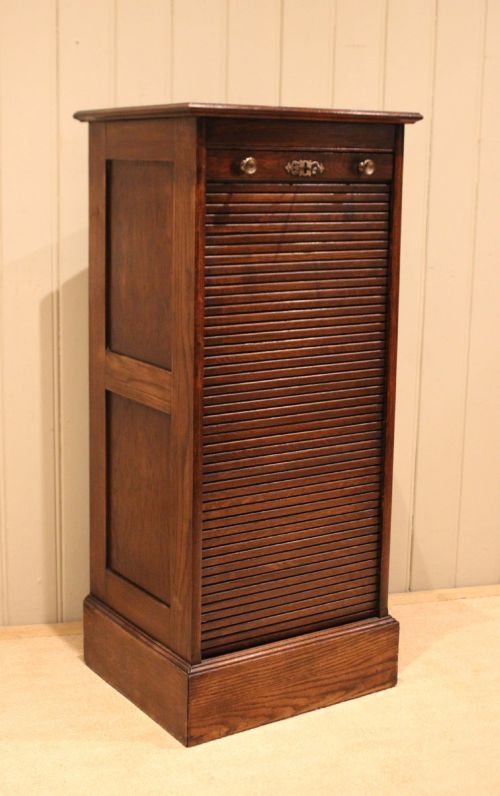
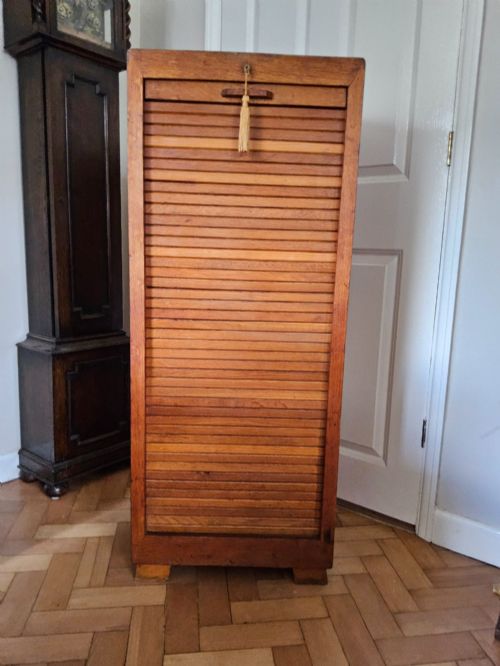
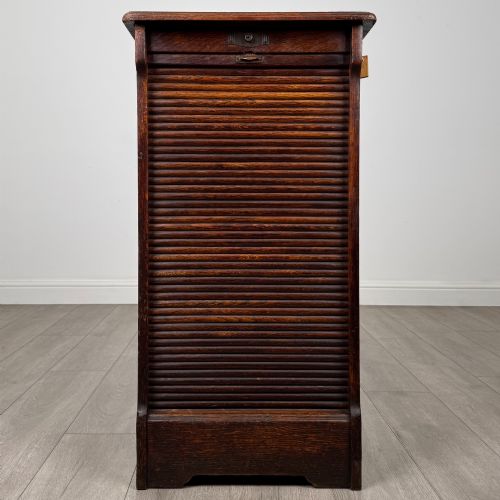
An oak roll front cabinet is a practical piece of office furniture with a slatted shutter door, valued for its ability to conceal documents while saving floor space.
Oak Roll Front Cabinet
When you search for an oak roll front cabinet, you are looking at functional storage items designed to keep papers and stationery organised. The selection spans filing cabinets, stationery cabinets, and bureaux, originating from periods such as the Victorian era, the Edwardian period, the 1920s, 1930s, and 1940s.
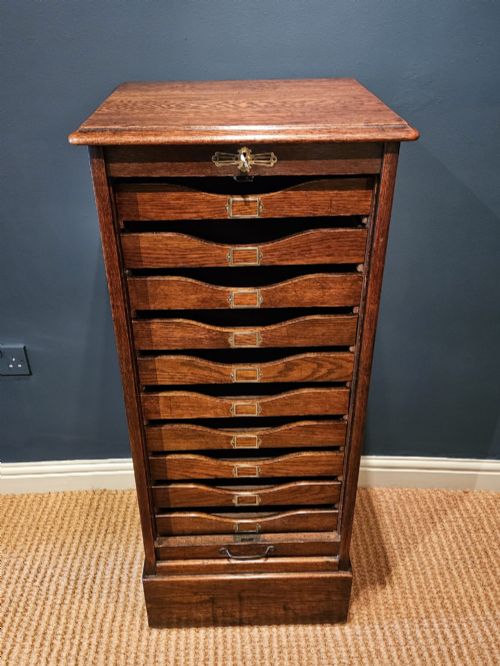
The version you are most likely to meet on this page is the single tambour front filing cabinet in oak. These office pieces use flexible wooden slats that slide smoothly around a track to reveal internal shelving or drawers.
Other variations include stationery cabinets and French utility designs, alongside occasional pieces like cigar cabinets and rolltop bureau bookcases. These pieces reflect the administrative needs of past offices and studies, constructed mainly in light, dark, or golden oak.
How they were made
Makers built these cabinets primarily using solid oak and oak veneers, selected for durability and grain pattern. The slatted roll front, known as a tambour, relied on individual wooden strips glued to a canvas or fabric backing to allow flexible movement along recessed tracks.
Metal, steel, and brass components appear in the hardware, locks, and internal mechanisms that support the sliding shutters and drawers. Glass and lead details occasionally feature in associated bookcase doors, while paper labels and card holders assist with office organisation.
Some stationery cabinets include adjustable dates to keep the Victorian desk clerk strictly on schedule.
What varies in quality
The distinction between standard office furniture and finer examples lies in the precision of the tambour mechanism and the quality of the timber selection. Cabinets with smooth-running slats that glide effortlessly without sticking demonstrate superior original craftsmanship.
Proportion and detailing also set pieces apart, ranging from simple utilitarian filing boxes to carefully figured golden oak finishes with integrated adjustable dates and fitted interiors. The condition of the canvas backing behind the wooden slats dictates the long-term reliability of the roll front.
The Oak Roll Front Cabinet Glossary
- Tambour
- A flexible shutter door constructed from narrow strips of wood attached to a canvas backing. This mechanism slides along a curved track to conceal the interior.
- Roll front
- A sliding shutter closure typical of desks and filing cabinets. It provides secure containment for contents without requiring clearance for swinging doors.
- Stationery cabinet
- A desk accessory or small piece of furniture designed for holding paper, envelopes, and writing implements. These often feature internal pigeon holes and small drawers.
- Bureau
- A writing desk featuring a sloping desktop or fold-down flap. Examples frequently incorporate tambour shutters or bookcase sections above.
Oak Roll Front Cabinet: Frequently Asked Questions
What is a tambour front?
A tambour front consists of narrow wooden slats mounted on a flexible fabric backing. This allows the door to curve around tracks and slide open smoothly.
It was a popular space-saving design for office furniture in the nineteenth and twentieth centuries.
How were these cabinets used?
These cabinets served primarily in offices and studies for filing documents, storing stationery, and organising correspondence. Some specialised variations held items like cigars or books.
The roll front allowed workers to secure confidential papers quickly during the working day.
How do I date an oak cabinet?
Dating relies on stylistic clues, hardware materials, and construction methods. Victorian and Edwardian pieces often feature richer timber tones and detailed brass handles.
Later examples from the 1930s and 1940s tend towards simpler lines, utility designs, and lighter oak finishes.
How do I care for the roll mechanism?
Keep the wooden tracks clean and free from dust to ensure the tambour slats slide without resistance. Avoid using heavy wax or oil products inside the grooves.
Maintain a stable room humidity to prevent the oak slats and canvas backing from warping or sticking.