
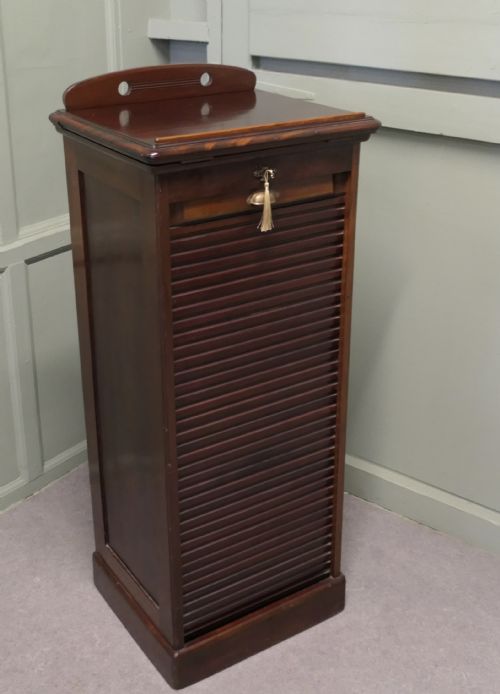


Vintage Wooden Tambour Door
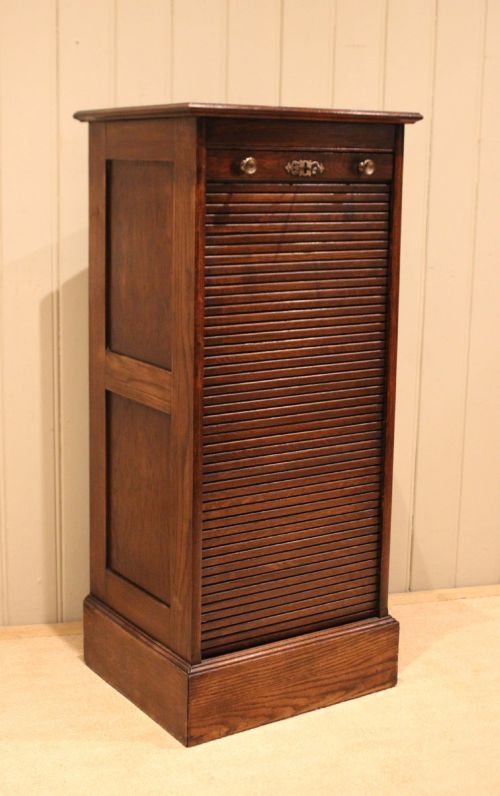
These vintage wooden tambour door pieces are functional workspace and domestic items with slatted sliding closures that save space.
Vintage Wooden Tambour Door
A vintage wooden tambour door desk or cabinet offers a clever sliding closure mechanism designed to conceal contents without swinging panels taking up room. When exploring vintage wooden tambour door forms, buyers encounter various office filing cabinets, sideboards, bedside tables, and chests dating from the Georgian period through to the mid-twentieth century.
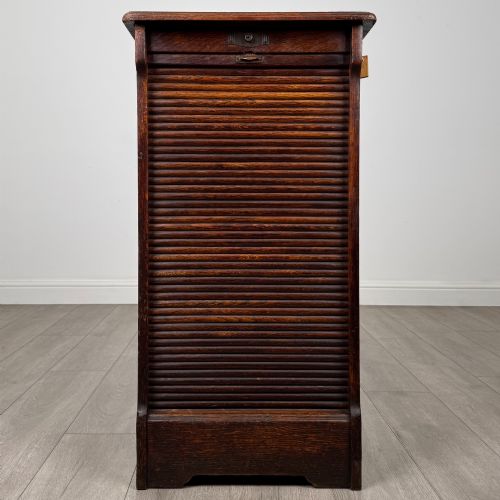
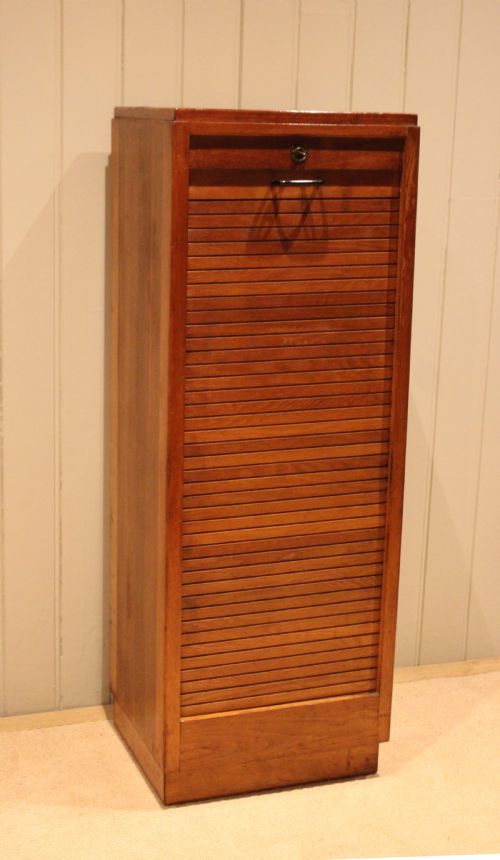
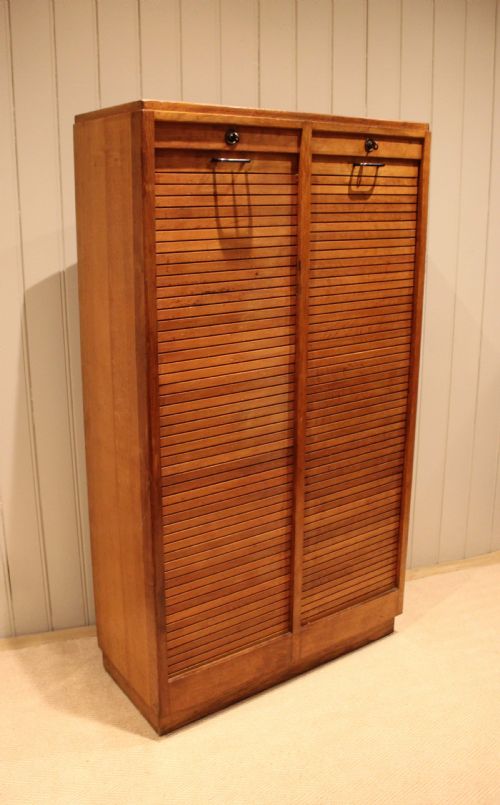
The selection ranges from single and double tambour front filing cabinets in oak to larger mahogany sideboards and nightstands. Oak dominates the early twentieth-century office furniture, while mahogany and yew wood appear in earlier domestic forms.
Construction and materials
Makers utilised solid timbers such as oak, mahogany, walnut, and yew wood, often backing the flexible slat assemblies on canvas or textile strips to allow smooth movement around curves. Brass and steel fittings appear on drawers and locking mechanisms, supporting the daily demands of office and domestic use.
Cabinetmakers combined traditional carcase construction with precision-grooved tracks that guide the individual wooden laths. Surface finishes preserve the natural grain of light and dark oak, satinwood, and mahogany.
Secretarial desks often hide tiny pigeonholes behind their slatted shutters, perfect for stashing forgotten love letters or loose paperclips.
Judging quality and craftsmanship
Quality rests on the smooth operation of the slatted sliding mechanism and the tightness of the joints within the timber housing. Superior examples maintain alignment along the running tracks without sticking or sagging across the opening.
Selection of figured timbers, such as inlaid mahogany or well-matched oak panels, distinguishes finer items from standard utility pieces. Original hardware, including brass escutcheons and working locks, elevates the status of a cabinet.
The Vintage Wooden Tambour Door Glossary
- Tambour
- A flexible sliding shutter formed of narrow wooden slats glued to a canvas or fabric backing. This allows the door to curve around the corners of a cabinet or desk.
- Filing Cabinet
- A tall piece of office furniture fitted with internal drawers or shelving enclosed by a sliding front. These units organise documents in commercial and domestic settings.
- Sideboard
- A large dining room or reception piece used for storing tableware and serving food. Georgian and later examples often feature cupboards and drawers.
- Nightstand
- A small bedside table designed to hold a lamp and personal items. Some include enclosed cupboards or small drawers beneath the surface.
- Stage-Back
- A raised rear superstructure on a sideboard featuring shelving or small compartments. This design element appears in Georgian Scottish pieces.
Vintage Wooden Tambour Door: Frequently Asked Questions
What is a tambour door?
A tambour door consists of narrow wooden slats attached to a flexible canvas backing that slides smoothly along recessed tracks.
This mechanism allows the closure to vanish into the sides or back of a cabinet, making it practical for tight spaces where swinging doors are inconvenient.
How were these cabinets used?
These pieces served primarily in offices and studies for filing documents, ledgers, and stationery securely behind a lockable shutter.
Domestic variants like nightstands and sideboards utilised the same sliding mechanism to conceal storage compartments in bedrooms and dining rooms.
How do I date an oak cabinet?
Dating relies on stylistic clues, hardware types, construction methods, and timber cuts visible within the piece.
Early twentieth-century office furniture often displays simpler quarter-sawn oak grain, whereas Georgian and Victorian items feature different proportions and cabinetmaking techniques.
Are these pieces suitable for modern homes?
These items integrate well into contemporary workspaces and living rooms as practical storage solutions for paperwork and electronics.
Their compact footprints and sliding fronts make them particularly useful for home offices where floor space is limited.