


Oak Tambour Cabinet
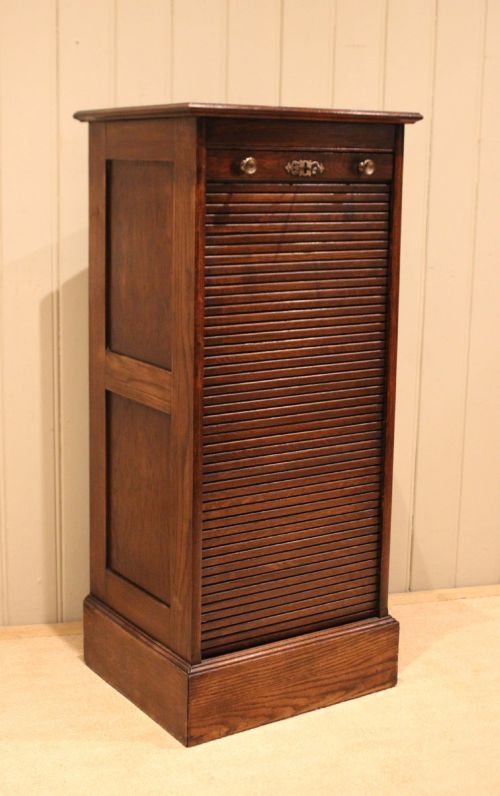
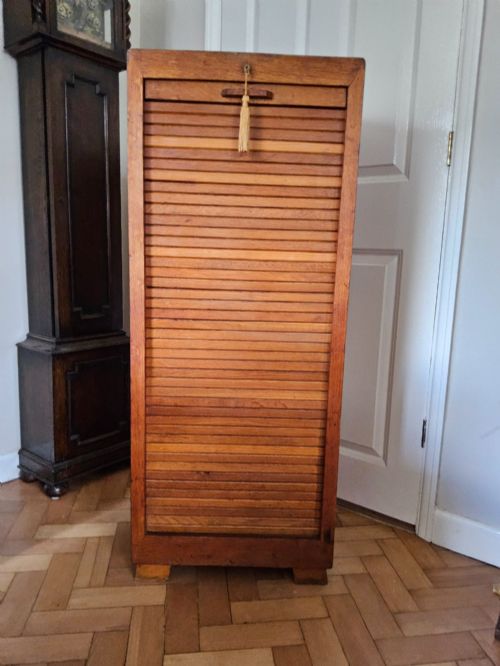
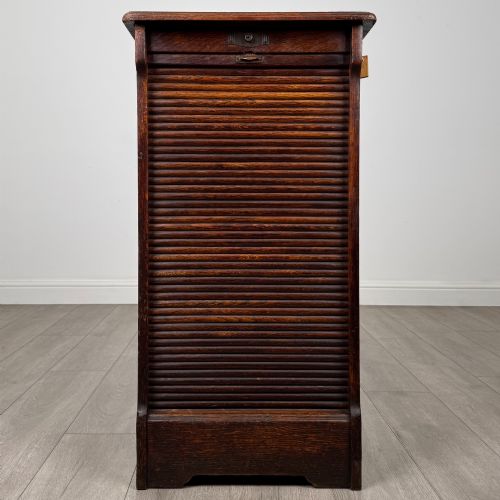
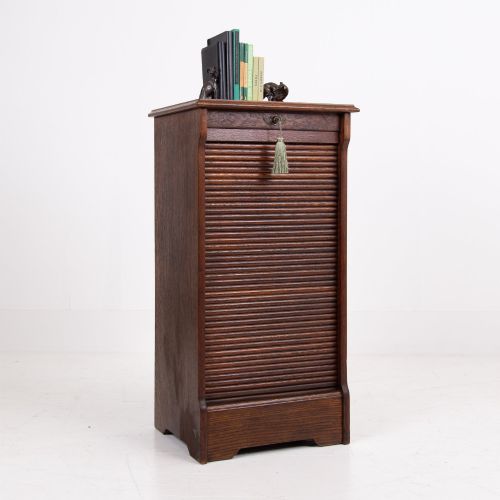
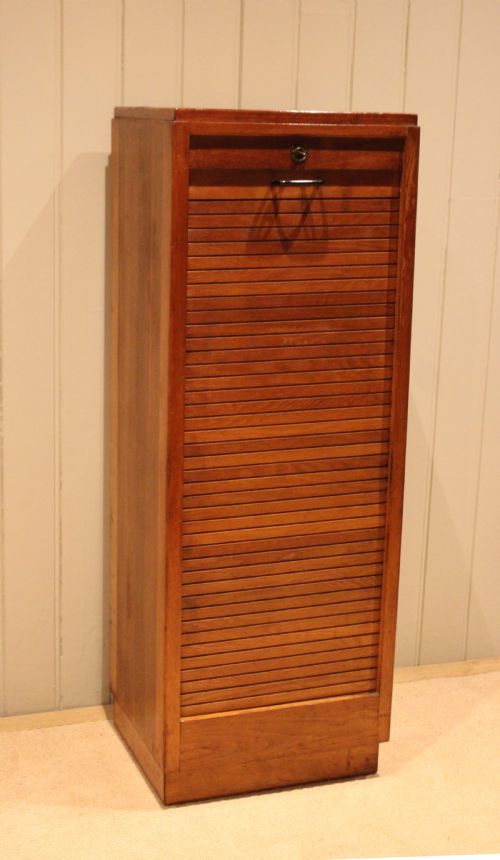
An oak tambour cabinet conceals its contents behind slatted wooden shutters that glide smoothly around a curve.
Oak Tambour Cabinet
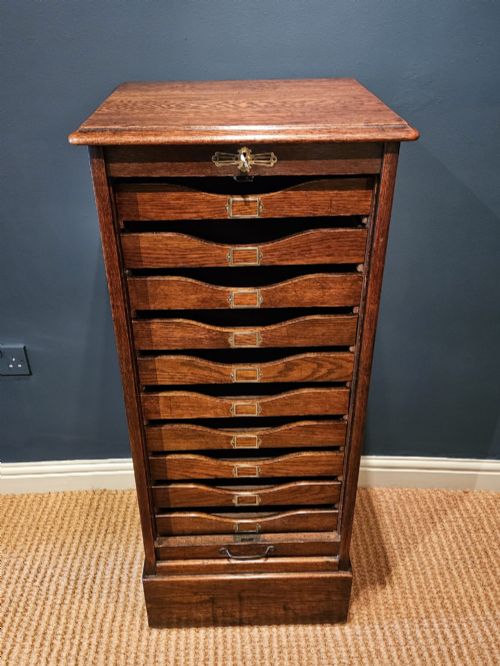
An oak tambour cabinet is primarily an office piece designed for filing papers, ledgers and stationery. The search phrase covers a range of practical workspace items built to keep documents tidy.
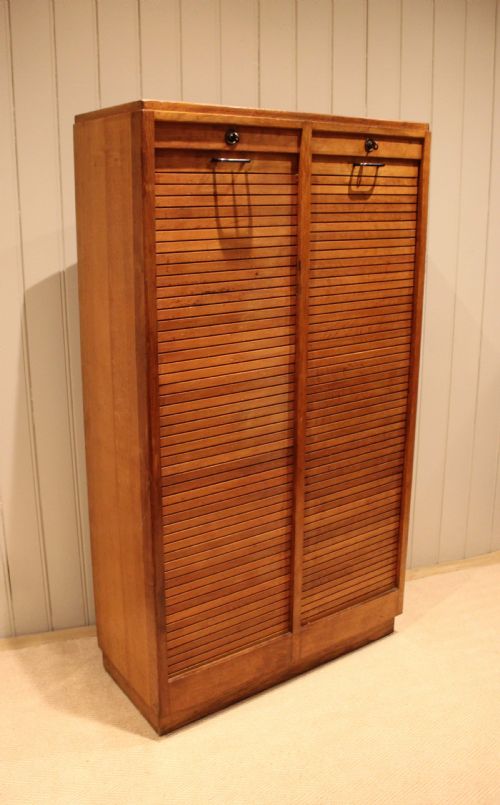
Filing cabinets dominate the selection, appearing as single, double and triple tambour variations alongside desks, stationery boxes and bureau bookcases.
Origin dates span from the late Victorian period through Edwardian times and into the nineteen thirties and forties, with French and English examples appearing regularly.
Materials and construction
Makers built these pieces using solid oak and oak veneers combined with internal canvas backings to hold the flexible slats together. Brass and metal hardware provide operational strength and decorative contrast.
The defining mechanism relies on individual wooden slats glued to fabric, allowing the door to slide along grooved tracks hidden within the cabinet sides.
Some Edwardian examples included built-in date adjustments, letting busy clerks manually track correspondence right on the cabinet front.
Judging execution
Quality rests in the precision of the slatted door and the smoothness of its track movement. Superior examples show tight joints and well-fitted internal pigeon holes or filing partitions.
The selection of timber grain and the depth of the colour mark the distinction between standard office utility items and finer domestic pieces.
James Shoolbred & Co
The Oak Tambour Cabinet Glossary
- Tambour
- Flexible sliding shutter made from narrow wooden slats attached to a fabric backing. This allows doors to curve around cabinet corners without swinging outward.
- Roll top
- Desk or cabinet design featuring a large tambour shutter that pulls down from the top to enclose the writing surface and pigeon holes.
- Stationery cabinet
- Small desktop or tabletop cabinet fitted with shallow drawers, compartments and doors designed for paper and writing equipment.
- Bureau bookcase
- Tall combination piece uniting a sloping desk section with upper shelving enclosed by doors.
- Arts and Crafts
- Design movement emphasising visible construction, honest materials and simple forms rather than heavy applied ornamentation.
Oak Tambour Cabinet: Frequently Asked Questions
How do tambour doors work?
Slats of wood are fixed to a flexible canvas backing that slides inside hidden vertical grooves. This lets the door curve around the sides of the cabinet.
When pulled, the shutter moves smoothly along the track to open or close the compartment without needing clearance space in front.
Were these cabinets only used for offices?
While the majority served as business filing units and office desks, smaller versions functioned as stationery or cigar cabinets in homes.
Makers adapted the form for domestic spaces by pairing the slatted shutters with bookcases and writing bureaus.
How do I date an oak tambour cabinet?
Victorian and Edwardian versions often feature richer golden oak tones and traditional brass handles. Pieces from the nineteen thirties and forties show simpler utility lines and darker finishes.
Internal construction details and hardware styles help narrow the decade of manufacture.
How do I maintain the sliding mechanism?
Keep the wooden tracks clean of dust and debris to ensure the slatted shutter moves freely. Avoid using heavy oils that attract dirt to the internal grooves.
Gentle cleaning preserves both the canvas backing and the individual oak slats.