


Antique Humidor Box
An antique humidor box is a dedicated storage vessel crafted to maintain tobacco in prime condition, drawing collectors for its rich timber and metal detailing.
Antique Humidor Box
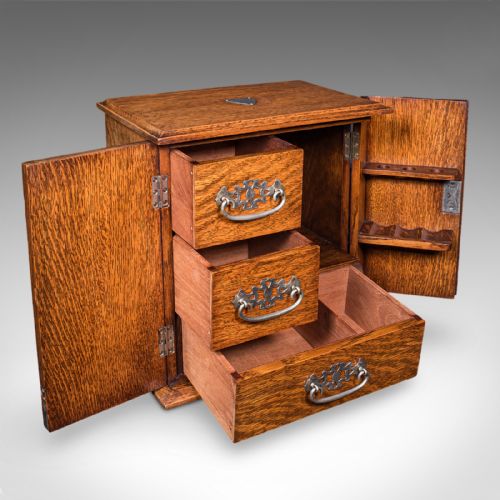
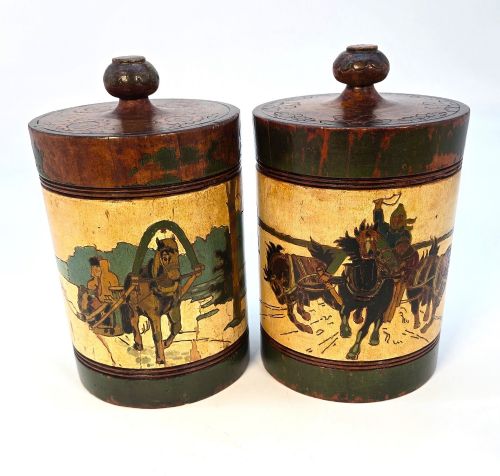
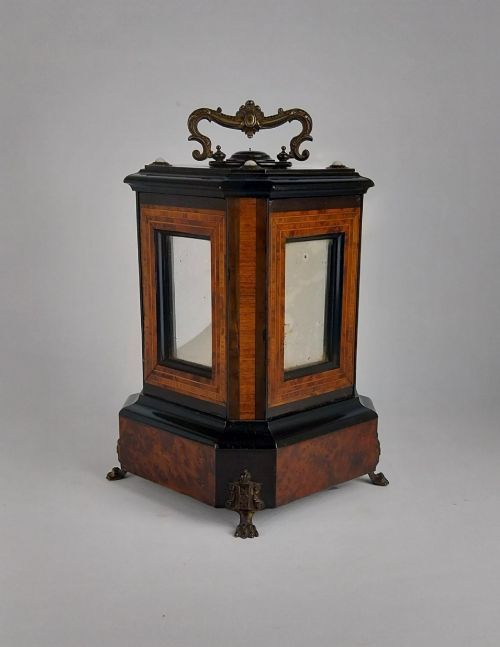
An antique humidor box serves as a secure domestic repository for cigars and smoking accessories, originating in periods spanning the nineteenth and early twentieth centuries. These pieces appear on this page in various formats, from desktop cabinets to tabletop chests and novelty containers.
The Edwardian and Victorian eras contribute heavily to the available selection, alongside robust examples from the Black Forest and Art Deco periods. Buyers encounter forms ranging from simple wooden caskets to elaborate compendiums fitted with multiple drawers and internal compartments.
Materials and construction
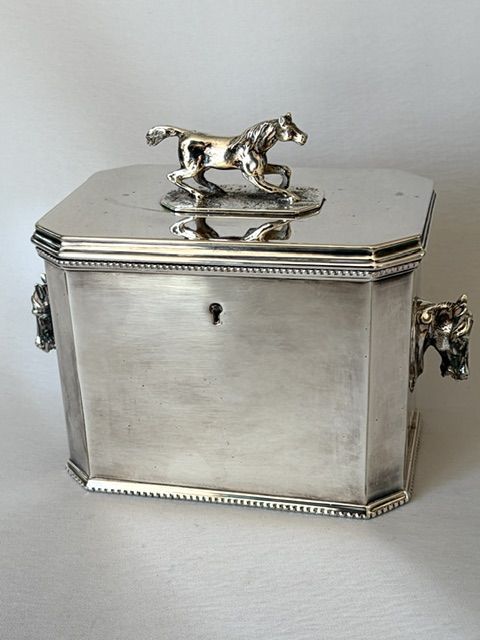
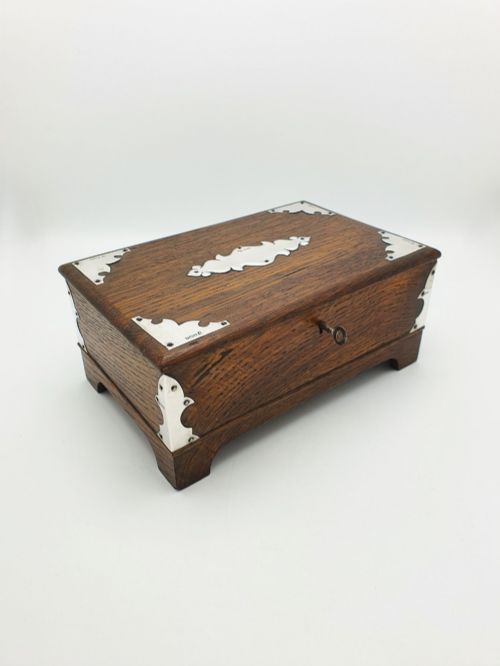
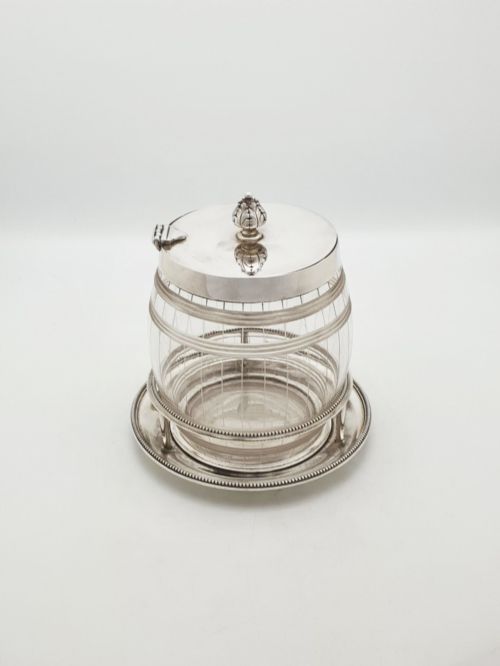
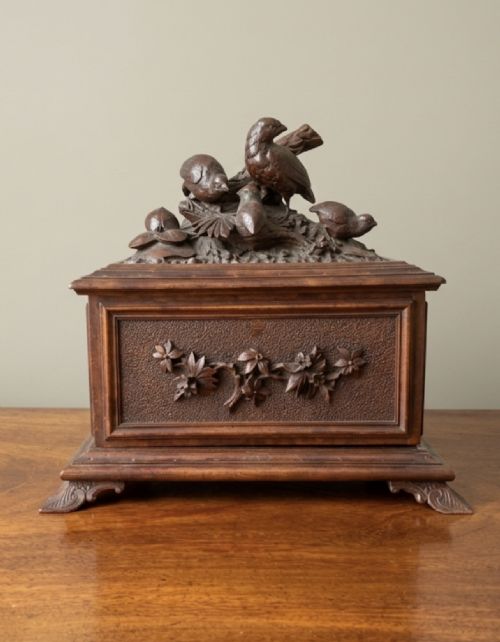
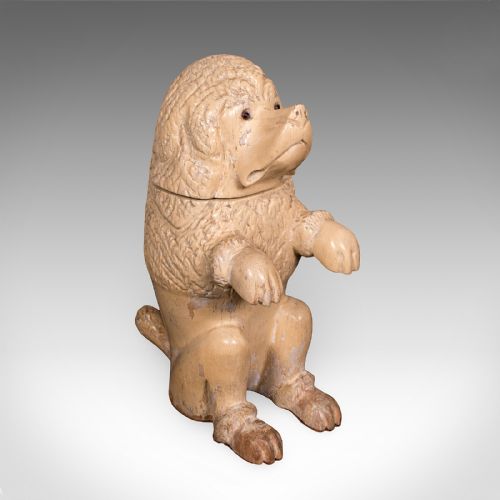
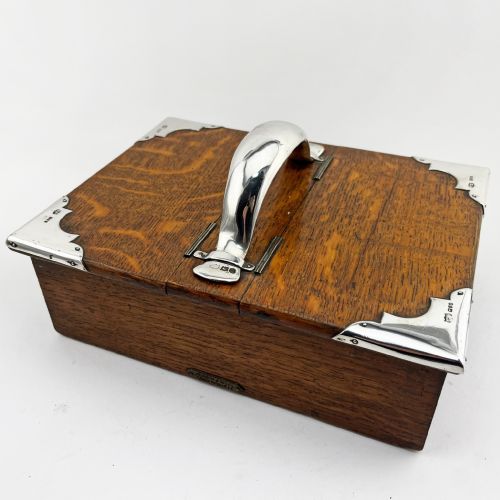
Makers utilised dense timbers such as oak, burr walnut, mahogany and linden wood, frequently pairing them with structural mounts in brass, copper and sterling silver. Many of these receptacles feature intricate hand-carved ornamentation, particularly in Black Forest animal studies and foliage motifs.
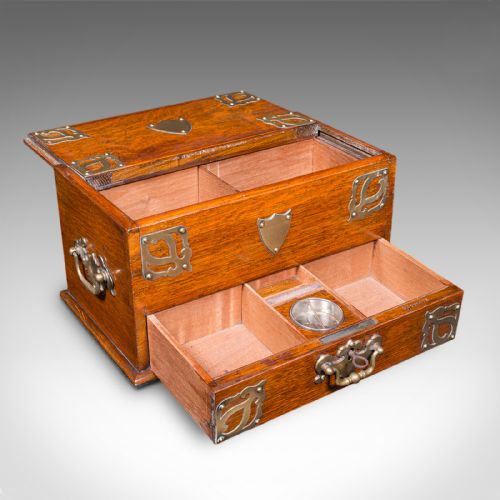
Internal joinery often incorporates fitted trays and metal linings designed to preserve moisture for tobacco storage. Exterior surfaces rely on French polishing or natural wax finishes to protect the grain of the wood over decades of handling.
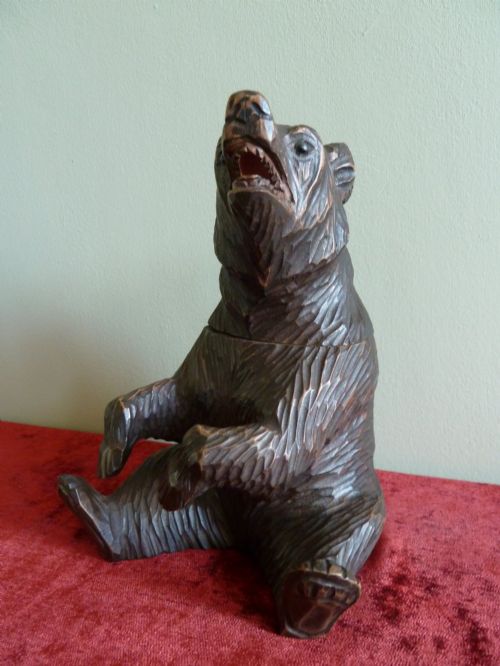
Several carved wooden bears stand guard over nineteenth-century tobacco, clutching jars as if guarding a woodland honey stash.
Evaluating the standard
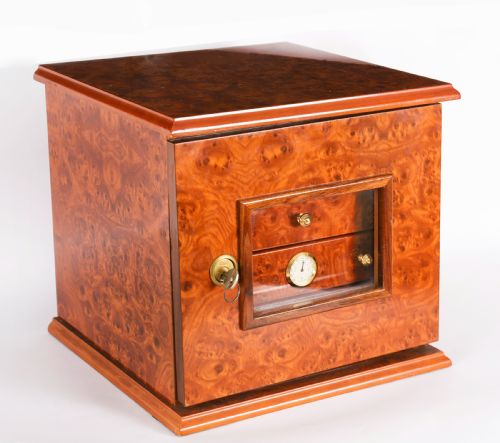
Quality rests in the precision of the cabinetwork and the integrity of the hardware, where tight joins and heavy-gauge metal mounts distinguish superior workshops from ordinary production. The choice of burr veneer and the crispness of hand-carved relief work elevate specific specimens above standard utilitarian boxes.
Complexity of internal mechanism also dictates distinction, separating simple lidded containers from automated cabinets, multi-drawer compendiums and novelty transport designs.
Elkington·Mappin & Webb·Wright & Davies·Alfred Dunhill
The Antique Humidor Box Glossary
- Humidor
- A sealed box designed to store cigars at a controlled humidity. These containers often feature interior wooden linings or metal moistening elements.
- Compendium
- A comprehensive box or cabinet holding multiple smoking requisites such as cutters, lighters and jars. Such pieces frequently incorporate folding stands or multi-tier storage.
- Black Forest
- A style of wood carving originating from central Europe, characterised by realistic depictions of animals and foliage. Bears and dogs appear commonly on these lids.
- Treen
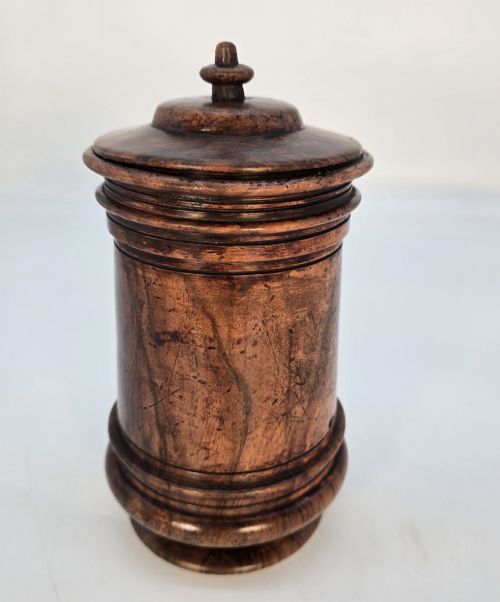
- Small handmade wooden household objects and utilitarian wares. These items display the natural grain of fruitwood and other regional timbers.
- Tambour
- A flexible sliding shutter formed from narrow slats of wood glued to a fabric backing. This mechanism allows curved cabinet fronts to open smoothly.
Antique Humidor Box: Frequently Asked Questions
How do I maintain an antique humidor box?
Keep the wood conditioned with appropriate wax and avoid placing the container near direct heat sources or rapid temperature shifts.
Modern humidification elements can be integrated carefully inside if you intend to store actual cigars today.
What is the difference between a tobacco jar and a humidor?
Tobacco jars generally act as simple storage vessels for loose leaf pipe tobacco, often featuring ceramic or wooden bodies with fitted lids.
Humidors are specifically engineered to preserve cigars at a controlled humidity level, frequently utilising tight-fitting seals and specialised internal compartments.
How can I date an oak cigar box?
Examine the construction methods, hinge types and lock mechanisms, as Victorian and Edwardian examples often feature specific brass hardware and registration marks.
Quarter-sawn oak and heavy sterling silver mounts typically point towards late nineteenth or early twentieth-century British production.
Were these boxes used for travel?
Certain compact specimens and campaign styles were built for portability, featuring secure brass bounds and locking mechanisms to withstand movement.
Larger cabinets and compendiums were designed exclusively for stationary desktop use in smoking rooms, clubs and libraries.