


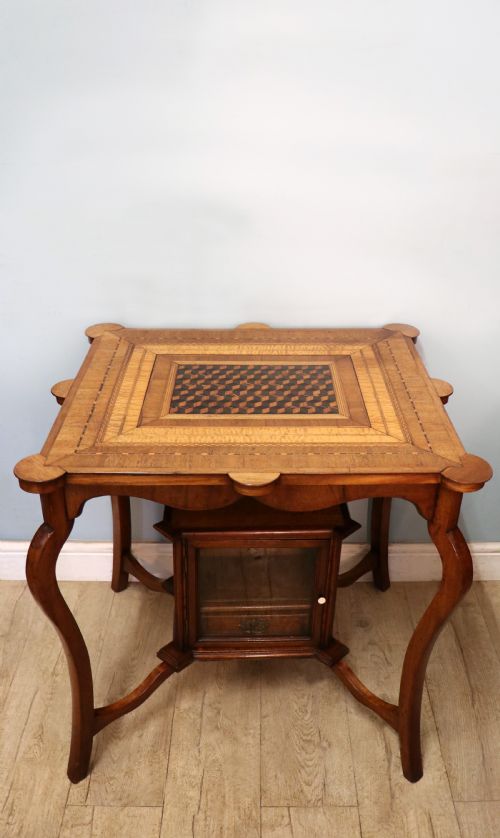


Vintage Smokers Cabinet
A vintage smokers cabinet brings period craftsmanship into the modern room, offering compact storage for pipes, cigars, and smoking accessories.
Vintage Smokers Cabinet
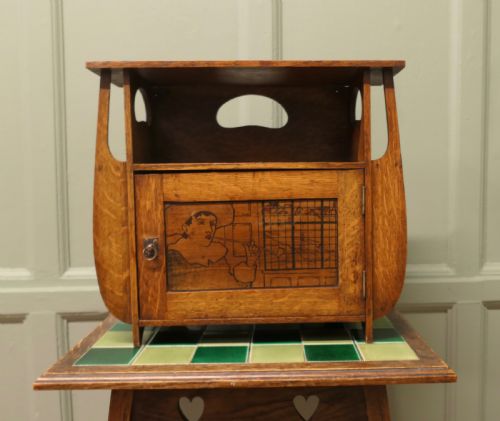
A vintage smokers cabinet collects together tabletop models, wall-hanging variants, and compact cigar humidors produced across the late nineteenth and early twentieth centuries. These pieces emerge in oak, mahogany, and walnut, frequently arriving as table top oak cabinets or wall cabinets styled in the Edwardian and Victorian eras.
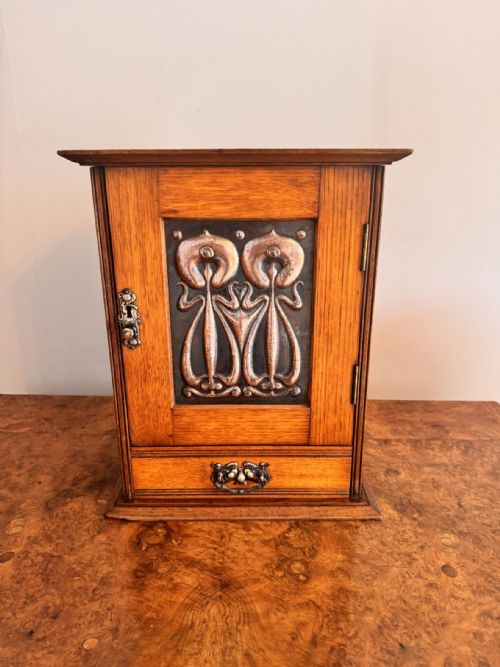
Buyers seeking a vintage smokers cabinet most often encounter golden oak constructions from the Edwardian period or 1900s, alongside pieces reflecting Art Nouveau and Arts and Crafts movements. Certain variations adopt distinct forms, including cigar cases for club lounges, advertising shop displays, and whimsical designs shaped like coal wagons.
Materials and construction
Makers relied heavily on solid oak, golden oak, mahogany, and walnut, often employing burr walnut or cedar for specific humidor interiors. Timber selection dictated the structural integrity of these small boxes and wall-mounted units.
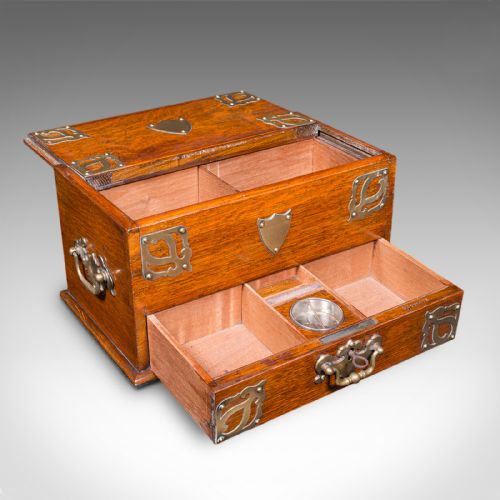
Metal hardware played an essential role, with brass and copper utilised for hinges, handles, locks, and internal mounts. Glass doors or panels occasionally appeared to showcase the contents, whilst iron details reinforced structural elements.
Joinery techniques ranged from traditional dovetailing in drawers to tambour fronts that rolled smoothly along tracks. Inlaid decoration and carved motifs defined the exterior surfaces of Arts and Crafts and Art Nouveau examples.
Assessing quality and execution
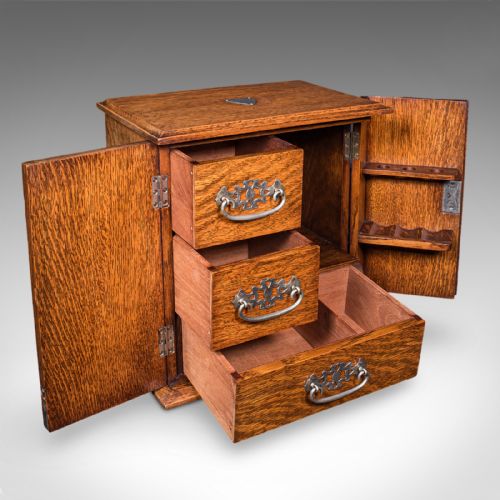
Quality rests upon the selection of timber and the precision of the joinery, particularly in the fit of doors, tambour fronts, and internal drawers. Superior examples display carefully matched wood grains and robust internal fittings for pipes and cigars.
Hardware execution distinguishes finer pieces, where solid brass or copper hinges and lock escutcheons remain securely fixed and original to the piece. The presence of integrated locking mechanisms and well-preserved cedar linings in humidors elevates the standard of construction.
H Upmann Habana
The Vintage Smokers Cabinet Glossary
- Humidor
- A specialised cabinet or box designed to store cigars at a controlled humidity. These interiors are frequently lined with Spanish cedar to preserve tobacco condition.
- Tambour
- A flexible door constructed from narrow strips of wood glued to a fabric backing. This allows the panel to slide smoothly around a curved track.
- Edwardian
- A stylistic period spanning the reign of King Edward VII until the First World War. Furniture from this era often lighter in scale than heavy Victorian designs.
- Arts and Crafts
- A design movement championing traditional craftsmanship and simple forms. Pieces from this style emphasise the natural qualities of oak and honest construction.
- Art Nouveau
- An international style characterised by organic, flowing lines and natural motifs. This aesthetic appears on cabinets through stylized floral carvings and decorative brasswork.
Vintage Smokers Cabinet: Frequently Asked Questions
What fits inside a vintage smokers cabinet?
These cabinets house tobacco pipes, loose leaf tobacco, and cigars within dedicated internal racks and small drawers. They were originally built to keep smoking paraphernalia organised and protected in domestic or club settings.
Today, the internal compartments accommodate modern small accessories, stationery, or collection items while retaining their historical layout.
Were these cabinets meant for walls or tables?
Makers produced both wall cabinets and tabletop variants depending on the intended room placement. Tabletop models sat on desks or sideboards, while wall-hanging versions utilised domestic vertical space.
Both forms share similar internal configurations for pipes and tobacco storage, differing primarily in their mounting provisions.
How do I date an antique smokers cabinet?
Dating relies upon stylistic markers such as Arts and Crafts linearity, Art Nouveau flowing motifs, or heavier Victorian proportions. Materials like golden oak point toward Edwardian production around 1900.
Hardware styles, construction methods, and any associated maker labels or stamps further clarify the specific decade of origin.
What is a tambour door?
A tambour door consists of narrow vertical wooden slats attached to a flexible fabric backing that runs in a tracked groove. This mechanism allows the door to slide open around a tight curve without swinging outward.
It appears frequently on compact desk and cabinet designs from the early twentieth century to save external clearance space.