



Wooden Cigar Box
A wooden cigar box is a solid timber repository for tobacco, ranging from modest oak storage to elaborate Black Forest carvings.
Wooden Cigar Box
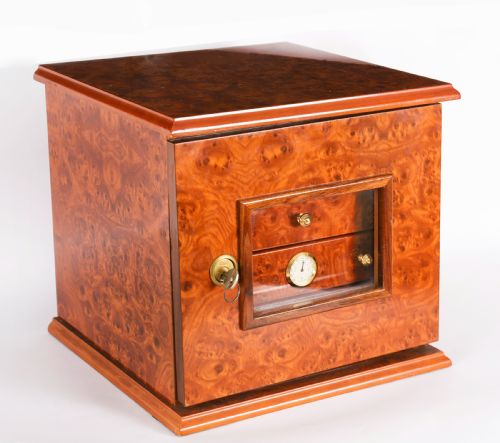
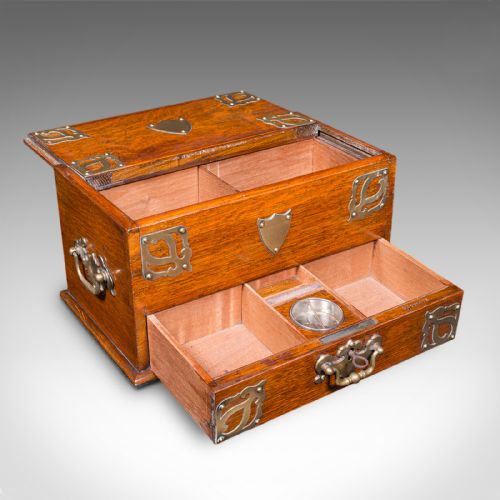
A wooden cigar box serves as a functional receptacle for storing and preserving cigars, appearing across this page in forms ranging from simple desktop humidors to substantial multi-drawer cabinets.
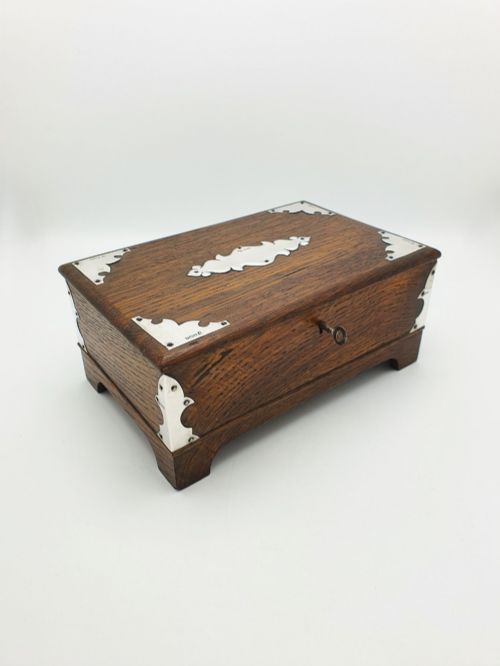
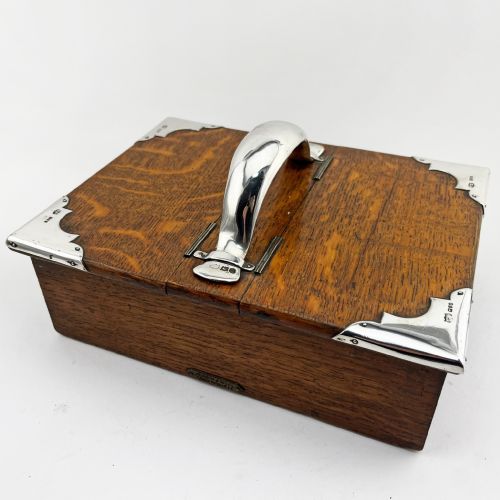
The version most commonly met on this page is the Victorian or Edwardian oak box, frequently mounted with sterling silver or brass and originating from nineteenth-century English workshops.
Beyond standard boxes, the selection includes specialised novelty pieces such as linden wood bear carvings and smokers cabinets fashioned in the shape of railway coal wagons.
How they were made
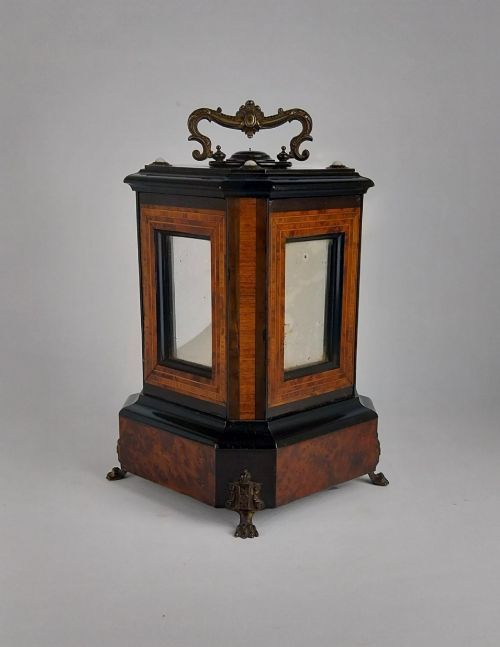
Cabinet makers utilised dense native and exotic timbers including oak, walnut, burr elm, and satinwood to construct the foundational carcase, often employing quarter-sawn boards for stability.
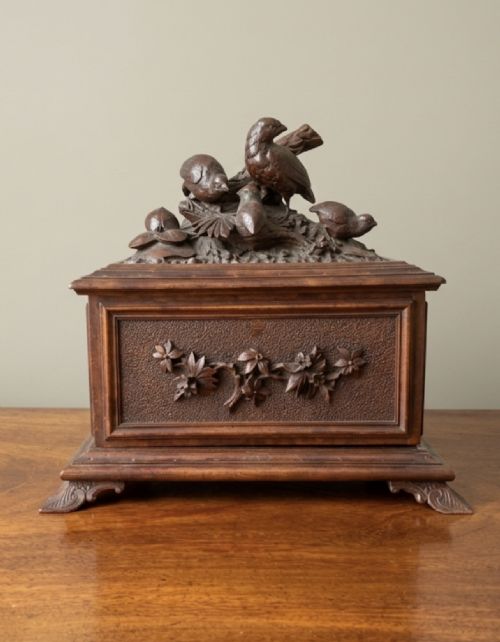
Surface ornamentation relied on meticulous hand-carving, as seen in Black Forest linden wood pieces, alongside precision joinery for tambour fronts and multi-drawer desktop collectors cases.
Hardware played an integral role, with workshops incorporating cast brass mounts, locking mechanisms, and sterling silver details supplied by silversmiths.
Several nineteenth-century craftsmen carved wooden cigar humidors in the exact likeness of railway coal wagons.
What varies in quality
The calibre of a piece is determined by the selection of timber figures, where richly figured burr walnut or pollard oak elevates the object far beyond plain utilitarian deals.
Execution of detail distinguishes standard production from superior work, evident in the depth and animation of Black Forest carvings or the crispness of sterling silver mounts.
Complexity of internal arrangement dictates distinction, separating simple lidded boxes from sophisticated multi-drawer cabinets, musical mechanisms, and tambour systems.
Mappin And Webb·Alfred Dunhill
The Wooden Cigar Box Glossary
- Humidor
- A moisture-controlled storage vessel designed to keep cigars at an optimal humidity. These boxes often feature internal linings of aromatic wood.
- Black Forest
- A nineteenth-century style of intricate wood carving originating from the Swiss and German border regions. Pieces frequently depict local fauna such as bears and hounds.
- Tambour
- A flexible sliding shutter formed from narrow vertical strips of wood glued to a fabric backing. It allows smooth operation around curved cabinet fronts.
- Pollard Oak
- Timber harvested from oak trees that have been pollarded, producing a dense cluster of branches that creates highly decorative circular grain patterns.
- Tramp Art
- A form of folk art created by itinerant workers utilising scrap wood from cigar boxes and shipping crates. Items are characterised by chip-carved, layered geometric reliefs.
Wooden Cigar Box: Frequently Asked Questions
What is the difference between a cigar box and a humidor?
A standard wooden cigar box simply holds tobacco products, whereas a humidor is specifically engineered to maintain internal moisture levels for long-term preservation.
Many examples on this page are described interchangeably, but true humidors often feature specialised interior fittings and tight seals.
How do I date an antique wooden cigar box?
Dating relies upon examining the timber species, construction methods, hardware styles, and any accompanying hallmarks on silver mounts.
Victorian pieces frequently display robust brass binding and heavy oak construction, while Edwardian examples often incorporate lighter satinwood or refined silver details.
Where were these smoking cabinets typically used?
These pieces were designed for gentlemen's clubs, private studies, and domestic drawing rooms as sophisticated desktop accessories.
They kept tobacco, matches, and cutters neatly organised and secure within the household or social lounge.
What maintenance does antique wood require?
Preservation involves keeping timber away from direct heat sources and extreme humidity fluctuations to prevent warping or splitting.
Occasional application of appropriate microcrystalline wax helps protect the polished surface without building up residue.