


Oak Music Cabinet
An oak music cabinet keeps scores and sheets tidy with solid construction, offering an appealing piece for traditional and period interiors alike.
Oak Music Cabinet
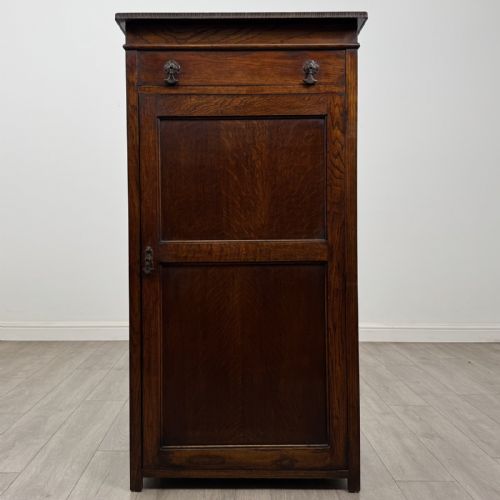
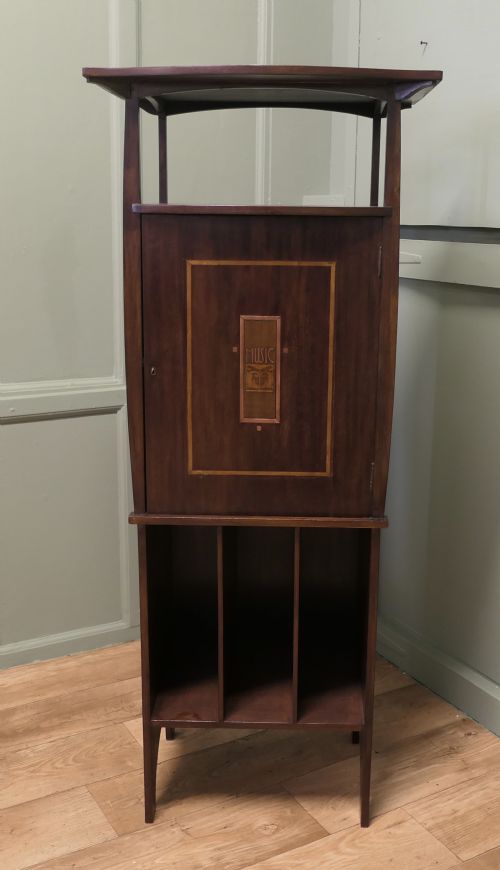
An oak music cabinet provides specialised storage for sheet music and scores, taking forms such as upright cupboards, Canterbury racks, and tambour door units. These pieces emerge predominantly from the Victorian, Edwardian, and Arts and Crafts periods, reflecting the domestic musical habits of the late nineteenth and early twentieth centuries.
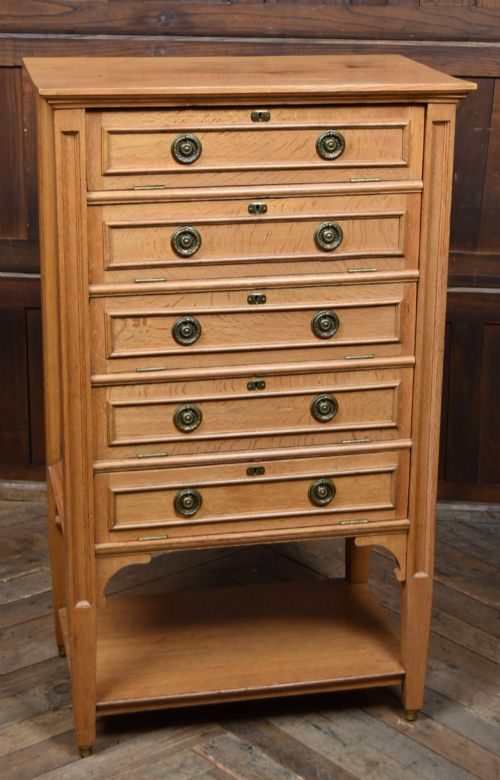
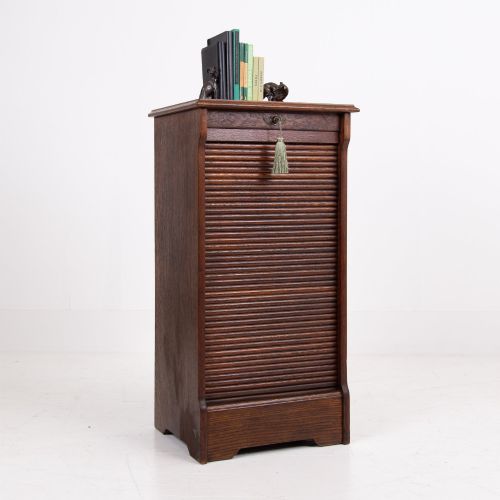
Buyers frequently encounter Edwardian examples alongside pieces featuring tambour fronts or internal sliding shelves designed specifically to keep paper uncreased. The selection spans utilitarian office-adapted storage alongside decorative parlour furniture finished in golden oak or ebonised highlights.
How they were made
Maker construction relies heavily on solid oak and wood inlay, utilising durable framing to house multiple internal shelves or sliding compartments. Brass hardware provides functional closure and handles, while occasional fabric linings protect delicate paper contents.
Joinery techniques from the period emphasise robust cabinetry, incorporating tambour slats glued to canvas backings for flexible roll-front doors. Surface finishes maintain the natural grain of the timber, sometimes enhanced through Arts and Crafts design principles.
Listings feature oak as the primary timber, complemented by brass hardware, wood inlay, and occasional fabric or canvas components.
What varies in quality
Quality differences rest upon the integrity of the timber selection and the precision of the mechanics, particularly on tambour doors that must glide smoothly along their tracks. Finer pieces demonstrate thoughtful proportions and deliberate grain matching across panels.
Maker attribution and decorative restraint separate standard utility storage from distinguished design work, such as pieces associated with specific Arts and Crafts workshops. The sophistication of internal storage fittings, including numbered slide trays, further distinguishes superior execution.
GM Elwood for JS Henry·U Phone of Leeds
The Oak Music Cabinet Glossary
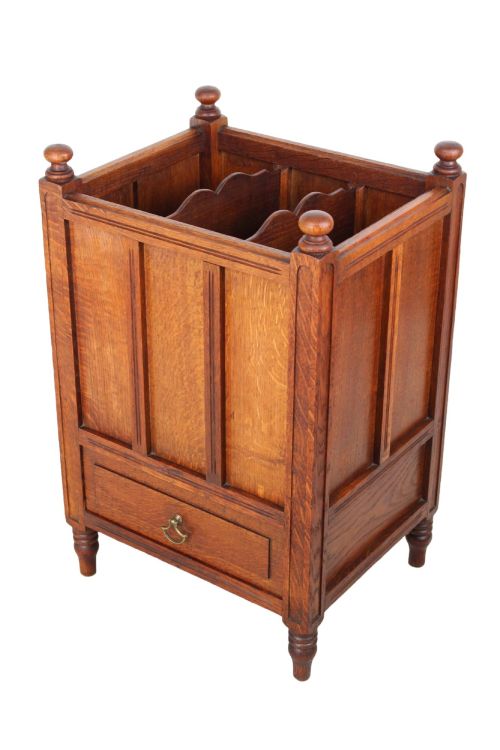
- Canterbury
- A low stand featuring upright partitions designed for holding sheet music, folios, or loose papers. These pieces often incorporate a small drawer beneath the main rack.
- Tambour
- A flexible door constructed from narrow vertical strips of wood attached to a canvas or fabric backing. This mechanism allows the door to slide smoothly around a curved track.
- Golden oak
- A warm, lighter timber tone achieved through specific finishing techniques popular during the late Victorian and Edwardian eras. It highlights the open grain characteristic of quarter-sawn oak.
- Duet stool
- A long seat designed for two piano players, frequently fitted with an internal compartment beneath the hinged lid for storing sheet music collections.
Oak Music Cabinet: Frequently Asked Questions
How were music cabinets used historically?
These cabinets stored sheet music, folios, and songbooks near the piano or parlour organ. The specialised internal shelves kept paper flat and organised for household musicians.
Today, the drawers and sliding trays serve equally well for holding modern documents, art papers, or general home organisation.
How do I identify an Edwardian piece?
Edwardian examples typically feature lighter oak tones, minimal decorative carving, and functional brass handles. They reflect the domestic interior trends prevalent around the start of the twentieth century.
Construction methods from this era prioritize practical storage solutions, often incorporating tambour fronts or multiple shallow sliding shelves.
What is a tambour door?
A tambour door consists of narrow wooden slats fixed to a flexible fabric backing. This construction lets the door slide neatly around a curved track into the body of the cabinet.
This mechanism saves space in compact rooms by eliminating the clearance needed for traditional swinging doors.
Will standard sheet music fit inside?
Most antique music cabinets feature internal dimensions designed specifically for nineteenth and early twentieth century paper sizes. Standard modern sheet music generally fits flat upon the shelves or sliding trays.
It remains sensible to check internal tray measurements if storing oversized modern folios or stiff binders.