

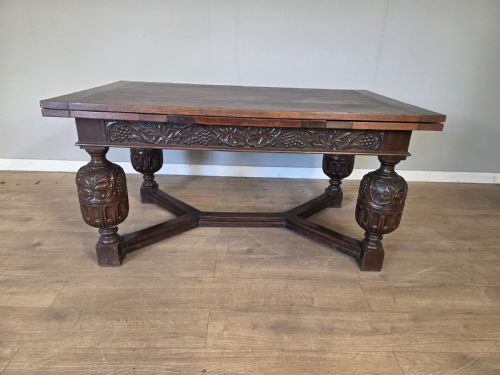
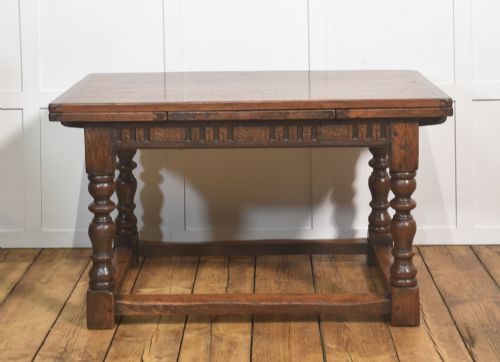
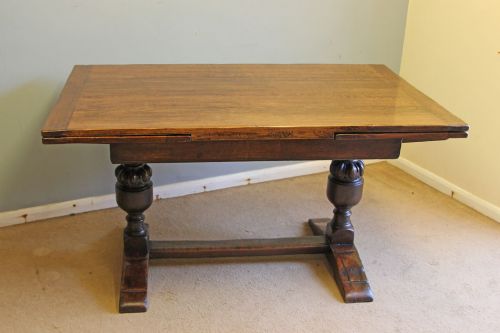
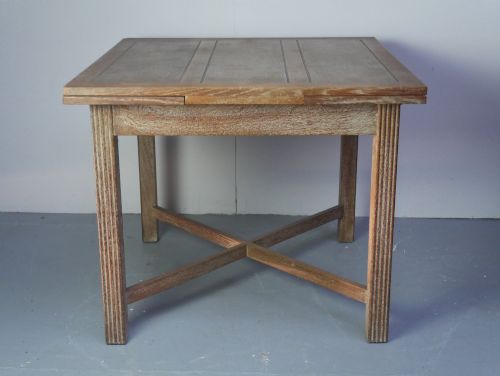
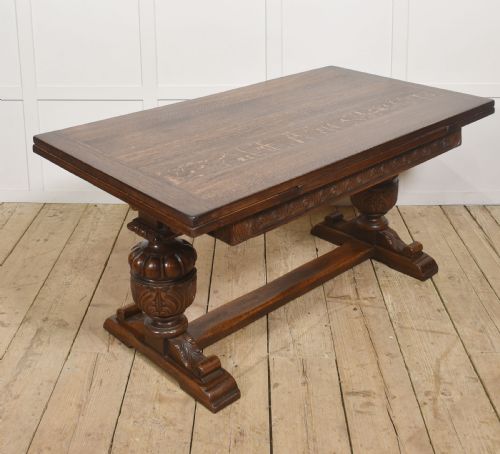


Antique Oak Extension Table
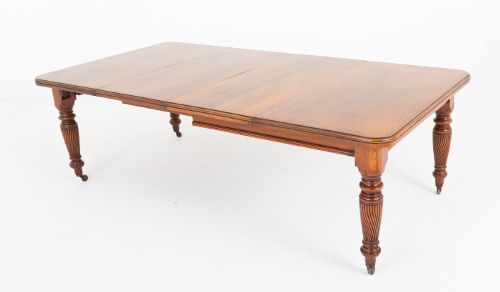
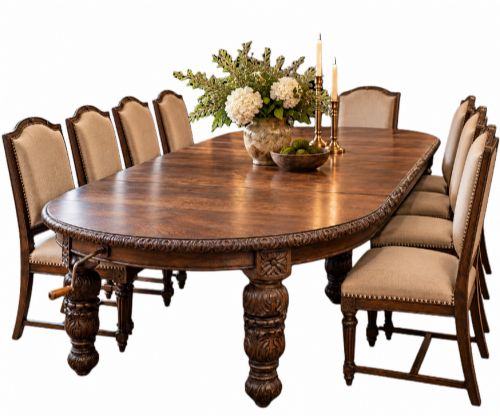
An antique oak extension table brings robust joinery and practical flexibility to the dining room, accommodating everyday meals and large gatherings alike.
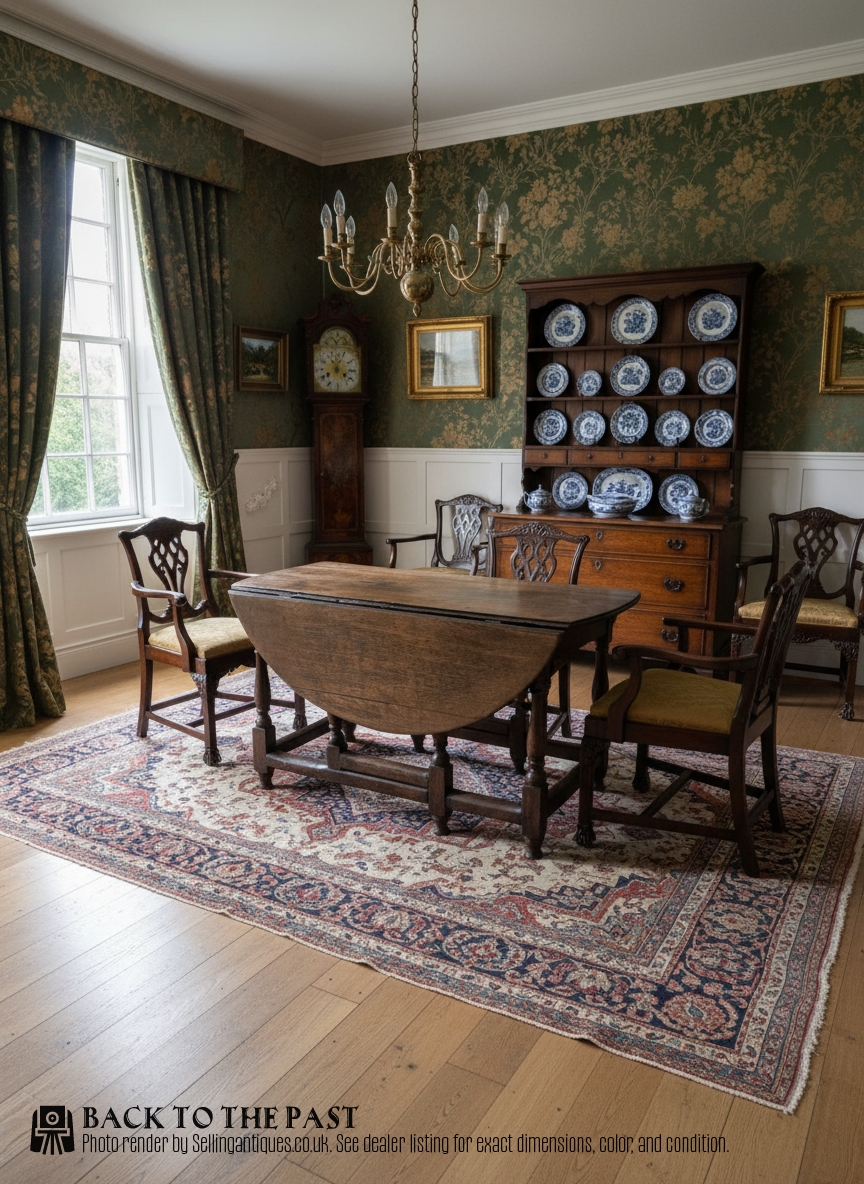
Antique Oak Extension Table
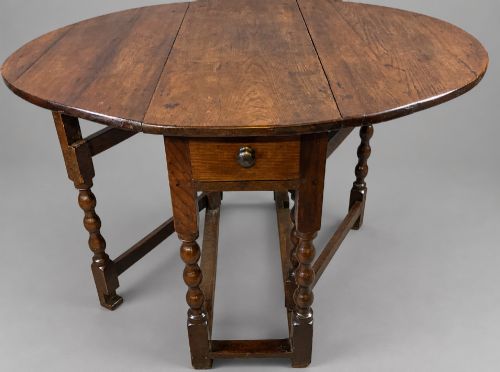
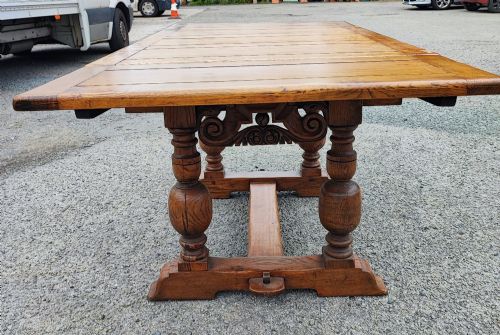
An antique oak extension table provides a sturdy dining surface that grows to seat extra guests when needed. These tables take various forms, from seventeenth-century designs to later refectory and gateleg variations.
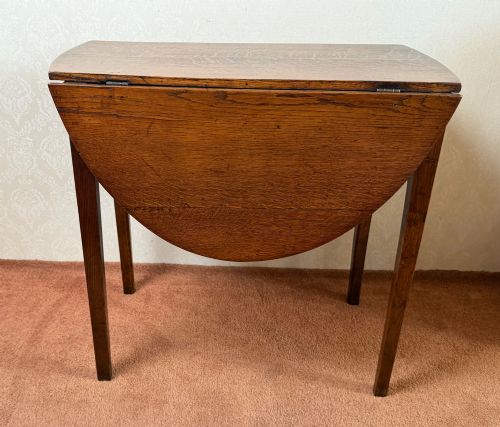
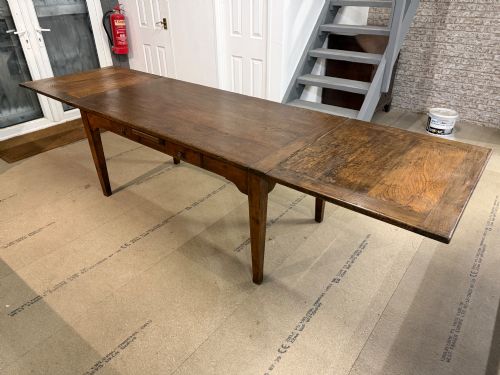
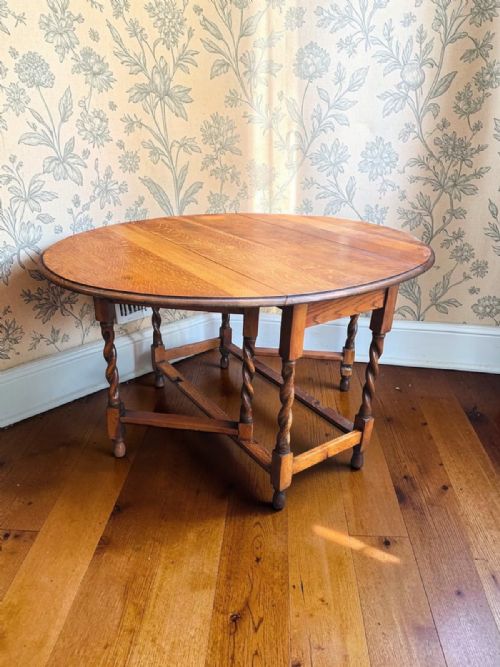
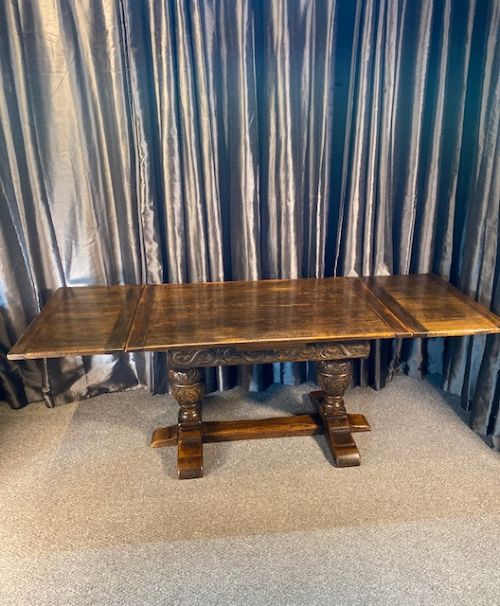
Buyers will most frequently encounter draw-leaf and drop-leaf formats across this selection. These mechanisms allow leaves to pull out from beneath the top or drop down at the sides to alter the table length.
Origin and period vary widely across the pieces gathered here, spanning seventeenth-century examples up through Edwardian and twentieth-century revivals. Solid timber construction unites them, offering a heavy and durable frame built for daily use.
Factors that distinguish quality
Quality rests in the precision of the extending mechanism and how smoothly leaves slide or drop into place. Solid timber thickness and the tightness of historical joinery dictate the overall stability of the frame during expansion.
Carving depth and the crispness of turned elements, such as barley twist legs, separate standard workshop output from finer craftsmanship. The selection of timber grain and the integrity of any inlaid or parquetry work further define the standard of the piece.
Antique Oak Extension Table Retail Price Guide 2026
Typical asking prices for oak extension table among the pieces listed under this phrase on Sellingantiques today, from the lower quarter to the upper quarter. They describe what is for sale here now, not the wider market.
The listings on this page span several centuries, featuring oak, fruitwood, and pollard oak alongside brass and iron hardware across various styles.
Heals
The Antique Oak Extension Table Glossary
- Draw-leaf table
- A table equipped with two leaves hidden beneath the main top that slide outwards to lengthen the surface. This design extends the dining space without requiring separate leaf storage.
- Gateleg table
- A table featuring hinged flaps supported by hinged legs that swing out like a gate. This construction provides a compact footprint when dropped and sturdy support when raised.
- Refectory table
- A long, narrow dining table traditionally used in communal halls. These sturdy forms often feature trestle bases or heavy four-leg frames connected by stretchers.
- Barley twist
- A type of furniture leg turned in a spiral resembling twisted barley sugar. This decorative turning style appears frequently on seventeenth-century revivals and early twentieth-century oak dining tables.
- Parquetry
- A geometric mosaic of wood pieces used for decorative surface patterns on tabletops. This technique displays different tones and grains of timber within the parquet design.
Antique Oak Extension Table: Frequently Asked Questions
How do draw-leaf tables work?
Draw-leaf tables operate through an under-top mechanism where two extension leaves slide out from beneath the main centre panel. Lifting the main top slightly allows the leaves to drop flush into place as they are pulled outward.
This clever design keeps the leaves stored inside the table frame when not in use, removing the need to find separate storage space in the dining room.
How do I care for antique oak?
Antique oak benefits from regular dusting with a dry, soft cloth and occasional treatment with appropriate beeswax to nourish the timber. Avoid placing solid oak tables near direct heat sources or in fluctuating humidity to prevent warping.
Using placemats and coasters protects the polished finish from moisture rings and heat marks while preserving the natural grain of the wood.
How can I tell the period?
Dating an oak extension table involves examining the joinery marks, hardware materials, and the style of the turned legs or carved aprons. Seventeenth-century examples often display pegged mortise and tenon joints, whereas twentieth-century revivals utilise more standardised mechanical runners.
Styles such as Jacobean revival, Victorian, and Edwardian each carry distinct decorative vocabularies that help place the piece within a specific era.