
Antique Monastery Table
An antique monastery table brings honest timber and grounded presence to a room, offering substantial surface space for modern dining.
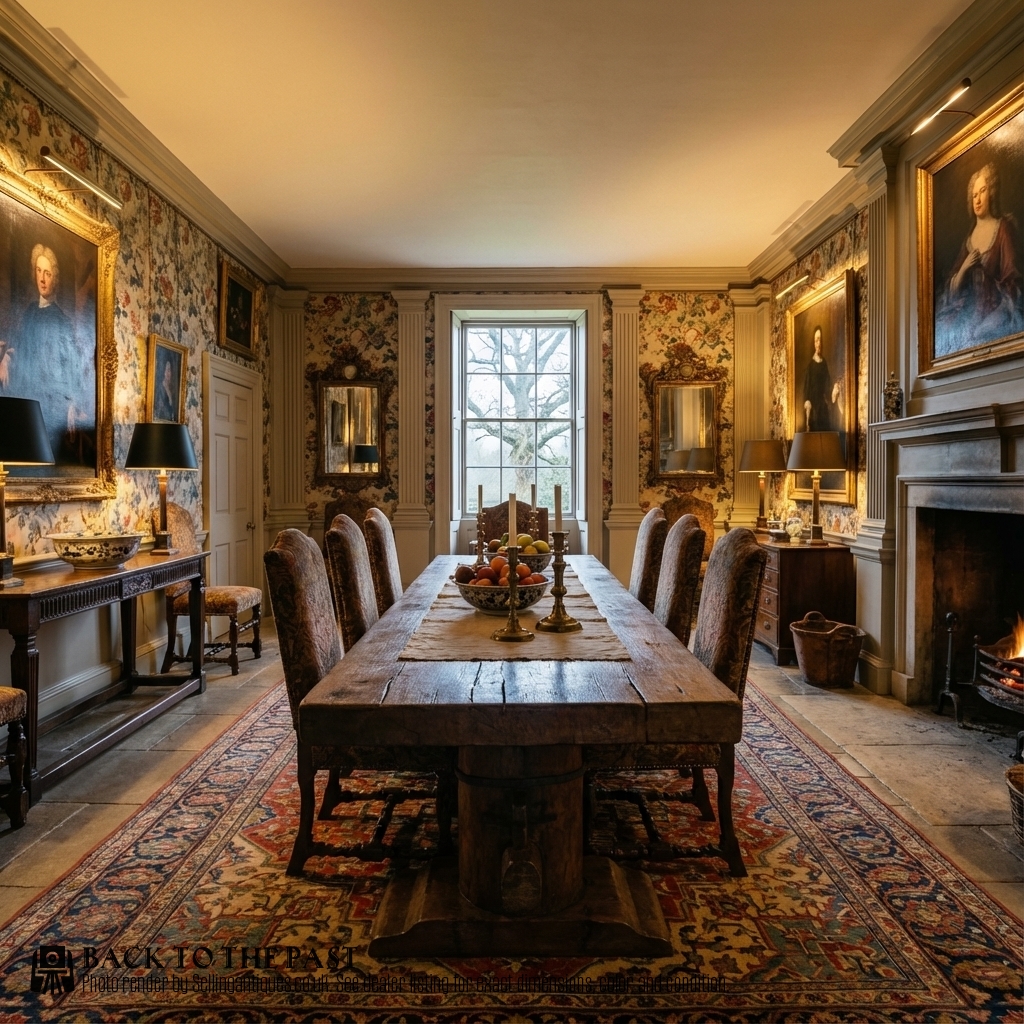
What an antique monastery table is
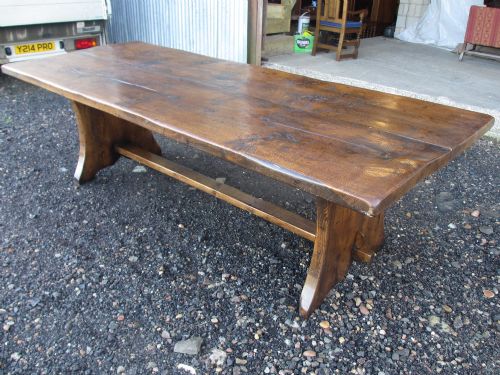
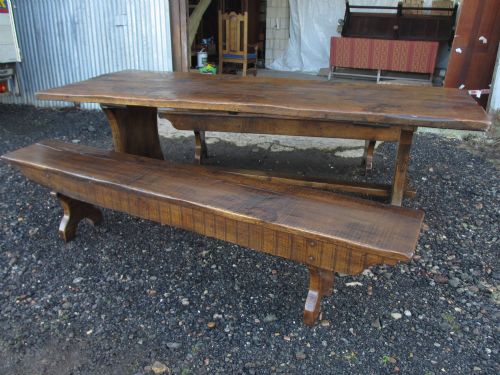
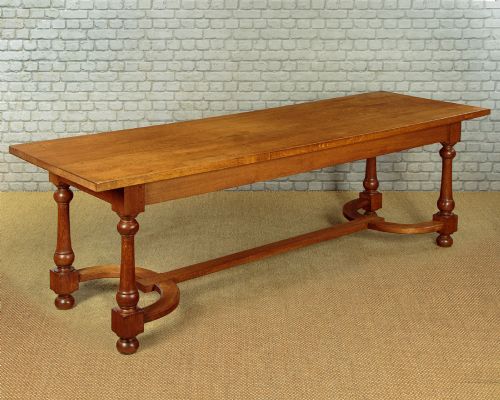
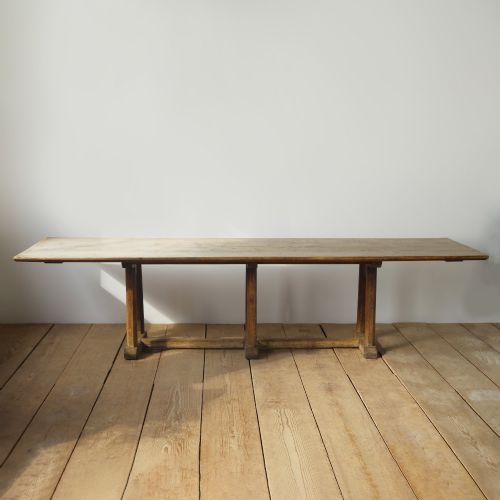
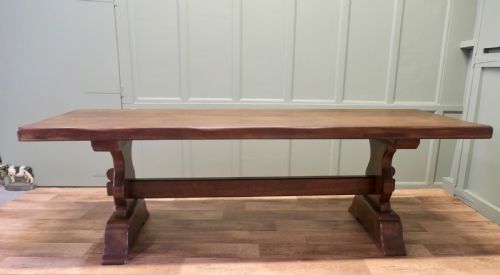
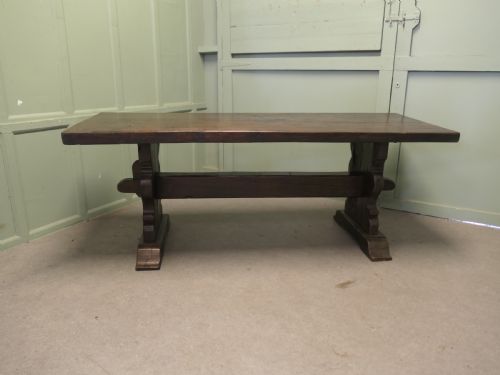
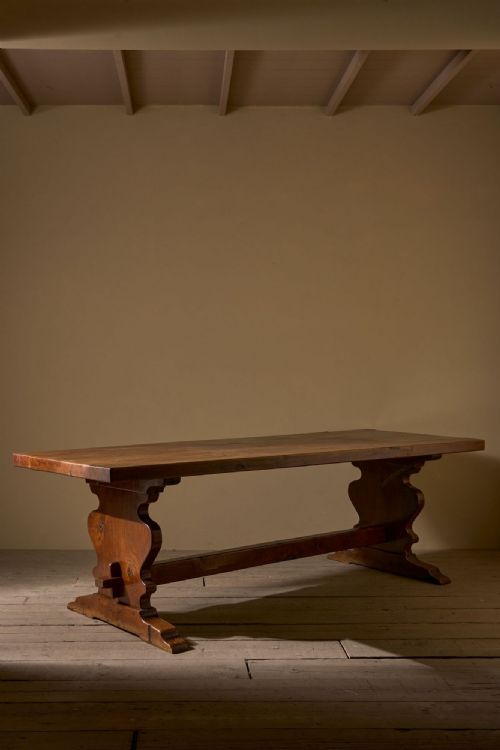
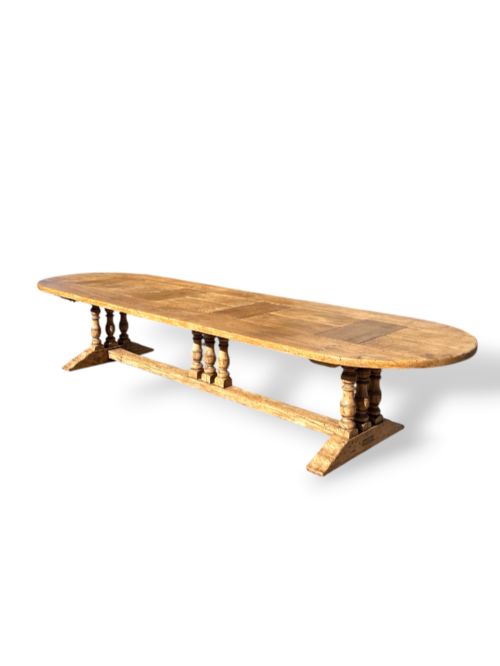
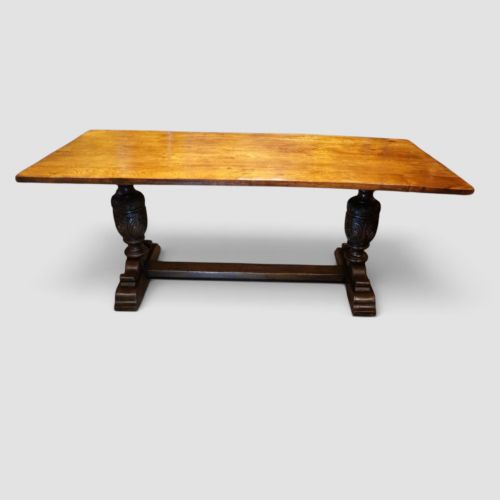
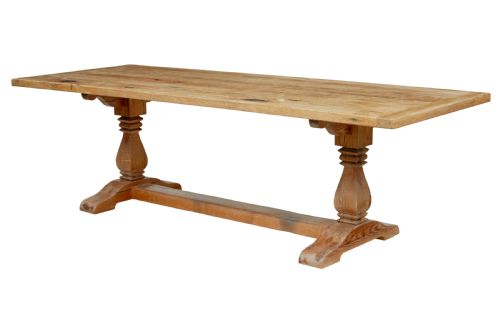
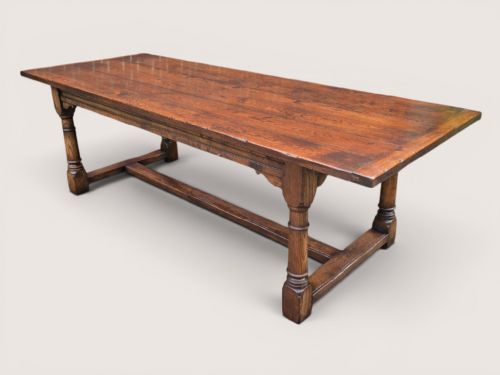
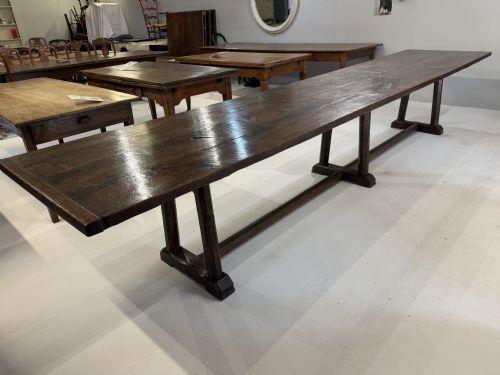
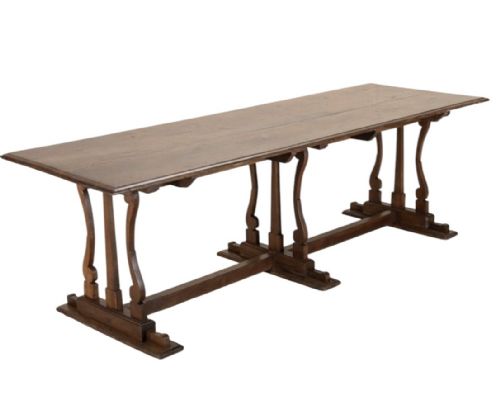
An antique monastery table is a substantial dining surface rooted in historical refectory forms. These large tables provide deep overhangs and ample legroom, designed originally for communal gatherings in large halls.
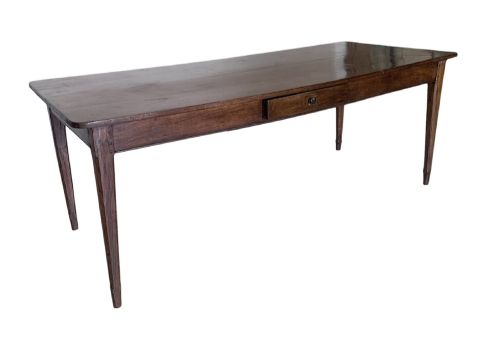
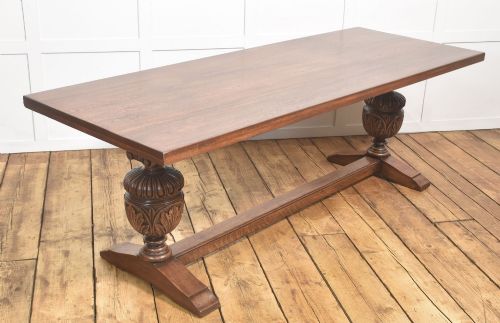
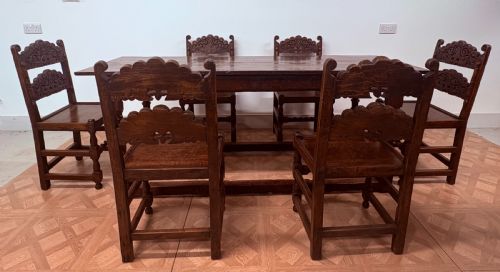
The versions met on this page span several centuries, including seventeenth century examples and nineteenth century interpretations. They arrive in French provincial styles, rustic farmhouse forms, and Jacobean or Arts and Crafts designs.
Makers built these pieces primarily for practical dining and heavy daily use. Their enduring utility makes them central anchors for contemporary kitchens and large dining spaces.
How they were made
Construction relies heavily on oak, solid oak, pine, and iron components. Workshops selected these sturdy woods to ensure the long heavy tops remained stable across generations.
Joinery methods involved thick timbers pegged together to support the long spans without modern mechanical fasteners. Iron braces and stretchers often reinforced the structural framework beneath the substantial tops.
Retail Price Guide 2026
Typical UK retail prices for monastery table, calculated from the Sellingantiques database of over a million retail prices indexed since 2003. This retail price guide relies exclusively on Sellingantiques data; no external sources or auction records are used, so the figures do not describe the wider market.
Listings feature items spanning the seventeenth century through to the nineteen thirties, constructed from oak, solid oak, pine, and iron.
What varies in quality
Quality rests in the selection of the timber and the integrity of the original construction. Thick, unyielding boards of solid oak command greater respect than softer pine alternatives or heavily restored surfaces.
Proportion and the handling of the stretcher base separate standard refectory forms from superior examples. A well-balanced frame carries the immense weight visually as well as physically.
The Antique Monastery Table Glossary
- Refectory table
- A long narrow dining table historically used in communal dining halls. This form provides the structural archetype for monastery tables.
- Stretcher
- A horizontal beam connecting the legs of a table for added stability. These often run low near the floor on heavier oak examples.
- Jacobean
- A style spanning the early seventeenth century characterised by dark oak, geometric panels, and robust turned supports.
- French provincial
- A regional style reflecting rural French craftsmanship from the eighteenth and nineteenth centuries. It often exhibits softer lines than formal English equivalents.
Frequently Asked Questions
What is a monastery table?
A monastery table is a long, heavy dining table derived from traditional refectory designs. These pieces were built for communal halls and feature robust timber construction.
Today, they serve as large dining tables that anchor a kitchen or dining room with historical character and utility.
How do I care for solid oak?
Solid oak requires minimal maintenance beyond regular dusting with a dry cloth. Avoid placing timber near direct heat sources to prevent splitting.
Natural oils or wax can be applied sparingly to nourish the grain and protect the aged surface from moisture.
How do I date an old table?
Dating relies on examining the tool marks, timber selection, and joint construction methods. Hand-cut peg joints and irregular board widths often indicate earlier centuries.
Stylistic cues such as Jacobean turnings or French provincial proportions also help narrow down the period of origin.
Can I use one for daily dining?
These tables were originally engineered for heavy daily use and communal dining. Their sturdy oak or pine construction handles regular family meals with ease.
Using placemats and coasters protects the historic surface from excessive heat and liquid marks while allowing everyday enjoyment.