

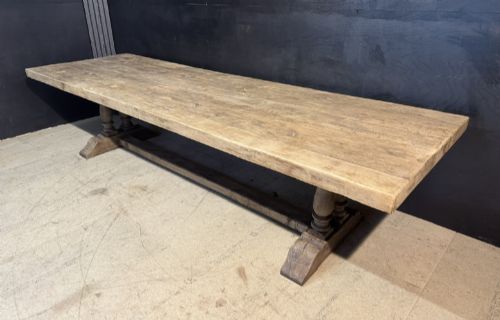
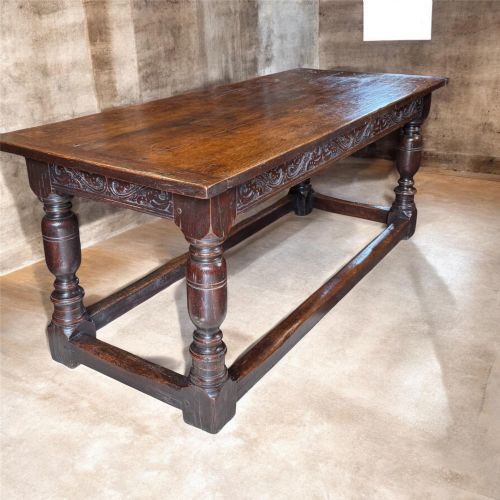
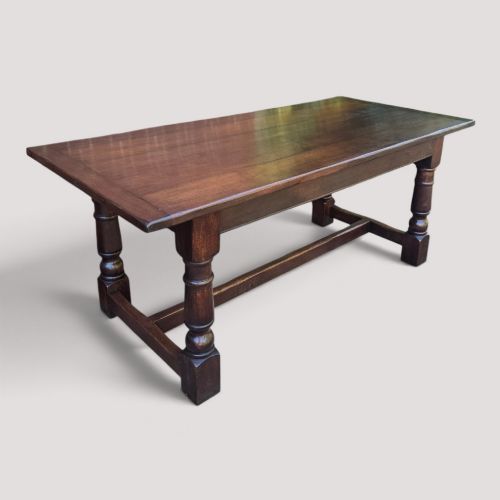
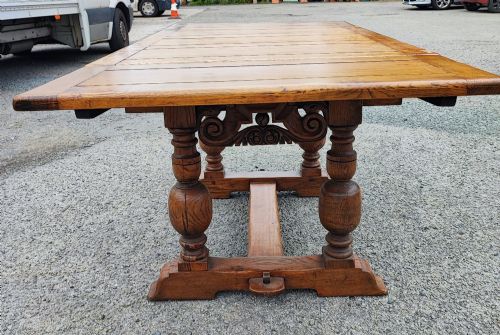
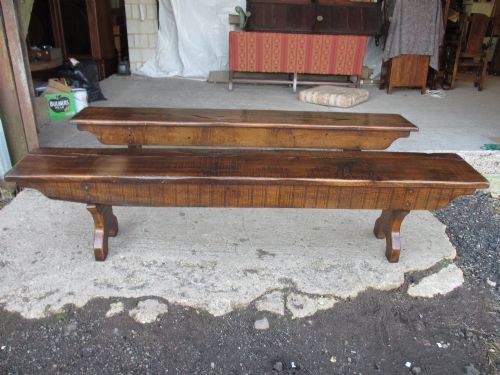
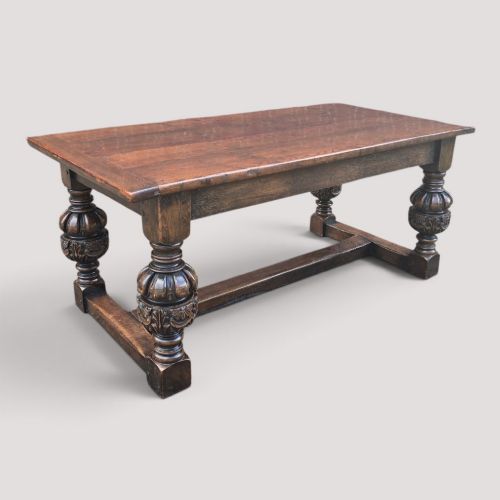
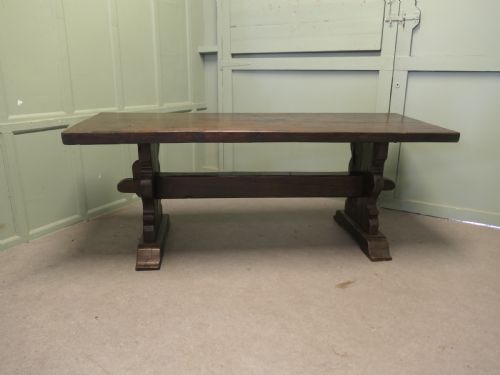
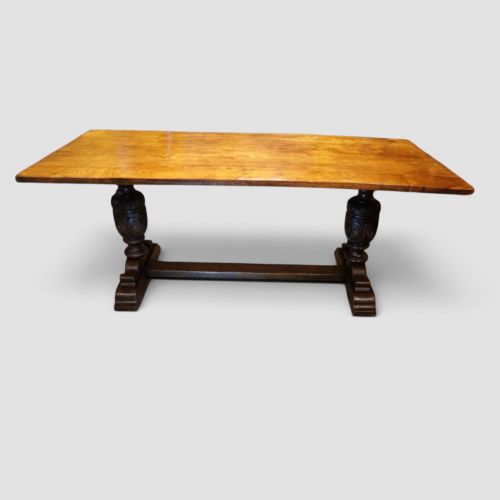
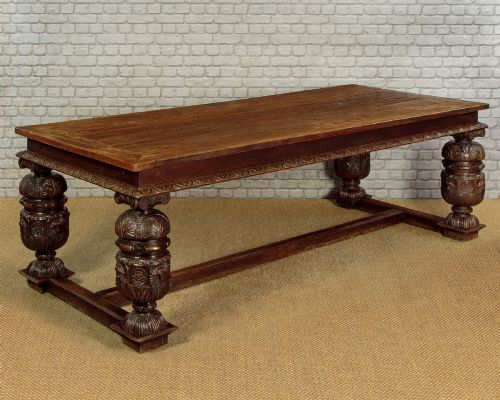
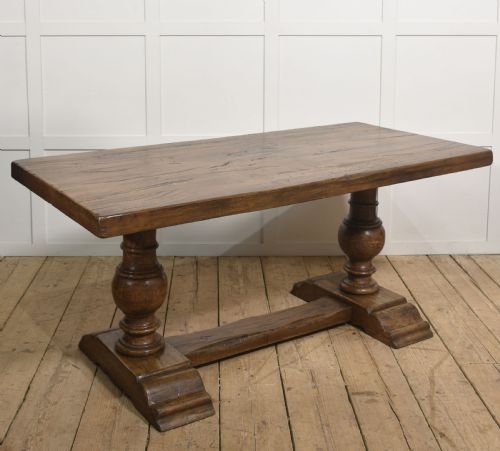


Heavy Oak Refectory Table
A heavy oak refectory table grounds a room with massive timber and centuries of dining tradition.
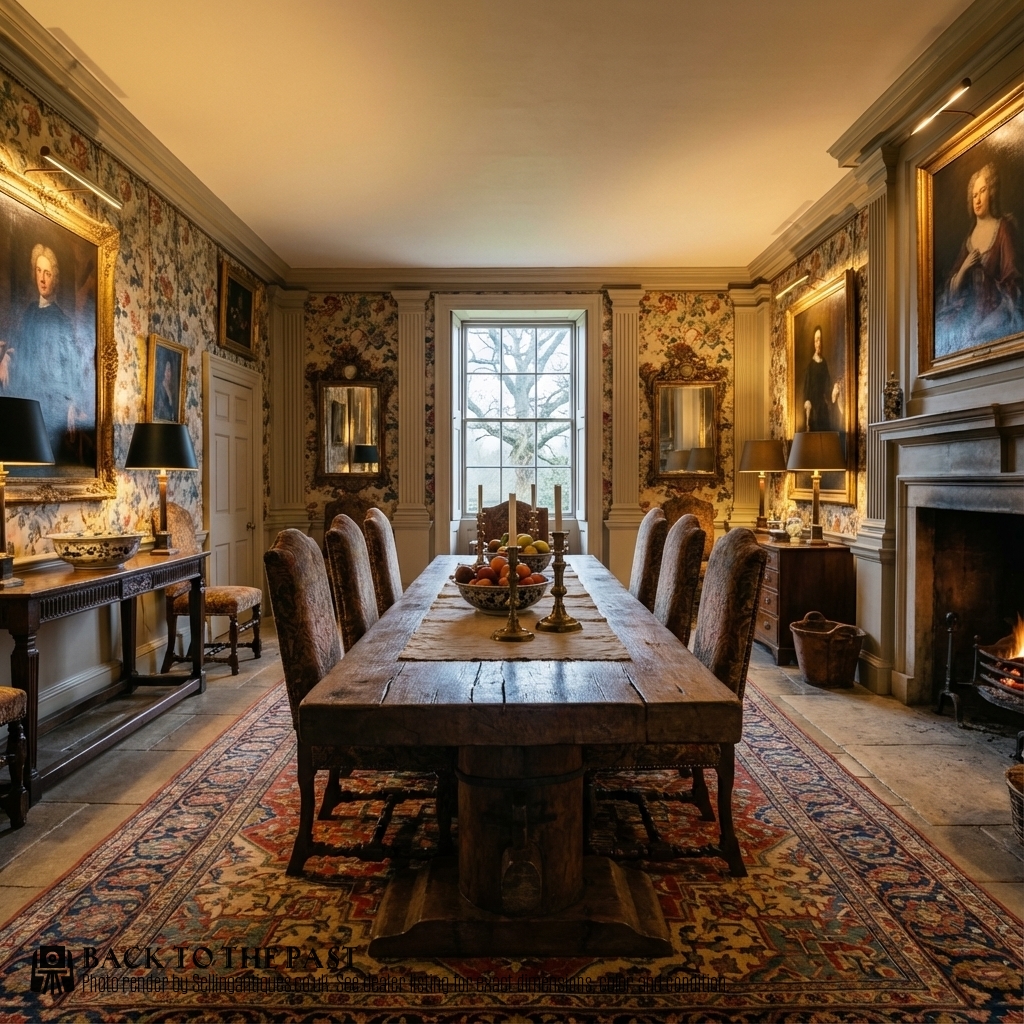
Heavy Oak Refectory Table
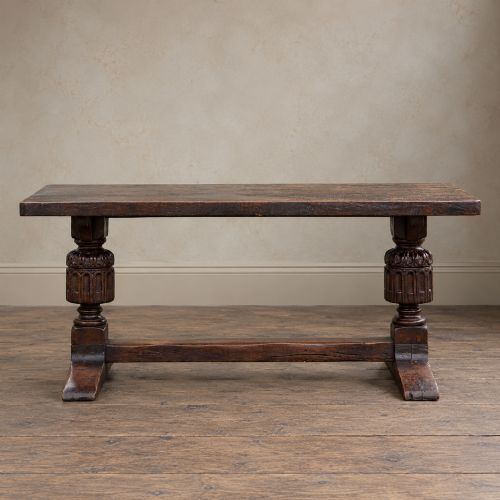
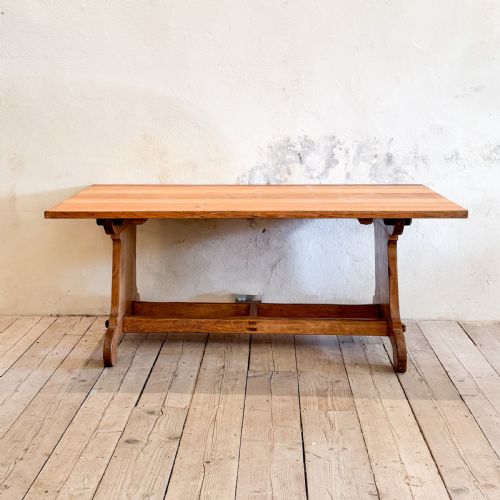
A heavy oak refectory table is a long, substantial dining piece built to serve large gatherings in halls, schools, and country homes. When you search for this phrase, you meet dining tables, library tables, and tavern pieces originating from the seventeenth century through to the early twentieth century.
The selections available here span authentic early periods as well as later revival styles. You will find seventeenth century originals featuring single plank elm tops alongside Edwardian and 1930s interpretations built in the Jacobean, Tudor, and rustic farmhouse traditions.
How they were made
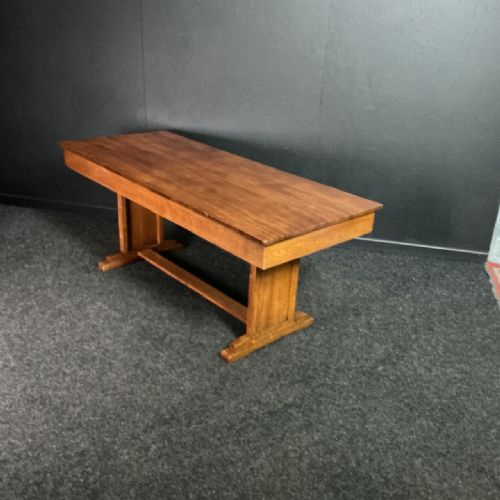
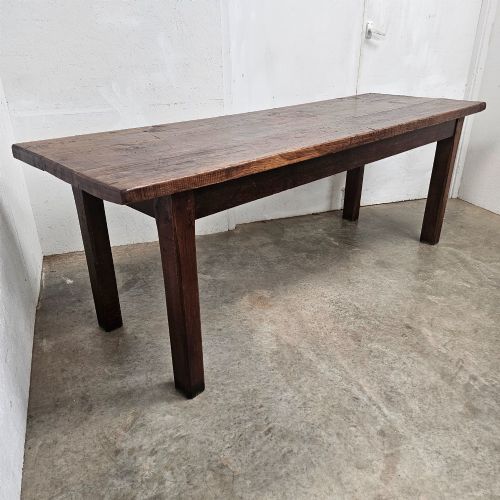
Makers built these pieces primarily from solid English and French oak, sometimes pairing the timber with elm tops, walnut details, or cast iron supports. Thick planks formed the surfaces, sustained by sturdy trestle ends, carved legs, or massive frames designed to endure heavy daily use.
Construction methods relied on traditional joinery that kept long spans rigid without modern fasteners. Workshops shaped the timber by hand, resulting in substantial tops made from single or multiple planks joined together to create an enduring surface.
Heavy Oak Refectory Table Retail Price Guide 2026
Typical asking prices for heavy oak refectory table among the pieces listed under this phrase on Sellingantiques today, from the lower quarter to the upper quarter. They describe what is for sale here now, not the wider market.
Listings feature solid oak, French oak, and elm, spanning periods from the seventeenth century through to the 1930s.
What varies in quality
Quality rests in the integrity of the timber and the honesty of the construction rather than surface decoration alone. Pieces built with thick single plank tops and substantial structural framing hold their form better than lighter alternatives.
The distinction between an everyday utility table and a finer example lies in the depth of the oak figure and the strength of the base architecture. Tables retaining their original surface patination and uncompromised trestle supports command greater appreciation.
Mouseman
The Heavy Oak Refectory Table Glossary
- Refectory table
- A long dining table traditionally used in monastic refectories and large domestic halls. These pieces evolved to seat many diners along long benches.
- Trestle base
- A support structure where the table top rests on vertical uprights connected by a central horizontal stretcher. This design maximises legroom along the length of the table.
- Draw leaf table
- A dining table featuring extension leaves stored beneath the main top that pull out to lengthen the surface. This mechanism allows the table to accommodate larger groups when needed.
- Plank top
- A table surface constructed from parallel boards joined edge to edge. Earlier examples often utilise fewer, wider planks of oak or elm.
- Jacobean Revival
- A style popular in the nineteenth and early twentieth centuries that imitates the heavy carved ornamentation and dark finishes of the early seventeenth century.
Heavy Oak Refectory Table: Frequently Asked Questions
How do I seat twelve people?
Look for long formats spanning past two hundred centimetres with trestle bases that allow chairs or benches to tuck underneath without obstruction.
Check the clearance beneath the side stretchers to ensure diners can sit comfortably along the entire length.
Are these tables solid oak?
Most pieces utilise solid English or French oak, though some examples incorporate elm for the top planks or walnut for decorative contrast.
Check the listing details to confirm whether the construction relies entirely on solid timber throughout the top and base.
How do I care for the top?
Clean the surface with a damp cloth and maintain the timber with traditional beeswax to preserve the natural grain and historic patination.
Avoid placing the table near direct heat sources or extreme humidity changes to prevent the heavy oak planks from splitting.
What is a trestle end?
A trestle end consists of sturdy vertical supports connected by feet or floor rails that hold the weight of the massive top.
This structural layout provides exceptional stability for long dining boards while leaving the sides free for benches.