

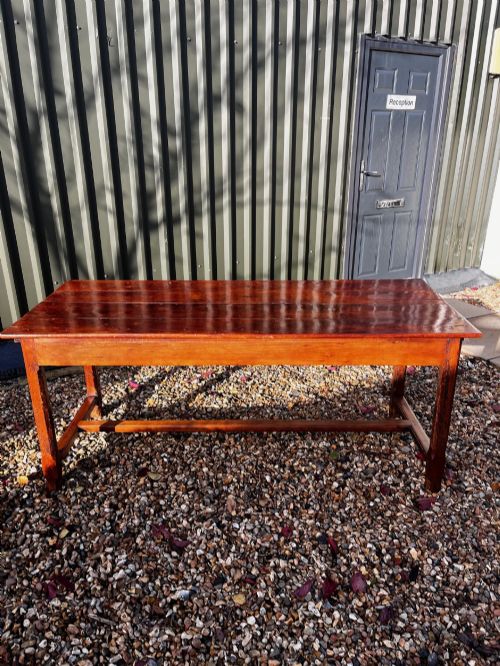
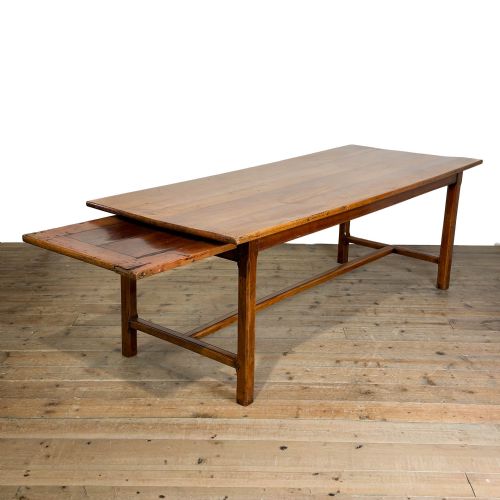
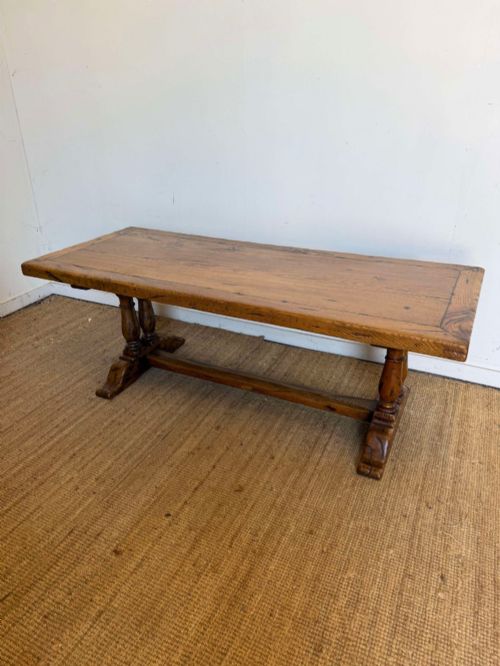
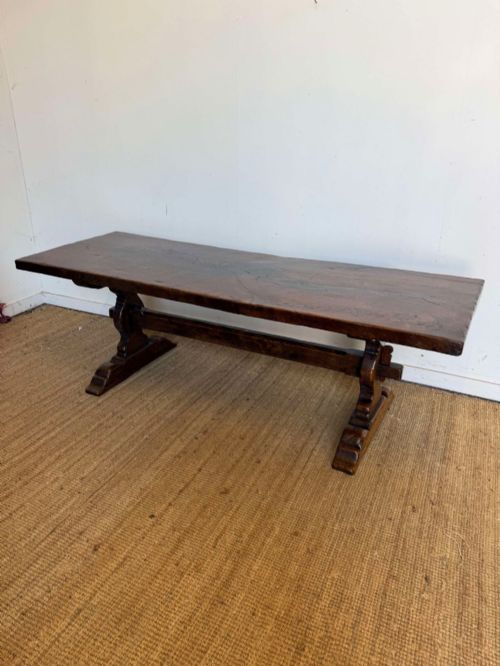
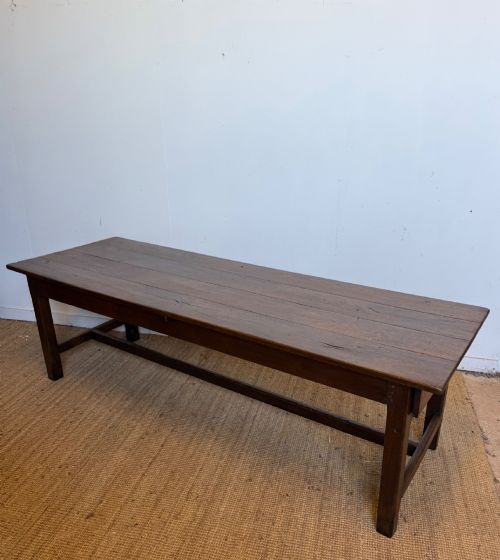
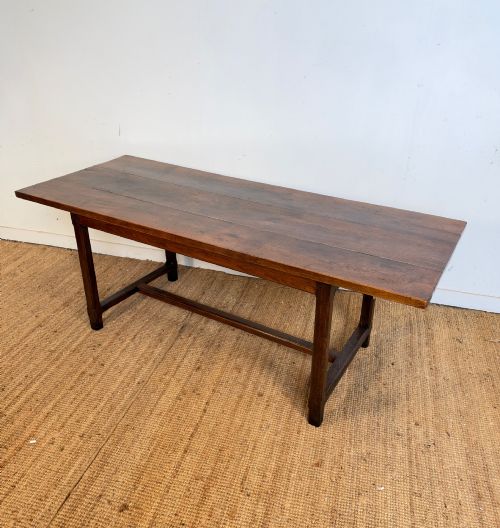
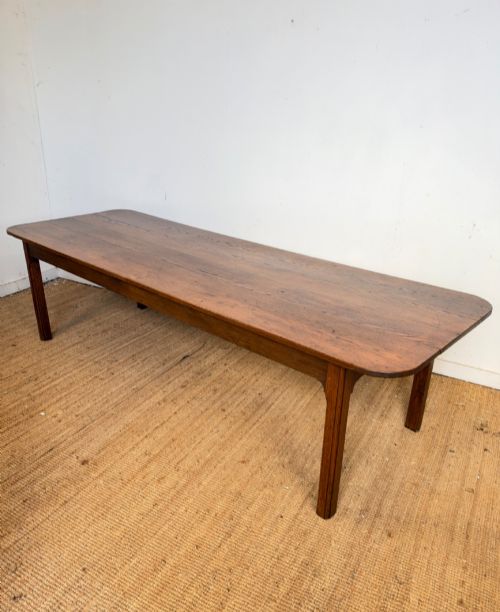
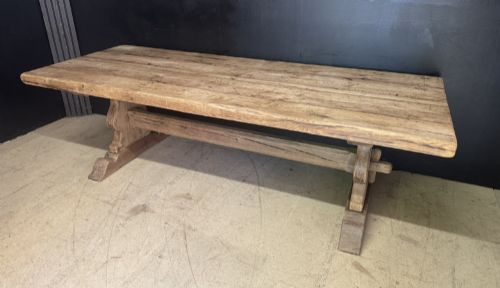
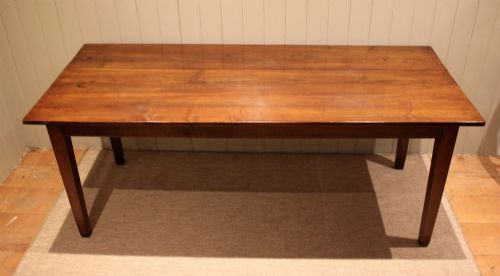
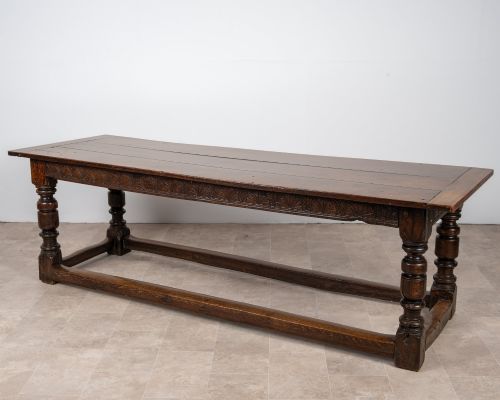

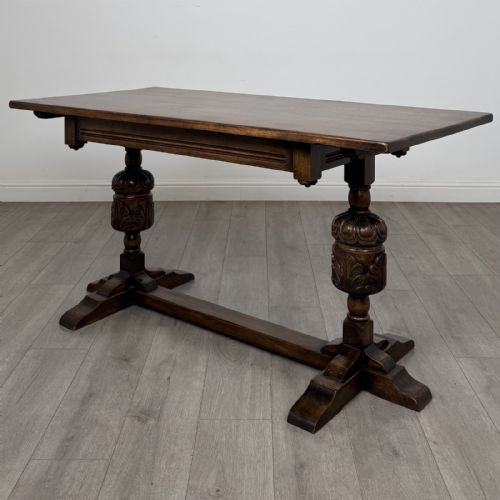
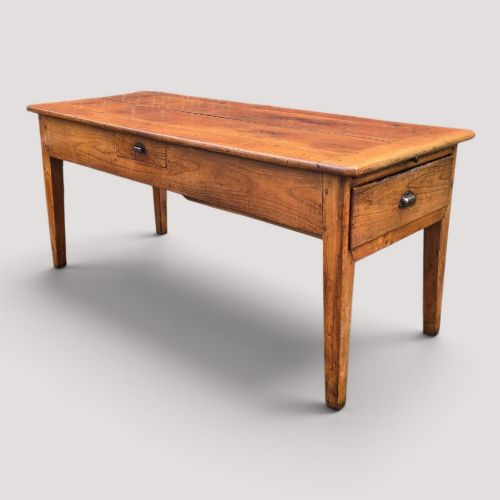
Brown Wooden Kitchen Table
A brown wooden kitchen table brings warmth and utility to the home through solid timbers and honest construction.
Brown Wooden Kitchen Table
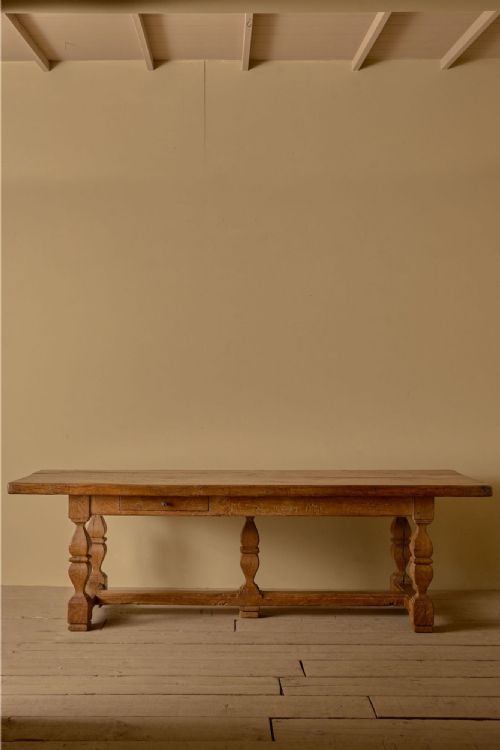
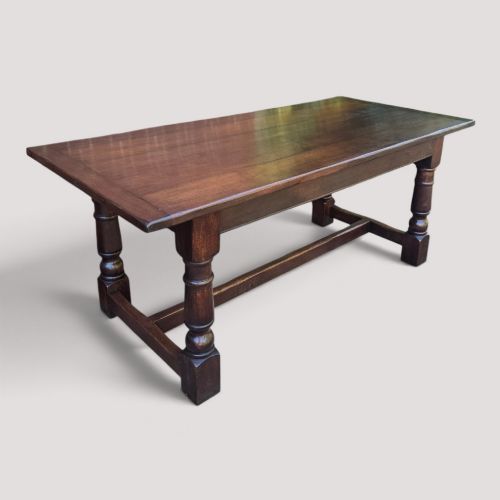
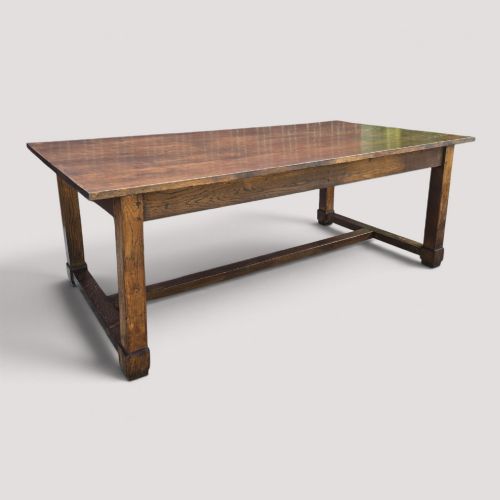
A brown wooden kitchen table is the working centre of the domestic interior, designed for daily preparation and dining. The examples found here span the eighteenth, nineteenth, and early twentieth centuries, drawing on regional traditions from England and France.
Most pieces on this page take the form of farmhouse dining tables, refectory styles, and drop-leaf pembroke designs. They appear in robust domestic woods built to withstand continuous family use over generations.
Makers utilised vernacular styles such as rustic farmhouse, French provincial, and Georgian country. These forms prioritise functional surface area and stable framing over decorative excess.
How they were made
Construction relies heavily on sturdy domestic hardwoods like oak, fruitwood, elm, and cherrywood, supplemented occasionally by pine. These timbers provide the density and load-bearing capacity required for heavy daily tasks.
Joinery methods emphasise durability, employing pegged mortise and tenon joints to secure the legs to the heavy top boards. Iron and brass fittings appear primarily on extension mechanisms, drop leaves, or supporting hardware.
Surfaces receive simple finishes that allow the natural grain of the wood to show through years of use and wear. Carpenters shaped these tables using hand tools, resulting in thick tops supported by sturdy tapered, turned, or trestle legs.
Brown Wooden Kitchen Table Retail Price Guide 2026
Typical asking prices for brown wooden kitchen table among the pieces listed under this phrase on Sellingantiques today, from the lower quarter to the upper quarter. They describe what is for sale here now, not the wider market.
Several tables retain generations of flour dust deeply embedded in their oak grain from decades of active pastry rolling.
What varies in quality
The primary distinction in quality lies in the selection of timber and the integrity of the original construction. Tables built from thick, quarter-sawn oak or mature fruitwood possess greater structural stability than those constructed from softer secondary woods.
Proportion and balance also set superior examples apart from standard utility furniture. Refined pieces exhibit harmonious leg turnings, well-integrated extension leaves, and top boards that remain flat and stable across wide spans.
The Brown Wooden Kitchen Table Glossary
- Drop-leaf table
- A table with a fixed centre section and hinged leaves on either side that fold down. This design allows the footprint to expand or contract according to space requirements.
- Draw-leaf table
- An extendable dining table featuring pull-out leaves stored beneath the main top. The leaves slide outward to increase surface area without removing the central section.
- Pembroke table
- A small rectangular table featuring hinged drop leaves on the long sides. It often includes a single drawer and slender legs.
- Dresser base
- A low cabinet or sideboard featuring drawers and cupboards beneath a sturdy work surface. These pieces served practical storage and preparation functions in domestic kitchens.
Brown Wooden Kitchen Table: Frequently Asked Questions
How do I care for an antique wooden table?
Maintain the wood by applying natural beeswax periodically to nourish the dry grain and protect against moisture. Avoid placing the table in direct sunlight or near heat sources to prevent timber splitting.
Use coasters and mats for hot dishes and liquids to protect the historic surface finish from staining. Simple dusting with a dry cloth keeps the grain clear without stripping the patina.
Can I use an antique table daily?
These tables were built specifically for heavy domestic labour and frequent dining, making them well-suited for modern family life. Their sturdy timber construction handles everyday wear with natural resilience.
Routine use only adds to the character and depth of the aged surface. Modern placement simply continues the historic purpose of the furniture.
What is the difference between refectory and farmhouse tables?
Refectory tables generally feature long, narrow proportions supported by trestle bases or heavy legs joined by low stretchers. They originated in large communal dining halls.
Farmhouse tables prioritize domestic utility with four distinct legs and often include drawers or drop leaves. They were designed for everyday kitchen preparation rather than formal dining halls.