

Antique Marble Wall Table
An antique marble wall table brings classical proportion and cool stone surface to an interior, anchored firmly against the wall.
Antique Marble Wall Table
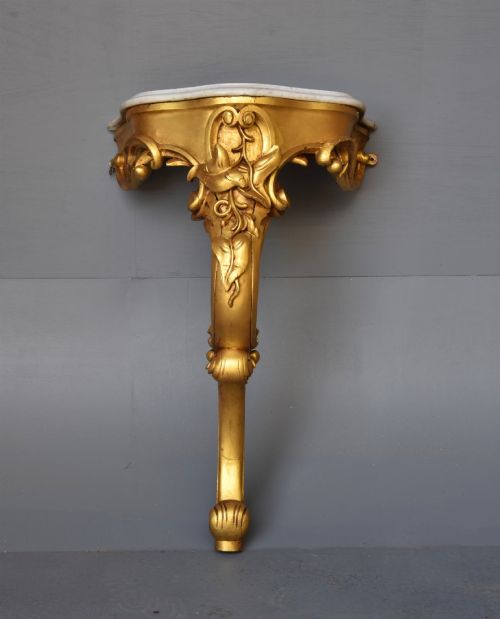
When you search for an antique marble wall table, you encounter console tables, pier tables, and wall-mounted side tables designed to stand flush against a vertical surface. Many of these pieces require structural support from the wall itself, utilising brackets or elaborate console legs rather than standing entirely on their own four feet.
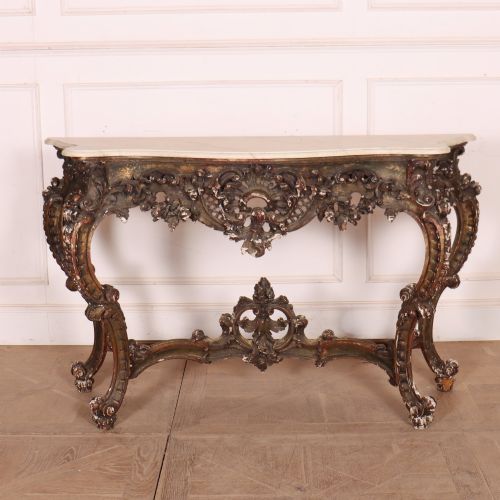
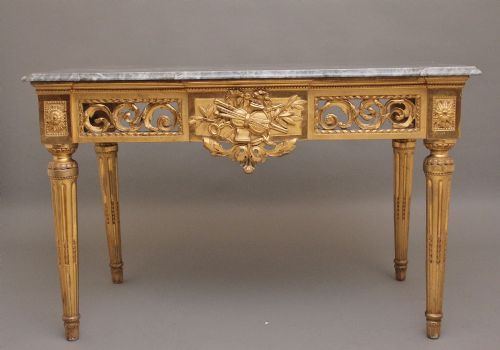
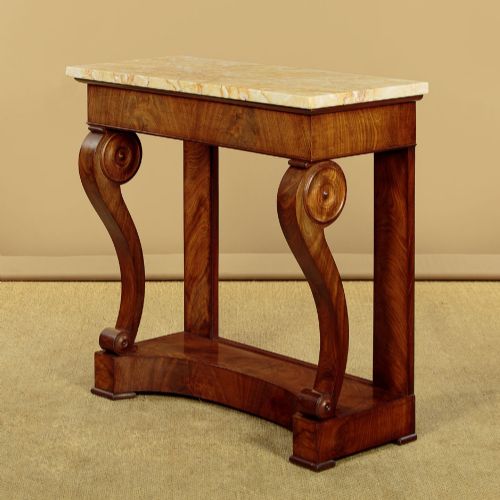
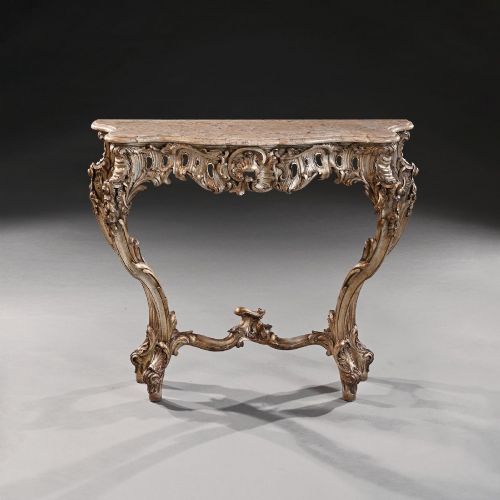
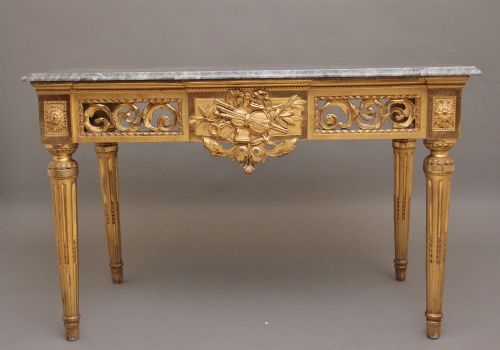
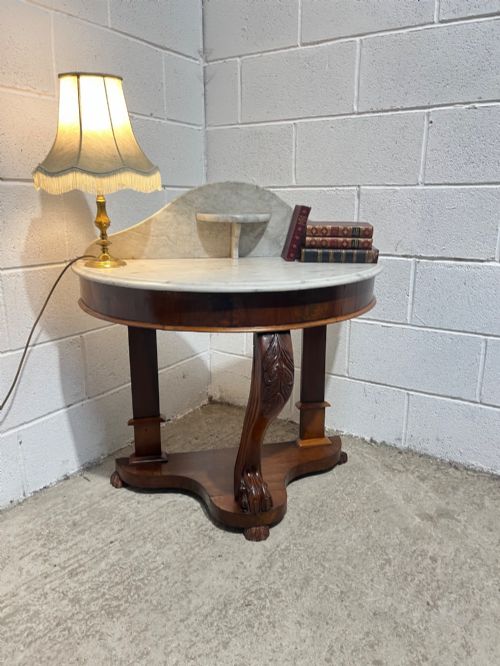
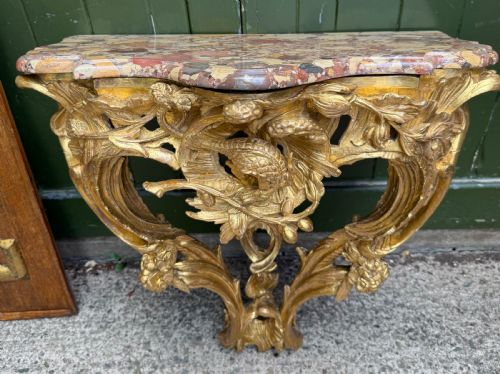
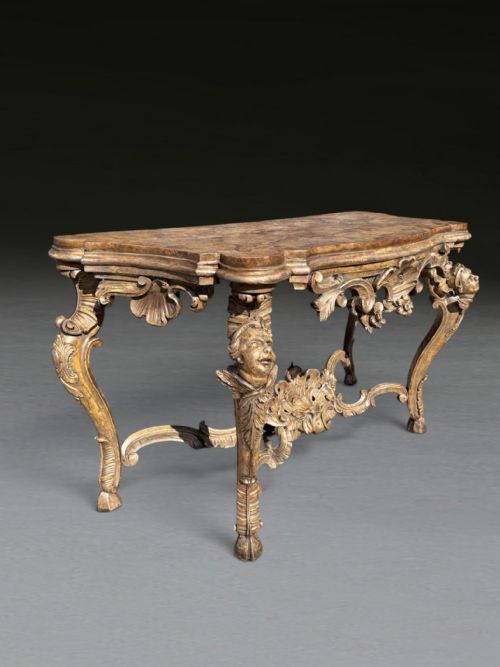
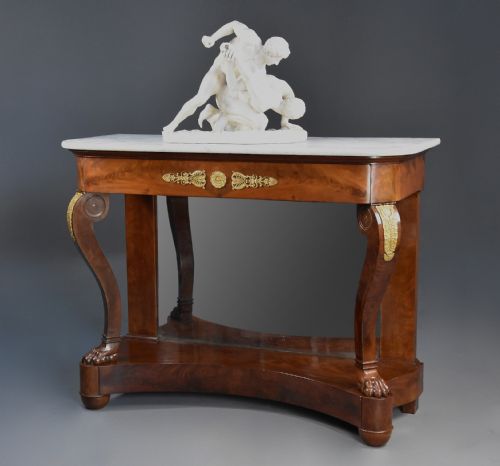
The pieces listed here date predominantly from the eighteenth and nineteenth centuries, taking forms associated with French Rococo, Italian Neoclassical, and Regency aesthetics. You will frequently find examples featuring shaped marble tops paired with carved wooden frames.
Cabinetmakers and joiners built these surfaces for grand reception rooms and hallways, serving as display spaces for decorative objects or mirrors. The surviving examples demonstrate the enduring appeal of combining heavy stone slabs with ornate wooden or iron supports.
How they were made
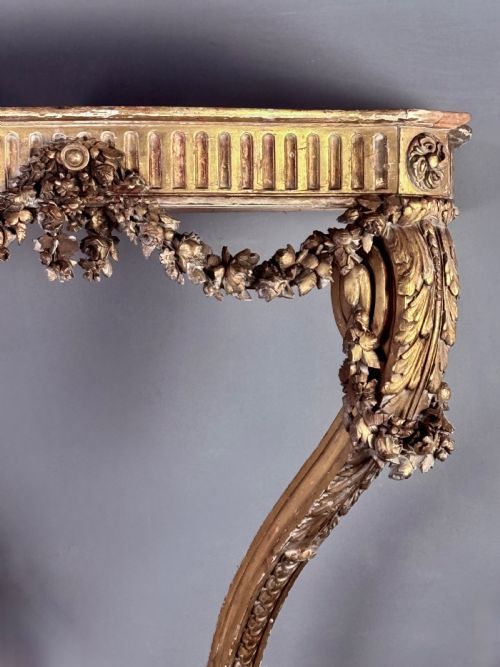
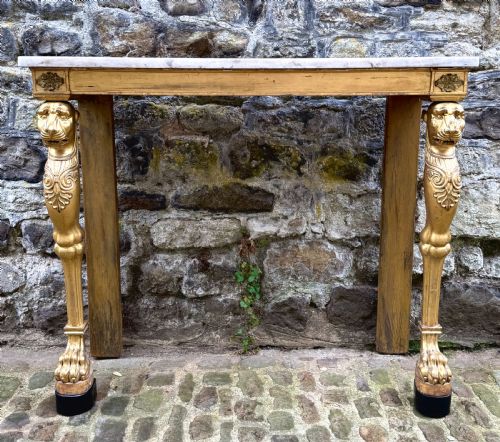
The frames rely on timber skeletons of mahogany, walnut, or pine, which makers then prepared for gilding using layers of gesso. Craftsmen applied gold leaf or silver leaf over Armenian bole to create brilliant metallic finishes on the carved wooden scrolls and foliage.
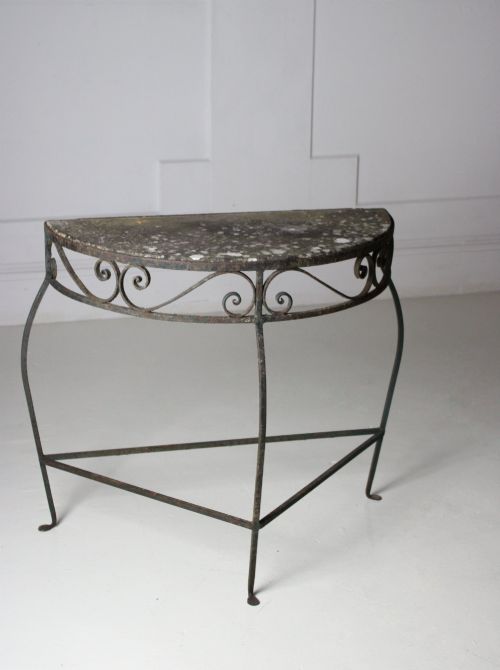
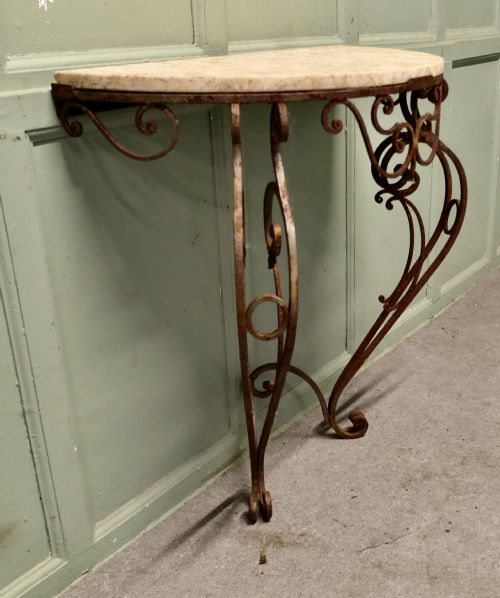
The stone tops consist of heavy slabs of marble, often featuring decorative figuring such as breccia or breche d'alep, shaped by hand to match the serpentine or rectilinear contours of the wooden base below. Wrought iron variants also appear, utilising forged metal supports shaped into structural brackets.
Listings feature periods spanning the eighteenth, nineteenth, and early twentieth centuries, constructed in mahogany, walnut, giltwood, and wrought iron.
What varies in quality
The crispness of the hand-carved ornament on the wooden or giltwood frame distinguishes superior work from simpler production, as skilled carvers achieved deep undercut relief and fluid lines in the acanthus leaves and scrollwork. The quality of the gilding itself, particularly the depth of the leaf and the preparation of the gesso ground, determines how the surface catches the light.
The selection and thickness of the marble slab also dictate the grade of the piece, with richly figured stone and precise edge profiling marking out the finest examples. Integration between the table frame and its wall fixings demonstrates the original maker's engineering, ensuring the heavy stone rests securely.
Felix Alfred Ternisien
The Antique Marble Wall Table Glossary
- Console table
- A table designed to be fixed against a wall, traditionally supported by two legs at the front and wall brackets at the rear.
- Gesso
- A plaster mixture applied to wood surfaces as a smooth base for gilding or painting.
- Giltwood
- Timber that has been coated with a thin layer of gold leaf over a prepared ground.
- Serpentine
- A furniture front or marble top that curves outward in the centre and inward at the sides, creating a wave-like contour.
- Breccia marble
- A composite stone made of broken fragments cemented together by a fine-grained matrix, creating a variegated pattern.
Antique Marble Wall Table: Frequently Asked Questions
Do antique marble wall tables need fixing to the wall?
Many of these tables were constructed specifically to be wall-mounted, relying on structural iron brackets or fixing points at the rear to remain stable. The sheer weight of the marble slab helps hold the piece down, but professional installation against a solid wall is essential for safety.
Some examples include front legs for additional support, yet the primary architectural intent remains tied to the vertical surface behind it. Checking the original fixing points reveals how the maker intended the weight to be distributed.
How do I care for antique marble tops?
Marble is a porous and acid-sensitive material that requires gentle cleaning with warm water and a soft cloth, avoiding harsh chemical cleaners or acidic substances like citrus. Using coasters and protective mats prevents staining and etching from everyday items placed on the surface.
Routine dusting keeps the stone clear of abrasive particles. Over decades, the stone develops a natural patina that reflects its age and handling.
What is the difference between a console table and a pier table?
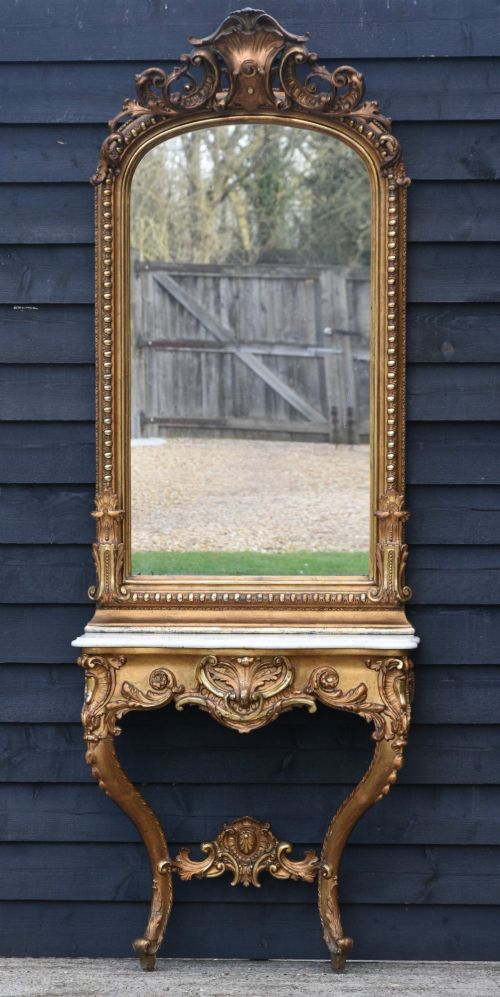
Console tables are designed to stand against a wall, frequently secured to it, and often paired with a matching wall mirror positioned directly above them. Pier tables specifically occupied the narrow wall space between two windows, known as the pier.
Both forms utilised marble tops to reflect light from windows and candles, serving similar decorative functions in formal historic interiors. The distinction often lies in the exact proportions required to fit architectural wall spaces.
How can I tell an eighteenth-century table from a nineteenth-century revival piece?
Examination of the timber framing, tool marks on the underside, and the composition of the gesso layers provides clues to a piece's age. Eighteenth-century examples often exhibit hand-sawn timber dimensions and distinct joinery techniques specific to regional workshops.
Nineteenth-century revival pieces frequently adopted earlier French and Italian styles with great technical skill, reflecting historical eclecticism. Comparing the wear patterns on the marble edge and the oxidation of the gilding helps clarify the timeline of manufacture.