


Painted Marble Hall Table
A painted marble hall table grounds an entrance with classical weight, pairing cool stone surfaces with decorative timber.
Painted Marble Hall Table
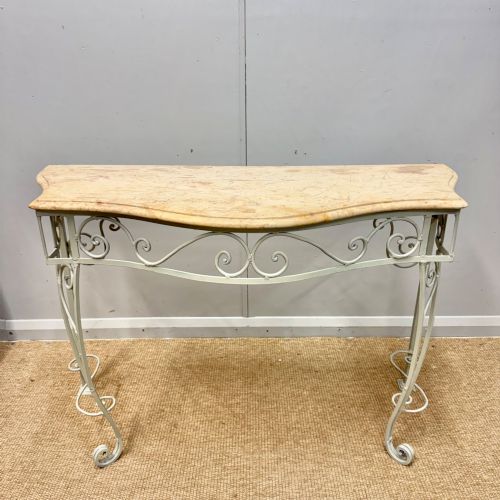
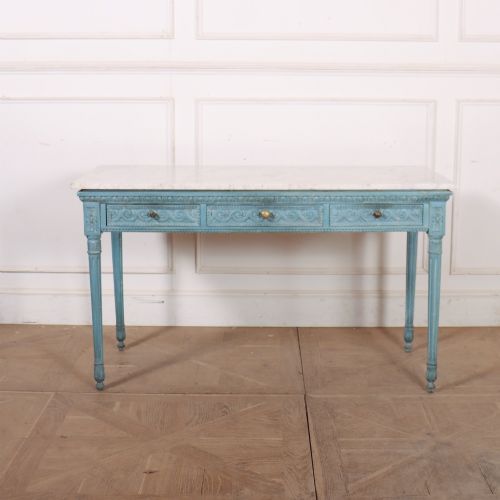
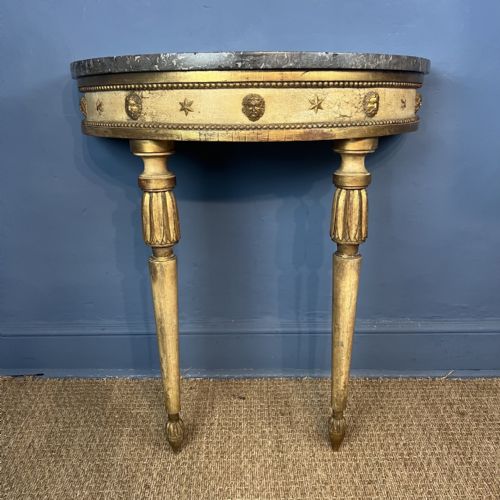
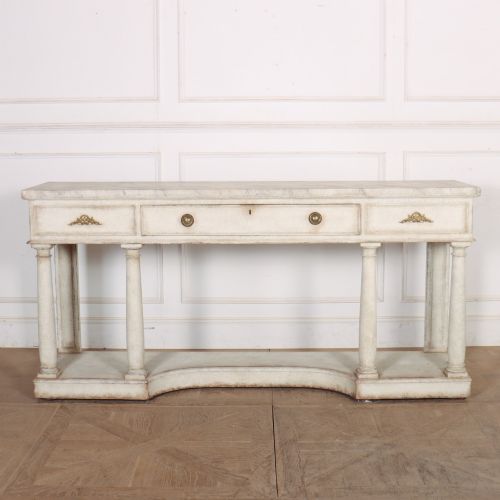
A painted marble hall table primarily manifests as a console or side table designed for narrow entrance spaces. These pieces combine a heavy stone surface with a decorated wooden or iron base, fulfilling both display and utilitarian roles in a hallway.
The selection here draws heavily from continental European workshops, featuring Italian, French, and Swedish examples alongside English pieces. Console tables and console desks dominate the forms, frequently echoing Neoclassical or Rococo design principles.
Dated examples stretch from the eighteenth century through the early twentieth century, encompassing Regency, Victorian, and Gustavian aesthetics. Buyers encounter everything from serpentine front profiles to half-moon demi-lune shapes designed to sit flush against a wall.
Materials and construction methods
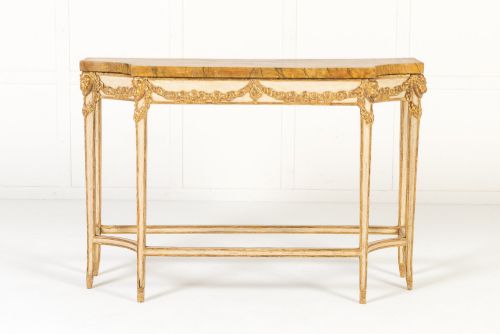
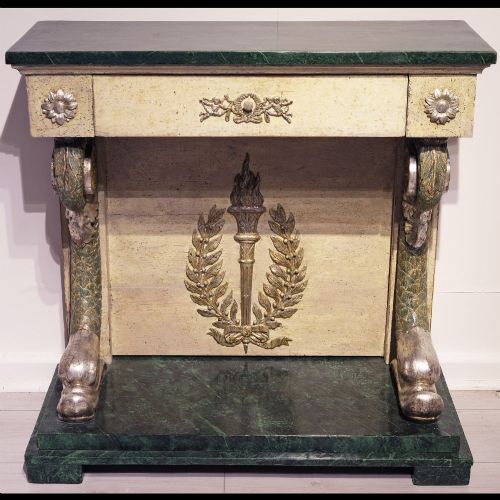
Construction relies upon solid timber, pine, or wrought iron carcasses finished with layers of paint, gesso, and occasionally gold or silver leaf. Artisans applied cream, black lacquer, or original grain finishes to the wood, often pairing these with parcel-gilt detailing.
The defining feature rests on top: slabs of marble, including specimen and rouge varieties, fitted directly to the frame. Metal elements such as wrought iron provide structural support in specific French and general nineteenth-century variants.
Listings feature marble, wrought iron, and painted wood across eighteenth and nineteenth-century Italian, French, and English forms.
Distinctions in execution and finish
Quality reveals itself in the depth and preservation of the hand-painted surfaces, gesso work, and parcel-gilt highlights. Tables retaining their original paint and grain finishes command greater appreciation than later, unsympathetic re-paintings.
The integrity and weight of the marble top, whether simple white or multi-coloured specimen stone, separates standard utility tables from grander architectural consoles. Carved wooden details, particularly on Italian and French rococo or neoclassical frames, demonstrate the sculptor's hand.
The Painted Marble Hall Table Glossary
- Console table
- A table designed to be fixed against a wall, traditionally supported on two front legs and secured with wall brackets. These narrow pieces suit entrance halls and reception rooms.
- Demi-lune
- A half-moon shape used for tabletops and cabinet fronts. This profile allows the table to sit compactly against a hallway wall.
- Gesso
- A plaster-like mixture applied to wood as a base for paint and gilding. It permits crisp, moulded decorative relief work before finishing.
- Parcel-gilt
- Partially gilded woodwork or metalwork where gold leaf accents specific carved details against a painted background. This technique highlights architectural moulding.
- Serpentine
- A gently undulating tabletop or front edge shaped in a double curve resembling a snake's movement. It introduces fluid movement to rigid timber.
Painted Marble Hall Table: Frequently Asked Questions
Where should I place a console table?
These tables find their natural home in entrance halls, corridors, and reception rooms where floor space is at a premium. Their shallow depth allows them to sit against walls without obstructing pathways.
Surface space accommodates mirrors, lamps, and decorative objects, making the entrance both functional and welcoming for visitors entering the home.
How do I clean a marble top?
Marble requires gentle maintenance using soft cloths and pH-neutral cleaners to avoid dulling the polished surface. Acidic substances like citrus or wine can etch the stone if left unattended.
Protecting the surface from heavy or damp objects preserves the stone figure and natural colour variations over decades of daily domestic use.
What is a Gustavian table?
Gustavian design originates from late eighteenth-century Sweden, inspired by French neoclassical styles introduced by King Gustav III. These pieces favour lighter, restrained palettes of grey, cream, and soft white.
Such tables balance neoclassical architectural symmetry with Scandinavian simplicity, making them versatile additions to both period and modern interiors.
Are these tables freestanding?
Traditional console tables often require fixing to the wall for absolute stability due to their narrow footprint and heavy stone tops. Some variations, such as centre tables or gueridons, stand independently.
Checking the base construction reveals whether a piece needs wall attachment or supports its own weight comfortably on four legs.