
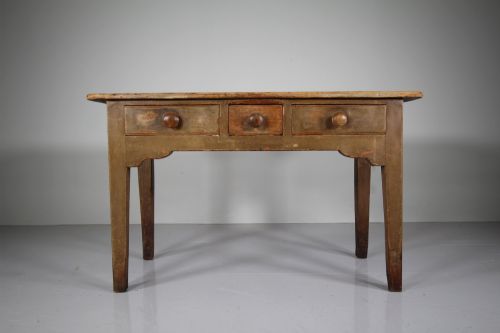
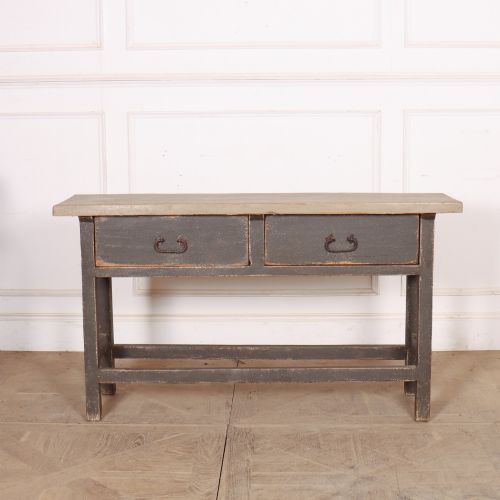
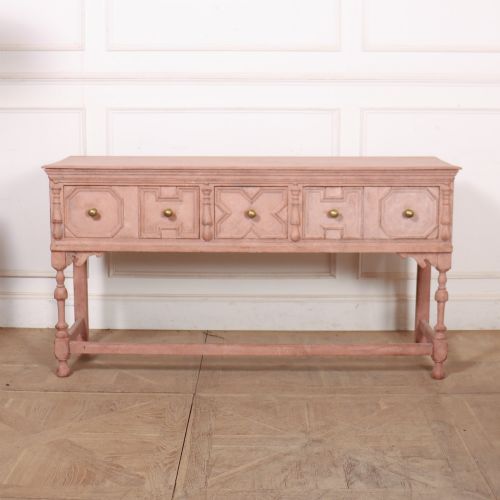
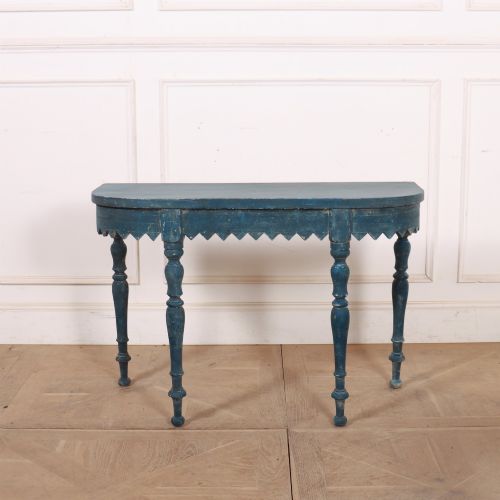


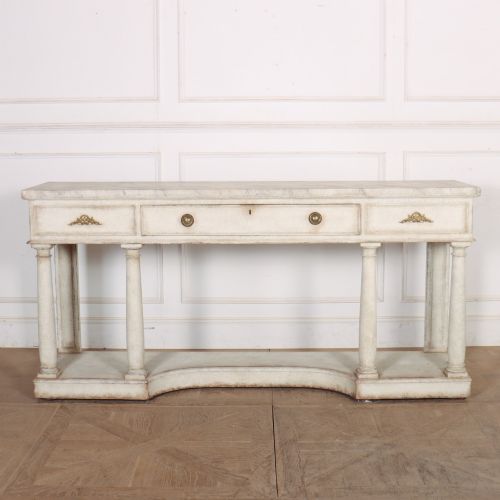


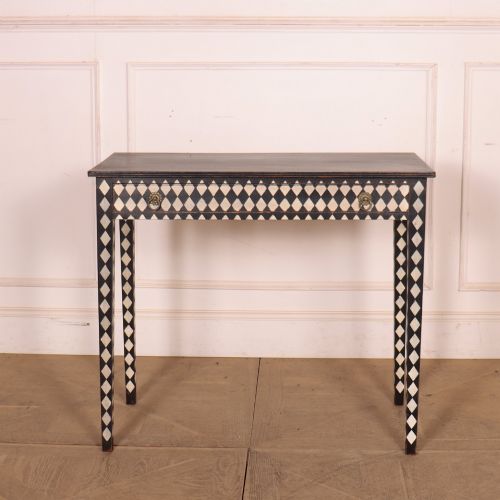
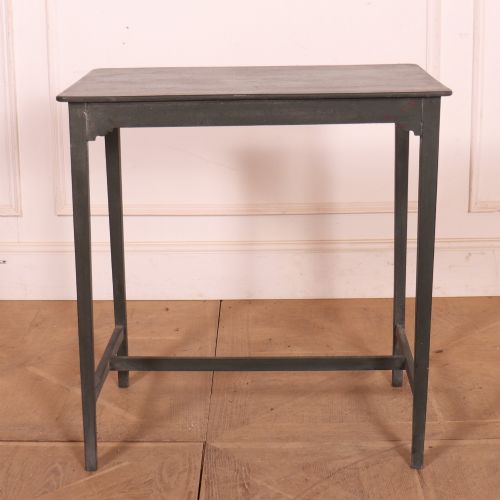


English Painted Hall Table
An english painted hall table brings useful surface space and muted historic character to an entryway.
English Painted Hall Table
When searching for an english painted hall table, buyers encounter a variety of forms including console tables, side tables, serving tables, and dresser bases. These items originate from periods spanning the seventeenth, eighteenth, and nineteenth centuries.
The most common formats on this page are compact lamp tables and side tables fashioned in pine and oak, alongside larger serving tables and demi-lune console tables. Pieces often display traditional regional styles such as English country and rustic farmhouse.
Dated examples stretch from the Georgian era through to the early twentieth century, reflecting domestic utility across multiple generations of British craftsmanship.
Materials and Construction
Makers utilised sturdy domestic timbers such as pine and oak as the foundational structure for these tables, occasionally incorporating brass hardware or marble tops.
Surfaces received decorative coats of paint, with several examples retaining original pigment or ochre finishes applied over wood.
Current listings feature items executed in pine, oak, and marble, spanning from the seventeenth century to the twentieth century.
Assessing Quality and Preservation
Quality rests upon the preservation of the original painted surface and the structural integrity of the timber beneath, rather than mere decorative flourish.
Tables retaining their authentic early paint layers without modern overpainting command greater interest among collectors of period furniture.
The English Painted Hall Table Glossary
- Demi-lune
- A half-moon shape used for console tables designed to sit flat against a wall. This profile allows the table to occupy minimal depth in narrow corridors.
- Dresser base
- A sturdy lower sideboard featuring cupboards and drawers, frequently utilised for storage in hallways and dining spaces. These items often showcase utilitarian oak or pine construction.
- Low boy
- A small leg table with drawers, typically originating from the eighteenth century. It serves well as a compact surface in restricted spaces.
- Potboard
- An open lower shelf built into the base of a dresser for storing kitchen utensils or pottery. It provides stable horizontal storage close to the floor.
English Painted Hall Table: Frequently Asked Questions
Where should I place a painted hall table?
These tables fit well in narrow entryways, corridors, or transitional spaces where surface area is needed without blocking passage.
Their shallow depths and compact footprints allow them to stand against walls while holding everyday items like keys and post.
How do I care for original painted surfaces?
Dust the wood gently with a dry, soft cloth and avoid chemical cleaners that might strip historic pigment.
Keep the furniture away from direct heat sources and strong sunlight to prevent the underlying paint from drying out or cracking further.
What is the difference between a console table and a side table?
Console tables often feature demi-lune or bowfront shapes intended specifically to stand flush against a wall. Side tables are generally freestanding items with four symmetrical legs designed for general placement.
Both serve similar functional roles in domestic interiors but offer different visual profiles.
How can I tell an 18th century table from a 19th century one?
Examination of construction joints, timber selection, and tool marks helps reveal the age of a piece. Earlier tables often display hand- cut joinery and dense native woods.
Paint analysis also assists, as Georgian and earlier examples carry distinct layers of historic pigment compared to later Victorian reproductions.