


Painted Grey Pier Table
These painted grey pier table pieces are console tables designed to anchor a wall beneath a mirror, offering architectural presence and surface space.
Painted Grey Pier Table
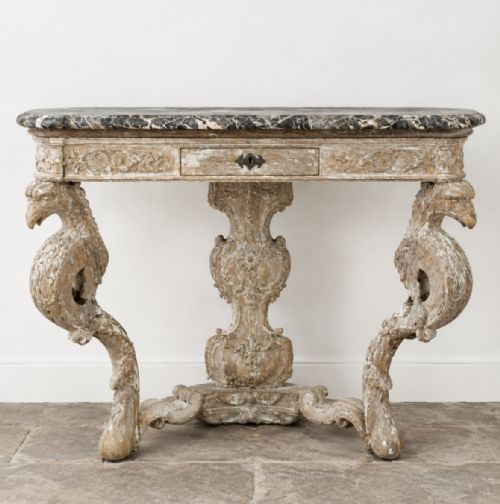
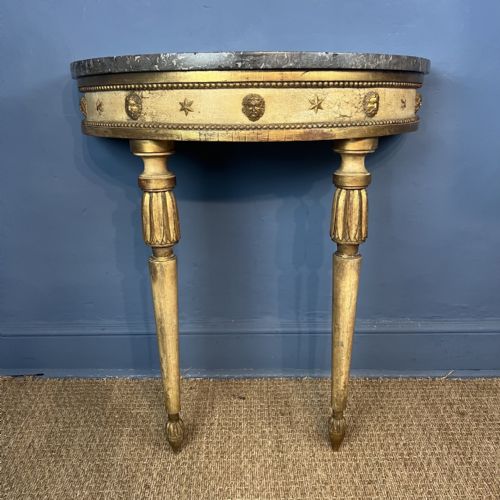
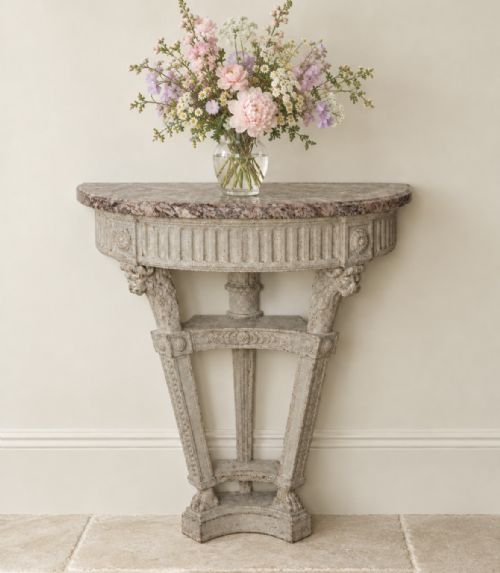
A painted grey pier table is primarily represented here by console tables spanning the eighteenth century through to the early twentieth century. You will encounter forms originating from English, French, and Italian workshops, often reflecting neoclassical or rococo tastes.
The selection includes examples finished with cream paint and parcel gilt, alongside pieces paired with trumeau style mirrors. These items serve a traditional function against a wall, frequently topped with marble.
How they were made
Construction relies primarily on wood, shaped through carving and finished with layers of paint and gesso. Gilt details are frequently applied to highlight carved wooden ornament.
Many examples are fitted with heavy marble tops, supported by carved wooden frames that incorporate brass elements in certain instances.
Listings span multiple centuries, ranging from eighteenth century examples to pieces made around nineteen thirty.
What varies in quality
The refinement of the carved wood and the application of gesso and paint dictate the visual distinction between standard and superior pieces. Finer examples display crisper detail in the carving and more sophisticated handling of painted finishes and parcel gilt.
The integration of materials, such as the fit of a marble top within a carved wooden base, marks the difference in execution across various nineteenth and eighteenth century workshops.
The Painted Grey Pier Table Glossary
- Pier table
- A table designed to stand against a wall, specifically beneath a pier glass or mirror. It forms an integral part of classical interior decoration.
- Console table
- A table supported by wall brackets or console legs, functioning as a side or wall table. These pieces often feature marble tops and elaborate carved woodwork.
- Gesso
- A plaster-like mixture applied to wood as a base for paint and gilding. It provides a smooth surface for detailed carving work.
- Parcel gilt
- The practice of gilding only specific portions of an object, such as carved details on a painted wooden frame. This technique creates contrast against the painted ground.
- Trumeau
- A decorative wall mirror or panel placed between windows or above a console table. It often incorporates painted or carved scenes within its wooden frame.
Painted Grey Pier Table: Frequently Asked Questions
Where should I place a console table?
These tables are traditionally positioned against a flat wall, frequently beneath a mirror or artwork where floor space is limited. Their shallow depth allows them to sit comfortably in hallways, drawing rooms, or reception areas without obstructing movement.
Because many feature finished backs or are designed specifically for wall placement, they anchor a room visually. Pairing them with a matching mirror creates a traditional focal point in an interior scheme.
How do I identify an eighteenth century piece?
Dating relies on observing the construction techniques, the nature of the carved wood, and the wear patterns on the painted and gesso surfaces. Eighteenth century examples often exhibit distinct regional stylistic traits, such as Italian or French neoclassical motifs.
Examining the underside and joints provides further clues regarding the age of the wooden frame. Hand-carved elements and period specific proportions separate these earlier works from later nineteenth and twentieth century interpretations.
Are marble tops original to these tables?
Marble tops are a common feature across many console tables originating from French and Italian workshops. They provide a durable and weighty surface that contrasts with the carved and painted wooden base below.
When evaluating a piece, the fit and thickness of the marble relative to the wooden frame help determine its period integrity. Original stones typically show age-appropriate wear and patination consistent with the base.