


White Marble Console
White marble console tables bring a crisp surface and structural grace to a room, uniting utility with classical presence.
White Marble Console
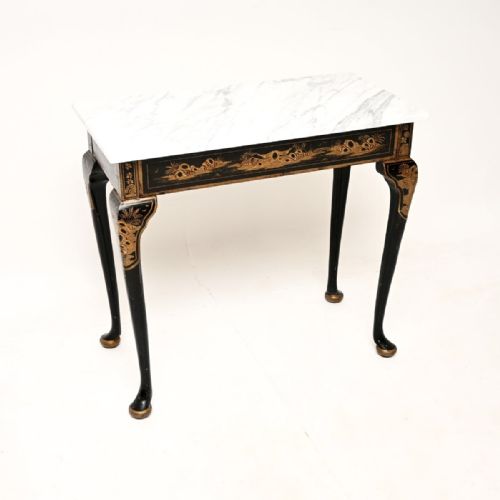
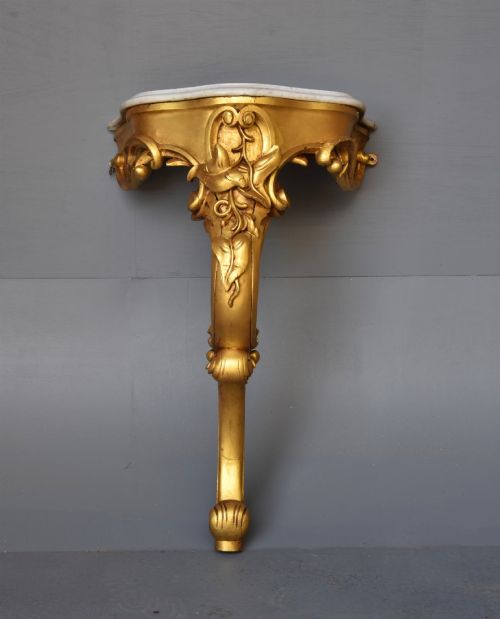
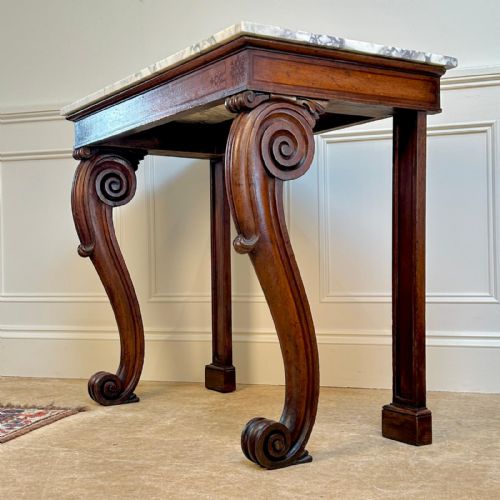
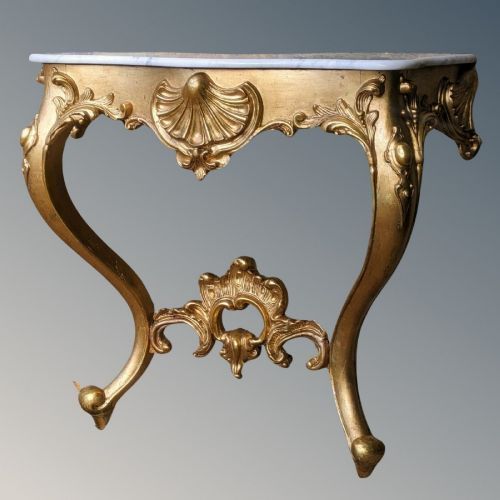
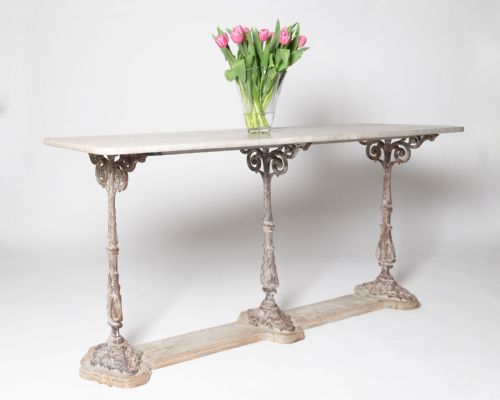
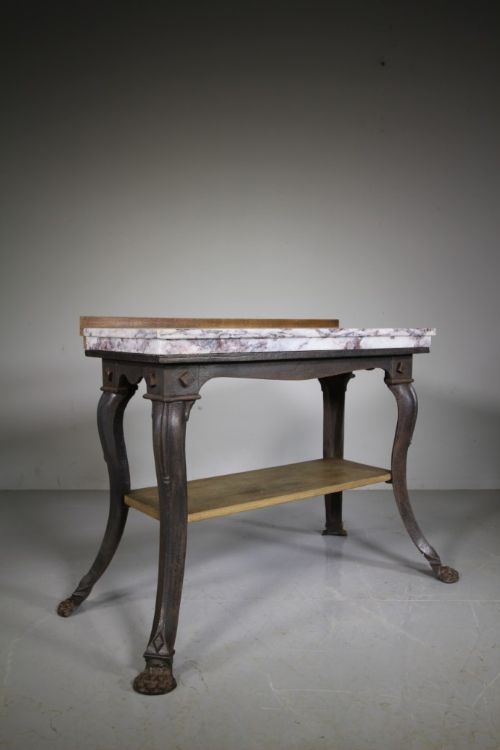
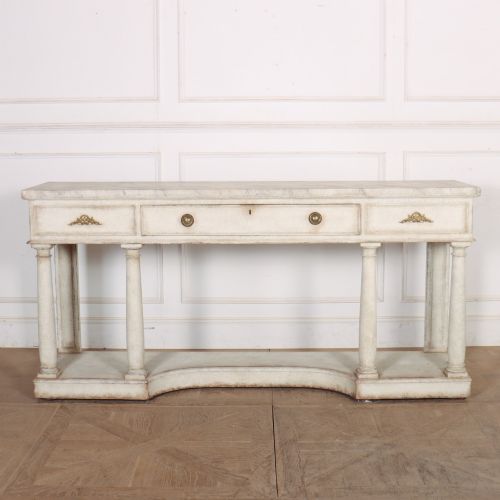
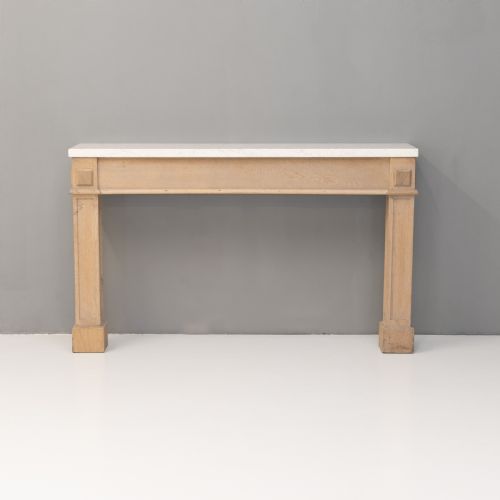
A white marble console table pairs a solid stone slab with a timber, iron, or giltwood base designed to stand against a wall. The pieces listed under this phrase span the eighteenth, nineteenth, and early twentieth centuries, drawing heavily from Victorian, Regency, and French Rococo traditions.
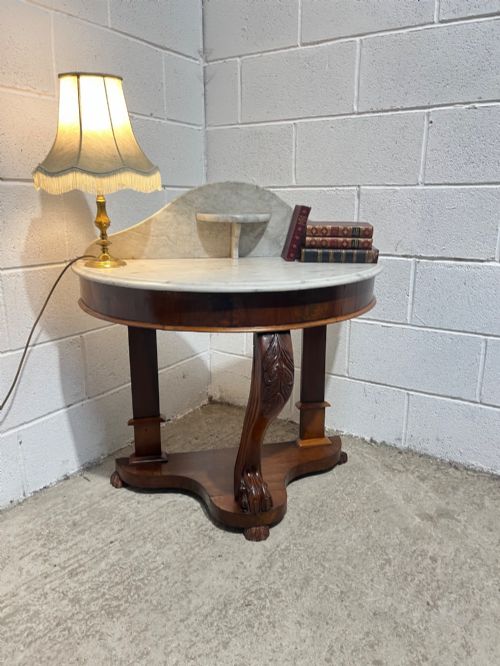
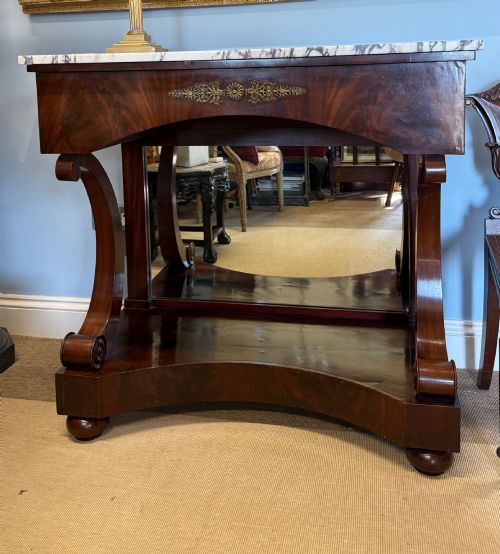
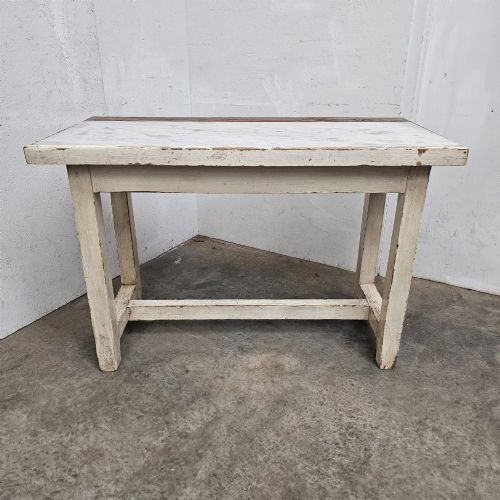
Most examples you encounter here are nineteenth-century creations, encompassing grand giltwood hall tables, mahogany side pieces, and practical French prep or bistro surfaces. Alongside dedicated console and pier tables, the selection includes washstands and garden tables sharing the defining white marble top.
Materials and construction
Carpenters and cabinetmakers worked with timber frames of mahogany, oak, walnut, and satinbirch, often applying giltwood, gesso, or paint to the exterior surfaces. Iron and brass also appear in the structural bases, particularly on French bistro and garden variations.
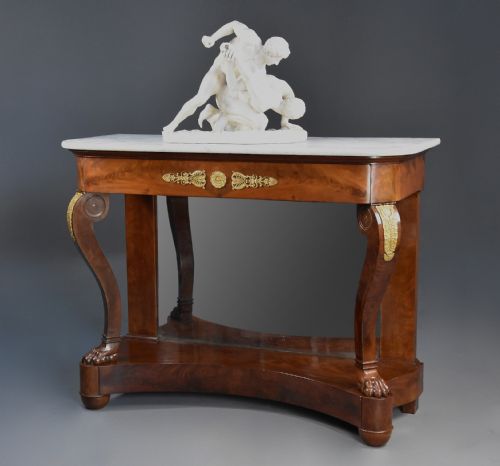
The heavy stone slabs rest upon these bases, taking the form of white Carrara, Statuary white, or general marble. Metal mounts, ormolu, and carved wooden details finish the framework, supporting the substantial weight of the stone above.
Heavy enough to anchor a room, some nineteenth-century marble tops still carry the faint chill of an Italian quarry.
Design and execution
Quality rests in the harmony between the stone top and its supporting base, where finer examples display crisply carved woodwork, original gilding, and well-fitted marble slabs. Heavier Rococo carving and intricate ormolu mounts elevate certain pieces far above simpler utilitarian washstands.
The integrity of the timber framing and the purity of the white marble surface dictate the standing of a piece. Finer items retain their original painted, gilded, or polished surfaces without heavy modern intervention.
Maples
The White Marble Console Glossary
- Console table
- A table designed to stand against a wall, frequently secured to it with brackets for stability due to its narrow depth.
- Giltwood
- Timber coated with gold leaf or a gold-coloured finish, common on decorative nineteenth-century frames.
- Ormolu
- Gilded bronze or brass mounts applied to furniture for decorative effect, prevalent in French designs.
- Carrara marble
- A type of white or blue-grey stone quarried in Italy, frequently utilised for classical tabletops.
- Pier table
- A specific type of console table designed to sit in the architectural space between two windows, often paired with a mirror back.
White Marble Console: Frequently Asked Questions
Where should I place a white marble console?
These tables suit hallways, entrance passages, and living rooms where a narrow profile leaves floor space open. Their stone tops provide a sturdy surface for lamps, vases, and decorative objects.
Because many were originally designed to stand flat against a wall or beneath a mirror, positioning them in primary reception spaces highlights their architectural form.
How do I care for a marble top?
Clean the stone surface with a damp cloth and mild soap, avoiding acidic solutions that can etch the polished finish. Using coasters and mats prevents staining from drinks and moisture.
Regular dusting keeps the timber or gilt base in good condition without requiring heavy polishing compounds.
Were these tables used in kitchens?
Certain variations, such as French charcuterie, patisserie, and prep tables, served functional roles in food preparation. The cool stone surface offered an ideal working area for pastry and meats.
Other forms, like giltwood console and pier tables, remained strictly within formal drawing rooms and halls.
How can I tell a Victorian table from a French one?
Victorian examples frequently utilise mahogany, oak, or satinbirch with rectilinear or straightforward classical proportions. French pieces often display exuberant Rococo curves, painted finishes, and elaborate giltwood carvings.
Examining the underlying construction methods and secondary timbers provides further clues to a piece's geographical origin.