

Antique Mahogany Chest of Drawers
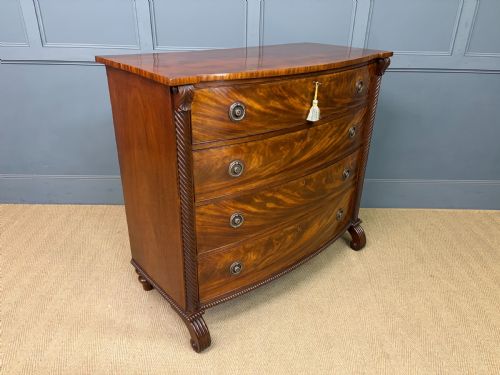
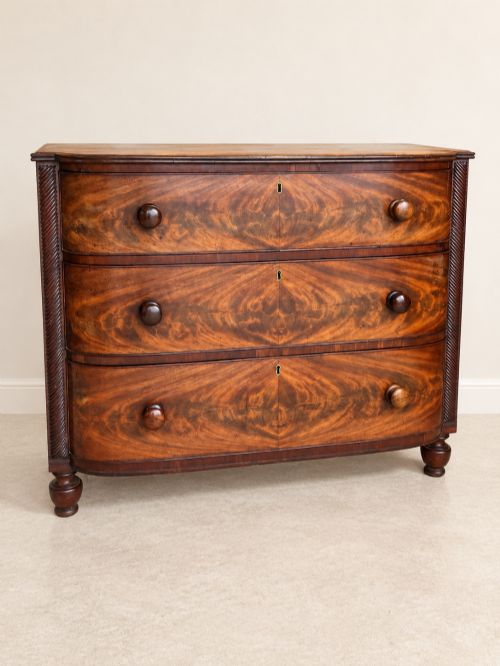
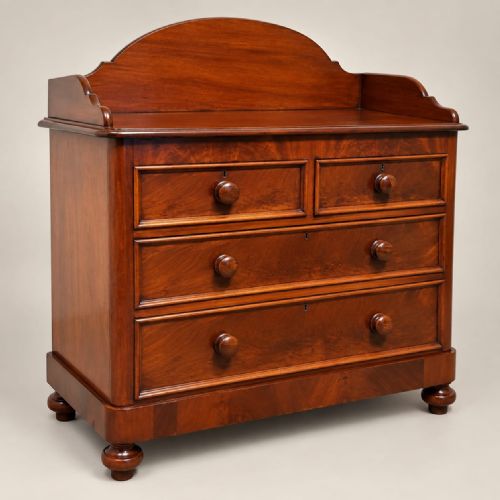
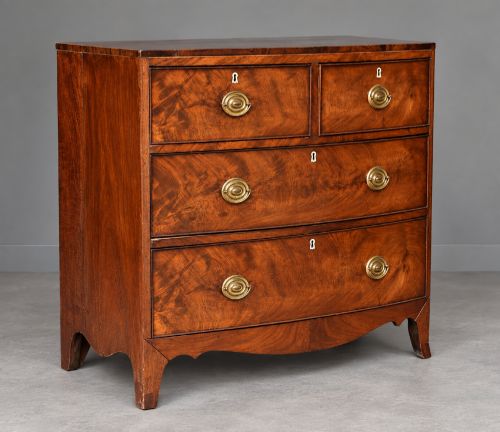
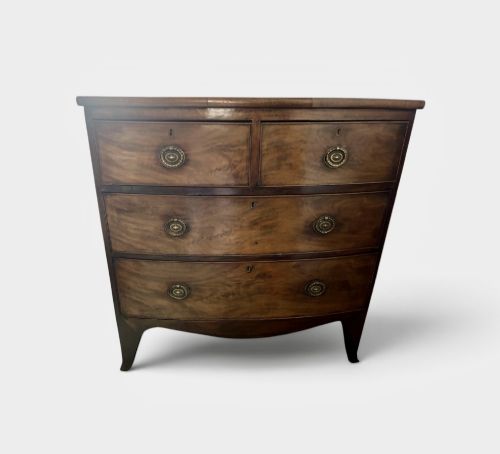
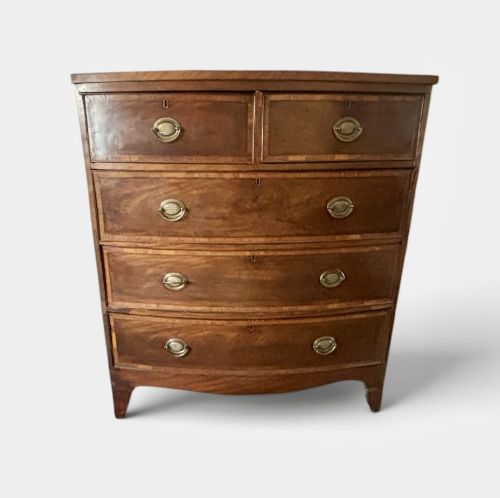
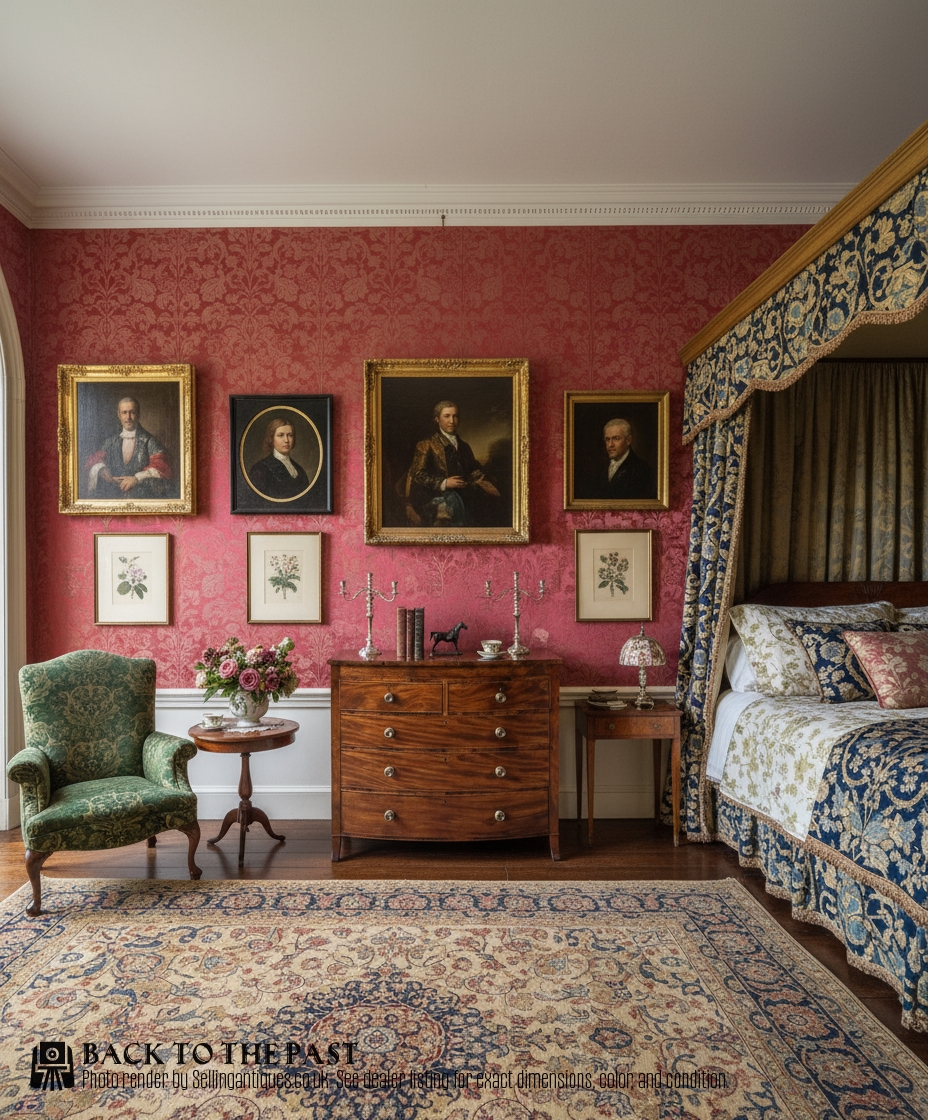
A case of graduated drawers in mahogany or mahogany veneer, made from the eighteenth century onward as bedroom storage for clothes and linen.
Antique Mahogany Chest of Drawers
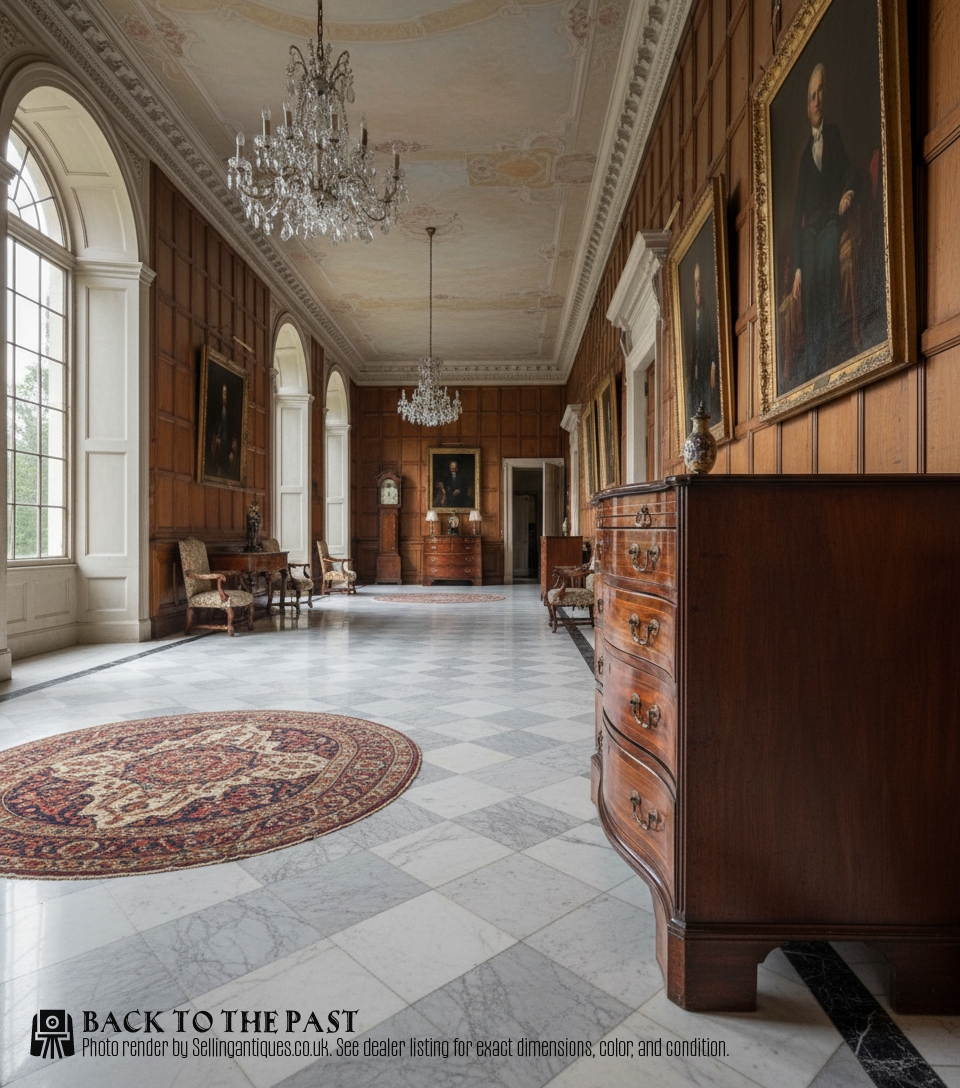
The chest of drawers grew out of the lidded chest in the seventeenth century, as drawers took over from lift-up storage. Mahogany became the standard cabinet timber for it in Britain from the second quarter of the eighteenth century, and it has stayed a bedroom form ever since. That's why the archive covers two and a half centuries of essentially the same object.
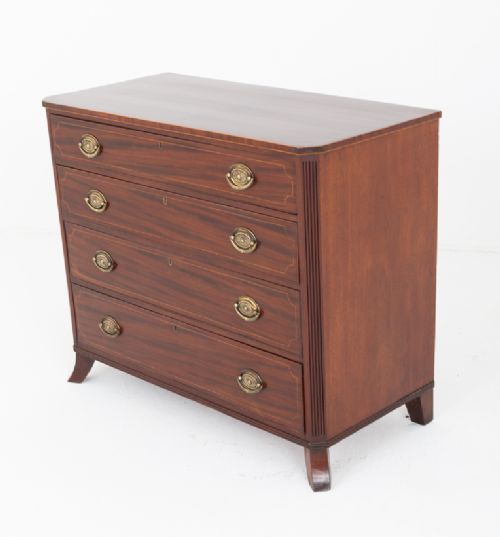
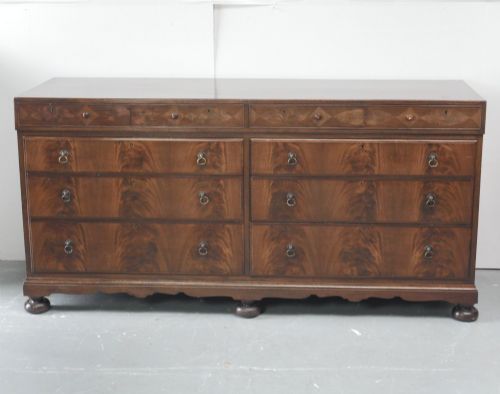
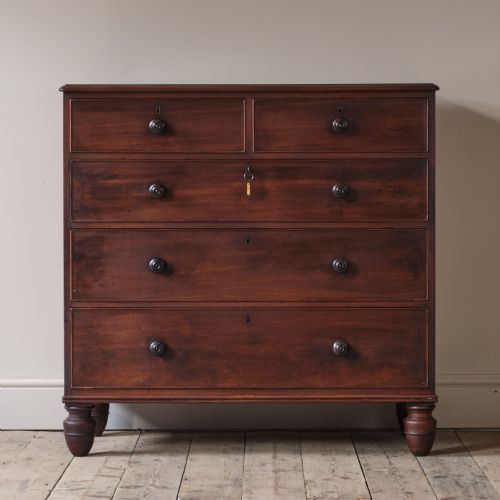
The one you're most likely to meet is a single carcase of three to five graduated long drawers, often arranged two over three or three over three, standing on bracket, splayed or turned feet. Georgian is the largest single period label on Sellingantiques, followed by a deliberately vague "19th Century", then Victorian, with Edwardian and 1920s pieces forming a real twentieth-century tail.
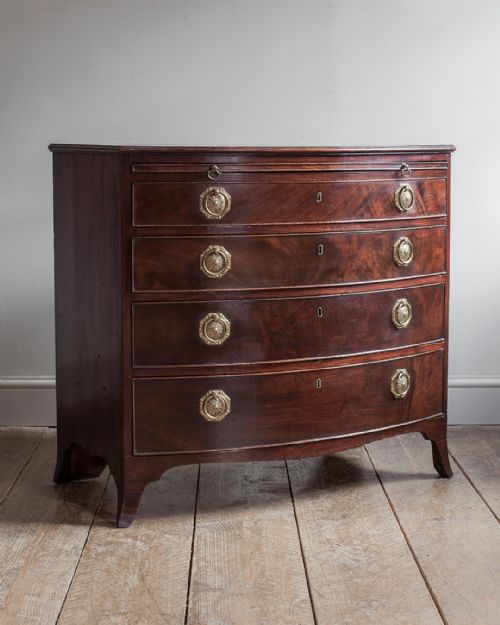
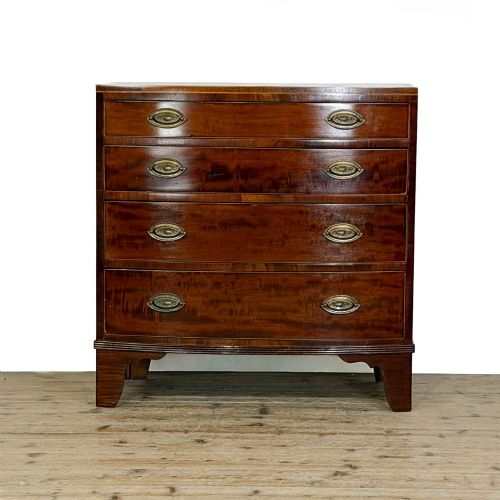
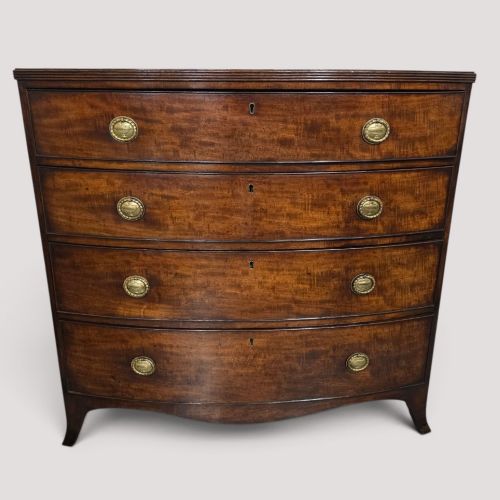
Front shape is what titles record above all else. Counting every spelling, bow, bow front, bow fronted and bowfront run to well over nine hundred titles, with serpentine a further 372. Straight fronts often go undescribed. Size is the other constant: "small" appears in 811 titles.
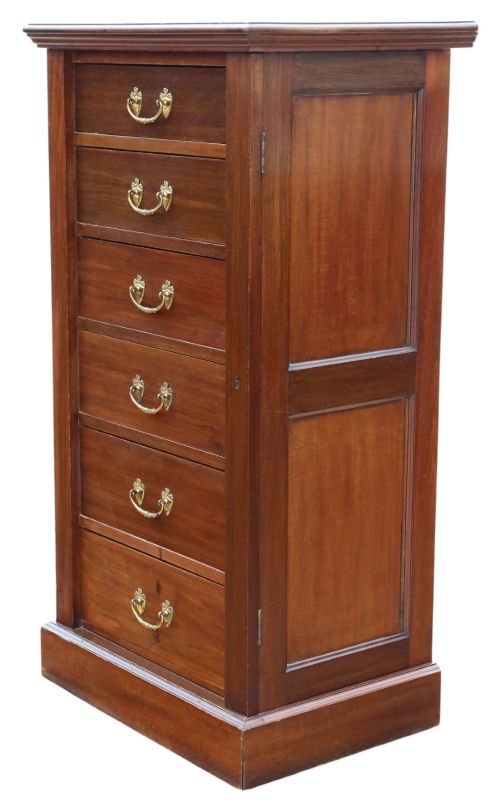
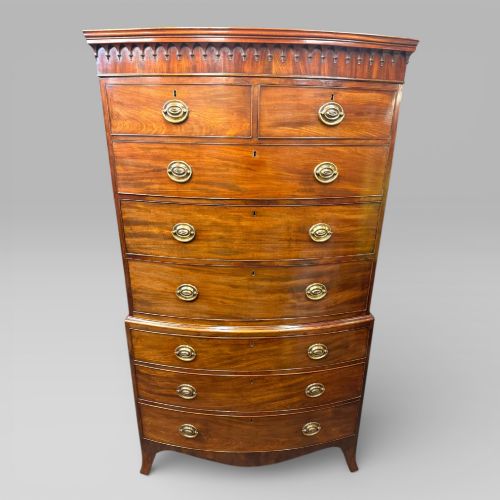
Beyond the standard bedroom chest sit several distinct branches. Two-part chest-on-chest and tallboy forms are a small share of the whole. Narrow Wellington chests with a locking side pilaster recur, as do campaign and military chests, often brass-bound and in two parts. Continental commodes and semainiers form a minority, several with marble tops.

Where The Range Splits
Date and shape do most of the work. The top of the sampled range is almost entirely eighteenth-century and George III, and the earliest clean date in the sample, a chest on chest of 1745, sits up there with it. Plain Victorian and Edwardian chests fill the bottom. Serpentine fronts cluster heavily in the upper band; undescribed straight fronts gather at the lower end, with bow fronts spread through the middle.
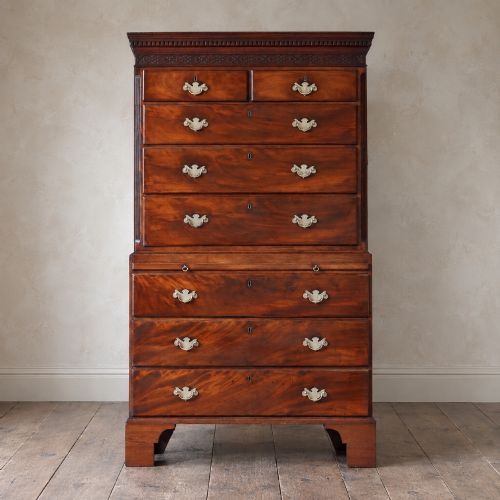
Construction pushes in the same direction. Chest-on-chest and tallboy titles dominate the top of the sample, and the highest-priced piece in the whole sample is an eighteenth-century George III tallboy. Double Wellington chests, twelve drawers in two banks, appear only a handful of times and sit near the top; the single Wellington chest is far commoner.
Then there's the timber and the decoration on it. Flame and figured veneer, satinwood or rosewood crossbanding and inlay all lift a chest within its period. Small size does the same, though "small" alone won't tell you much, since it runs the entire length of the range, from the very bottom up to a small George III bachelor's chest of five drawers.
Antique Mahogany Chest of Drawers Retail Price Guide 2026
Typical UK retail prices for mahogany chest of drawers, calculated from the Sellingantiques database of over a million retail prices indexed since 2003. This retail price guide relies exclusively on Sellingantiques data; no external sources or auction records are used, so the figures do not describe the wider market.
Gillows is the name that turns up from the most dealers on Sellingantiques in this category, ahead of Maple & Co and Holland & Sons.
Gillows·Maple & Co·Holland & Sons·Heals
The Antique Mahogany Chest of Drawers Glossary
- Bow front
- A convex curved front. Written as bow front, bow fronted or bowfront depending on the dealer, all meaning the same shape.
- Serpentine
- Front curved out at the centre and in at the sides. It appears in 372 titles and clusters at the upper end of the range.
- Chest on chest
- Two stacked carcases forming one tall chest. Tallboy is used interchangeably with it in titles.
- Wellington chest
- Tall narrow chest whose hinged side pilaster locks every drawer at once. A double version runs twelve drawers in two banks.
- Brushing slide
- Pull-out board above the top drawer, for laying clothes out on. Named in 80 titles.
- Semainier
- Tall narrow French chest of seven drawers, one for each day of the week. Also spelled semanier.
Antique Mahogany Chest of Drawers: Frequently Asked Questions
What does bow fronted mean?
It means the front of the chest curves outward in a convex sweep, rather than running flat. Dealers write it as bow front, bow fronted, bowfront or just bow, and all four describe the same thing.
It's the most-recorded feature after period. Across every spelling it runs to well over nine hundred titles, which makes it the commonest shape word in the category.
How old are these chests?
The dated field runs from 1700 to 1960, a 260-year span for what is recognisably one object. Only 1,744 of the 6,806 listings pin themselves to a clean year; the rest sit in era buckets.
Georgian is the biggest single label, then "19th Century", Victorian, "18th Century", Regency and "1800s". Edwardian and 1920s pieces make up a genuine twentieth-century tail.
The labels overlap. Georgian, 18th Century, George III and 1800 get used for the same sort of stock, and a title's period word sometimes disagrees with the dated field, so treat it as an indication.
Is a tallboy the same as a chest on chest?
Yes. Two carcases stacked to form one tall chest, and dealers use the two words interchangeably in titles.
Tallboy appears in 166 titles. Two-part forms are a small share of the category, and they concentrate at the upper end, dominating the top of the sample.
What is a Wellington chest?
A tall narrow chest with a hinged pilaster down one side that locks all the drawers at once when swung shut.
Wellington appears in 225 titles. Double versions, twelve drawers in two banks, turn up only a handful of times and sit near the top of the range.
Are French mahogany chests common?
Continental work is the rarest origin in this category. Among 6,806 listings, 163 titles say French, and commode appears in 212.
Several of those are marble-topped. Individual Russian, Dutch bombé, Swedish Empire, Biedermeier, Directoire and Channel Islands pieces each turn up once in the sample, alongside semainiers of seven drawers.
Do unusual chests of drawers appear?
Regularly. The sample includes a Victorian commode disguised as a chest of drawers, a sheet-music filing cabinet, a haberdashery shop cabinet and a five-drawer pharmacy chest.
Also a demi-lune chest of twelve drawers, one with a raised mirrored dressing compartment, and one fitted with a secret drawer.
Around 753 mahogany chests are listed on Sellingantiques in a year across 333 dealers, so the oddities surface often enough.