
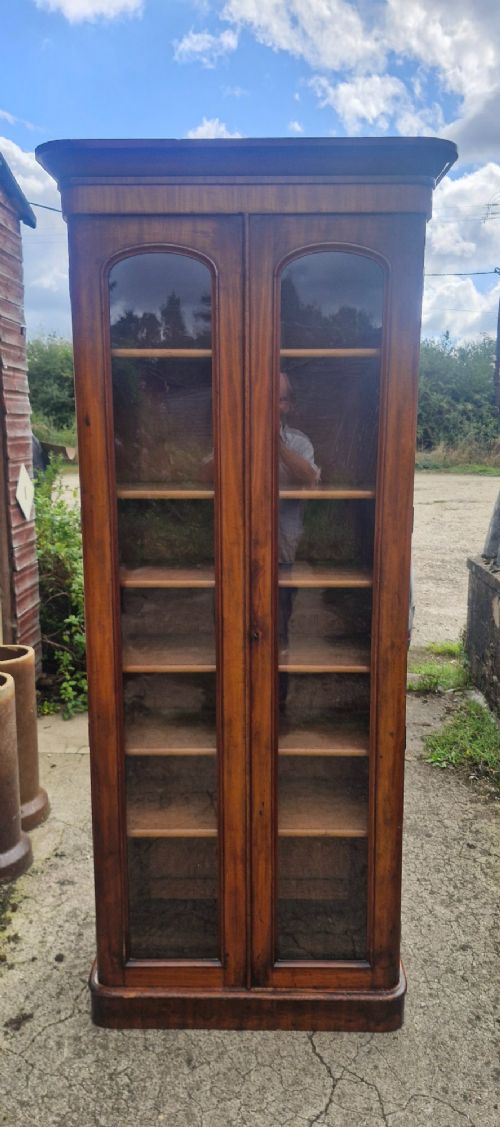
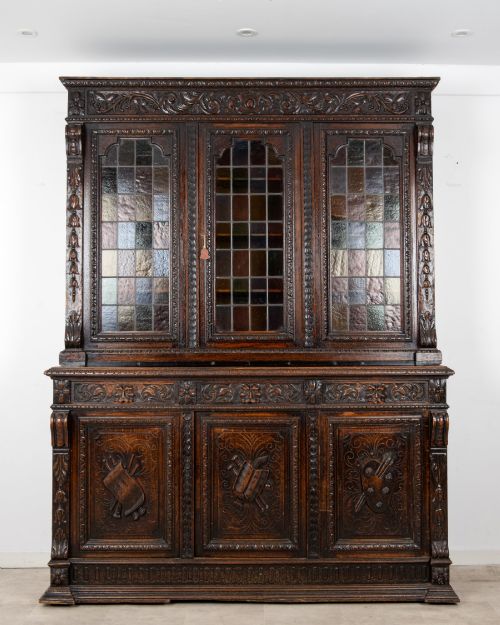
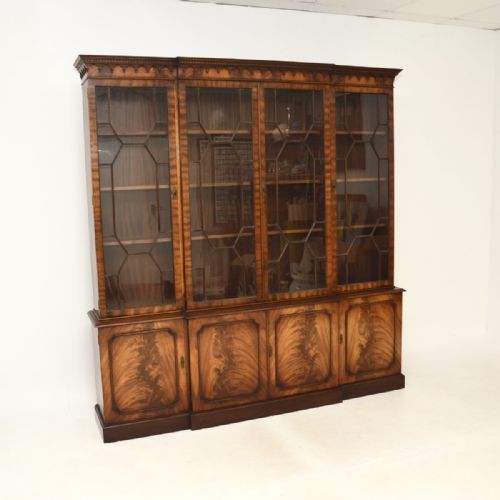
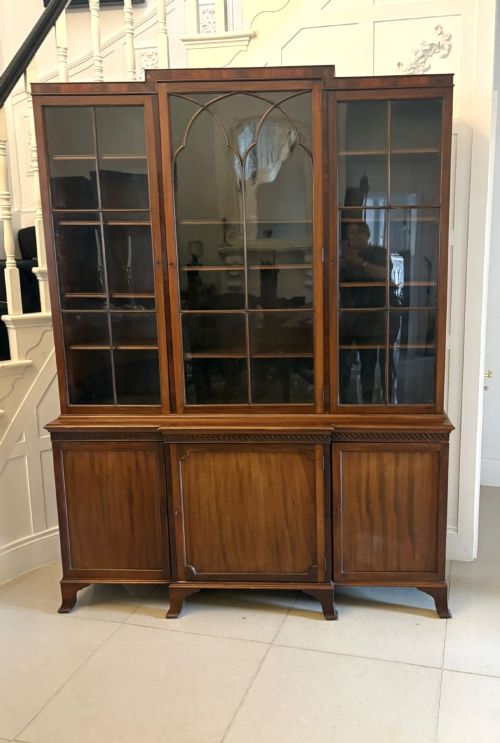
Antique Library Display Cabinet
An antique library display cabinet brings structured timber and glazed panels to a room, holding books behind glass while showing off bound volumes.
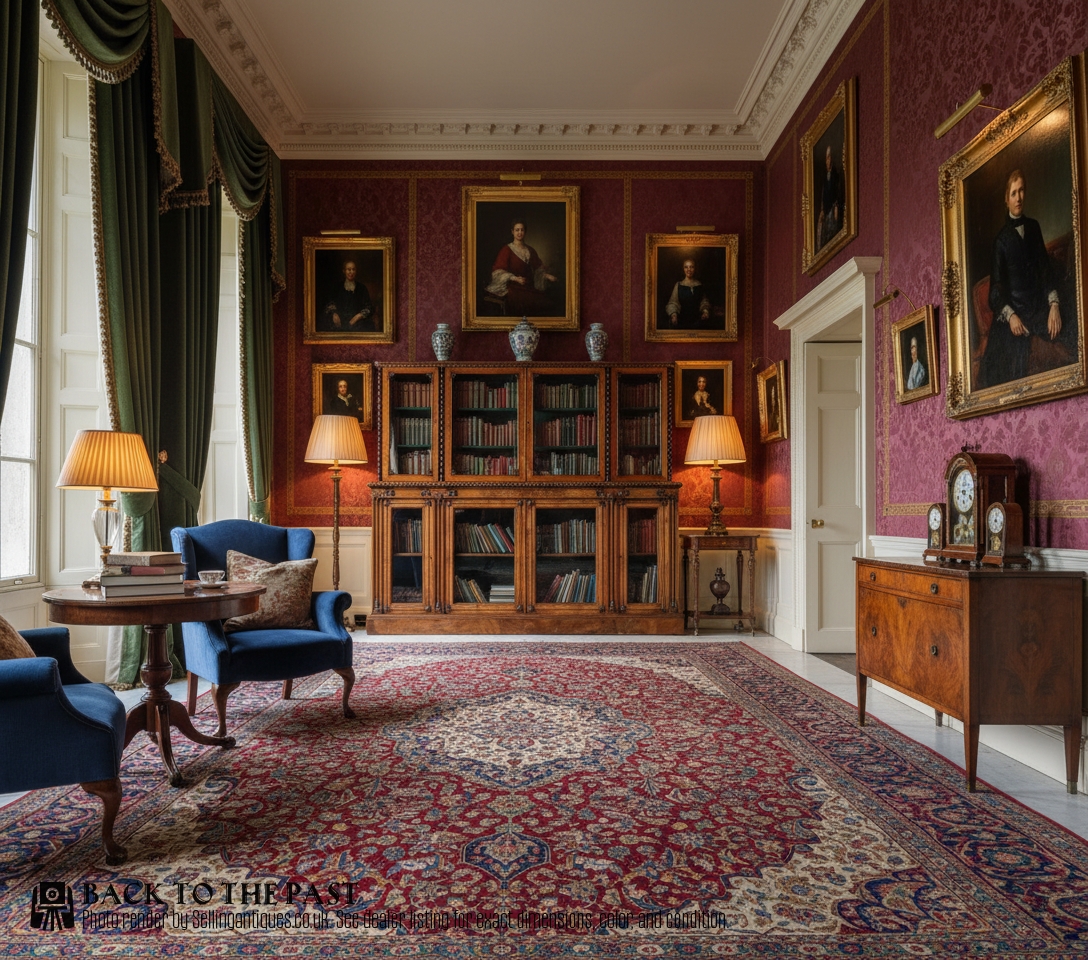
Forms and Origins
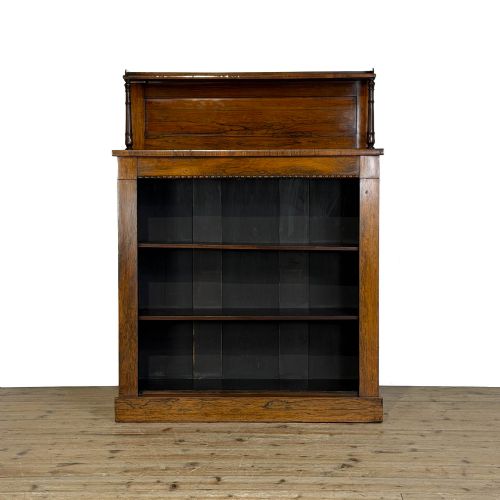
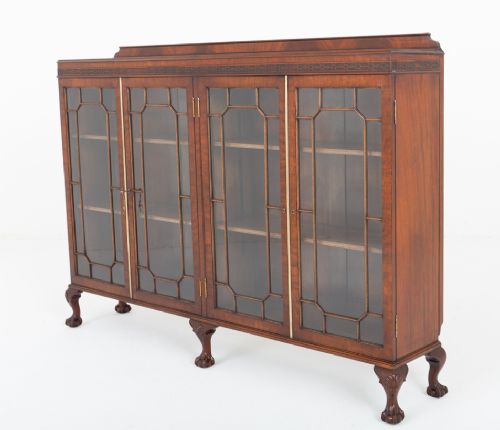
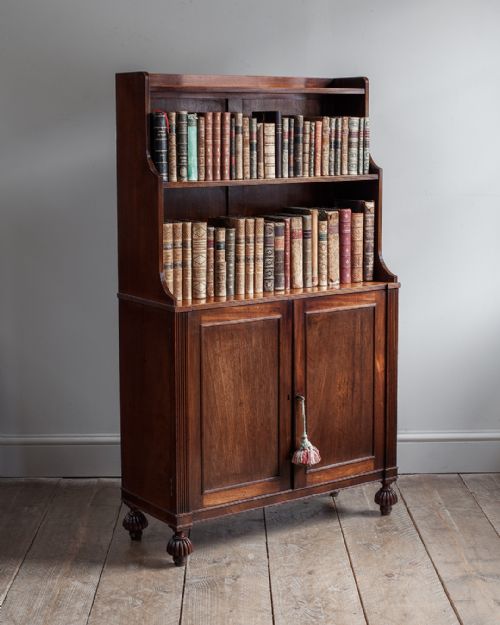
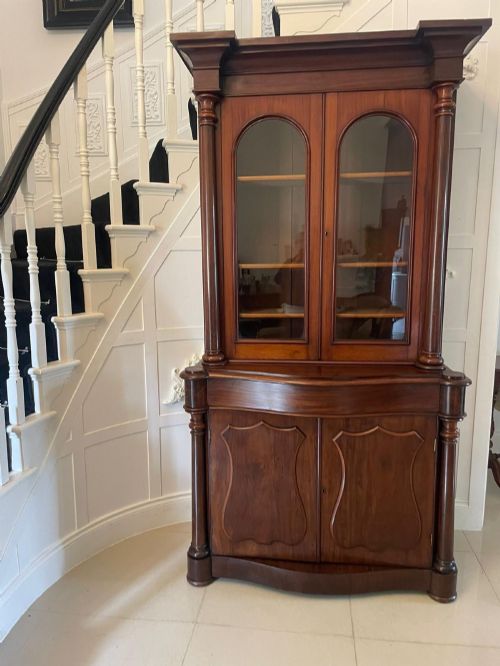
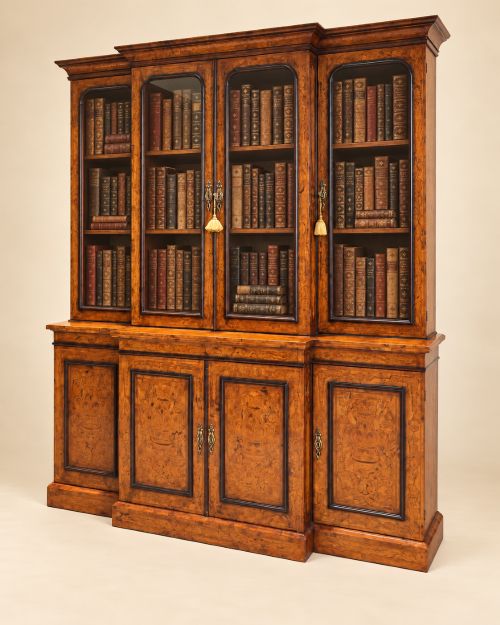
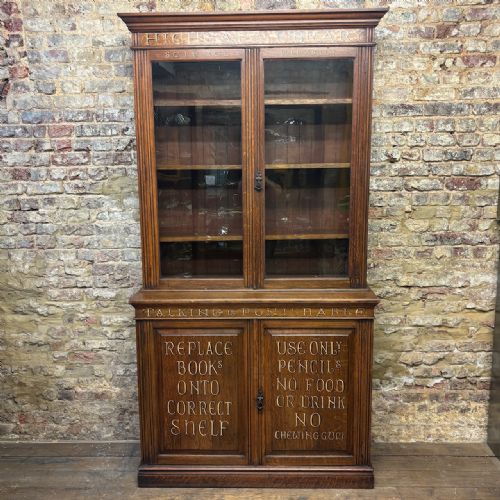
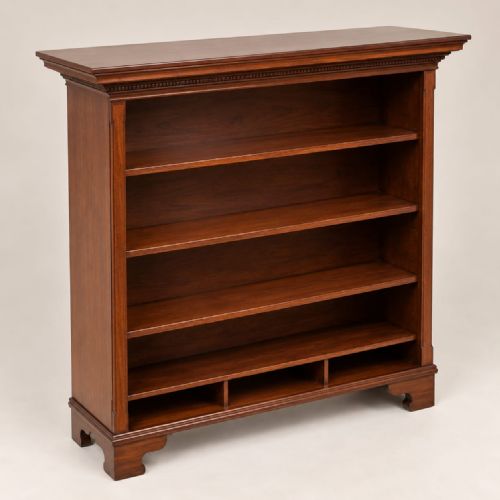
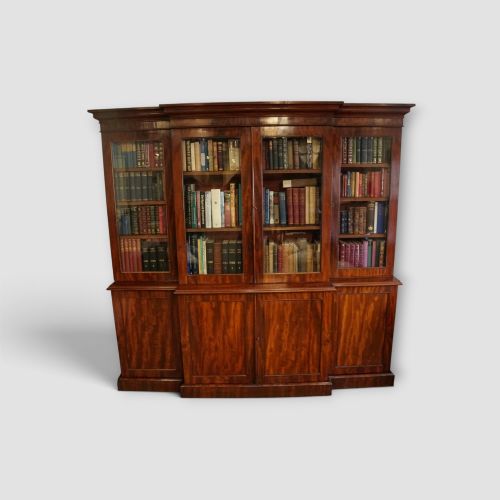
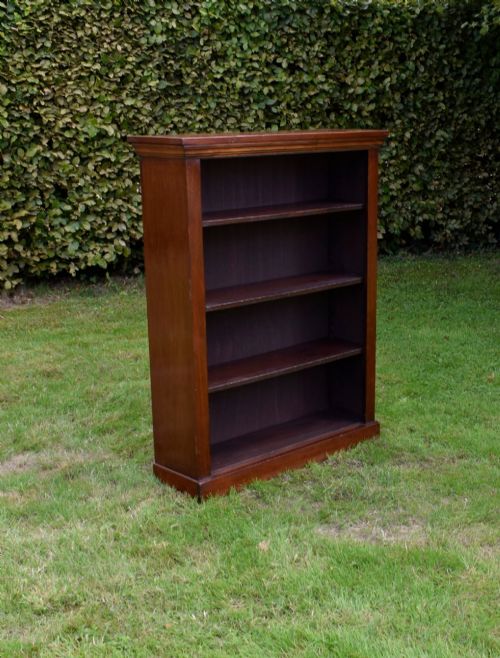
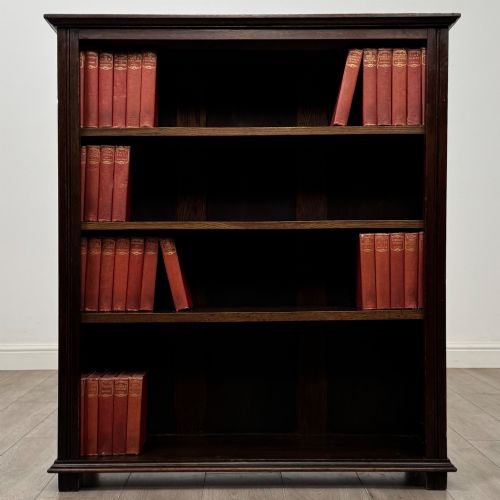
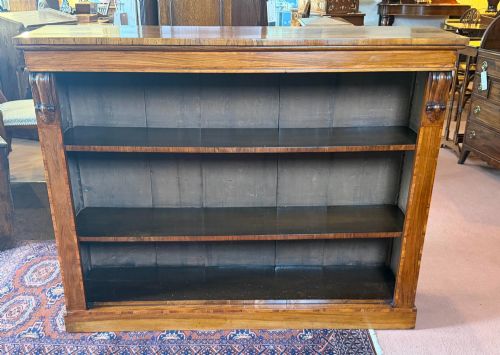
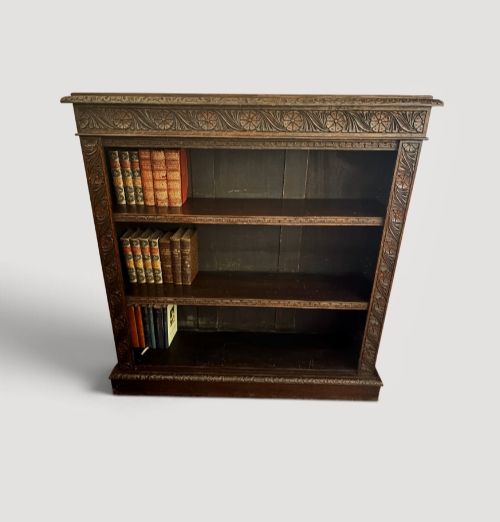
The antique library display cabinet encompasses glazed bookcases, breakfront storage units, open display shelves, and large architectural cupboards built to house private collections.
Most pieces seen here originate from the nineteenth and early twentieth centuries, spanning the Victorian and Edwardian eras alongside earlier George III examples.
Makers designed these items as substantial home library furniture, combining enclosed shelving behind glass doors with lower wooden cupboards or desk configurations.
Materials and Construction
Cabinet makers built these pieces using dense hardwoods like mahogany, figured walnut, and oak, often incorporating intricate wood inlay and marquetry across the exterior surfaces.
Transparent glass formed the front doors to protect volumes from dust while maintaining visibility, supported by brass hardware and fitted with adjustable shelving inside.
Retail Price Guide 2026
Typical UK retail prices for library display cabinet, calculated from the Sellingantiques database of over a million retail prices indexed since 2003. This retail price guide relies exclusively on Sellingantiques data; no external sources or auction records are used, so the figures do not describe the wider market.
Listings show pieces spanning the Victorian and Edwardian periods, constructed in mahogany, oak, walnut, and inlaid woods.
Quality and Proportion
Superior examples distinguish themselves through choice timber selections like figured walnut and finely figured mahogany, paired with precise joinery and balanced proportions.
The refinement of brass fittings, the complexity of inlaid wood decoration, and the presence of crisply carved architectural mouldings elevate the execution of the cabinet.
Holland & Sons
The Antique Library Display Cabinet Glossary
- Breakfront
- A cabinet design where the central section projects forward from the flanking wings. This configuration creates visual depth and breaks up the linear expanse of large library walls.
- Astragal
- A small moulded strip of wood or metal framing the individual panes of glass within a door. These bars divide large glazed areas into smaller geometric compartments.
- Marquetry
- The art of applying decorative veneer pieces in wood to form pictorial or ornamental patterns. Craftsmen utilised contrasting timbers to create detailed surface designs.
- Glazed
- Fitted with transparent glass panes to enclose the shelving compartment. This treatment allowed owners to inspect book spines without opening the doors.
Frequently Asked Questions
How do I clean the glass?
Use a soft microfibre cloth dampened slightly with water or a mild glass cleaner to wipe the panes gently. Avoid spraying liquid directly onto the wood framework.
Take care not to let moisture seep into the wooden astragals or joints surrounding the glass panels.
Are the shelves adjustable?
Many examples feature movable internal shelving supported by traditional wooden racks or metal pins. This allows you to alter shelf heights for different book sizes.
Older fitted interiors may have fixed shelving dictated by the original structural layout of the cabinet.
How do I date these cabinets?
Look to the timber species, construction methods, and decorative styles such as Victorian mahogany or Edwardian marquetry inlay. Secondary woods at the back often provide further clues.
Hardware styles and the cut of the glass can also point toward a specific nineteenth or early twentieth-century decade.
Where should I place this cabinet?
Position the piece against a sturdy interior wall away from direct sunlight and radiators to protect the timber and veneer. Ensure the floor is level so the large doors hang straight.
Allow sufficient clearance in front for opening glazed or cupboard doors comfortably.