
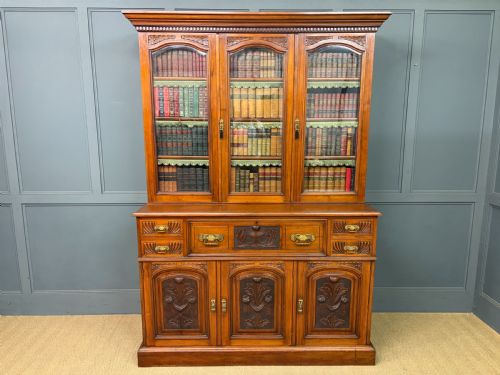

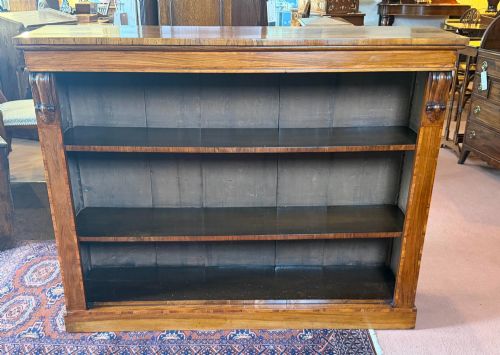
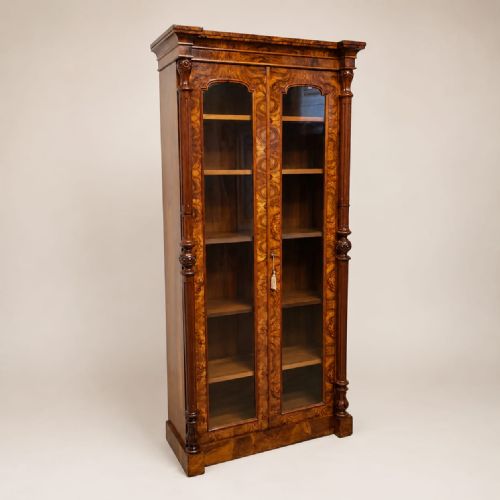
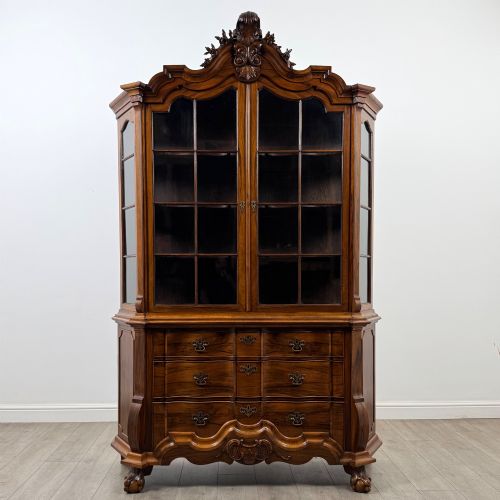
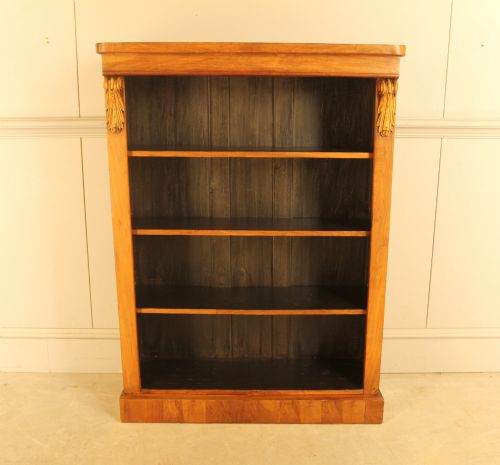
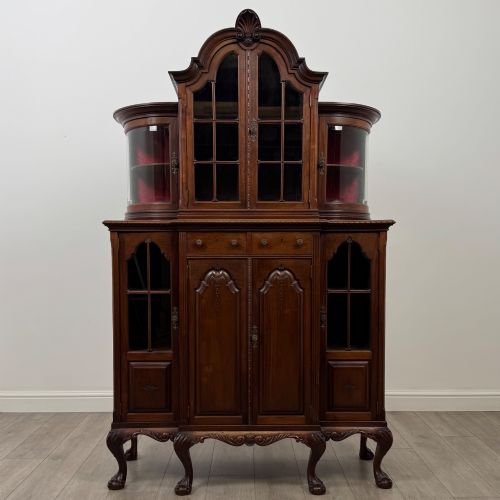
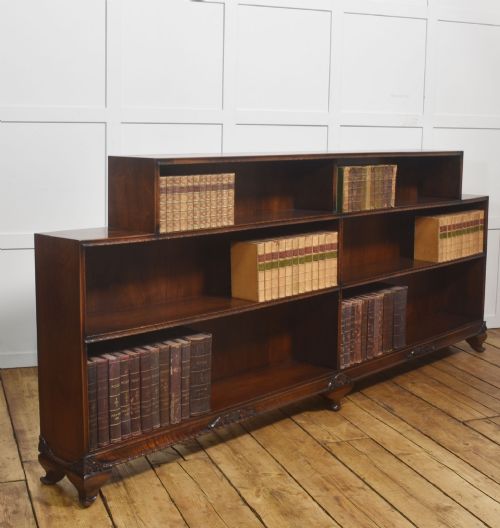
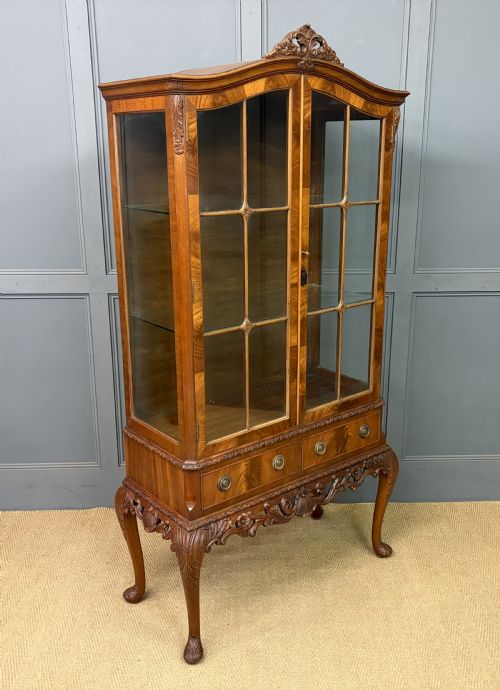
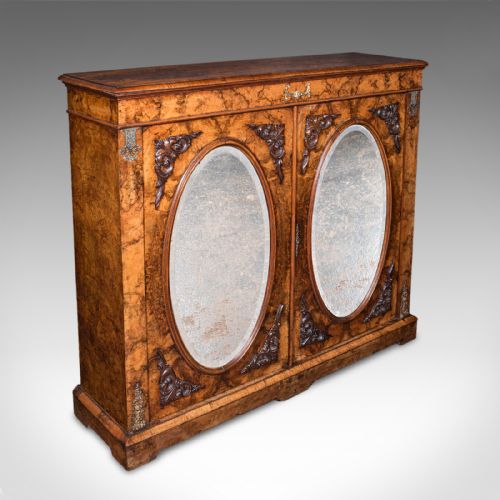
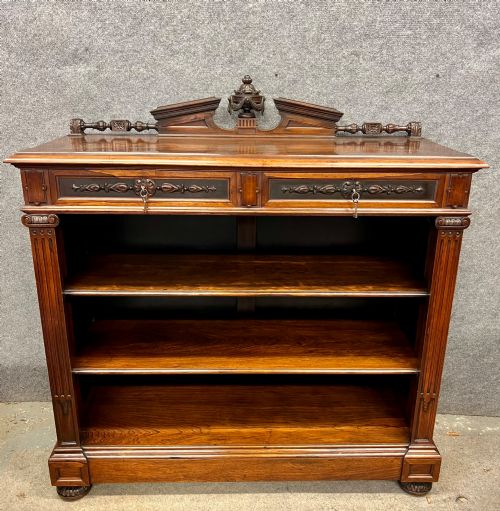
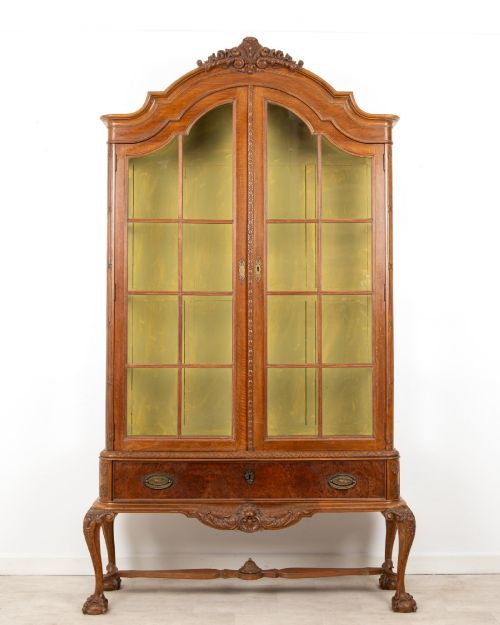
Carved Walnut Display Bookcase
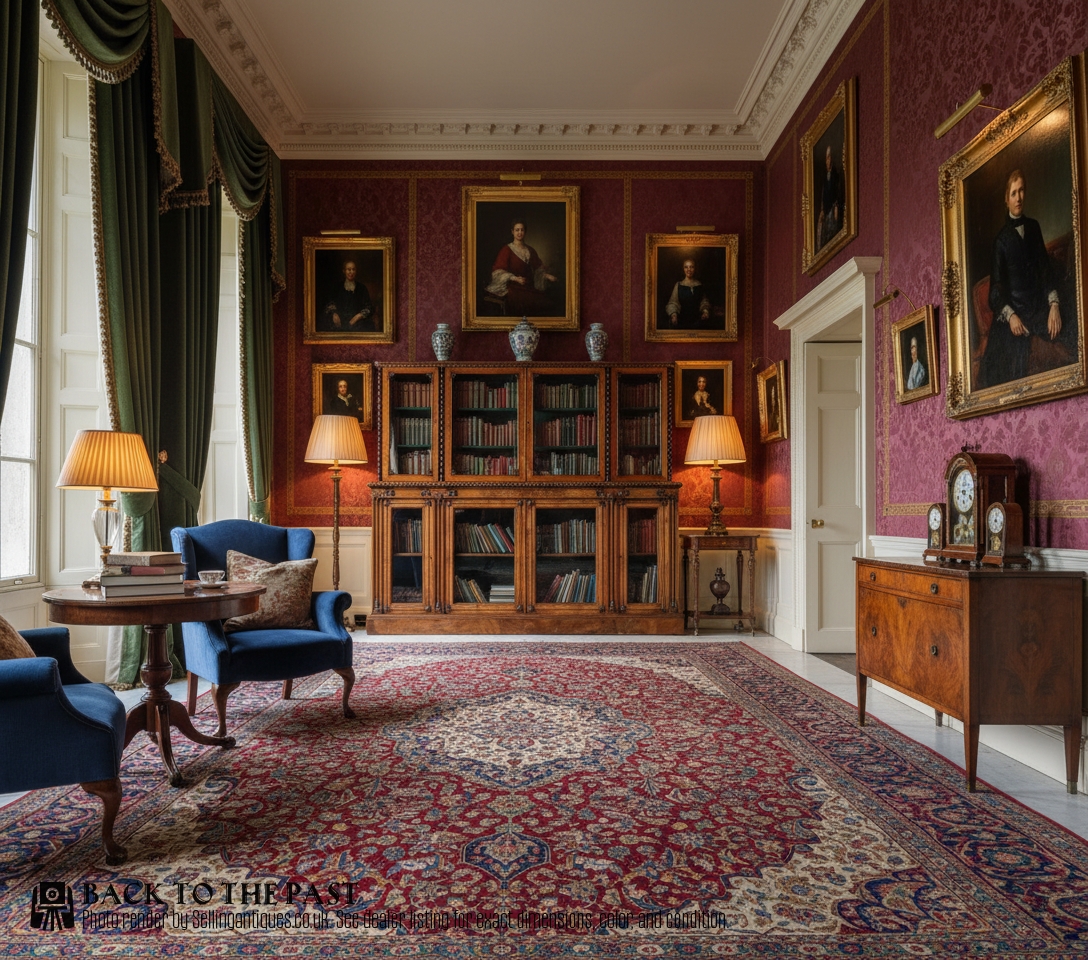
A carved walnut display bookcase brings warmth to a room while holding a library behind glass.
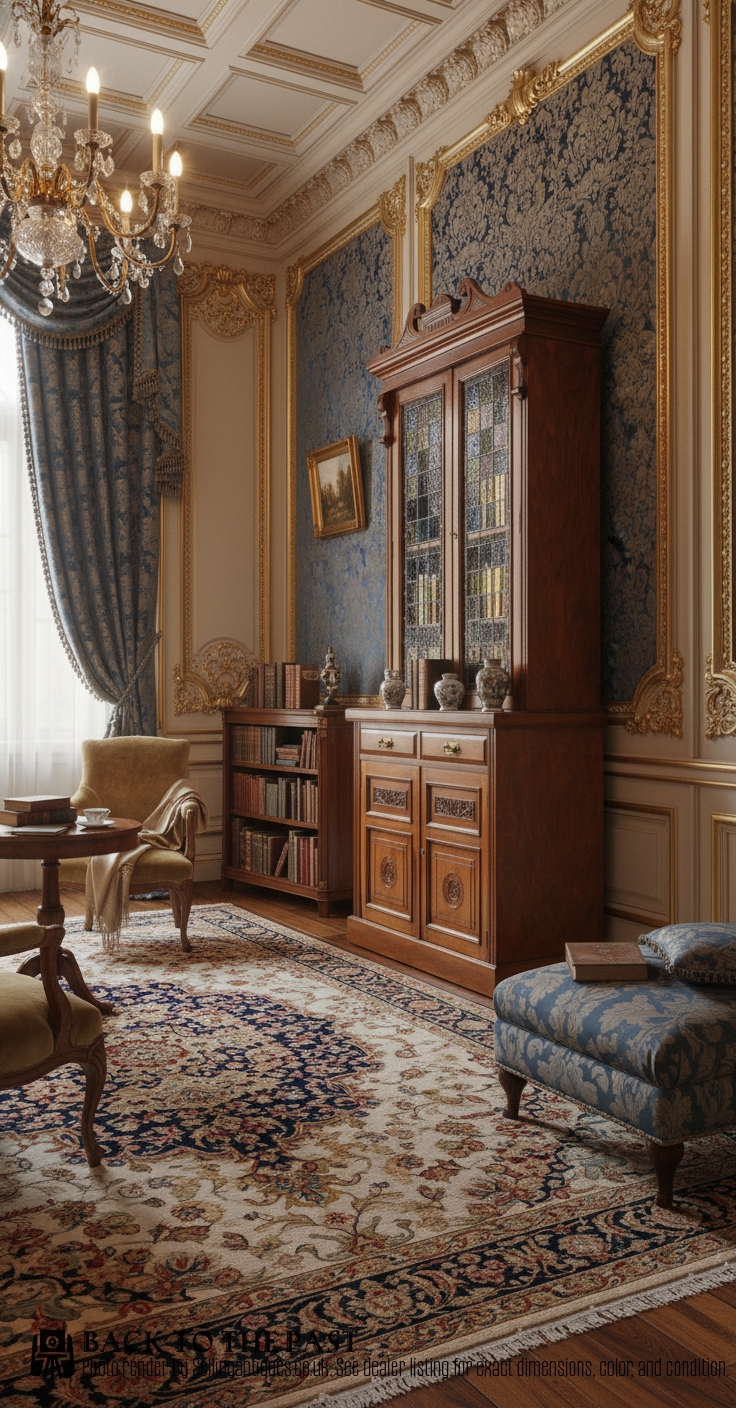
Carved Walnut Display Bookcase
When you search for a carved walnut display bookcase, you are looking at substantial timber furniture designed to store books and show off decorative objects. These pieces combine closed shelving with glazed doors or open fronts, uniting storage and exhibition in a single room centrepiece.
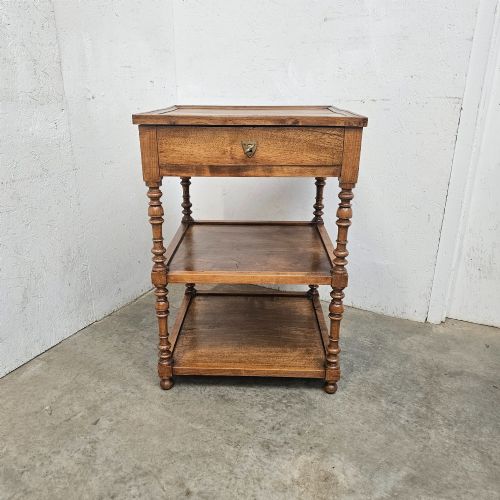
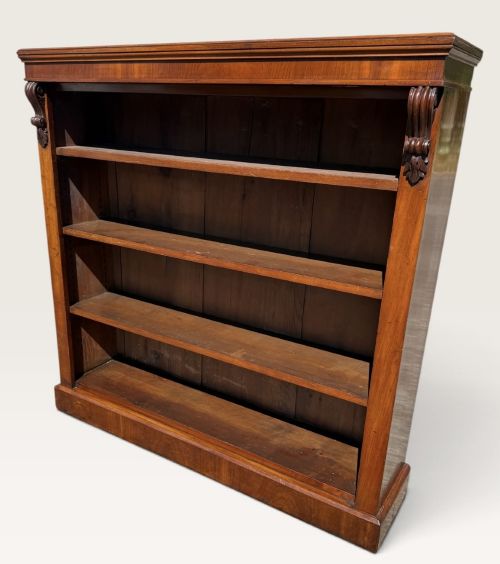
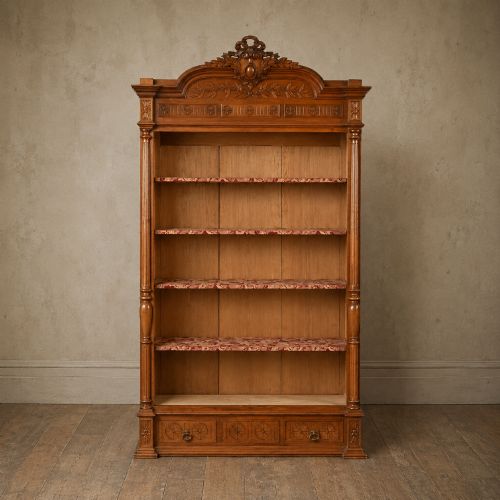
You are most likely to meet Victorian and late nineteenth-century examples on this page, alongside earlier eighteenth-century continental pieces and revival styles. The forms range from tall glazed cabinets and bureau bookcases to open library shelves and narrow etageres.
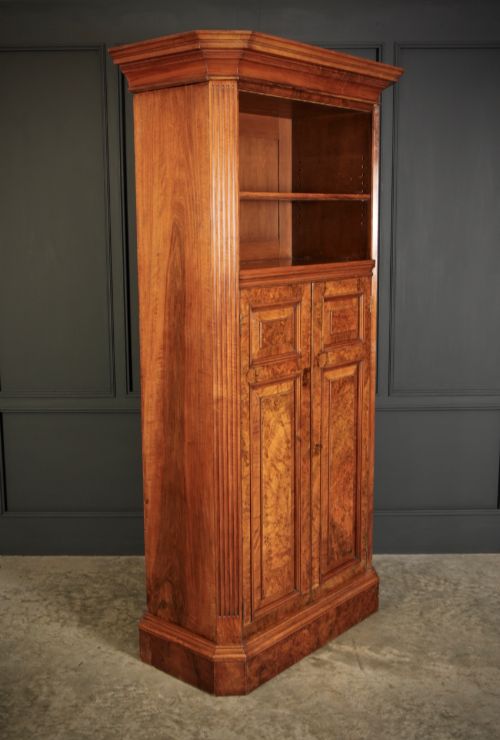
The timber used gives these cabinets a rich, dark tone with distinct grain patterns, often enhanced by burr walnut veneers. They arrive from English, French, Dutch and Italian workshops, reflecting diverse regional tastes in carving and joinery.
What varies in quality
The standard of a carved walnut display bookcase depends heavily on the choice of timber and the precision of the veneer work. Book-matched burr walnut and finely detailed hand-carving indicate superior workshop production compared to plain timber surfaces and cast ornament.
Construction details such as solid drawer linings, original brass fittings, and well-fitted glazed doors separate finer examples from standard commercial output. The crispness of the carving and the depth of the French polished finish also reveal the skill of the original maker.
Carved Walnut Display Bookcase Retail Price Guide 2026
Typical asking prices for carved walnut display bookcase among the pieces listed under this phrase on Sellingantiques today, from the lower quarter to the upper quarter. They describe what is for sale here now, not the wider market.
Listings feature walnut, burr walnut, and pine across Victorian, Edwardian, and eighteenth-century periods.
Gabriel Viardot·Maple and Co·Holland and Sons
The Carved Walnut Display Bookcase Glossary
- Burr walnut
- A prized timber harvested from tree growths that produce complex, swirling grain patterns. It was sliced into thin veneers to cover large cabinet surfaces.
- Vitrine
- A glass-fronted cabinet designed for displaying porcelain, curiosities and fine books. These pieces often feature glazed side panels as well as front doors.
- Etagere
- A piece of furniture consisting of open shelves for displaying small objects. They frequently appear combined with cabinet bases in nineteenth-century designs.
- Marquetry
- The art of applying pieces of veneer to a structure to form decorative patterns and pictures. Dutch examples on this page make frequent use of floral inlay.
- Breakfront
- A cabinet design where the central section projects forward from the flanking wings. This architectural arrangement adds depth and visual rhythm to large bookcases.
Carved Walnut Display Bookcase: Frequently Asked Questions
What is a carved walnut display bookcase used for?
These pieces serve to organise personal libraries while protecting delicate books behind glass doors. The open shelves and display sections provide space for ceramics and decorative objects.
They function as principal storage items in studies, libraries and morning rooms. Their combination of display space and shelving makes them versatile focal points for large living areas.
How do I date a walnut bookcase?
Dating relies on examining the construction methods, hardware and prevailing style of the piece. Victorian examples often feature heavy glazed doors and distinct burr walnut veneers, while eighteenth-century pieces display marquetry and hand-cut dovetails.
Secondary timbers inside drawers, such as pine or oak, also provide clues to the period of manufacture. Revival styles from the late nineteenth century frequently copy earlier Queen Anne or Dutch Baroque forms.
Are these bookcases suitable for modern homes?
The deep brown tones and figured grain of walnut blend well with both traditional and contemporary interiors. Their substantial height provides generous storage without occupying an excessive floor footprint.
Glass-fronted versions keep dust away from volumes while maintaining a light visual presence in a room. Open variants allow for easy access to frequently read books and family collections.
What is the difference between an etagere and a bookcase?
An etagere consists entirely of open shelving supported by slender uprights, designed strictly for exhibition. A bookcase incorporates enclosed cupboard space or dedicated book storage alongside display areas.
Many nineteenth-century hybrid pieces combine both forms, featuring lower cabinets beneath open upper shelves. This merging of functions allows for both concealed storage and prominent display.