
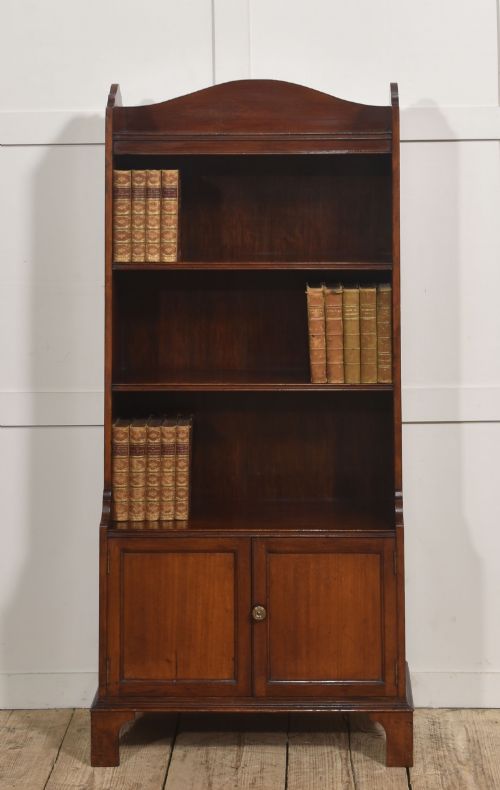


Cupboard Base Bookcase
When you search for a cupboard base bookcase, you are looking at tall storage where enclosed lower cupboards anchor open or glazed upper shelving.
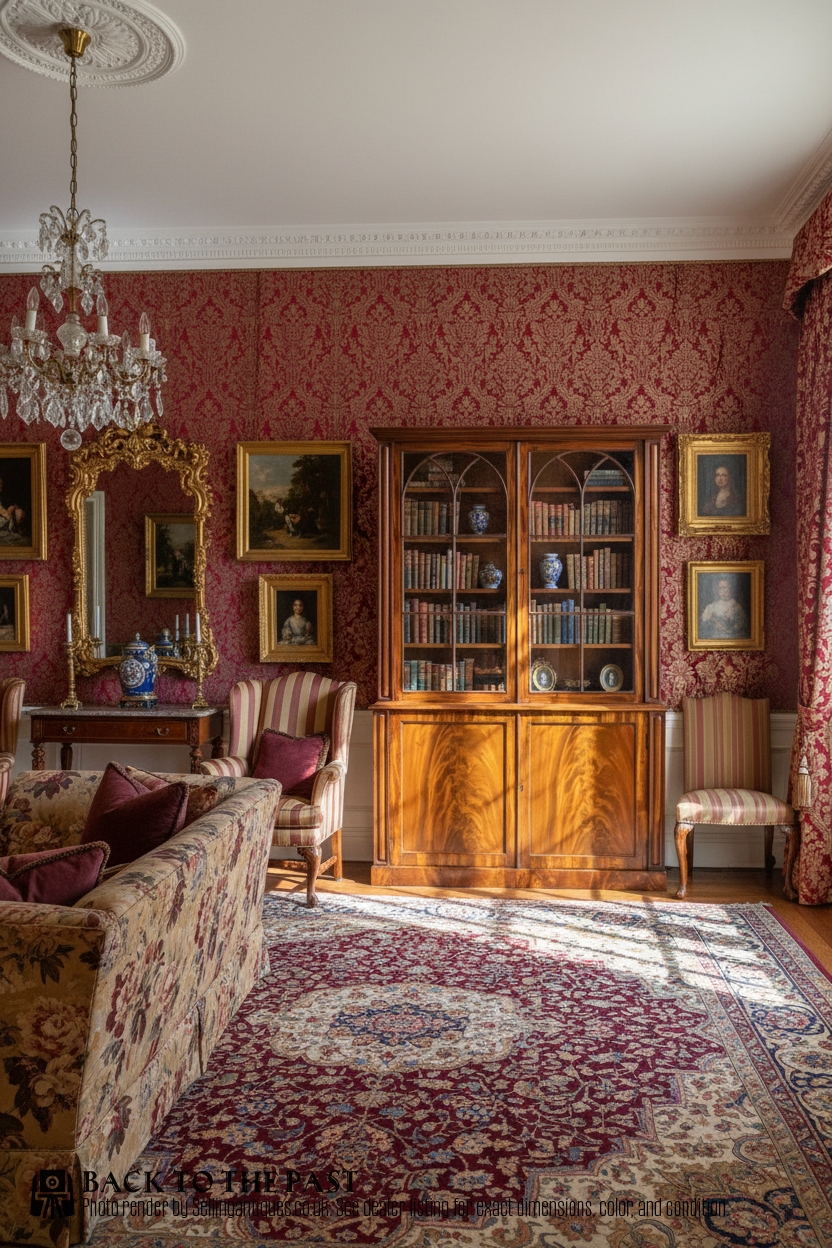
Cupboard Base Bookcase
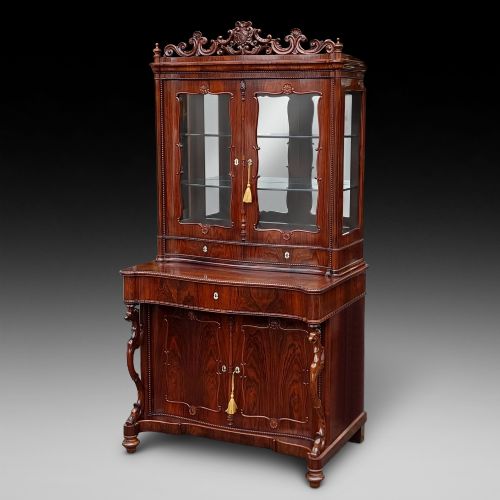
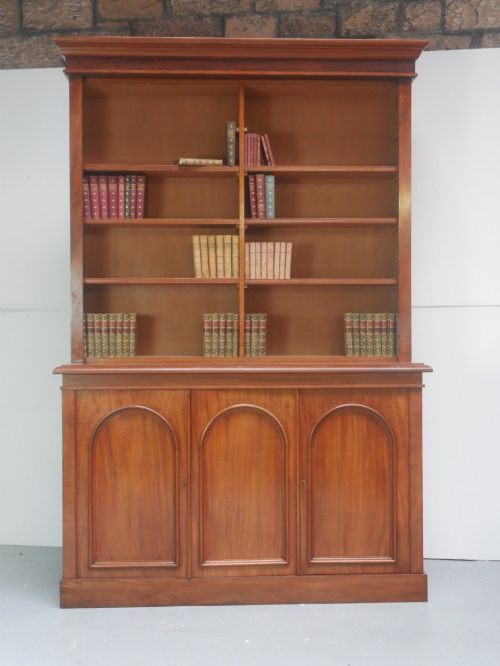
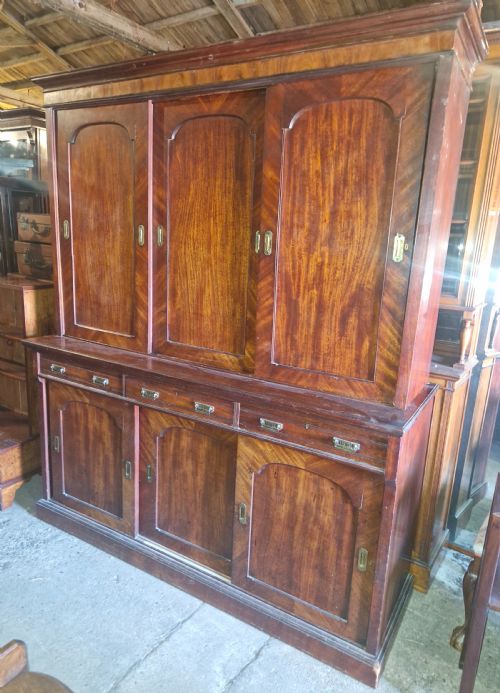
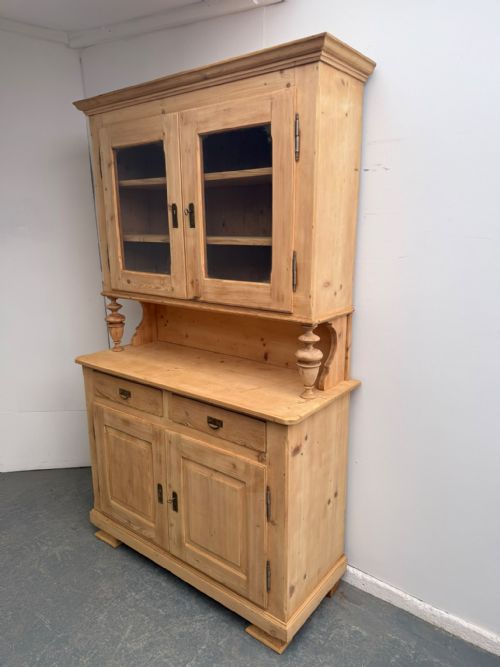
A cupboard base bookcase combines lower cabinet storage with upper book or display shelving, providing both concealed space and open display. The pieces on this page span the Georgian, Regency, William IV, and Victorian periods, alongside later twentieth-century iterations.
Most examples you encounter here are constructed from mahogany, walnut, oak, or pine, with variations ranging from modest country pine dressers to formal breakfront library pieces. Forms extend from slim two-door configurations to wide multi-door breakfront formats.
Makers historically adapted these combinations for domestic libraries and estate offices, housing volumes below while keeping frequently consulted texts or display items within reach above.
Materials and Technique
Makers relied heavily on solid hardwoods like mahogany and oak, frequently applying figured mahogany veneers or walnut surfaces to the primary display facades.
Secondary timbers such as pine appear within internal shelving and carcass backs, while brass fittings and glass doors complete the upper sections of formal library pieces.
Some nineteenth-century estate office cabinets survived decades of heavy paperwork before retiring to quiet domestic book collections.
Evaluating the Build
Quality rests in the selection of timber figures, such as flame mahogany or burr walnut, and the precision of the joinery connecting the heavy lower cupboard to the upper shelving.
Finer examples demonstrate careful attention to internal fittings, original glass, and integrated mouldings, whereas utilitarian pieces prioritise plain pine or oak utility over decorative veneer work.
Heal & Son London·Waring & Gillow
The Cupboard Base Bookcase Glossary
- Breakfront
- A cabinet design where the central section projects forward from the flanking wings. This format creates depth and visual weight across larger library pieces.
- Chiffonier
- A low sideboard or cupboard, often incorporating shelving or a raised back. These compact units bridge the gap between small side cabinets and full bookcases.
- Grille door
- A cabinet door fitted with brass wire mesh instead of glass. This technique allowed air circulation for stored books while maintaining a formal aesthetic.
- Marquetry
- Decorative inlay work utilising various coloured woods to form pictorial patterns. Artisans applied these veneers to elevate the status of walnut and mahogany surfaces.
Cupboard Base Bookcase: Frequently Asked Questions
What is a cupboard base bookcase?
A cupboard base bookcase is a dual-purpose furniture form featuring enclosed storage cupboards at the lower level and open or glazed shelving above.
This arrangement allowed households to store bulkier items out of sight below while displaying books or decorative objects at eye level.
How were these bookcases used historically?
These pieces served primarily in libraries, parlours, and estate offices to organise reference volumes and personal collections.
The lower cupboards accommodated ledgers, periodicals, or fragile items that required protection from dust and light.
How do I identify a Georgian piece?
Georgian examples typically feature dense mahogany timbers, restrained classical proportions, and understated bracket feet or plinth bases.
Decoration remains structural rather than ornate, relying on the natural grain of the wood and subtle cockbeading around drawer fronts.
How do Victorian examples differ?
Victorian versions often display heavier proportions, darker finishes, and more prominent decorative elements such as figured walnut veneers or ormolu mounts.
These pieces frequently incorporate arched panel doors and wider cornice mouldings reflecting the tastes of the later nineteenth century.