






Antique Japanned Tray
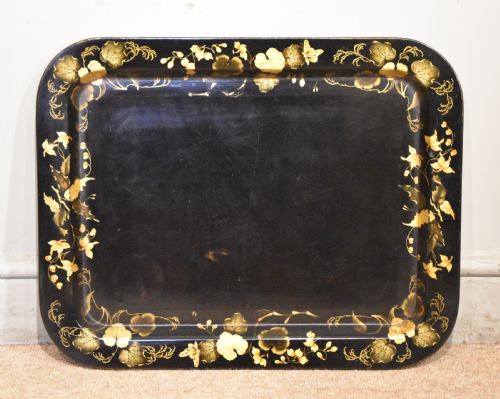
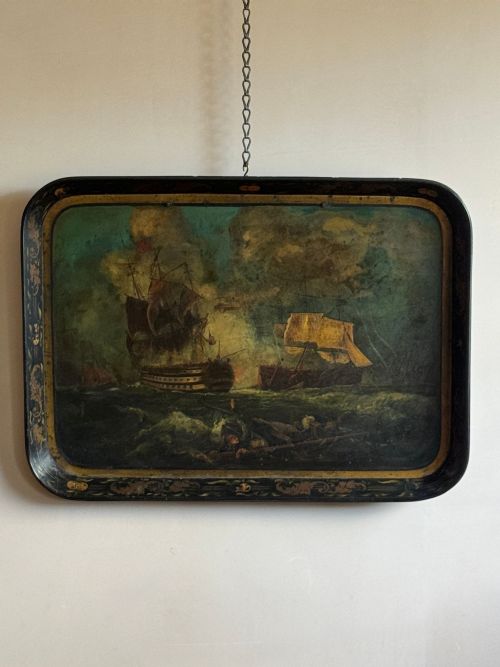
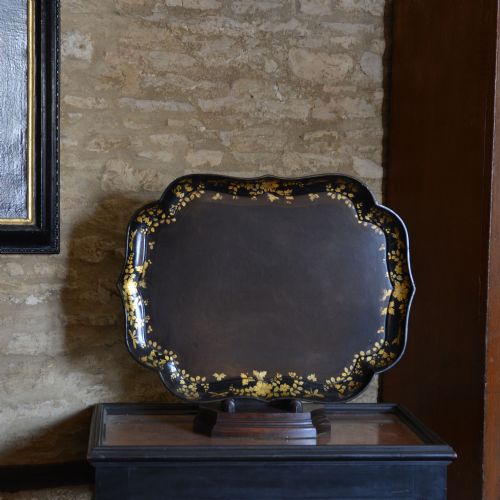
An antique japanned tray brings glossy hand-painted scenes and gilded borders to a room, serving as a striking tabletop or resting on a later stand.
Antique Japanned Tray
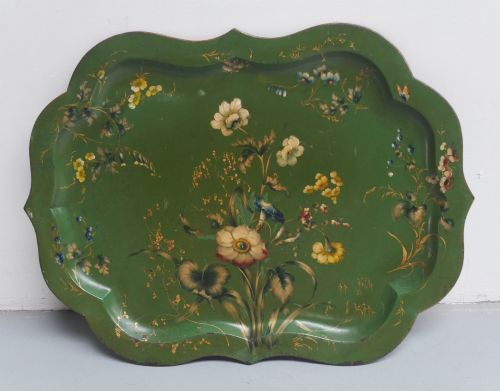
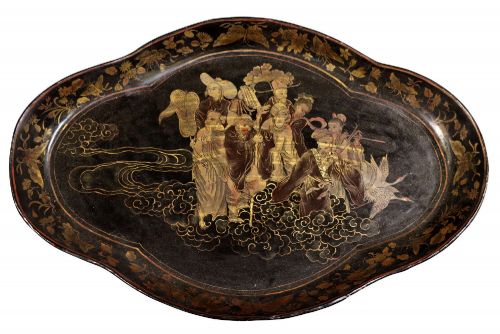
An antique japanned tray is a serving or decorative piece finished with dark lacquer, often in the Chinoiserie taste with figures, pavilions, and floral motifs. Buyers searching this phrase meet papier-mâché, painted toleware, and lacquered wood forms originating across the Georgian, Regency, and Victorian periods.
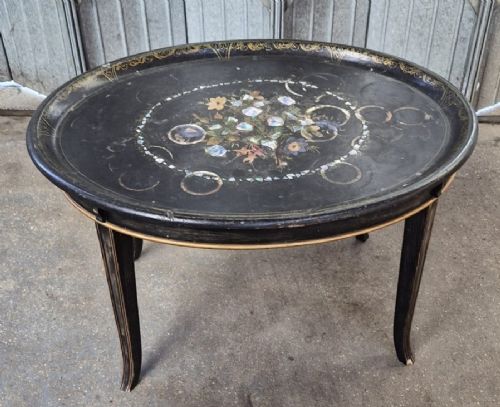
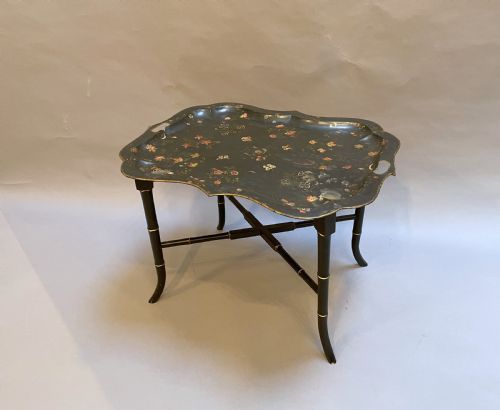
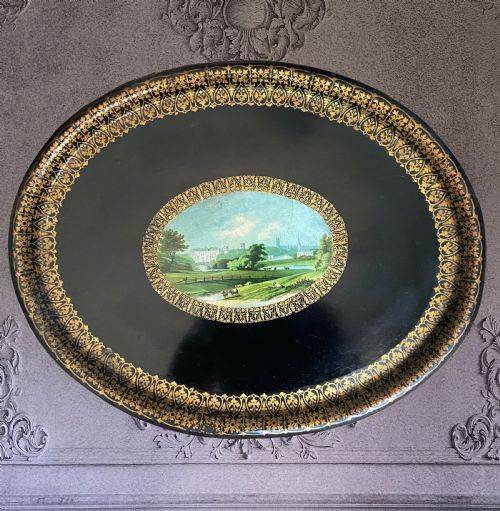
Many examples emerge in oval, rectangular, or kidney shapes, sometimes mounted on later folding stands to function as occasional tables, coffee tables, or tray tables. The surface decoration ranges from simple gilt borders to elaborate hand-painted narratives and hunting scenes.
Origins span English workshops, French Napoleonic centres, and Japanese export houses, showing the widespread fascination with lacquered wares. Pieces appear alongside related items such as desk sets, letter racks, and games, but the flat tray remains the primary form.
Materials and Construction
Makers built papier-mâché trays by pressing layers of paper pulp with glue and oil, then baking and smoothing the dense board to form a rigid blank. This material took fine curves like the kidney shape and provided a stable foundation for layers of dark lacquer.
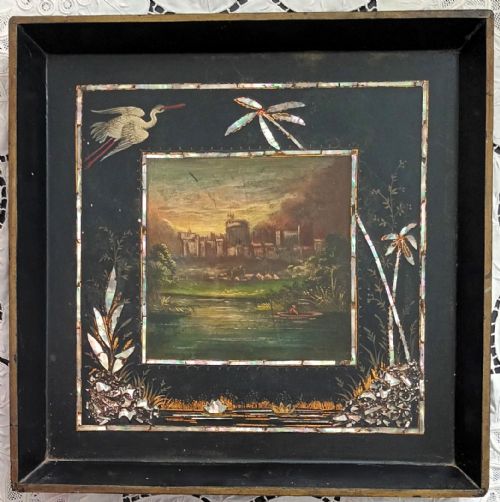
Toleware trays utilised sheet metal, specifically tinned iron, coated in layers of japan paint and stoved to create a hard, durable surface. Artisans applied gold leaf, gilding, and hand-painted pigments directly onto the prepared dark grounds, often incorporating mother-of-pearl inlay for added depth.
Antique Japanned Tray Retail Price Guide 2026
Typical asking prices for japanned tray among the pieces listed under this phrase on Sellingantiques today, from the lower quarter to the upper quarter. They describe what is for sale here now, not the wider market.
Listings feature papier-mâché, toleware, and lacquered wood items spanning the Georgian, Regency, and Victorian periods.
Distinctions in Quality
The sophistication of the hand-painted detail and the crispness of the gilt decoration separate standard production from masterwork pieces. Skilled brushwork in pictorial scenes, such as architectural landscapes or figurative narratives, denotes superior craftsmanship.
The integrity of the core material - whether heavy pressed papier-mâché or solid metal toleware - determines durability and weight. Superior pieces retain their original glossy finish and deep lacquer without extensive crazing or structural distortion of the edges.
Henry Clay·Jennens and Bettridge·H. Meeson
The Antique Japanned Tray Glossary
- Japanning
- European imitation of East Asian lacquerwork, created by applying layers of varnish and resin onto a prepared base. Artisans cured the surface with heat to achieve a hard, lustrous finish.
- Papier-mâché
- A composite material formed from paper pulp or layered paper sheets mixed with binding agents. It was moulded under pressure and baked to create lightweight, sturdy trays.
- Toleware
- Painted or lacquered sheet metal items, particularly associated with Welsh centres like Pontypool. The iron plate received multiple coats of japan to protect against rust and wear.
- Chinoiserie
- A European artistic style reflecting Chinese motifs and imaginary oriental landscapes. It heavily influenced the painted decoration on lacquer and papier-mâché trays.
- Gilding
- The application of gold leaf or gold powder onto the surface of the tray. It highlights borders, frames pictorial scenes, and accentuates the dark lacquer background.
Antique Japanned Tray: Frequently Asked Questions
How do I use an antique tray safely?
These trays function well as display surfaces on coffee tables or sideboards, and many sit securely atop dedicated folding stands. Avoid placing hot dishes or liquids directly on the fragile lacquer surface.
Protect the finish by using coasters and soft felt pads underneath objects. Gentle dusting with a dry microfibre cloth preserves the historical varnish.
What is the difference between papier-mâché and toleware?
Papier-mâché uses compressed paper pulp and binding agents to create a lightweight, rigid board that takes smooth curves and deep dark finishes. Toleware consists of tinned iron sheet metal coated in japan paint.
Both materials received similar decorative treatments including hand-painting and gold leaf, but metal toleware feels heavier and cooler to the touch than paper composites.
How do I date a painted tray?
Dating relies on the core material, the style of the painted decoration, and any maker marks stamped on the reverse. Georgian and Regency examples often feature crisp Chinoiserie landscapes and gilt borders.
Victorian pieces frequently introduce mother-of-pearl inlay and broader botanical or figurative scenes. Later nineteenth and early twentieth century items may repeat Regency styles on independent stands.
Can I put a tray on a stand?
Many trays were paired with custom stands during the nineteenth or twentieth century to convert them into functional occasional tables. These stands allow the decorative surface to be viewed at a comfortable height in a living space.
Stands are often later additions while the tray itself retains its original period manufacture. This conversion provides a practical way to live with fragile serving pieces.