





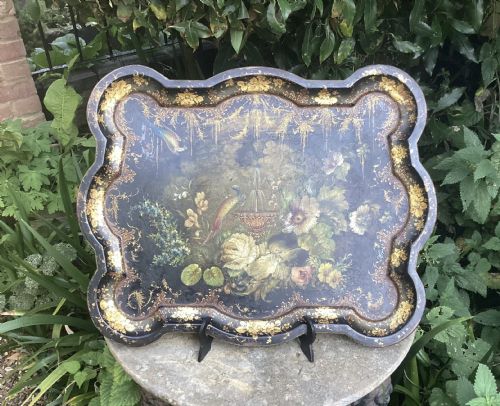


Victorian Toleware Tray
These Victorian toleware tray pieces combine painted metal and fine gilding, offering both historical depth and striking visual character for any interior.
Victorian Toleware Tray
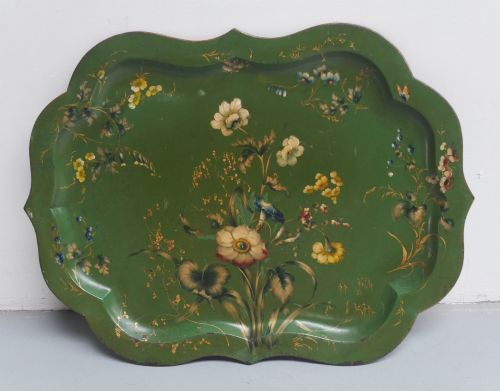
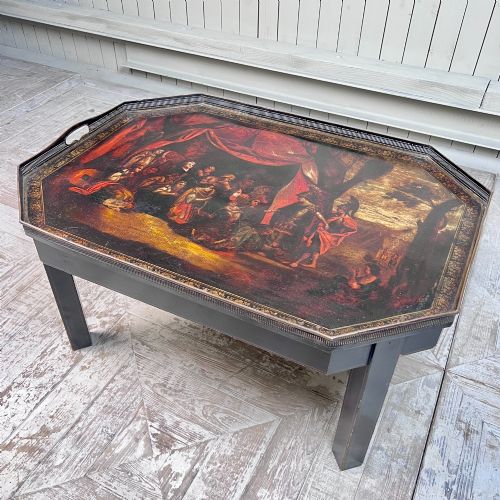
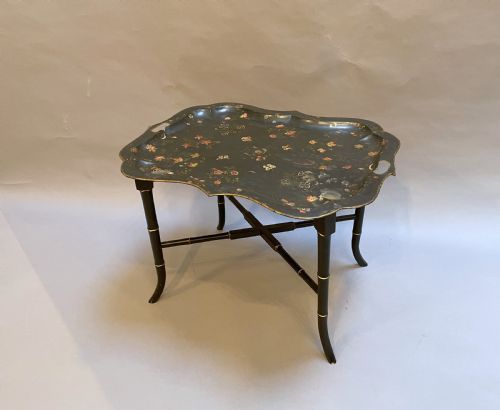
A victorian toleware tray represents the intersection of durable metalwork and decorative painting from the nineteenth century. These items encompass serving trays, decorative trays, and larger examples adapted into coffee tables or side tables.
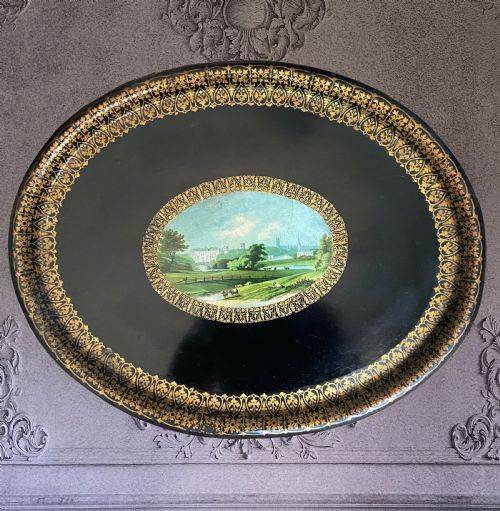
Most pieces seen here belong to the nineteenth century, including specific dates like 1870, alongside related Regency and French Second Empire examples. Forms range from octagonal and oval trays to complete sets of boxes with trays.
Makers and origins span English production centres such as Pontypool as well as French workshops. Buyers will find both simple painted metal surfaces and elaborate pictorial narratives.
Materials and construction methods
Makers fashioned these objects primarily from sheet iron and metal, shaping them into trays and boxes before applying protective layers. Wood often supports pieces that have been adapted into tables.
Surface decoration relies on paint, lacquer, and gold leaf or gilt embellishment. Artisans executed handpainted designs, sometimes incorporating complex figurative scenes and gilt highlights onto the dark toleware ground.
Victorian Toleware Tray Retail Price Guide 2026
Typical asking prices for victorian toleware tray among the pieces listed under this phrase on Sellingantiques today, from the lower quarter to the upper quarter. They describe what is for sale here now, not the wider market.
Materials recorded in this selection include paint, toleware, lacquer, gold leaf, metal, wood, sheet iron, and gilt.
Distinctions in quality
Quality rests heavily on the ambition and execution of the painted surface, moving from simple decorative borders to intricate historical or Biblical narratives. Fine examples display skilled brushwork and sophisticated use of gold leaf.
The integrity of the underlying metalwork and the preservation of the original lacquer or paint layers define the better specimens. Pieces retaining their crisp gilding and stable sheet iron structure stand apart from heavily worn equivalents.
H. Meeson
The Victorian Toleware Tray Glossary
- Toleware
- Painted or lacquered metalware, typically manufactured from sheet iron during the eighteenth and nineteenth centuries. This material formed the base for domestic items like trays and boxes.
- Pontypool
- A Welsh town renowned for its metalplate industry and distinctive toleware production. Pontypool pieces often feature glossy dark finishes and fine handpainting.
- Gilt
- Gold leaf or gold paint applied to the surface of the metal to create decorative highlights and borders. It catches the light and emphasises the contours of the tray.
- Regency
- An English stylistic period preceding the Victorian era, noted here in pieces featuring refined gilt embellishment. Design during this phase drew heavily on classical motifs.
Victorian Toleware Tray: Frequently Asked Questions
What is a toleware tray?
A toleware tray is a painted or lacquered metal object, usually made of sheet iron, designed for serving or display during the nineteenth century and earlier periods.
These items often feature handpainted floral motifs, landscapes, or narrative scenes enhanced with gold leaf and gilt details.
How were these trays used?
Originally utilised for serving drinks or food in prosperous households, many examples also served a purely decorative function in formal rooms.
Today, larger trays are frequently mounted on bases to function as coffee tables or side tables while retaining their original painted surfaces.
How do I care for toleware?
Protect the painted and lacquered surface by keeping the tray away from direct sunlight and excessive moisture. Dust gently with a dry, soft cloth rather than using liquid cleaners.
Avoid placing hot or wet items directly onto the antique finish to preserve the original paint and gilt embellishments.
How can I tell the period?
Dating relies on stylistic clues such as the Regency gilt embellishments, Victorian Chinoiserie patterns, or specific nineteenth century manufacturing traits in the sheet iron.
Examining the wear of the paint, the composition of the metal, and any attributable workshop styles helps place the piece within its historical context.