


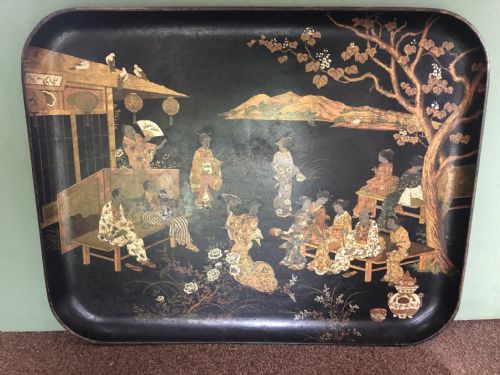

Black Papier Mache Platter
These black papier mache platter items bring glossy depth and hand-painted artistry to a room, offering both historic utility and striking display presence.
Black Papier Mache Platter
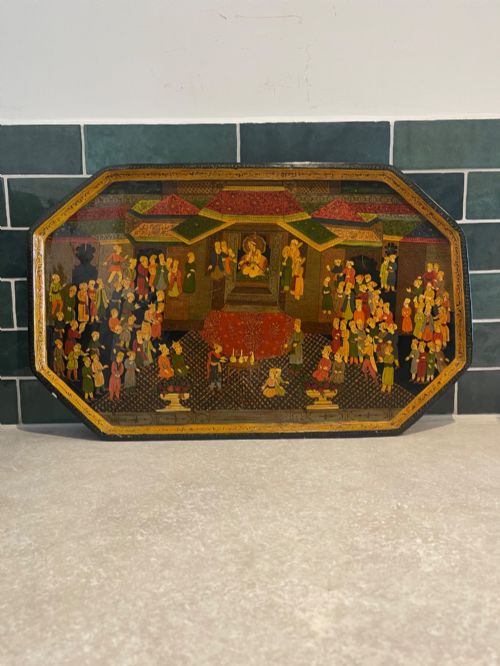
A black papier mache platter combines layers of reinforced paper pulp with deep dark lacquered finishes to create a robust serving or display surface. Buyers seeking a black papier mache platter encounter items spanning the Georgian, Regency, and Victorian eras, alongside distinct Kashmiri and Japanese export examples.
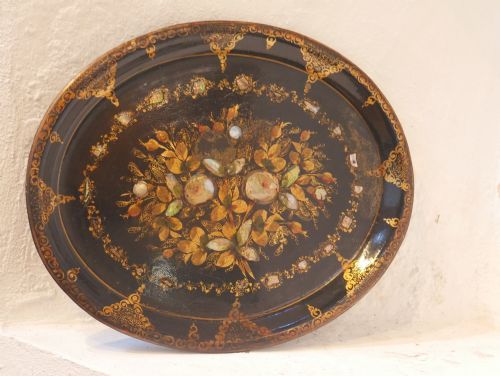
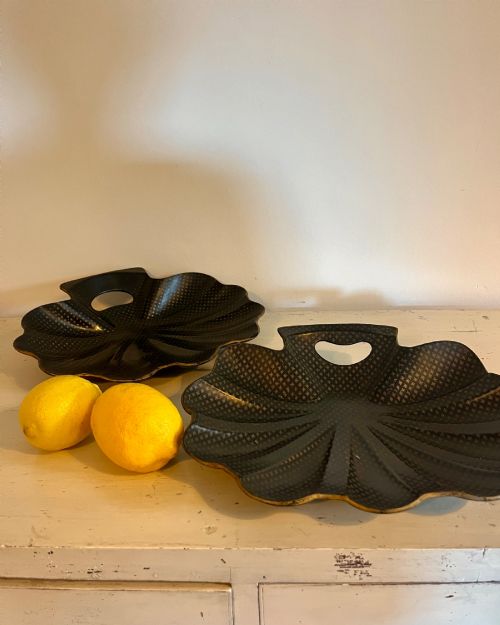
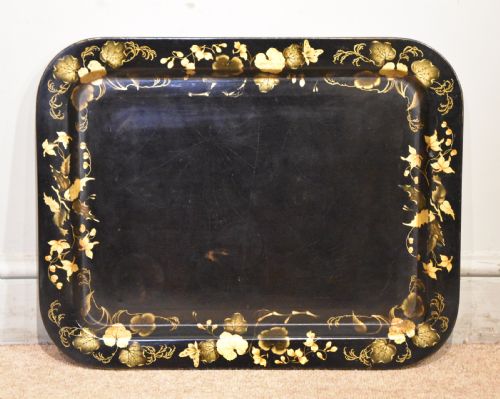
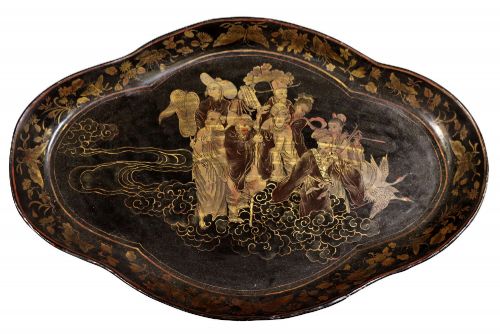
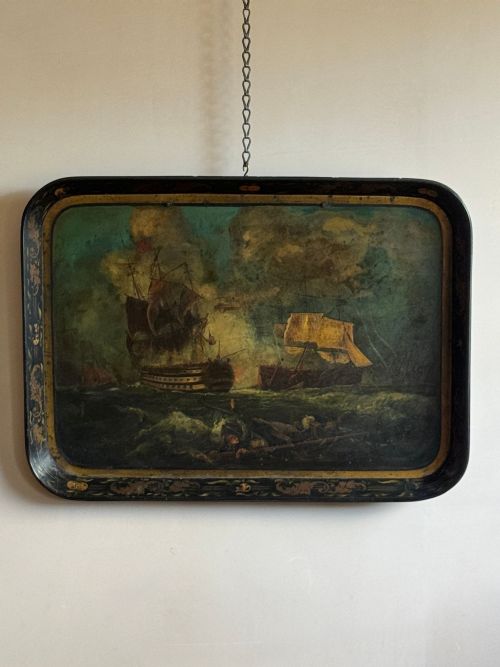
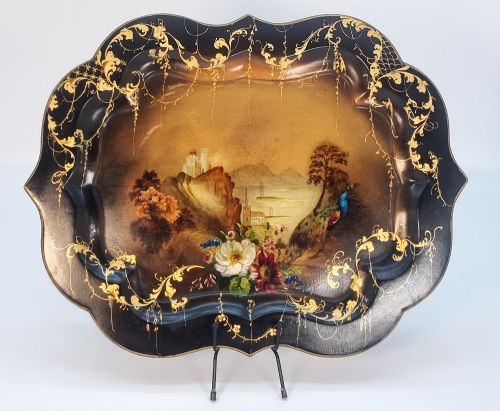
These pieces primarily manifest as decorative trays and serving trays, appearing in oval, rectangular, and kidney-shaped forms. Many examples feature intricate gilded borders, Chinoiserie motifs, or hand-painted landscapes and hunting scenes.
The material's versatility allowed makers to fashion everything from small dishes to massive serving surfaces. They served both practical dining functions and decorative display roles in period drawing rooms.
Materials and construction methods
The core construction involves layers of paper pulp mixed with glue and resin, pressed into moulds and baked until rigid. This produced a surprisingly tough foundation that resisted warping better than solid wood.
Makers applied multiple coats of dark lacquer to achieve the characteristic deep black finish, often rubbing the surface smooth between applications. Artisans then decorated the dried panels using gold leaf, metallic gilding, and hand-painted pigments.
Many finer surfaces incorporate inlaid mother-of-pearl to catch the light and add shimmering tonal variation to the dark ground. The combination of lacquer and gilding created a durable, lustrous surface capable of holding decorative detail.
The listed selection spans from the late eighteenth century through the Victorian era, incorporating English, French, Kashmiri, and Japanese export origins.
Distinctions in craftsmanship and design
Quality rests primarily in the crispness of the painted decoration and the depth of the lacquer finish. Superior examples display finely rendered hunting scenes, landscapes, or Chinoiserie details executed by skilled hands rather than hurried brushwork.
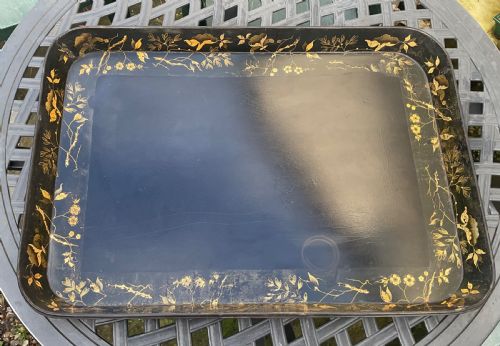
The application of gold leaf and mother-of-pearl inlay dictates the tier of the piece. Finer trays utilise precise, hand-applied gilding along the borders, whereas simpler items feature basic painted lines.
Structural integrity of the moulded paper foundation also separates standard utility items from elite production pieces. Heavier gauge pulp and stable lacquering prevent the surface crazing and flaking seen in lesser examples.
Jennens and Bettridge·Clay
The Black Papier Mache Platter Glossary
- Papier-mâché
- A composite material made from paper pulp or reinforced paper sheets mixed with binding agents, then moulded and dried. This substance forms the lightweight yet rigid foundation for the entire tray.
- Japanned
- A European imitation of East Asian lacquerwork, typically achieved through layers of dark varnish baked onto a rigid substrate. The technique creates a glossy, dark surface mimicking traditional oriental lacquer.
- Chinoiserie
- A European artistic style reflecting Chinese aesthetic influences, commonly featuring pavilions, exotic figures, and imaginative landscapes. This style frequently appears rendered in gold paint against the black ground of the tray.
- Mother-of-pearl
- The iridescent inner layer of certain mollusc shells, harvested and cut into thin plates for inlay work. Craftsmen embed these shimmering pieces into the lacquer to create luminous highlights.
- Toleware
- Metalware painted and lacquered in imitation of genuine papier-mâché or oriental lacquer items. These pieces share similar decorative palettes and purposes despite their different metallic base material.
Black Papier Mache Platter: Frequently Asked Questions
How do I clean a papier-mâché tray?
Dust the surface gently with a soft, dry cloth to remove loose particles. Avoid using water, chemical solvents, or abrasive cleaners, as moisture can penetrate the lacquer and damage the paper base.
If the tray requires more attention, consult a professional conservator specialising in lacquered or painted antiques. Excess moisture remains the primary threat to the stability of the historical material.
Can I still use these trays for serving food?
Most historic trays function best as decorative objects or dry display pieces rather than active serving vessels. Direct contact with moisture, hot liquids, or sharp cutlery can easily scratch the delicate lacquer and painted scenes.
Placing them on sideboards, coffee tables, or mounting them for wall display protects the fragile finish while allowing the artwork to be enjoyed.
What is the difference between Regency and Victorian pieces?
Regency items often lean towards classical restraint, featuring elegant gilded borders and refined landscape painting. They frequently display maker stamps associated with notable workshops of the early nineteenth century.
Victorian examples sometimes embrace more exuberant decoration, including elaborate mother-of-pearl inlay, varied geometric shapes like the kidney form, and diverse stylistic influences such as Japanese export aesthetics.
Why are some trays called Japanese export?
These specific pieces reflect the nineteenth-century Western fascination with Eastern design following the opening of Japanese trade routes. Artisans in the East produced items specifically tailored to European tastes while maintaining traditional lacquer techniques.
Such pieces combine local decorative motifs with the standard European tray formats popular in the Victorian period.