


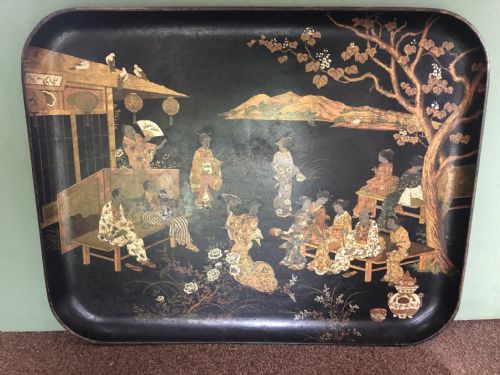


19th Century Lacquered Platter
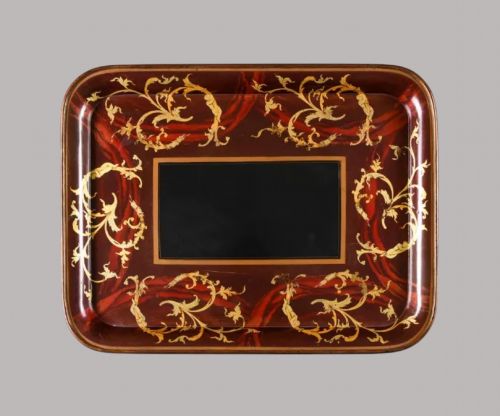
A 19th century lacquered platter brings hand-painted scenes and lustrous dark surfaces into a room, offering both decorative presence and historic utility.
19th Century Lacquered Platter
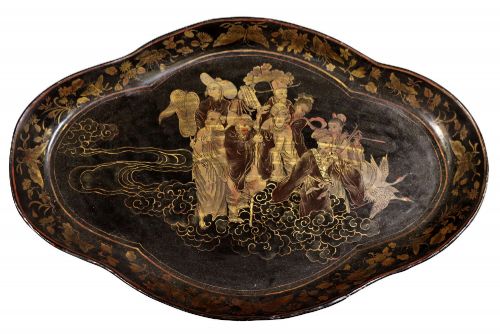
When you search for a 19th century lacquered platter, you are looking at serving trays, decorative trays, and chargers shaped from papier-mâché, metal, or porcelain, finished with hard protective coatings. The version you are most likely to meet on this page is the English papier-mâché tray, often oval or kidney-shaped with a dark lacquered surface.
The evidence spans the Georgian, Regency, and Victorian periods, alongside Japanese export pieces from the Meiji and Edo periods. These objects served functional roles in wealthy households before transitioning into decorative wall pieces and display items.
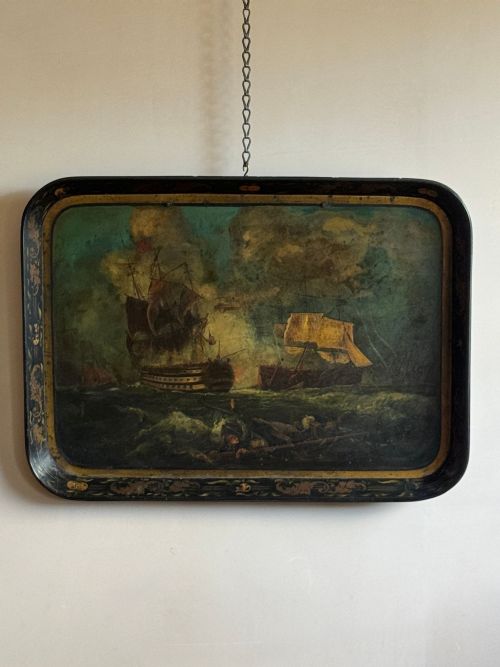
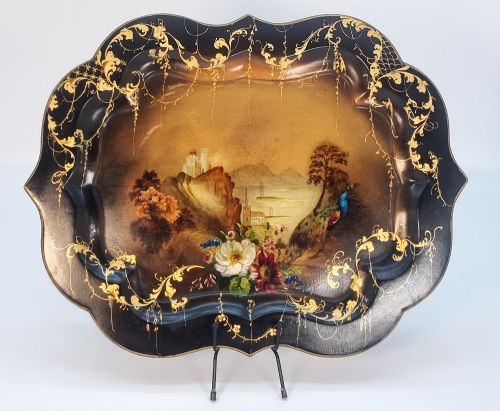
Form follows utility, ranging from compact rectangular shapes to large proportions designed for heavy service. Makers styled them with Chinoiserie motifs, landscape hunting scenes, and gilded borders that reflect the aesthetic tastes of the nineteenth century.
Materials and Construction
Papier-mâché formed the core of many English pieces, built from layers of paper pulp and binders pressed into heavy moulds before drying hard. This stable base received coats of dark lacquer that provided a smooth canvas for subsequent decoration.
Painters applied gold leaf, coloured paint, and occasionally mother of pearl inlay directly onto the dark surface. Japanese export examples utilised alternative techniques, including porcelain cores coated in cinnabar lacquer.
Finishing involved rubbing the surface to a deep sheen and applying varnishes to protect the delicate painted scenes and gilded borders from everyday wear.
The listings show papier-mâché as the dominant material, paired with painted, gilded, and mother of pearl decoration across the nineteenth century.
Judging Quality and Execution
The distinction between standard domestic trays and exceptional examples rests on the skill of the painting and the complexity of the surface ornamentation. Pieces featuring detailed hunting scenes or intricate Chinoiserie landscapes demonstrate a higher grade of artistic handwork than plain surfaces.
Scale and structural ambition also set pieces apart, with large proportions and unusual forms like kidney shapes demanding greater technical control during the moulding process. The preservation of original gilding and early painted decoration largely determines the visual impact of each piece.
Jennens and Bettridge·Clay
The 19th Century Lacquered Platter Glossary
- Papier-mâché
- A composite material made from paper pulp, bound with glue or resin, and pressed into rigid shapes suitable for heavy lacquer finishing.
- Chinoiserie
- European artistic style reflecting Chinese motifs, commonly featuring pagodas, figures, and exotic landscapes painted in gold and dark colours.
- Japanned
- European work imitating Asian lacquer using layered varnishes and paints on a dark base.
- Cinnabar lacquer
- Carved red lacquer built up in numerous layers over a core material such as porcelain.
- Totai
- A Japanese technique where lacquer is applied over a porcelain or ceramic body.
19th Century Lacquered Platter: Frequently Asked Questions
How were these platters used originally?
Household staff used these trays to serve tea, wine, and food in the reception rooms of large houses. Their sturdy papier-mâché or metal construction handled the weight of ceramics and glassware.
Over time, many of these pieces transitioned from functional pantry items to decorative objects displayed on stands or hung on walls.
How do I clean a lacquered tray?
Maintenance requires only a soft, dry cloth to remove dust from the surface. Moisture and chemical cleaners damage the historic lacquer and painted details.
Keeping the piece away from direct sunlight and damp environments preserves the original finish and gold leaf.
What is the difference between English and Japanese export trays?
English trays typically rely on a papier-mâché foundation decorated with painted hunting scenes, landscapes, or Chinoiserie motifs under European ownership. Japanese export pieces often incorporate traditional Asian materials like cinnabar lacquer and porcelain.
Both traditions date to the nineteenth century but reflect distinct regional craftsmanship and stylistic influences.
Are these platters safe for serving food today?
Historic lacquers and paints contain materials that are not graded for modern food safety standards. Surface wear and age make them unsuitable for direct contact with edibles.
Collectors treat them as decorative antiques rather than functional tableware.