




Gold Lacquer Tea Tray
A gold lacquer tea tray brings rich dark surfaces and metallic detail to a room, offering both a decorative centrepiece and a functional serving surface.
Gold Lacquer Tea Tray
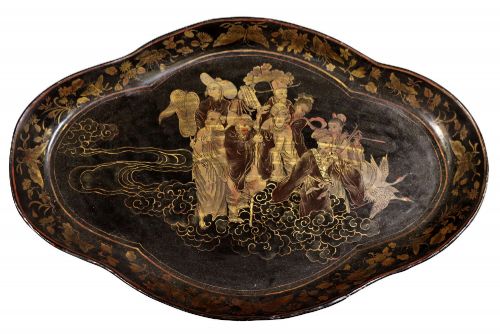
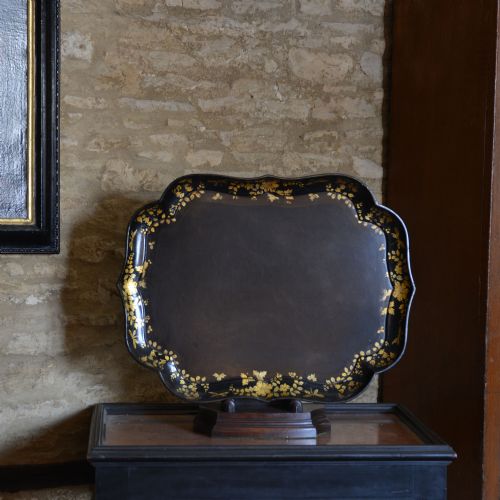
A gold lacquer tea tray combines deep dark finishes with metallic decoration, serving as both a functional piece and a striking display item. These items appear across the nineteenth century, including the Regency, Georgian, and Victorian periods.
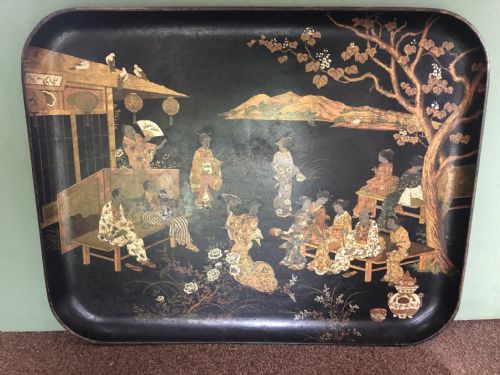
Buyers will encounter rectangular and oval trays, alongside circular coffee tables and occasional tables formed by placing trays onto stands. Many examples incorporate Chinoiserie motifs or Japanese export designs from the Edo and Meiji eras.
English interpretations run from early nineteenth-century productions by notable makers through to Edwardian Chinoiserie variations. The forms vary from large hanging wall pieces to serving trays and dedicated tray tables.
Materials and Construction
The foundation of these pieces relies primarily on papier-mâché, wood, and timber, built to provide a sturdy base for the decorative skin. Artisans applied layers of lacquer to seal and smooth the surface before adding painted scenes or gilded details.
Gold leaf and gilt work provide the characteristic metallic highlights that catch the light against dark grounds. Some examples integrate brass fixtures or later wooden stands to adapt flat serving trays into functional tables.
Some nineteenth-century hunters immortalized their pursuits not in oil on canvas, but across the glossy surface of a tea tray.
Evaluating Quality and Craftsmanship
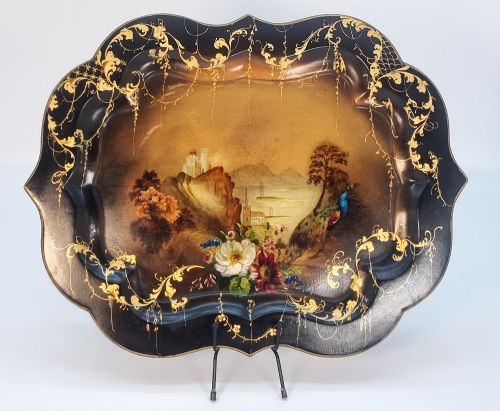
The distinction between standard production and top-tier work rests on the crispness of the hand-painted details and the depth of the lacquered finish. Finer examples display intricate landscapes, hunting scenes, or complex Chinoiserie motifs executed with exceptional precision.
Maker attribution elevates certain pieces, particularly those bearing signatures or stamps from recognised workshops such as Jennens and Bettridge or Clay. The integrity of the papier-mâché core and the preservation of the original gilt surface also dictate the standing of an individual piece.
Jennens & Bettridge·Clay
The Gold Lacquer Tea Tray Glossary
- Papier-mâché
- A composite material made from paper pulp or reinforced paper sheets mixed with glue, then moulded and dried to form a rigid base for lacquering. It provides a lightweight yet durable substrate for decorative serving pieces.
- Japanese Export
- Goods produced in Japan specifically for Western markets during periods such as the Edo and Meiji eras. These pieces often showcase traditional lacquer techniques adapted to European tastes.
- Gilt
- A thin layer of gold applied to the surface of wood, paper composite, or metal to simulate solid gold decoration. It creates the luminous contrast characteristic of these dark lacquer grounds.
- Regency
- An English design period spanning the early nineteenth century, known for classical restraint and refined ornamentation. Trays from this era frequently exhibit elegant proportions and sophisticated painted borders.
Gold Lacquer Tea Tray: Frequently Asked Questions
Were these trays used for serving tea?
Many examples served practical duties during tea service, carrying porcelain teapots, cups, and silverware across drawing rooms. Their sturdy papier-mâché construction handled daily domestic use.
Over time, many of these functional serving pieces transitioned into decorative wall displays or found new life mounted on custom stands as occasional tables.
How can I tell a Regency tray from a Victorian one?
Regency pieces often display classical motifs, restrained borders, and elegant proportions typical of the early nineteenth century. Makers from this era, such as Clay, established high standards for papier-mâché production.
Victorian and later Edwardian pieces frequently embrace busier Chinoiserie designs or more ornate landscape painting. The introduction of different stand configurations also helps distinguish mid-to-late nineteenth-century adaptations.
Can these trays be used as coffee tables?
Numerous pieces come mounted on dedicated stands, transforming traditional serving trays into functional low tables for modern living spaces. Some stands are contemporary adaptations while others date alongside the tray.
Placing a tray on a stand offers a practical way to enjoy the decorative top daily while keeping the fragile antique surface elevated and secure.