




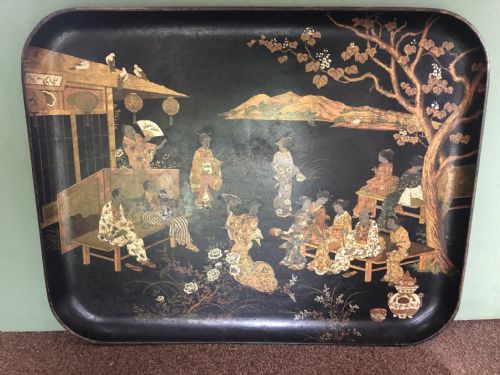
Edwardian Lacquer Tray
These edwardian lacquer tray pieces combine hand-painted Chinoiserie decoration with deep surface polish, offering functional serving surfaces and tables for period interiors.
Edwardian Lacquer Tray
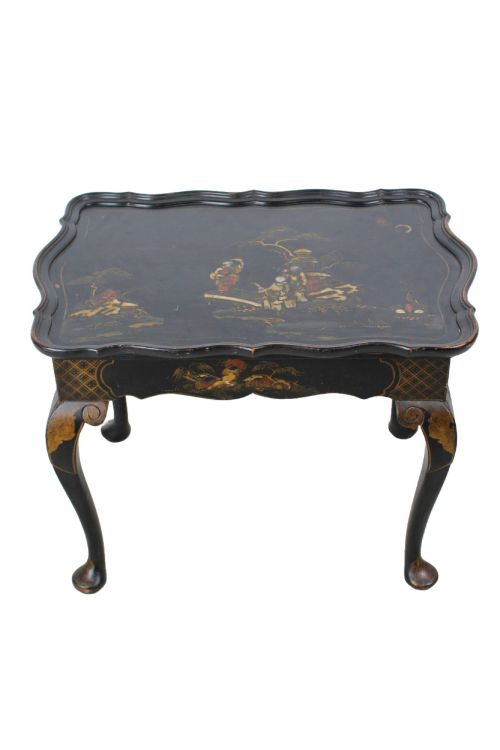
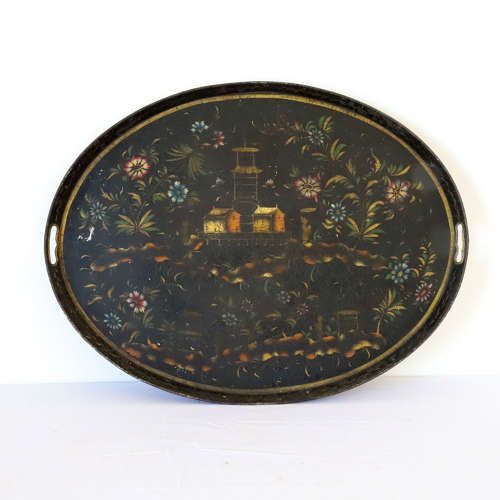
An edwardian lacquer tray search reveals a diverse mix of serving trays, tray tables, and decorative boxes spanning periods from the Regency era through to the early twentieth century. The primary forms encountered include rectangular and circular serving pieces, often elevated onto stands to function as coffee tables.
The selection encompasses English, Swedish, and Japanese export origins, displaying distinct regional adaptations of lacquer work and painting techniques. While true Edwardian examples sit alongside nineteenth-century and George V pieces, Chinoiserie decoration remains the defining aesthetic thread across the inventory.
Materials and construction
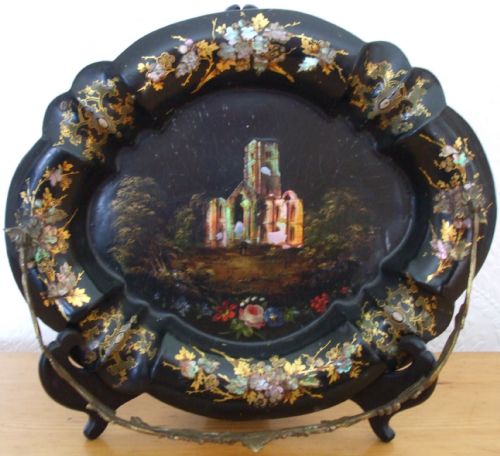
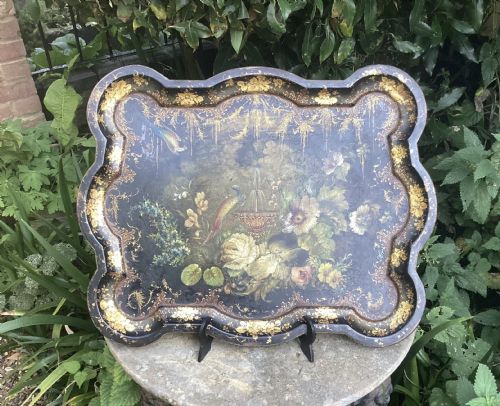
Makers utilised papier-mâché, ebonised wood, and traditional timber bases as foundations for the deep lacquer finishes that characterise these items. These surfaces frequently incorporate hand-painted motifs, gilt embellishments, and occasionally mother-of-pearl inlay to create contrasting decorative details.
Structural elements such as brass galleries, silver-plated rims, and fitted stands provide functional support to the lacquer and papier-mâché bodies. The application of multiple layers of varnish builds a hard, glossy surface designed to withstand regular handling.
Object forms on this page include circular and rectangular serving trays, card baskets, jewellery boxes, and coffee tables.
Judging quality in lacquer work
The sophistication of the hand-painted Chinoiserie detail and the depth of the lacquer finish distinguish superior examples from simpler production. Pieces featuring integrated stands, gilt embellishments, or intricate mother-of-pearl additions demonstrate higher standards of craftsmanship.
The preservation of the original surface polish and the integrity of the underlying papier-mâché or timber substrate dictate the overall condition quality. Finer items retain crisp painted lines and stable edges without significant crazing or structural distortion.
The Edwardian Lacquer Tray Glossary
- Lacquer
- A durable resin finish applied in multiple coats to wood or papier-mâché bases. It provides a hard, glossy protective layer that accepts painting and polishing.
- Chinoiserie
- European artistic style reflecting Chinese motifs and decorative schemes. It appears frequently on trays and furniture through painted figures, landscapes, and pavilions.
- Papier-mâché
- A composite material made from paper pulp or reinforced paper sheets pressed and dried. It forms a lightweight yet strong foundation for lacquer and gilding.
- Toleware
- Painted or lacquered sheet metal items produced in various decorative styles. These pieces often feature dark grounds with gilt or coloured ornamentation.
Edwardian Lacquer Tray: Frequently Asked Questions
How do I clean an antique lacquer tray?
Dust the surface gently with a soft, dry microfibre cloth to remove particles without scratching the varnish.
Avoid using water, chemical sprays, or abrasive cleaners, as moisture can penetrate cracks in the aged lacquer.
Can these trays be used for serving drinks?
Many examples are robust enough for light serving duties, particularly those mounted securely on rigid stands.
Care should be taken with hot liquids and condensation to prevent water rings or heat damage to the historic finish.
What is the difference between papier-mâché and wood trays?
Papier-mâché provides a moulded, lightweight body with smooth curved edges well-suited to detailed painting and deep gloss finishes.
Wooden trays offer greater structural rigidity, often incorporating ebonised frames, brass galleries, or fitted metal handles.