




Antique Italian Dresser
An antique Italian dresser brings grand provincial timber and painted Venetian scenes straight into a room, offering deep drawers set beneath shaped serpentine fronts.
Antique Italian Dresser
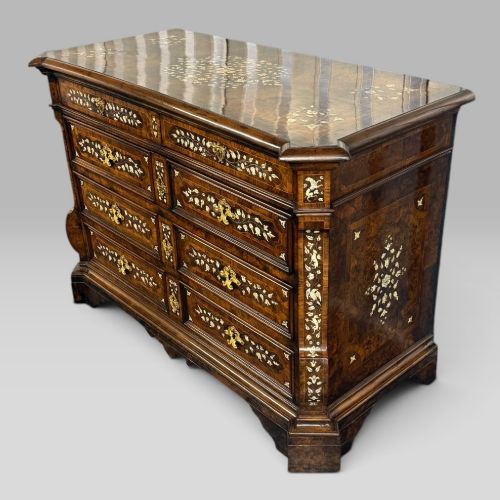
An antique Italian dresser typically appears as a commode or chest of drawers, built in walnut, fruitwood, and painted wood across the seventeenth, eighteenth, and nineteenth centuries. These pieces carry regional identities ranging from Lombard marquetry to Venetian painted surfaces and heavy Baroque carving.
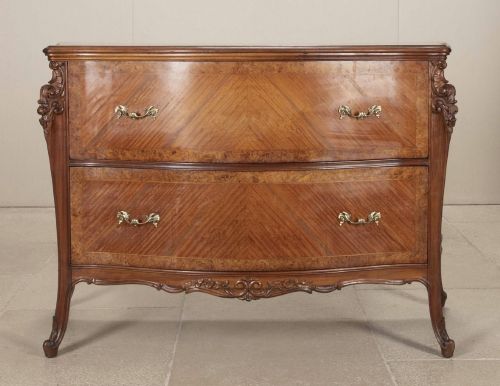
The most common examples on this page date from the eighteenth and nineteenth centuries, taking the form of serpentine commodes and bombe chests. Cabinets, sideboards, and occasional marble-top buffets also appear alongside smaller tables and caskets.
Materials and Technique
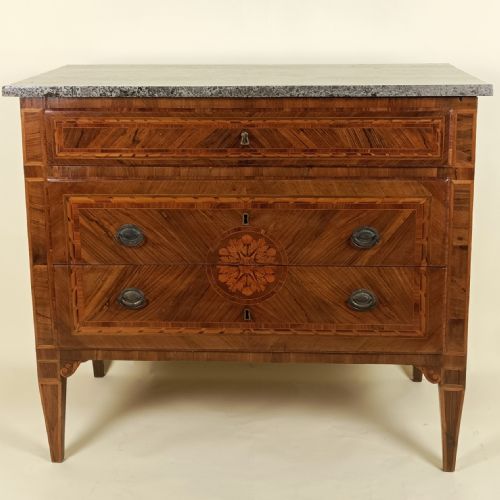
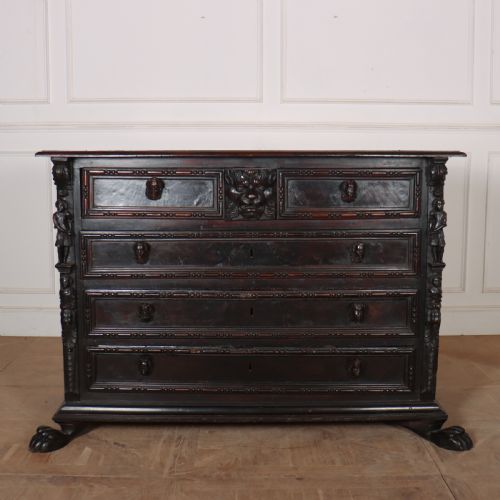
Cabinet makers relied primarily on solid walnut, burr walnut, fruitwood, and olive-wood, often laid as intricate marquetry or floral inlay across drawer fronts and tops. Carved details emerge directly from the timber on Baroque and Renaissance revival pieces.
Painted finishes form a distinct technique, utilising original pigments to show Venetian scenes, floral motifs, and aged patination on wooden carcases. Marble tops occasionally cap these chests, while brass hardware secures the handles and escutcheons.
Listings feature Italian case pieces spanning the seventeenth century through to nineteen-twenty, built in walnut, painted wood, and marble.
Assessing Quality
Quality rests upon the crispness of the carving, the precision of the marquetry, and the untouched nature of the painted or polished surface. Pieces attributed to specific workshops or grand ducal centres command attention through superior joinery and sculptural depth.
The handling of the serpentine and bombe curves dictates the refinement of the silhouette, requiring masterly shaping of the timber. Original hardware and undisturbed interior drawer construction further separate standard provincial items from exceptional commissions.
Grand Ducal Workshops
The Antique Italian Dresser Glossary
- Commode
- A low chest of drawers or cabinet originating in France but widely adopted in Italy during the seventeenth and eighteenth centuries. These form the primary style of furniture found in this category.
- Bombe
- A swelling, outward-curved contour characteristic of eighteenth-century case furniture. This bulging shape demands advanced woodworking skill to construct from solid or veneered timber.
- Marquetry
- The art of applying pieces of veneer to a structure to form decorative patterns and pictorial scenes. Craftsmen utilise various fruitwoods and contrasting timbers to achieve tonal depth.
- Serpentine
- A furniture front or top shaped with a central convex curve flanked by concave sweeps. This flowing line defines much of the Italian case furniture from the eighteenth century onwards.
- Bambocci
- Small carved figures or grotesque supports applied to furniture, particularly associated with seventeenth-century walnut pieces. The term derives from the style of genre painting popular in Rome.
Antique Italian Dresser: Frequently Asked Questions
What is an antique Italian dresser?
An antique Italian dresser generally refers to a commode, chest of drawers, or buffet produced in Italy between the seventeenth and nineteenth centuries. These pieces utilise local timbers such as walnut and fruitwood, often featuring serpentine fronts or painted Venetian decorations.
Craftsmen built them for grand palazzos and provincial homes alike, combining practical storage with sculptural presence. Regional variations span from Baroque carved walnut to Neoclassical marquetry.
How do I care for a painted commode?
Painted wooden surfaces require stable indoor humidity and protection from direct sunlight to prevent pigment fading and timber movement. Dusting should occur gently with a dry, soft cloth without the application of modern chemical polishes.
Wax finishes benefit from occasional professional maintenance using traditional beeswax. Avoid placing damp items directly onto antique painted tops.
How can I tell an eighteenth-century piece apart from a later revival?
Eighteenth-century commodes display construction methods, hand-cut dovetails, and timber shrinkage consistent with age. Tool marks on the interior secondary woods often reveal period hand-working techniques.
Revival pieces from the nineteenth century frequently employ machine-sawn elements and standardised fixings while imitating earlier Baroque or Rococo styles. Examining the drawer linings and internal framing clarifies the true date of manufacture.
Where were these chests originally placed?
Italian commodes and buffets historically stood in principal reception rooms, grand hallways, and state bedchambers. They functioned as display surfaces for porcelain and decorative objects while storing linens or valuables within the drawers.
In modern interiors, they serve similar roles in living rooms and dining spaces as focal storage furniture. Their decorative fronts make them suitable for freestanding placement against prominent walls.