
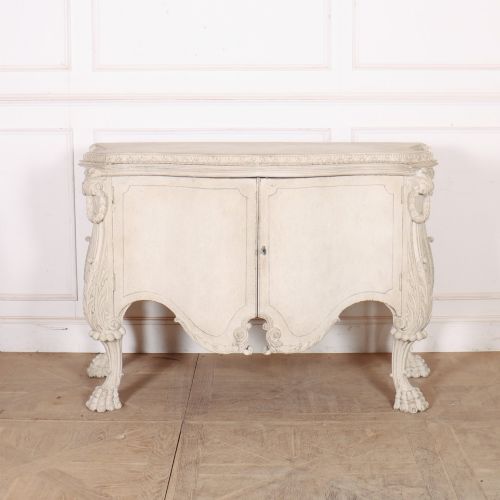


Italian Carved Sideboard
An italian carved sideboard brings deep walnut timber and monumental relief carving straight into a dining room or hall.
Italian Carved Sideboard
When you search for an italian carved sideboard, you encounter substantial storage furniture built primarily from walnut across several centuries. The examples here span periods from the seventeenth century through to the early twentieth century, taking forms such as sideboards, credenzas, cabinets on stands, and commodes. Renaissance Revival and Baroque styles dominate the selection, bringing heavy architectural presence and elaborate figural carving to interior spaces.
Most pieces you meet on this page are constructed from walnut, often featuring detailed relief work, caryatids, or figural motifs. Alongside traditional sideboards, the selection includes related storage forms like linen cupboards, painted marble-top commodes, and console tables. These items originate from various Italian regional traditions, ranging from provincial pieces to monumental architectural credenzas.
How they were made
Cabinetmakers built these pieces using solid walnut timber, applying hand-carving techniques to create deep relief decoration and sculptural figures. Metal elements such as brass and iron appear in structural hardware, hinges, and supports.
Certain pieces incorporate painted wood surfaces and oil paint alongside marble and glass elements, particularly in commodes and console tables. Master wood sculptors utilised traditional chisel work to execute complex motifs including caryatids and Renaissance Revival ornamentation.
The furniture spans stylistic revivals including Italian Baroque, Renaissance Revival, and Rococo forms.
What varies in quality
The distinction between ordinary and exceptional pieces rests upon the depth and ambition of the wood carving. Works attributed to named sculptors or possessing monumental scale display superior sculptural fluency in figures like caryatids.
Material selection and period integrity also determine the standing of a piece. Eighteenth-century and seventeenth-century examples exhibit denser timber grain and more confident proportion than later revival interpretations.
The Italian Carved Sideboard Glossary
- Caryatid
- A carved architectural figure serving as a support in place of a column. These sculptural supports frequently appear on the corners of substantial sideboards.
- Credenza
- An Italian base cabinet or sideboard used historically for storing and serving food. In antique terms, it denotes a monumental storage piece with rich relief work.
- Renaissance Revival
- A nineteenth-century architectural and decorative style drawing inspiration from fifteenth and sixteenth-century Italian art. This aesthetic accounts for many of the heavy walnut cabinets found in this category.
- Commode
- A low chest of drawers or cabinet standing on legs. Italian examples often feature painted wood finishes and marble tops.
Italian Carved Sideboard: Frequently Asked Questions
How do I date an antique Italian sideboard?
Dating relies on examining the timber construction, tool marks, and stylistic vocabulary used in the carving. Seventeenth and eighteenth-century pieces show distinct hand-tool methods and regional joinery compared to nineteenth-century revival items.
Secondary materials like iron hardware and marble inserts also provide clues to the period of manufacture. Comparing the specific revival style, such as Baroque or Renaissance, helps narrow down the decade.
What rooms suit an Italian carved sideboard?
These monumental storage pieces suit large dining rooms, entrance halls, or spacious living areas where their heavy walnut presence can anchor the room. Console tables and commodes offer similar carved walnut character for tighter spaces.
Positioning them against solid walls allows the relief carving and caryatids to catch natural light. Pairing them with simpler furnishings prevents the room from feeling overcrowded.
How should I care for carved walnut furniture?
Walnut timber benefits from consistent indoor humidity levels to prevent the wood from drying out or splitting. Gentle dusting with a dry, soft cloth preserves the intricate hand-carved relief work.
Avoid placing these cabinets near direct heat sources or strong sunlight that might alter the finish. Professional wax application maintains the natural lustre of the timber over time.
What distinguishes a credenza from a sideboard?
In Italian furniture traditions, a credenza typically denotes a lower, highly architectural storage cabinet with cupboards, often associated with the Renaissance period. Sideboards encompass a broader range of dining room storage forms developed across the eighteenth and nineteenth centuries.
Both types utilise heavy walnut construction and sculptural elements, but credenzas often lean towards formal architectural proportions.