

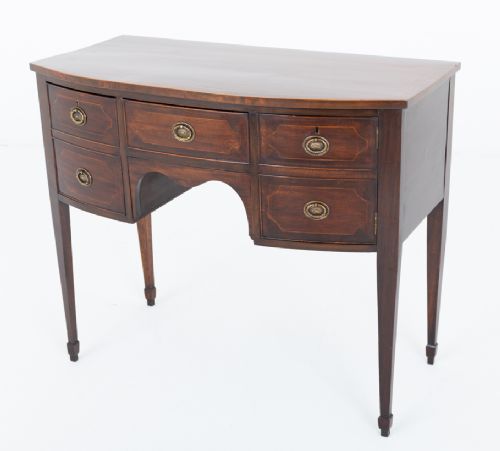
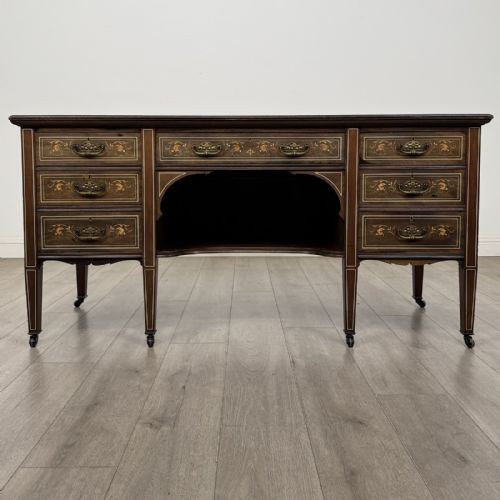

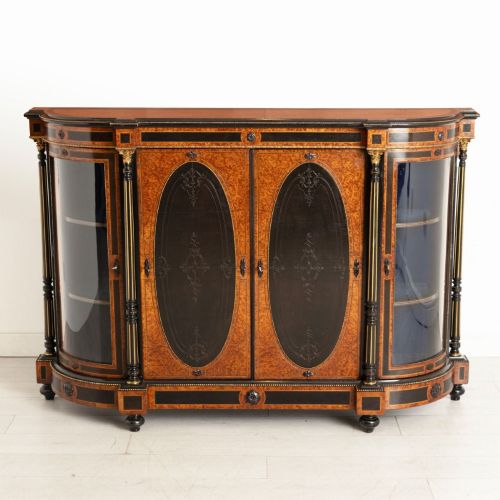
Antique Inlaid Credenza
An antique inlaid credenza brings rich timber and delicate marquetry into a room, offering both display space and substantial closed storage.
Antique Inlaid Credenza
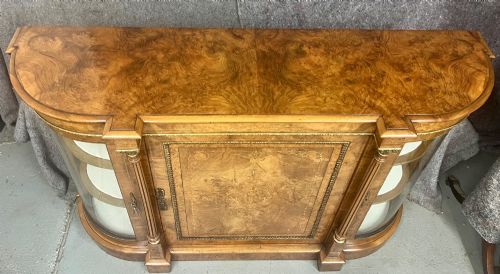
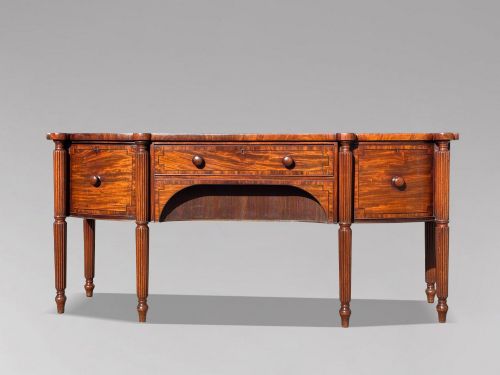
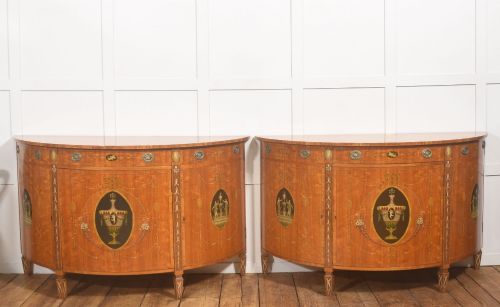
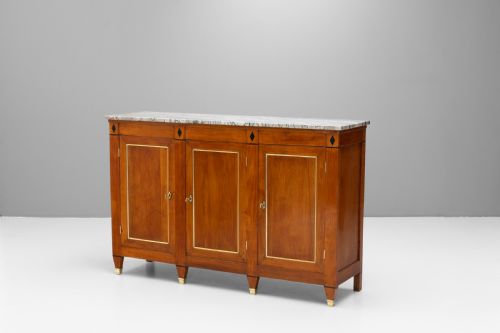
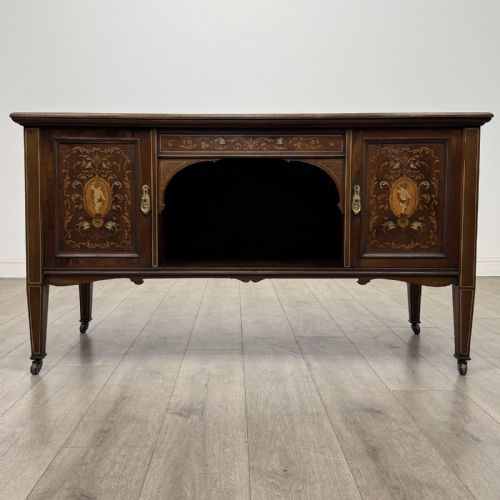
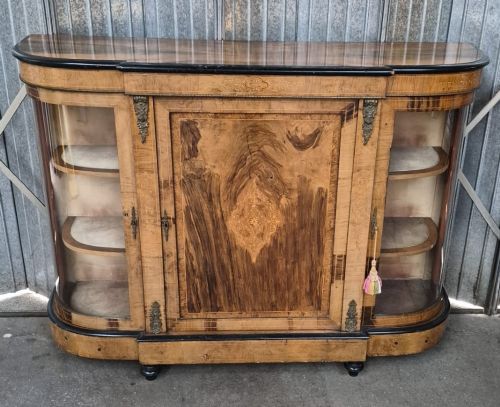
An antique inlaid credenza typically appears as a low, freestanding cabinet designed for principal reception rooms, combining central doors with curved side cupboards or open display sections. These pieces emerge predominantly from the nineteenth century, with Victorian examples frequently pairing burr walnut with marquetry and gilt-metal mounts.
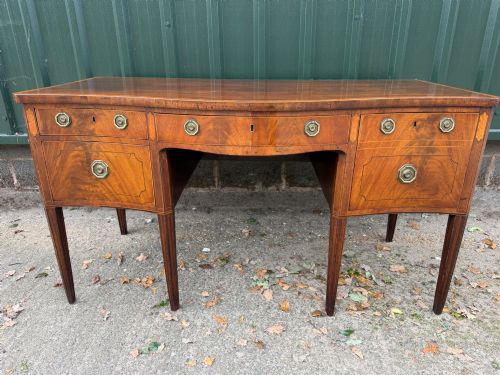
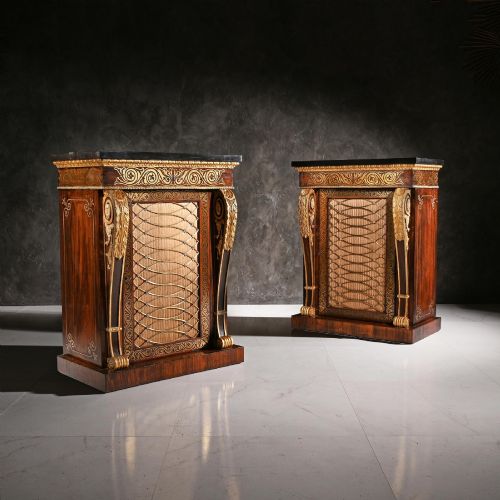
Makers and cabinet-makers working in the Georgian, Regency and Sheraton Revival styles also produced related sideboards and side cabinets featuring inlaid satinwood and mahogany. Buyers encounter forms ranging from serpentine fronts to straight three-door configurations, often enriched with glass panels or porcelain plaques.
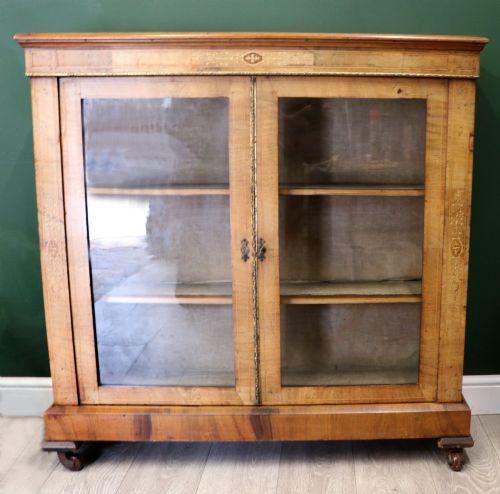
The category overlaps closely with sideboards, pier cabinets and display cabinets, reflecting how nineteenth-century households adapted these low storage pieces for china, books and decorative objects. Most surviving examples rely on timber frames finished with intricate contrasting wood veneers and decorative borders.
How They Were Made
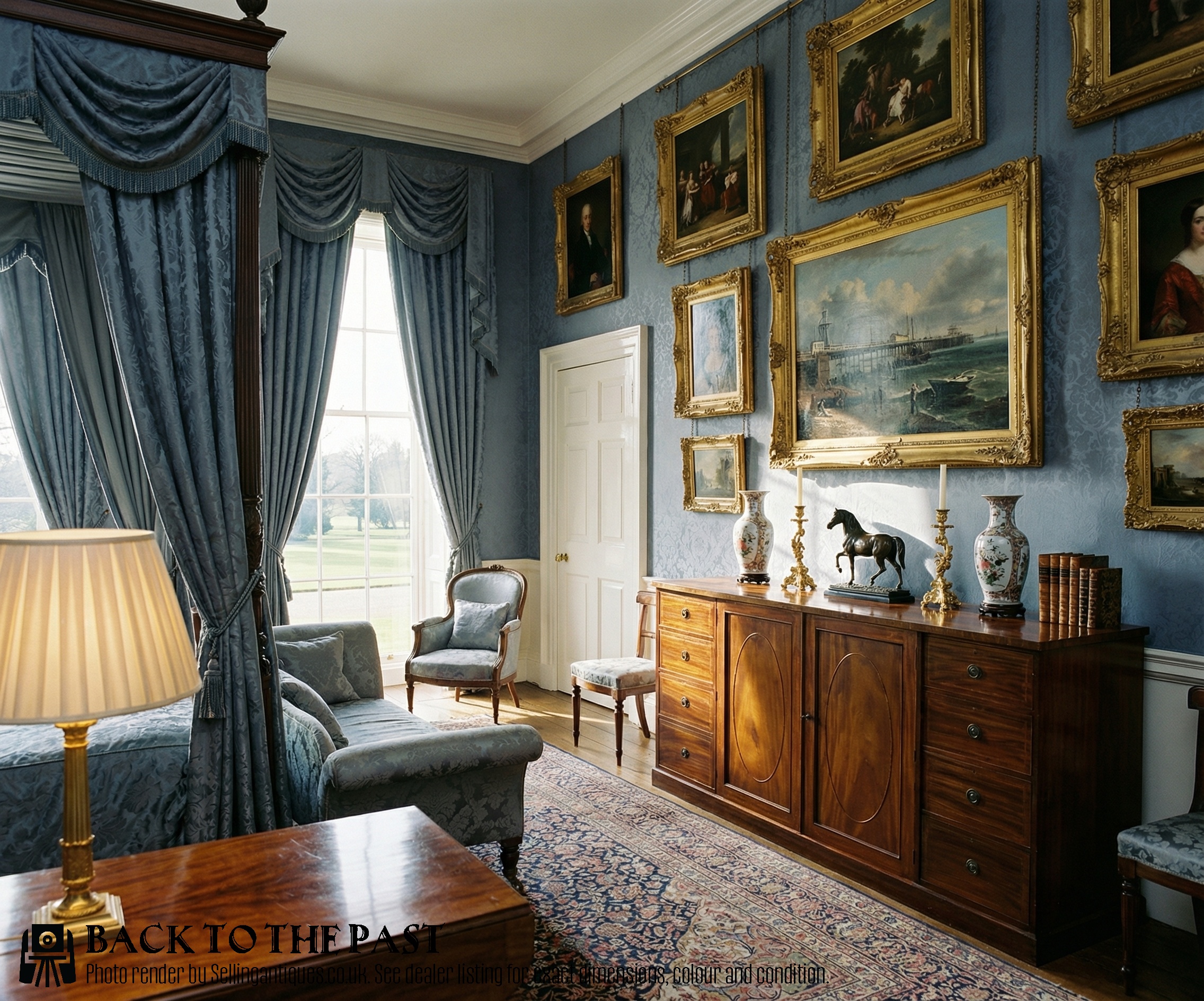
Cabinet-makers constructed the carcase from solid secondary timbers such as mahogany or pine before applying fine veneers of burr walnut, satinwood, rosewood or flame mahogany across the visible surfaces. Marquetry panels were cut by hand from contrasting dark and light woods to form floral or geometric motifs, then set flush into the primary timber.
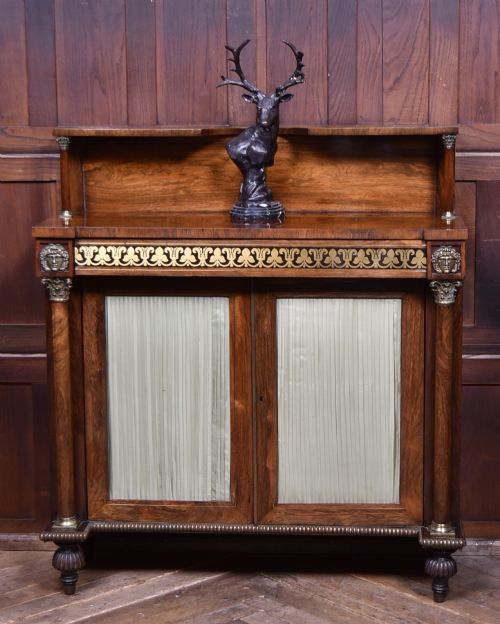
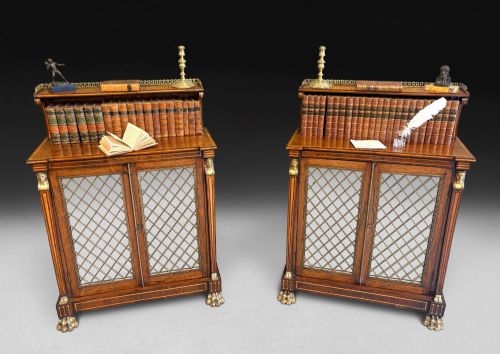
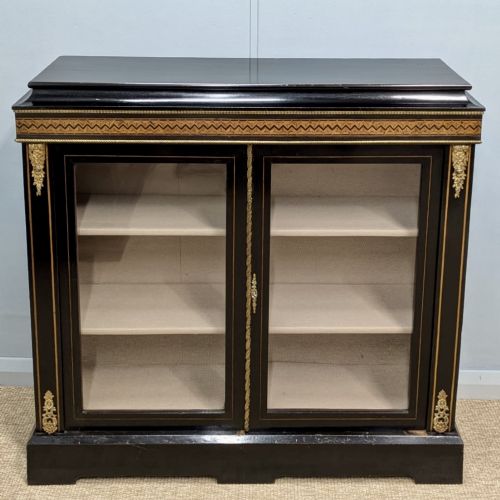
Ormolu mounts, cast in bronze and gilded, were screwed to corners, pilasters and friezes to accentuate the architectural lines of the cabinet. Brass stringing and ebony inlay often define the panel borders, while glass doors utilise timber or brass framing to secure the bevelled panes.
Interior shelving rests on timber supports within enclosed cupboards, and serpentine or demi-lune fronts required specialist steam-bending of timber layers to achieve the curved profiles characteristic of finer workshops.
Antique Inlaid Credenza Retail Price Guide 2026
Typical asking prices for inlaid credenza among the pieces listed under this phrase on Sellingantiques today, from the lower quarter to the upper quarter. They describe what is for sale here now, not the wider market.
Certain nineteenth-century specimens incorporate genuine lion paw feet beneath their mahogany frames, giving dignified beasts a permanent domestic job.
What Varies in Quality
The distinction between standard production and exceptional craftsmanship lies in the selection and matching of the timber veneers, particularly the grain symmetry found across burr walnut and flame mahogany panels. Superior pieces display continuous, carefully aligned grain patterns that require considerable skill to cut and lay without splitting.
The execution of the marquetry and inlay separates simpler workshop output from master cabinet-making. Finer examples feature crisp, tightly fitted wood-to-wood joints without excessive filler, alongside hand-chased or finely cast ormolu mounts rather than plain, mass-produced metal fittings.
Structural integrity also dictates quality, demonstrated by the weight and thickness of the timber carcase, the snug fit of the cabinet doors within their frames, and the original quality of the locks, hinges and interior linings.
Hewetsons London·Grand Ducal Workshops·Collinson and Lock
The Antique Inlaid Credenza Glossary
- Burr walnut
- A figured timber taken from the excrescences or burls on walnut trees, prized for its swirling, highly decorative grain pattern. It forms the primary decorative surface on many Victorian credenzas.
- Marquetry
- The art of applying small pieces of veneer to a structure to form decorative patterns or pictures. Craftsmen cut various woods together to ensure tight, seamless joints.
- Ormolu
- Gilded bronze mounts used extensively as architectural and decorative accents on nineteenth-century furniture. The metal is cast and finished with gold leaf or mercury gilding.
- Serpentine
- A furniture front shape curving outward in the centre and inward at the sides, or vice versa. This undulating contour demands advanced woodworking expertise.
- Satinwood
- A durable, yellowish timber native to India and Ceylon, frequently utilised in Sheraton Revival pieces for light-toned contrasting inlays and banded borders.
Antique Inlaid Credenza: Frequently Asked Questions
What is an antique inlaid credenza used for?
These low cabinets served nineteenth-century dining rooms and drawing rooms as sophisticated storage for porcelain, silver and glassware. The top surface provided an ideal stage for displaying decorative objects, clocks or lamps.
Today, they function well in modern interiors as television consoles, sideboards in dining spaces, or statement storage pieces in hallways and living rooms where floor space permits.
How do I tell Victorian from Georgian pieces?
Georgian pieces from the eighteenth century typically rely on linear mahogany construction, subtle stringing and classical proportions, often taking the form of serpentine sideboards. They emphasise architectural restraint and natural timber figure.
Victorian credenzas from the mid to late nineteenth century embrace bolder, more eclectic styles, frequently featuring burr walnut veneers, porcelain plaques, gilt-metal ormolu mounts, and elaborate floral marquetry.
Are original ormolu mounts important?
Original ormolu mounts significantly contribute to the authenticity and visual impact of a credenza. They reflect the high manufacturing cost of the piece and were designed specifically to complement the timber.
Replacement mounts or missing fittings alter the historical completeness of the cabinet, making careful inspection of the screw fixings and surface wear advisable.
How should I care for a walnut credenza?
Polished timber surfaces require protection from direct sunlight and extreme humidity fluctuations, which can cause wood veneers to lift or crack. Regular dusting with a soft, dry cloth maintains the finish without chemical buildup.
Feeding the wood occasionally with a quality traditional wax preserves the moisture in nineteenth-century veneers and enhances the natural depth of the burr walnut grain.