


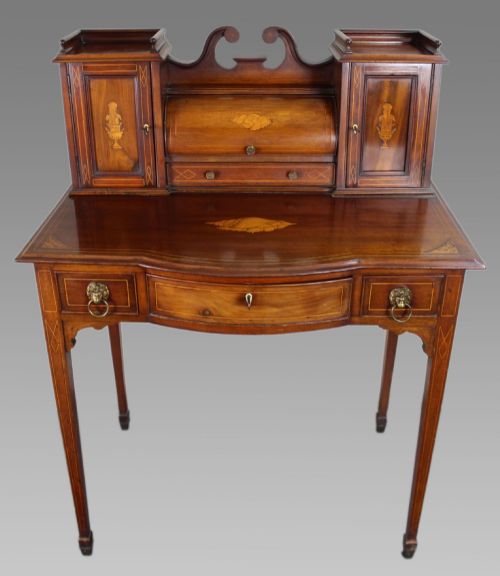
Antique Inlaid Bureau
An antique inlaid bureau brings practical writing space and exquisite craftsmanship into a room.
Antique Inlaid Bureau
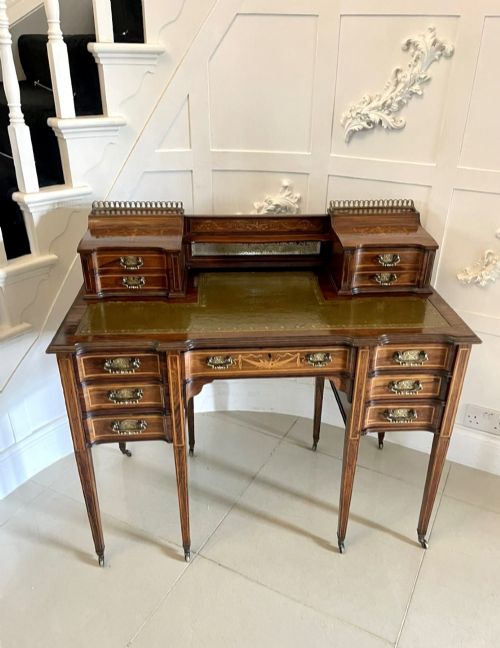
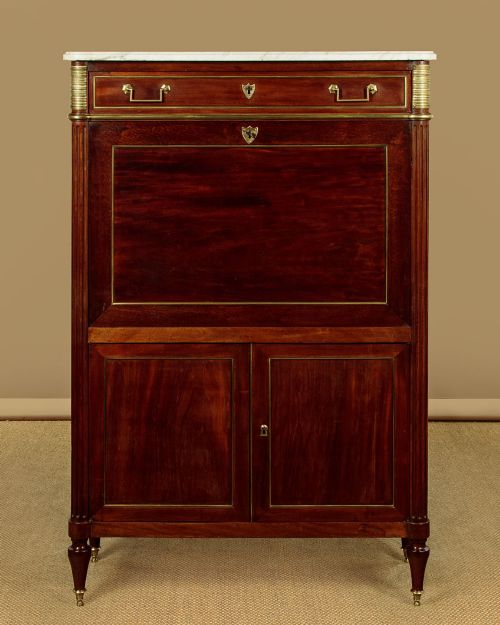
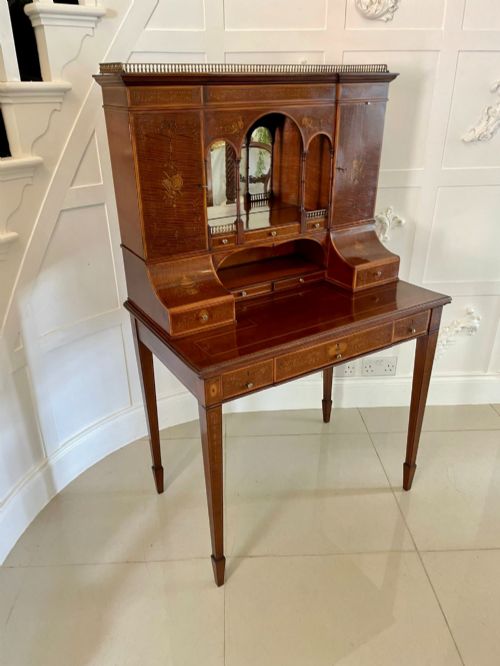
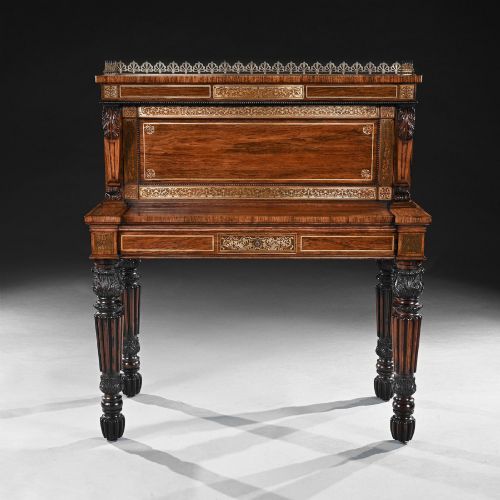
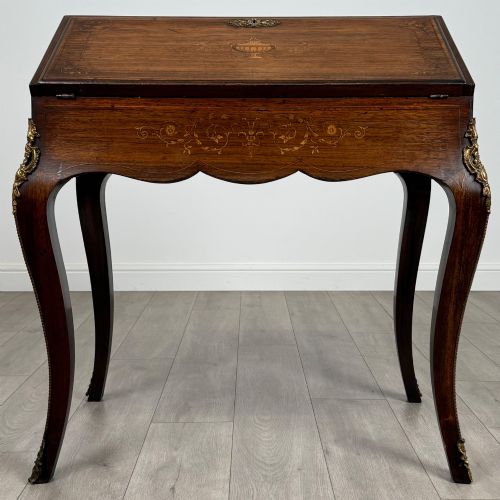
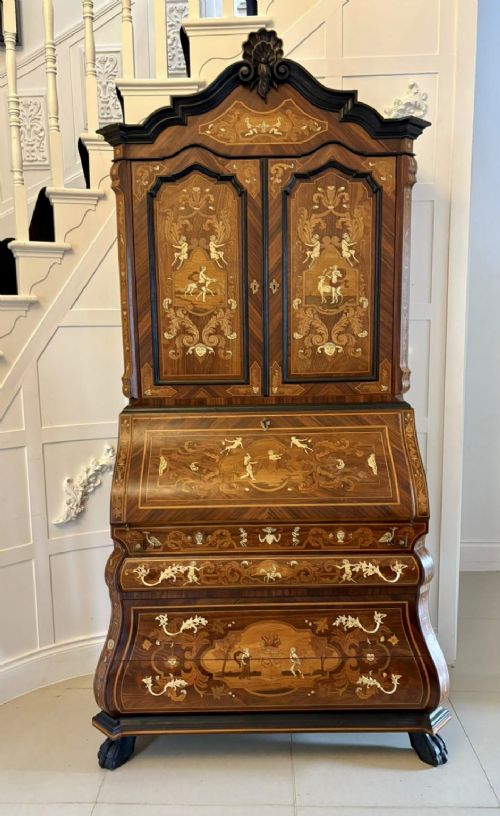
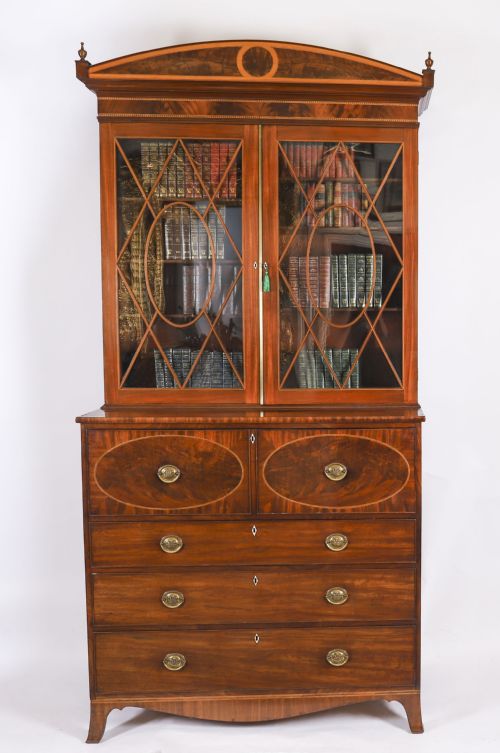
An antique inlaid bureau combines a sloping writing flap or drop-front desk with decorative wood ornamentation, often concealing a fitted interior of small drawers and pigeonholes. When you explore this selection, you encounter various formats ranging from compact Edwardian satinwood models to grand Georgian mahogany bookcase combinations.
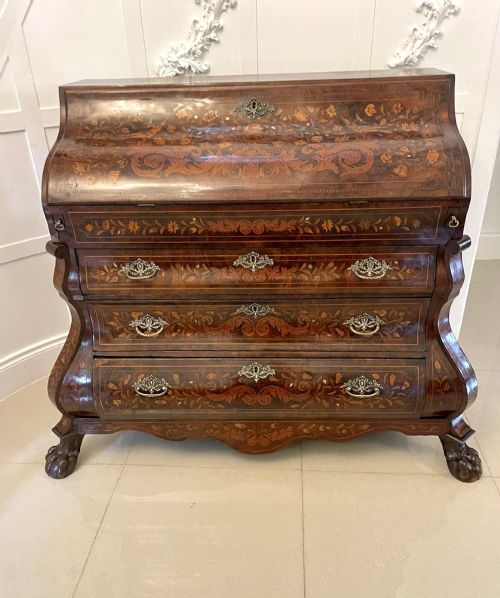
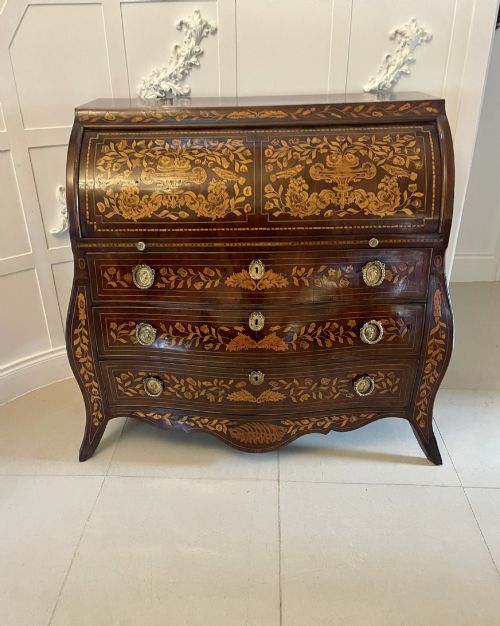
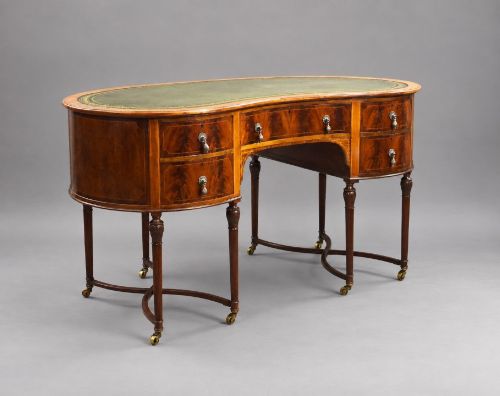
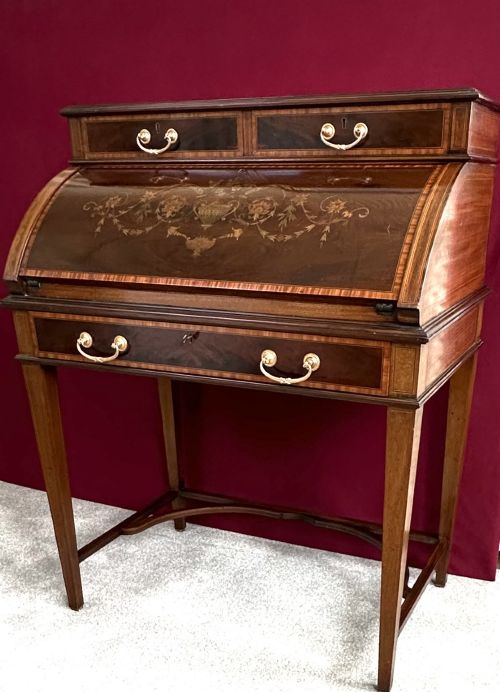
The pieces on this page span several centuries, featuring forms such as freestanding writing tables, cylinder desks, and bombe-shaped bodies. Pieces from the eighteenth and nineteenth centuries dominate the selection, frequently displaying elaborate floral marquetry or geometric stringing.
Makers and cabinetmakers across England, France, and Italy produced these writing desks to serve both domestic utility and formal reception rooms. The integration of decorative veneers transforms a utilitarian storage item into a striking centrepiece.
Materials and construction
Cabinetmakers constructed the carcass of an antique inlaid bureau using solid foundational timbers like mahogany, walnut, or oak, which provided structural stability. Onto these surfaces, they applied choice veneers of satinwood, rosewood, kingwood, and burr walnut to create varied grain patterns.
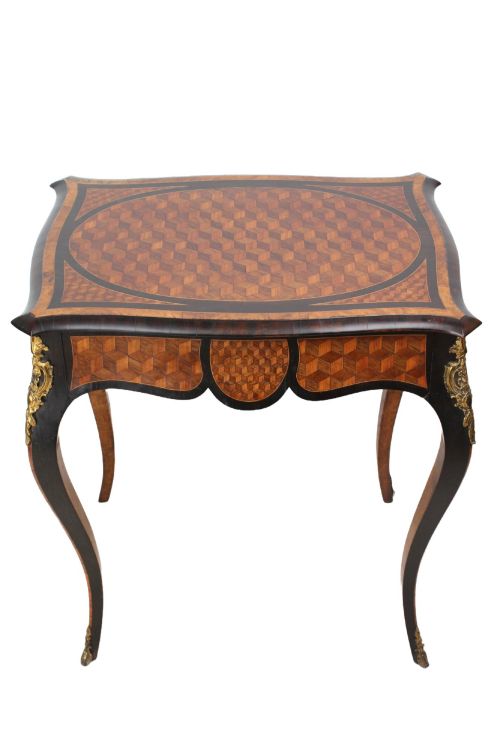
Decoration relied heavily on marquetry and parquetry, wherein contrasting wood veneers were meticulously cut and fitted to form floral motifs or geometric patterns. Craftsmen also incorporated brass hardware, leather writing inserts, and occasionally ormolu mounts to complete the composition.
Listings feature mahogany, walnut, satinwood, and rosewood timbers alongside brass and leather components.
Assessing craftsmanship and execution
Quality rests upon the precision of the marquetry and the choice of veneers, where tighter grain figures and seamless integration of contrasting woods distinguish finer examples. The crispness of the floral or geometric inlays shows the artisan's control over the medium.
Internal engineering also dictates value, seen in the smooth action of the fall-front mechanism, the complexity of the internal pigeonholes and secret compartments, and the solidity of the secondary timbers used in drawer construction.
Maple and Co·Gillows Oxford Street Workshop·JAS Shoolbred·Maison Krieger
The Antique Inlaid Bureau Glossary
- Marquetry
- Decorative veneer work arranged to form pictorial designs, often floral or architectural scenes. Artisans cut multiple contrasting wood veneers simultaneously to achieve a tight fit.
- Bureau bookcase
- A two-part form combining a writing desk base with an enclosed shelving or cabinet top. These pieces often feature glazed upper doors and substantial proportions.
- Secretaire
- A piece of furniture containing a drawer or drop-front panel that pulls down to reveal a writing surface and small compartments. This term frequently appears alongside cabinet variations.
- Parquetry
- Geometric mosaic woodwork used for floors and furniture surfaces. It creates patterned arrangements such as cubes or chequers utilising contrasting timber tones.
- Bombe
- A swelling, outwardly curved contour characteristic of continental furniture styles. This curved profile demands advanced woodworking skill to apply veneer smoothly over undulating surfaces.
- Stringing
- Thin inlay lines of contrasting wood or light-coloured material used to outline panels and drawers. It provides a crisp visual border on mahogany and walnut surfaces.
Antique Inlaid Bureau: Frequently Asked Questions
How do I use a bureau daily?
The drop-front or sloping lid folds down to create a writing surface while keeping correspondence concealed underneath. Internal compartments organise stationery, pens, and small documents.
Closing the flap instantly hides the workspace, restoring a tidy appearance to the room. Many models include lower drawers for additional storage of larger items.
What is a bureau bookcase?
A bureau bookcase combines a lower writing desk with an upper shelving unit enclosed by doors. This tall form maximises vertical storage space in a study or library.
The upper section traditionally displays books or decorative ceramics, while the lower compartment handles correspondence and paperwork.
How do I distinguish walnut from mahogany?
Walnut displays a rich, varied grain with darker brown swirls and occasional golden undertones, often appearing in burr formations. Mahogany presents a straighter, red-brown grain that deepens in warmth over time.
Inlaid pieces utilise these contrasting timber colours to highlight geometric stringing or floral marquetry motifs.
Where should I place an antique bureau?
Freestanding models look exceptional positioned away from walls where polished backs and refined marquetry can be admired from all angles. Desks with finished backs suit central room placements.
Standard wall placement works well for taller bookcase variants, provided they receive indirect light to protect delicate wood veneers and leather writing surfaces.