
Antique Inlaid Box
When you trace the grain of an antique inlaid box, you touch domestic history built to hold letters, trinkets and tea.
Antique Inlaid Box
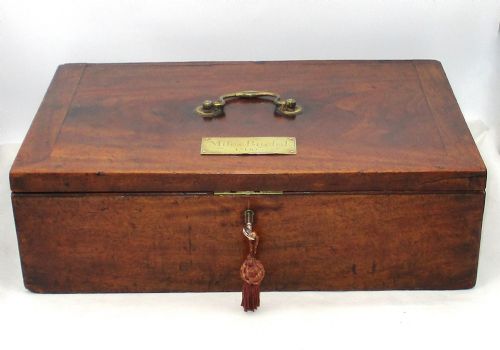
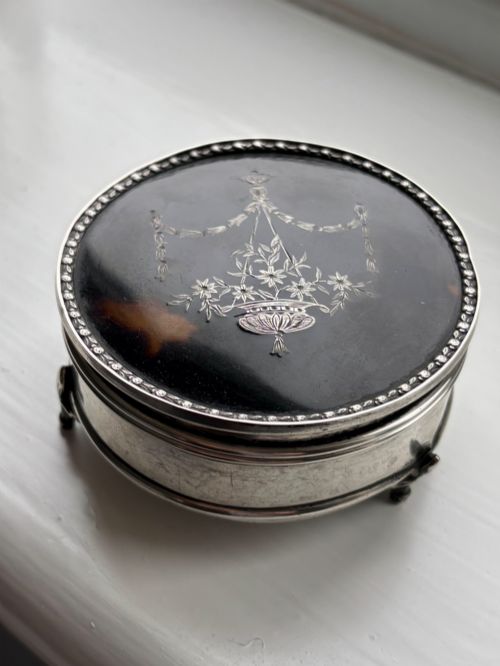
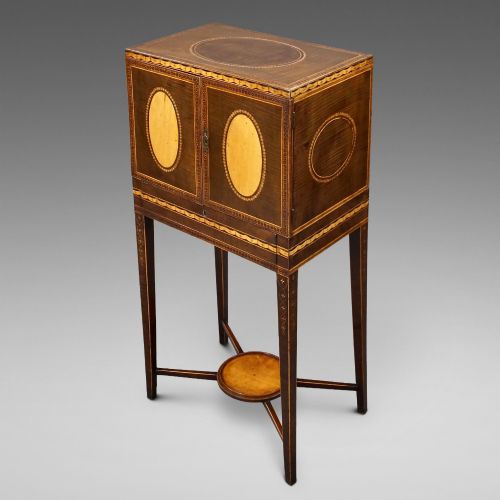
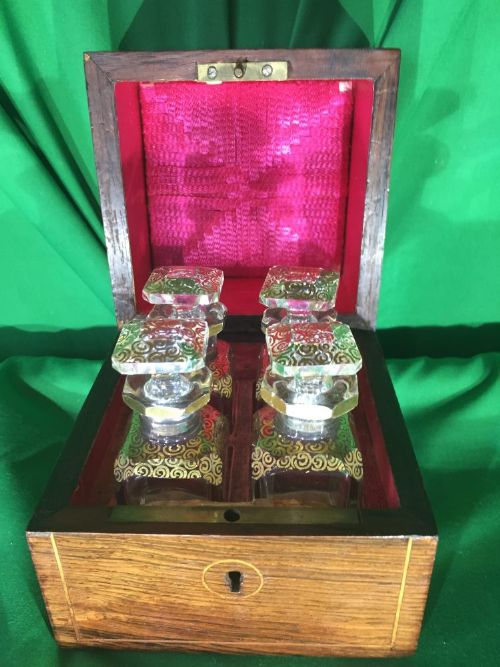
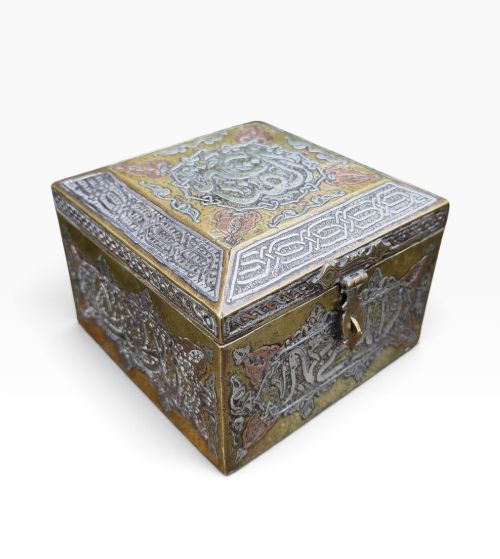
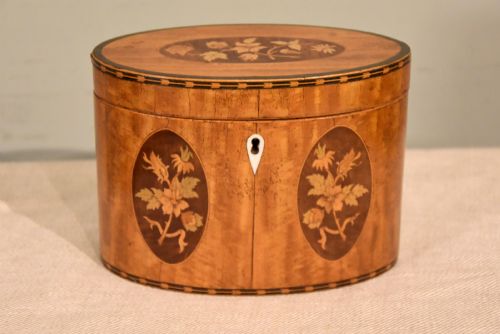
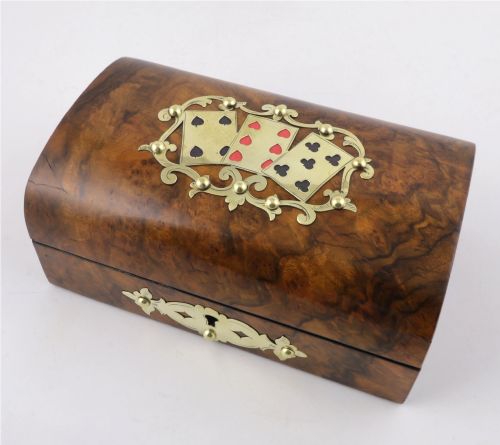
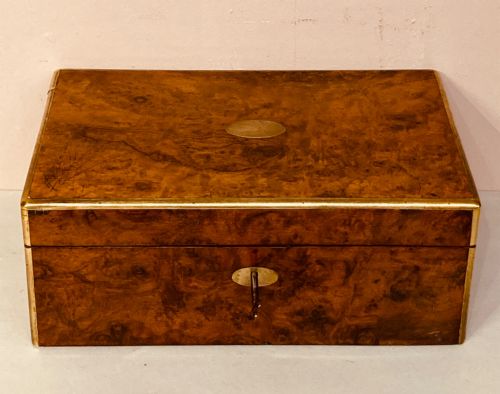
An antique inlaid box encompasses domestic receptacles designed for specific contents, including tea caddies, writing slopes, jewellery cases, and document chests. These pieces span the Georgian, Victorian, Regency, and Edwardian periods, reflecting changing social habits across the eighteenth, nineteenth, and early twentieth centuries.
The domestic interior relied on these lidded containers for organisation before modern cabinetry took over. Tea caddies preserved precious leaves, writing slopes provided portable desks, and jewellery boxes secured personal valuables with fitted compartments and small brass locks.
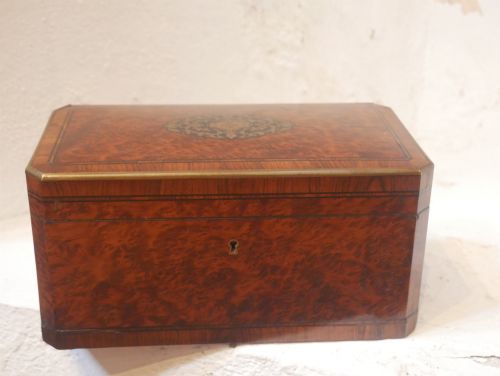
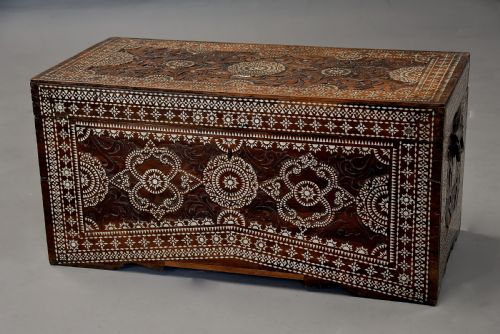
Makers utilised native hardwoods alongside exotic timbers, applying geometric banding, stringing, or pictorial marquetry to decorate the surfaces. Examples range from small Tunbridge ware pin boxes to large coromandel and burr walnut writing boxes equipped with secret drawers.
Materials and Technique
Cabinet makers built the carcase from solid woods like mahogany, oak, or walnut, often applying veneers of rosewood, satinwood, amboyna, or bird's-eye maple to the exterior surfaces. These primary foundations were selected for stability before decorative slicing and application took place.
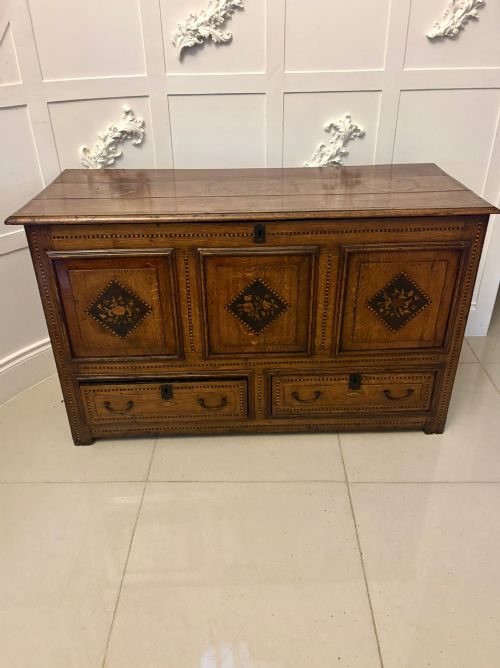
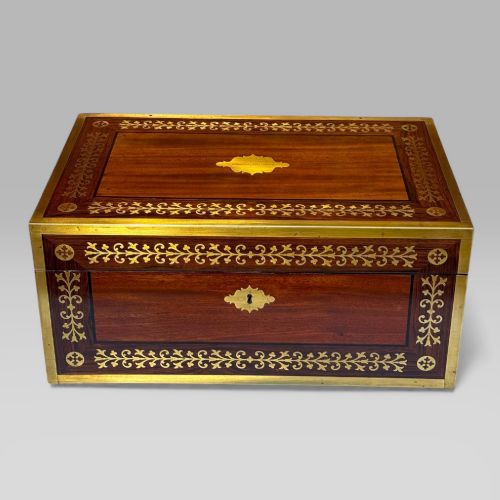
Decoration relied on inlay and marquetry, setting contrasting timbers, bone, mother-of-pearl, abalone, or brass directly into shaped recesses cut into the wood. Craftsmen secured these elements with animal glue, smoothing the final surface before polishing it with wax or shellac.
Some nineteenth-century writing slopes conceal secret spring-loaded drawers that release only when the owner pushes a hidden wooden pin.
Gradations of Make
Quality rests in the precision of the joinery and the snugness of the fitted interior compartments. Superior boxes maintain tight mitres at the corners and hinges that operate without binding, while lesser examples show gaps in the timber or crude repairs.
The crispness of the inlay work separates standard production from master craftsmanship. Fine pieces display sharp, seamless contrasts between the boxwood, satinwood, and mother-of-pearl elements, whereas baseline items rely on painted lines or loosely fitted veneers that lift over time.
Tahan Paris·Ollivant & Botsford·Edwards and Roberts·A. F. Lloyd·Edmund Nye·James Shoolbred & Co.
The Antique Inlaid Box Glossary
- Marquetry
- The art of creating decorative pictures or patterns by arranging veneers of different timbers, metals, or shell onto a structural carcase. This technique defines the pictorial lids found on nineteenth-century sewing and game boxes.
- Tunbridge Ware
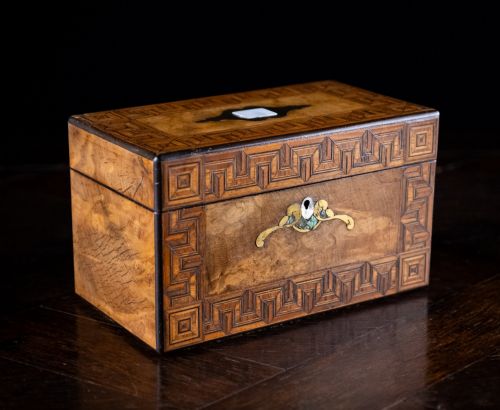
- A specialised form of mosaic woodwork originating in Kent, constructed from thousands of tiny coloured wood blocks to form geometric or pictorial tessellations. Victorian collectors prized these small lidded receptacles for their astonishing detail.
- Writing Slope
- A portable desk featuring a hinged, sloping lid that opens to reveal a leather-lined writing surface, inkwell compartments, and secret storage wells. Regency and Victorian examples frequently incorporate brass stringing and secret locking mechanisms.
- Tea Caddy
- A lidded container built to store loose tea leaves securely under lock and key when tea was an expensive commodity. Georgian and Victorian specimens often feature internal foil-lined compartments and delicate satinwood or shell inlay.
- Parquetry
- A geometric mosaic of wood veneer arranged in repeating patterns such as cubes, triangles, or squares. It frequently decorates the tops of Victorian card boxes and games caskets.
- Stringing
- Thin, narrow lines of contrasting wood inlaid into the surface of a box to create linear borders and panel outlines. Georgian cabinet makers relied heavily on this technique to frame mahogany drawer fronts and box lids.
Antique Inlaid Box: Frequently Asked Questions
What were tea caddies used for?
Tea caddies stored precious tea leaves securely under lock and key in Georgian and Victorian households. Servants kept the tea locked away because the dry leaves held high financial value.
Inside the box, hinged lids or internal canisters separated different varieties of green and black tea. Many examples include a central glass mixing bowl for blending leaves before brewing.
How do I care for antique wood?
Keep wooden boxes away from direct sunlight and radiators to prevent the timber and delicate veneers from drying out and cracking. Stable room temperatures protect the animal glues holding the internal compartments together.
Apply a microcrystalline wax occasionally to nourish the polished surface. Avoid using modern silicone polishes, which soften the historic finish over time.
What is a writing slope?
A writing slope is a portable desk designed for correspondence while travelling or moving between rooms in a large house. The hinged lid folds down to create a slanted writing surface lined with leather or velvet.
Lifting the writing surface reveals hidden compartments for stationery, nibs, and inkwells. Wealthy owners during the Regency and Victorian eras used these boxes to manage their personal affairs.