


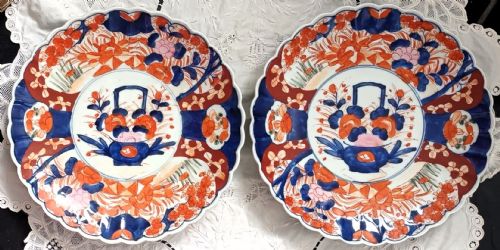



Antique Imari Wall Decor
These antique imari wall decor pieces bring striking colour and pattern to a room, offering rich visual weight for display.
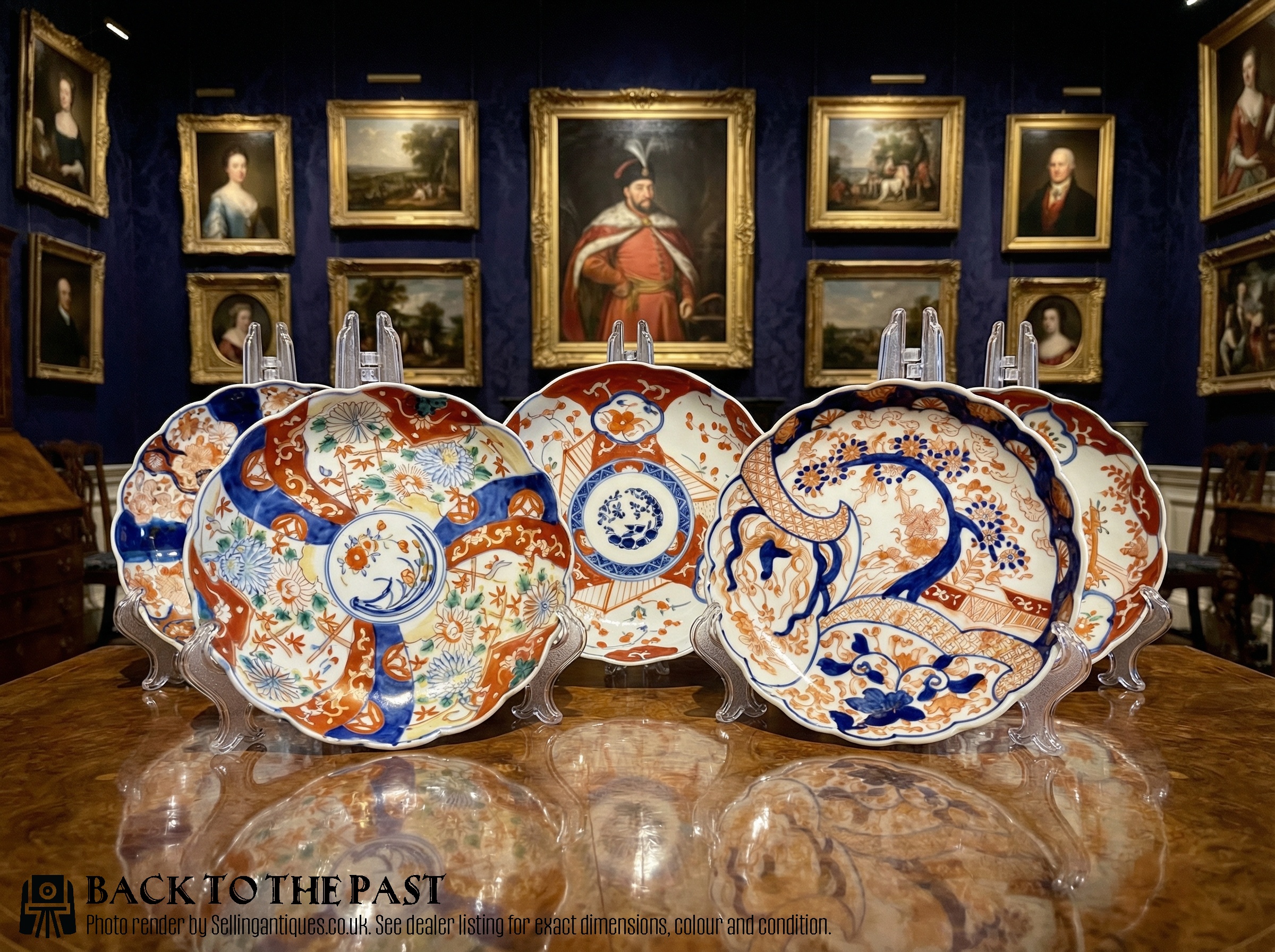
Antique Imari Wall Decor
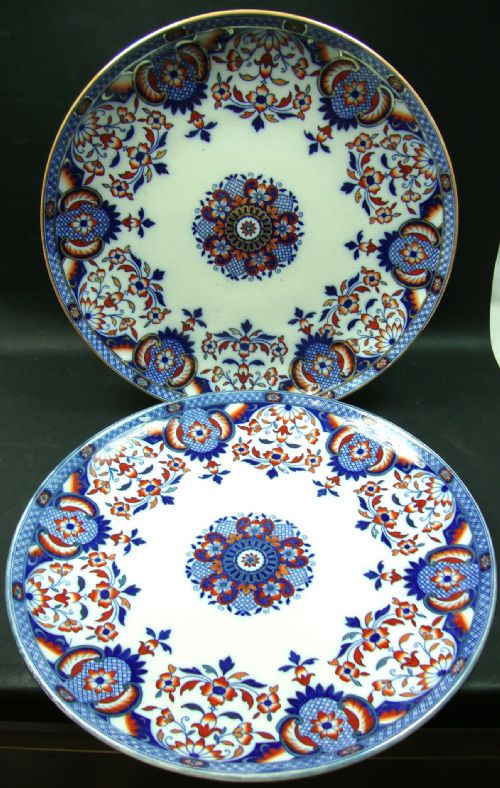
When you search for antique imari wall decor, you encounter decorative plates, decorative dishes, platters, and chargers designed for display. The pieces on this page span the nineteenth century, the Meiji period, and the early twentieth century.
Japanese Imari ware dominates the selection, appearing alongside related Victorian Aesthetic Movement pieces and English iterations such as ceramic chargers bearing nineteenth-century date marks.
Forms range from standard round plates to shell-shaped vessels and large chargers. These objects arrive in matched pairs, near pairs, and larger collections.
How they were made
The objects combine porcelain and glazed ceramic bodies with cobalt underglaze painting. Artisans applied vibrant enamel pigments and gold trim or gilt highlights to enrich the surface.
Firing techniques fixed the characteristic palette of cobalt blue and iron red, often layered with additional enamel colours during subsequent low-temperature kilns.
The listings span porcelain and glazed ceramic materials, incorporating cobalt underglaze, enamel, and gold trim across periods from the nineteenth century to 1920.
What varies in quality
Quality rests in the precision of the cobalt underglaze painting and the execution of the enamel colours and gold trim. Stronger pieces display crisp botanical, avian, or geometric motifs rather than hurried brushwork.
The depth of the glaze and the preservation of the gilt highlights distinguish standard production from finer examples.
The Antique Imari Wall Decor Glossary
- Imari
- A style of Japanese porcelain traditionally featuring a palette of cobalt blue, iron red, and gold. It originated in Arita and was shipped from the port of Imari for export.
- Meiji Period
- The era in Japanese history spanning from 1868 to 1912, associated with increased trade and export of decorative arts to Western markets.
- Charger
- A large decorative plate or dish intended primarily for display on a wall or sideboard rather than for serving food.
- Cobalt Underglaze
- A blue pigment applied to the raw ceramic body before glazing and firing, which reacts to high heat to produce a permanent blue design.
Antique Imari Wall Decor: Frequently Asked Questions
How do I hang antique imari wall decor safely?
Use a specialised spring-loaded plate hanger that grips the rim securely without scratching the porcelain. Ensure the wall fixing is anchored properly to support the weight of chargers or large plates.
Verify that the wire or bracket on the back of the hanger remains taut before leaving the piece unattended on the wall.
Are these pieces meant for daily dining?
These items function primarily as decorative objects rather than functional tableware. Their historic glazes and delicate gold trim require gentle treatment.
Displaying them on walls or cabinets preserves the painted surfaces from the wear of regular use and washing.
How do I identify a Meiji period piece?
Meiji period items typically date between 1868 and 1912, aligning with increased international trade. They often exhibit dense cobalt underglaze painting combined with iron red and gilt.
Examination of the foot ring and paste helps differentiate these export wares from later reproductions.
Can I clean antique imari plates with water?
Dust them gently with a soft, dry cloth to remove everyday particles. Avoid soaking or using harsh detergents that might degrade the enamel pigments or gold trim.
Professional conservation advice is recommended if deeper cleaning becomes necessary due to accumulated grime.