

Antique Glass Goblet Stemware
These antique glass goblet stemware pieces range from eighteenth-century baluster drinking vessels to twentieth-century coloured crystal.
Antique Glass Goblet Stemware
When you search for antique glass goblet stemware, you encounter drinking vessels spanning several centuries of European manufacture. The selection contains wine glasses, rummers, dram glasses, and heavy baluster goblets.
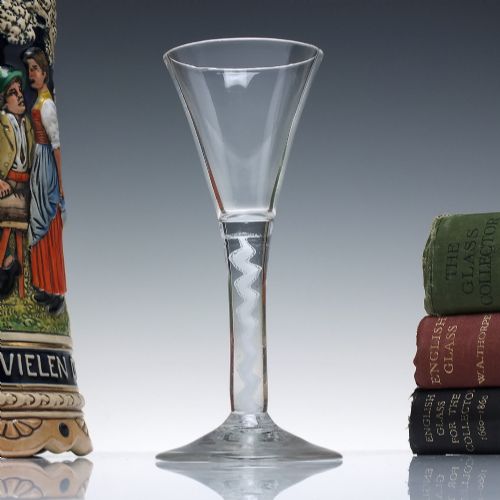
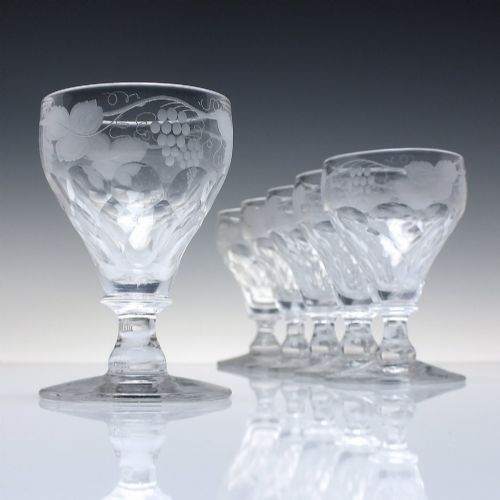
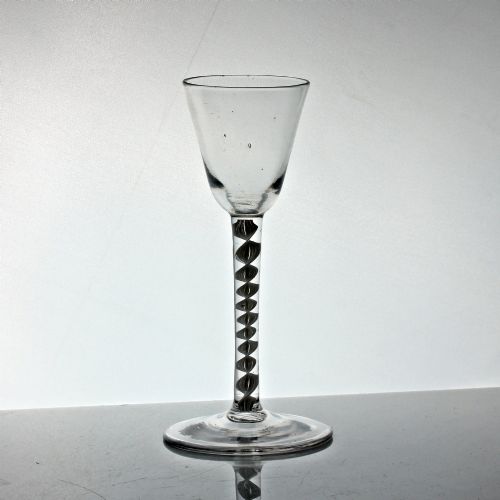
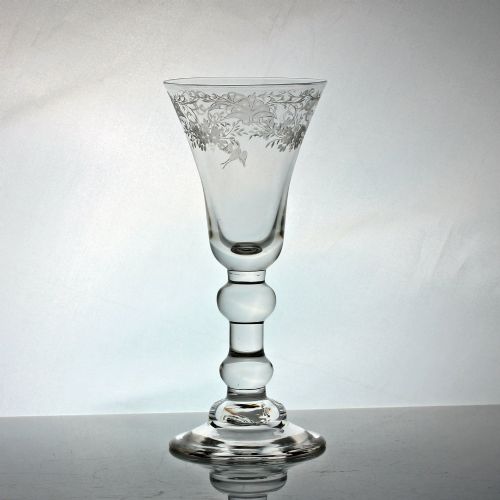
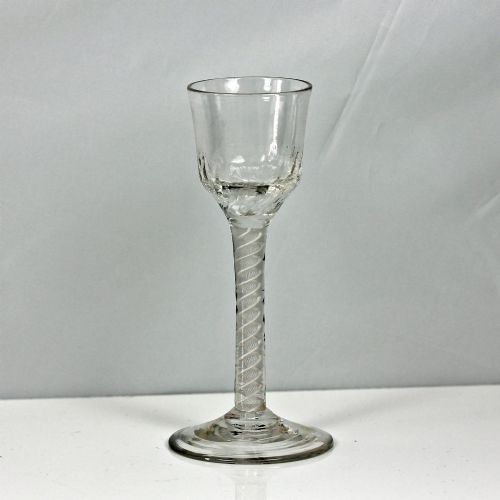
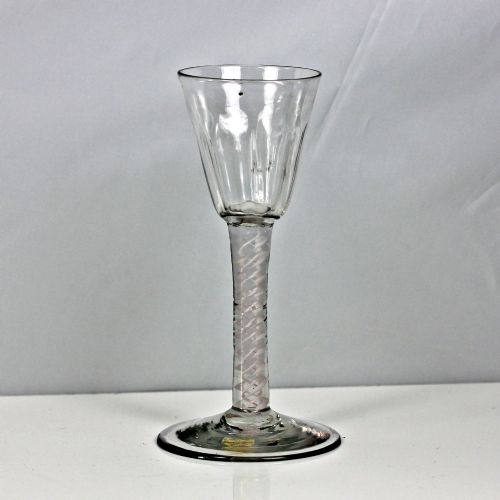
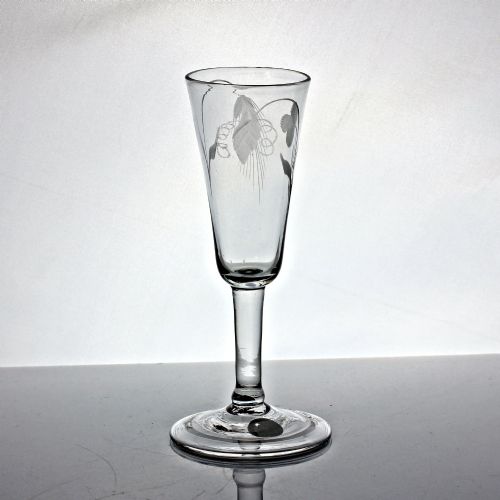
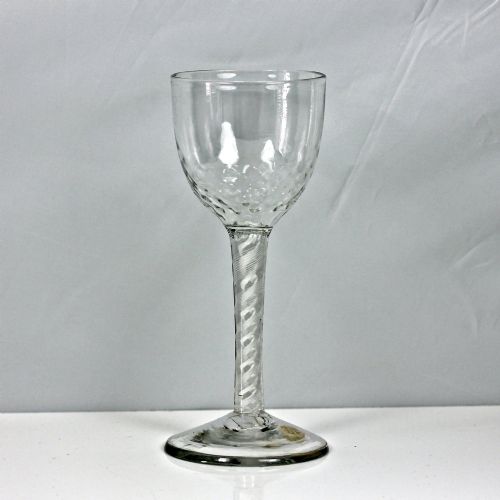
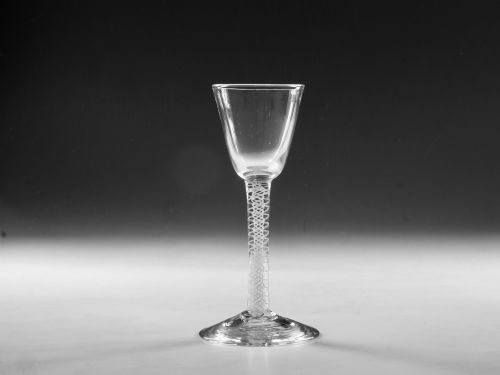
The most common examples on this page date from the Georgian and eighteenth-century periods. These items include opaque twist stems, engraved bowls, and folded feet.
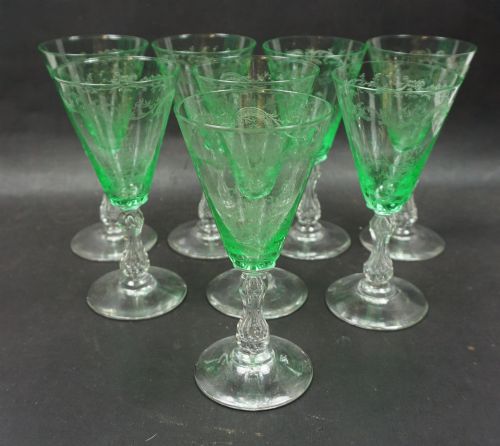
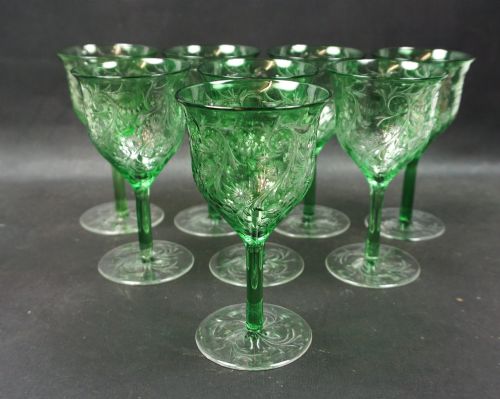
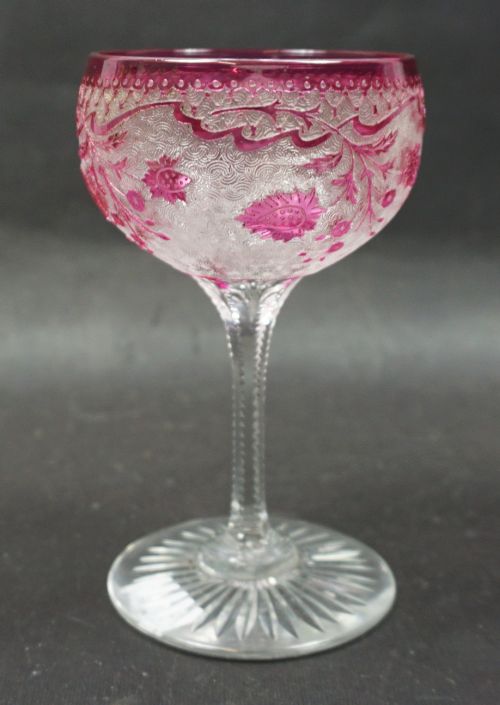
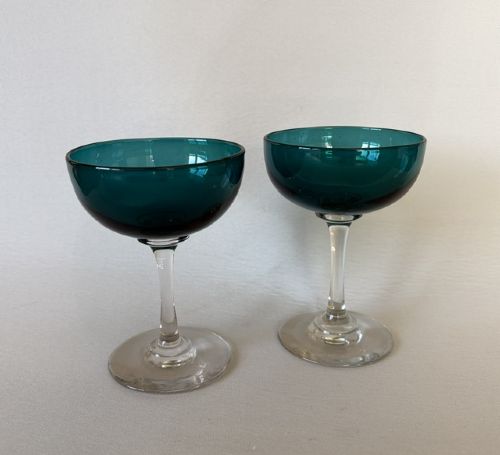
Later pieces shift into nineteenth-century Victorian colours and twentieth-century French and Bohemian production. These later items include hock glasses, champagne coupes, and uranium glass.
How these pieces were made
Maker operations relied on lead glass and crystal foundations shaped by blowing and moulding. Workers pulled air tears into stems or formed opaque twists using white enamel threads inside the glass matrix.
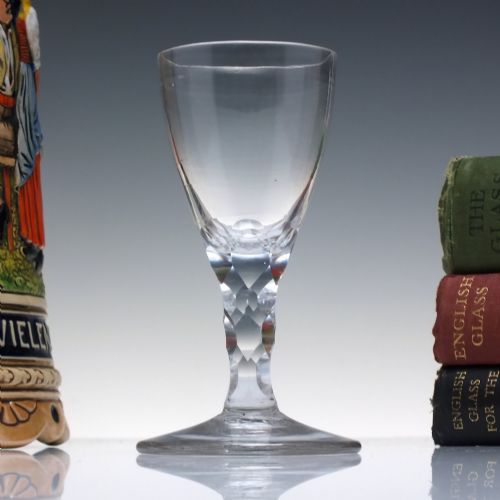
Decoration involved wheel engraving, intaglio cutting, and surface gilding with gold leaf. Craftsmen faceted bowls, engraved hop and barley motifs, or applied cameo overlays to coloured glass layers.
Antique Glass Goblet Stemware Retail Price Guide 2026
Typical asking prices for glass goblet stemware among the pieces listed under this phrase on Sellingantiques today, from the lower quarter to the upper quarter. They describe what is for sale here now, not the wider market.
One recorded rummer bears the specific engraved sentiment 'Women & Wine'.
What varies in quality
The standard of a piece rests on the precision of its stem formation and the clarity of its metal. Fine opaque twists maintain regular thread patterns without distortion, while superior facet cutting shows crisp geometric edges.
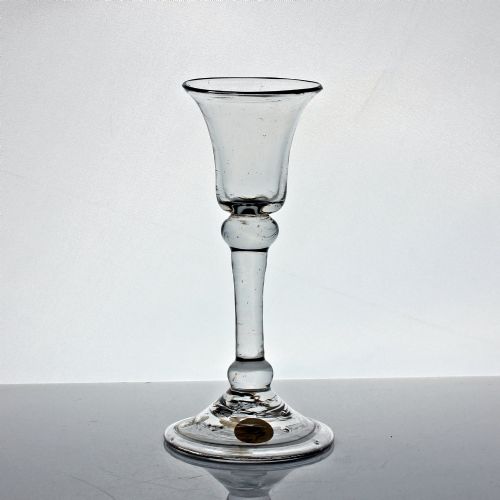
Proportion and weight dictate the presence of quality within early drinking vessels. Heavy baluster goblets and balustroid stems depend on balanced distribution between bowl, knop, and foot.
St. Louis·Stevens & Williams·Baccarat·Moser
The Antique Glass Goblet Stemware Glossary
- Opaque twist
- A stem formed with white enamel threads spun within the clear glass. This technique gained popularity in mid-eighteenth-century English drinking vessels.
- Baluster
- A heavy, swelling stem shape resembling architectural supports. These forms often contain internal air tears or bubbles.
- Rummer
- A capacious drinking glass on a short stem with a rounded or ovoid bowl. They appeared frequently during the Georgian and Regency periods.
- Römer
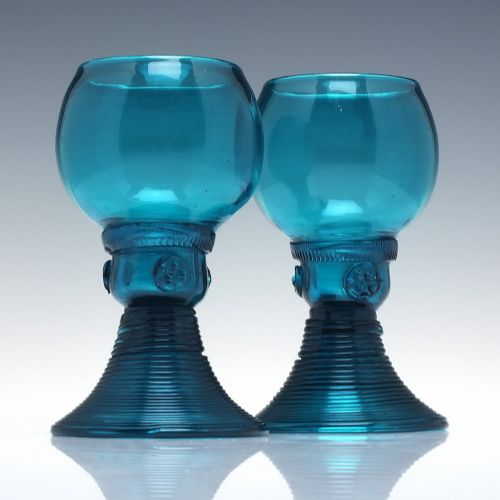
- A traditional Germanic or Bohemian goblet style featuring a decorated bowl on a ribbed or prunted stem. They frequently employ green-tinted crystal.
- Folded foot
- A base edge turned underneath during manufacture to create a thickened rim. This method added strength to early glass vessels.
Antique Glass Goblet Stemware: Frequently Asked Questions
How do I identify a Georgian opaque twist glass?
Look inside the stem for white enamel threads twisted in single or double series configurations. These stems support various bowl forms including ogee, bell, and trumpet shapes.
Examine the foot for pontil marks and surface wear consistent with eighteenth-century hand-finishing techniques.
What is the difference between a rummer and a wine glass?
Rummers possess larger, deeper bowls and shorter, sturdier stems suited to stronger ales and wines. They often feature heavy lead glass construction and engraved decoration.
Wine glasses maintain taller, slender stems and smaller bowls designed for table service.
How should I display coloured Victorian stemware?
Position green, aqua, and blue glassware near natural light sources to illuminate the saturated tones. Group matching sets together on stable wooden shelving.
Keep pieces away from direct heat sources to preserve the integrity of any gilt embellishments or enamel work.
What are air tears in glass stems?
Air tears are elongated bubbles trapped inside the molten metal during the manufacturing process. Makers often drew these bubbles intentionally into baluster stems as a decorative feature.
Their presence indicates hand-blown production methods typical of eighteenth-century glasshouses.