

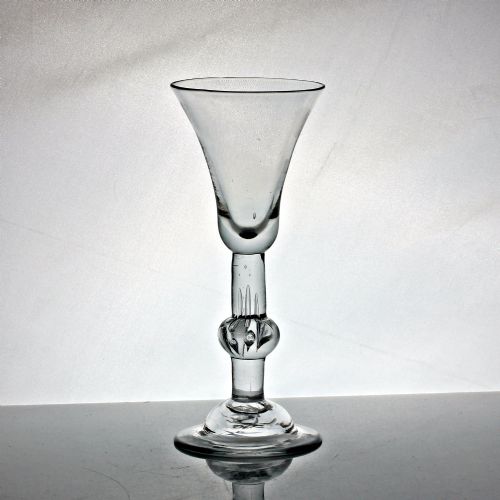
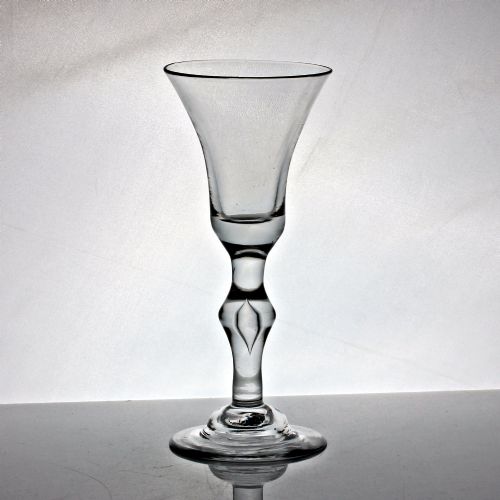
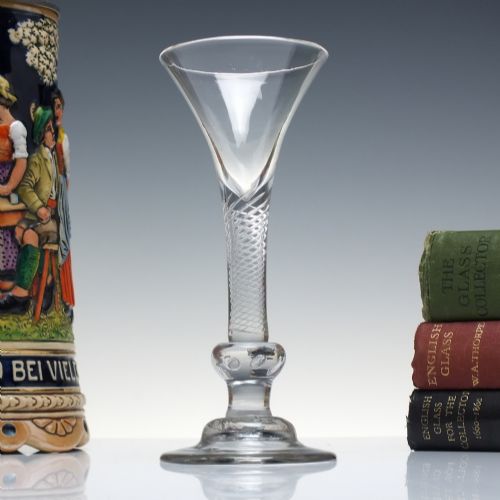

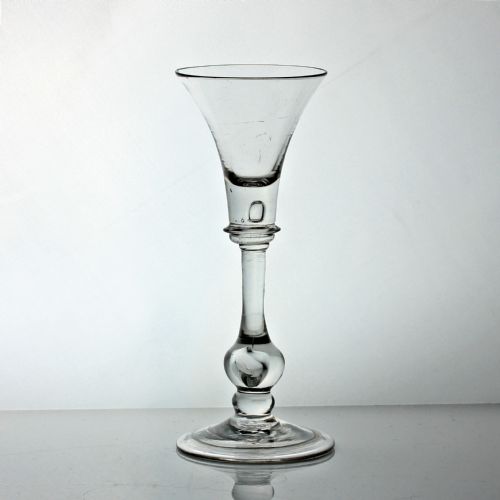



Bell Bowl Glass Goblet
A bell bowl glass goblet sits comfortably in the hand, offering the satisfying weight of eighteenth-century lead glass and clear glass.
Bell Bowl Glass Goblet
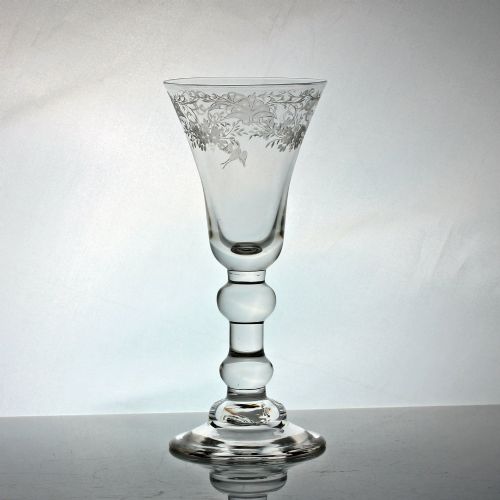
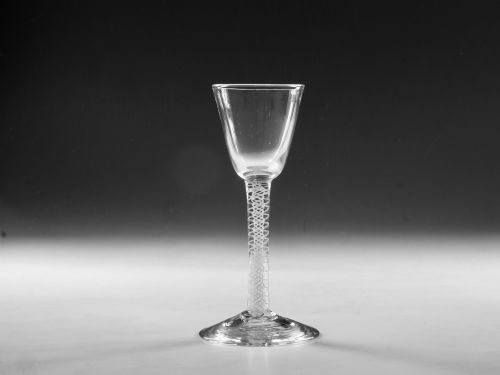
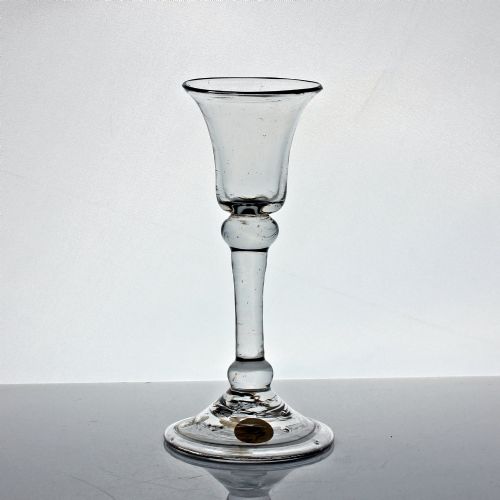
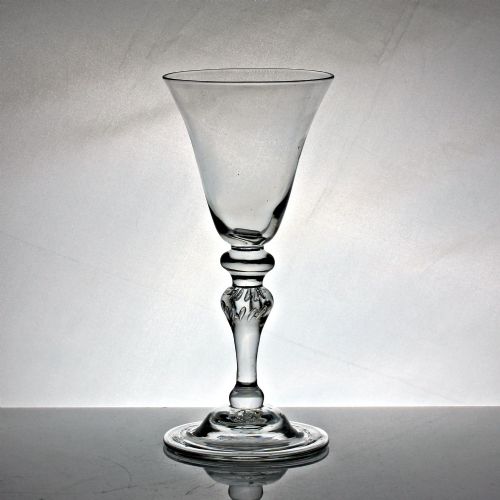
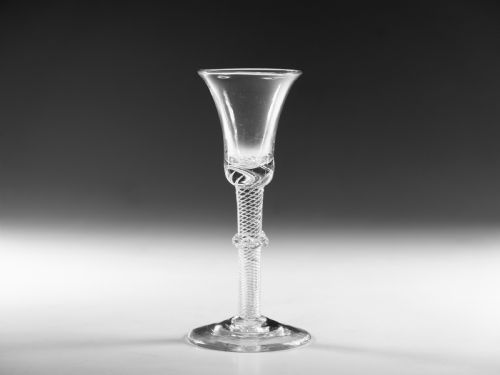
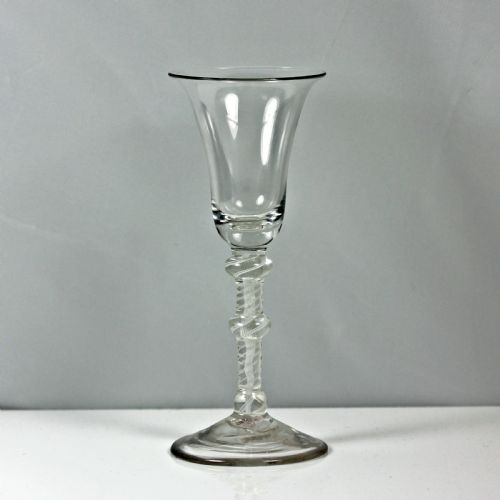
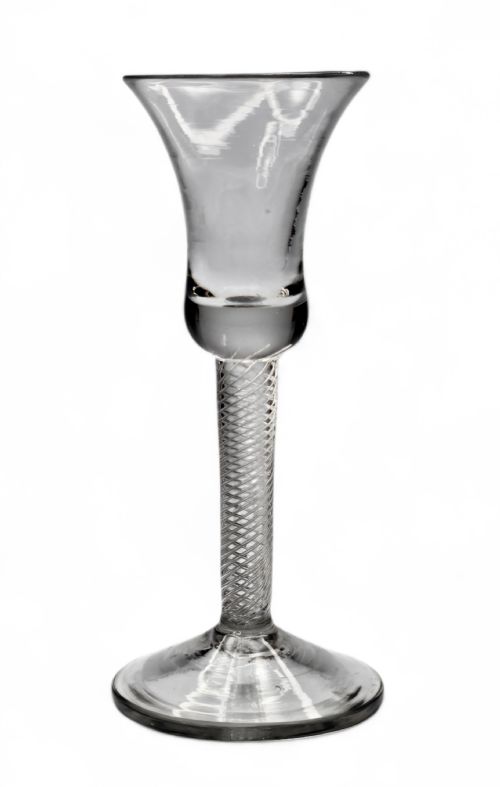
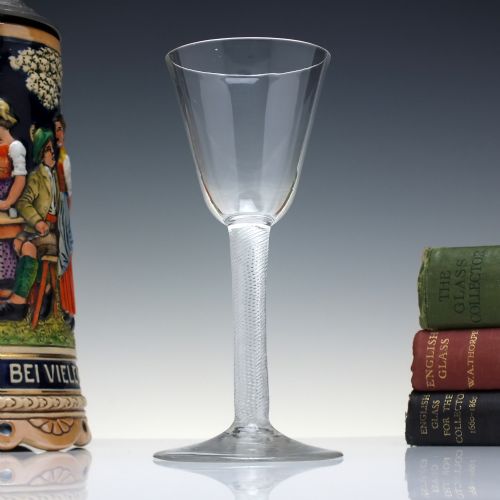
A bell bowl glass goblet represents a distinct form of antique glassware primarily rooted in the eighteenth century and the Georgian era. These drinking vessels showcase the characteristic flared profile of the bell bowl atop various stems such as baluster, balustroid, and twist stems.
Most examples encountered here date from the seventeen-forties through to the late Georgian period, with occasional Victorian interpretations. They function principally as wine glasses, wine goblets, gin glasses, and cordial glasses.
The surviving selection demonstrates a strong emphasis on English lead crystal and flint glass production. Collectors seek these pieces for their authentic period manufacture and tactile qualities.
How they were made
These vessels rely upon lead glass, clear glass, and flint glass, materials prized for their weight, clarity, and resonance. Artisans shaped the metal while hot, often incorporating a folded foot or a domed foot for stability and visual balance.
Stems required specialist skill, whether forming a solid baluster, drawing air into spiral tears, or incorporating white enamel threads to create opaque twist and mixed twist designs.
Bell Bowl Glass Goblet Retail Price Guide 2026
Typical asking prices for bell bowl glass goblet among the pieces listed under this phrase on Sellingantiques today, from the lower quarter to the upper quarter. They describe what is for sale here now, not the wider market.
Listings for this phrase focus heavily on eighteenth-century Georgian lead glass, featuring baluster, air twist, and opaque twist stems.
What varies in quality
Quality rests upon the purity of the metal and the precision of the stem formation. Exceptional clarity in the lead crystal elevates a piece, allowing light to pass unimpeded through the bowl and foot.
The execution of the twist or the heft of a heavy baluster stem distinguishes standard production from finer examples. Proportion between the bell bowl, stem, and foot dictates the visual harmony of the goblet.
The Bell Bowl Glass Goblet Glossary
- Bell bowl
- A drinking vessel bowl shaped like an inverted bell with slightly flaring sides. This form is typical of eighteenth-century wine glasses and goblets.
- Baluster stem
- A heavy, thick stem shape derived from architectural balusters, often featuring knops. It adds substantial weight to early Georgian glassware.
- Air twist
- A decorative stem formation containing elongated internal air bubbles drawn into spirals. These threads catch the light within the clear glass stem.
- Opaque twist
- A stem containing white enamel glass rods twisted into threads within the clear metal. These date predominantly to the mid-to-late eighteenth century.
- Folded foot
- A foot formed by doubling the glass edge back underneath itself to create a stronger rim. This technique appears frequently on earlier Georgian pieces.
Bell Bowl Glass Goblet: Frequently Asked Questions
What is a bell bowl?
A bell bowl is a distinctive drinking vessel shape that curves outward slightly at the rim, resembling an inverted bell. This silhouette defines many eighteenth-century wine glasses.
The form provides a comfortable mouthfeel and directs the aromas of the wine effectively toward the drinker.
How do I identify a Georgian wine glass?
Georgian wine glasses display characteristic handling marks such as pontil scars on the underside of the foot. The metal often contains lead, giving the glass a heavier feel and brighter ring.
Stem construction also helps determine the period, with baluster, air twist, and opaque twist designs pointing directly to the eighteenth century.
What is an opaque twist stem?
An opaque twist stem contains white enamel glass rods that have been manipulated into spiral patterns inside the clear metal. These threads are sealed permanently within the solid glass stem.
Glassmakers achieved this effect by inserting enamel canes into a hot gather before twisting and drawing the stem to shape.
Can I use antique goblets for wine?
These historical glasses can hold wine, though many collectors prefer to display them to preserve their surfaces. Eighteenth-century lead glass is durable but sensitive to sudden temperature changes.
Hand washing in lukewarm water without harsh detergents keeps the clear glass and enamel twists safe from damage.