


Antique Wheel Engraved Glass
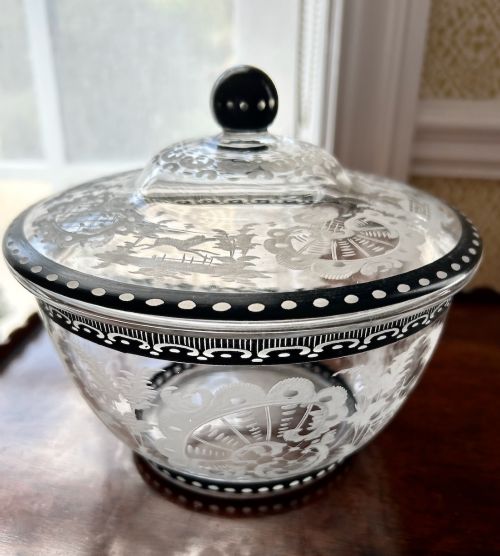
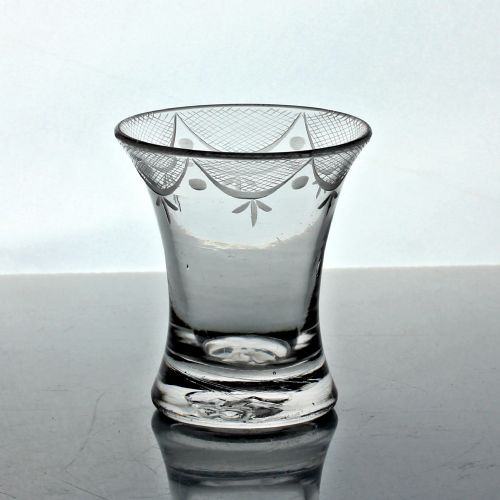
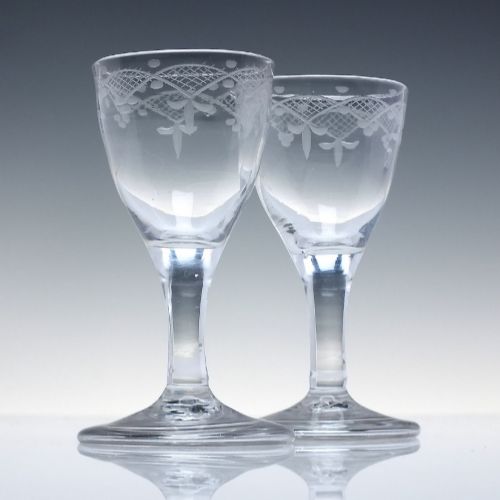
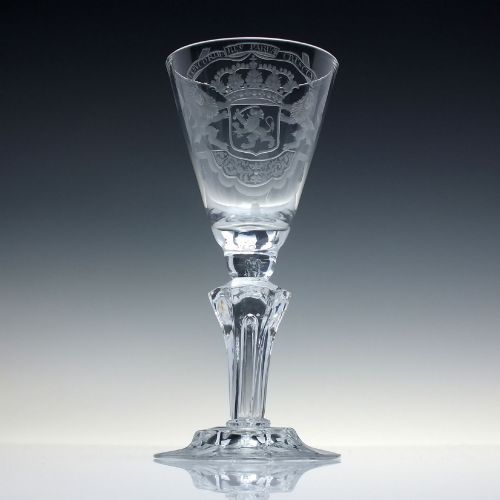
When you search for antique wheel engraved glass, you find drinking vessels, decanters, and bowls cut with rotating metal wheels to leave permanent decorative motifs.
Antique Wheel Engraved Glass
When you search for antique wheel engraved glass, you are looking at items shaped from lead glass, clear glass, and crystal that feature detailed cuts made by abrasive wheels. The pieces span Georgian, Victorian, and Edwardian periods, stretching from the mid eighteenth century into the early twentieth century.
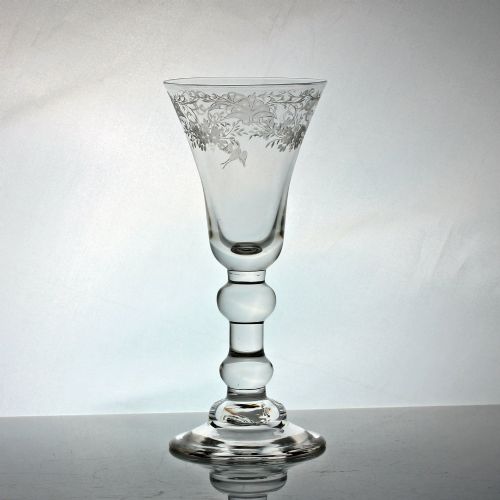
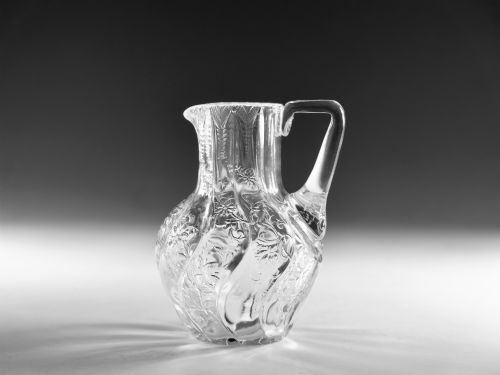
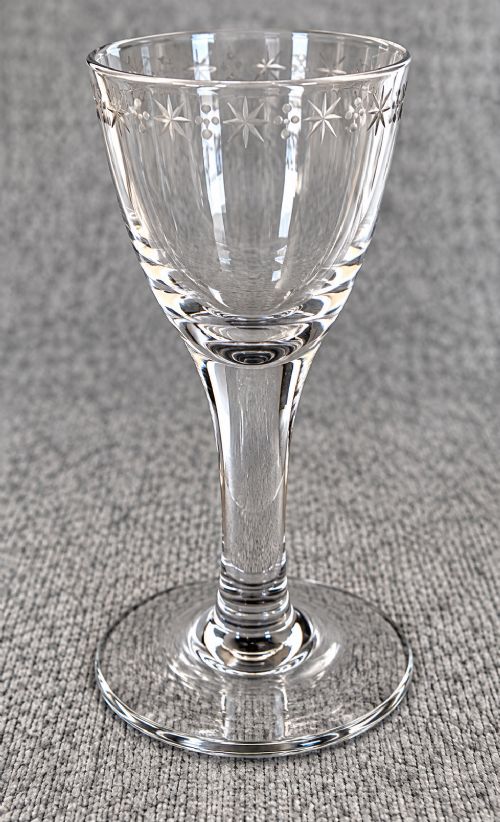
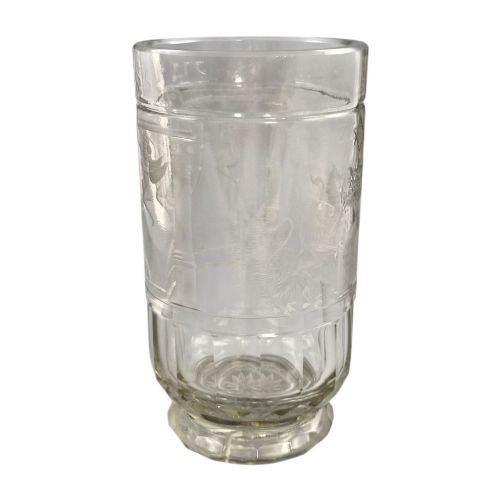
The forms on this page include heavy baluster goblets, dram glasses, wine jugs, decanters, rummers, and tumblers. You will also encounter specialised items such as ceremonial armorial beakers, firing glasses, and perfume bottles.
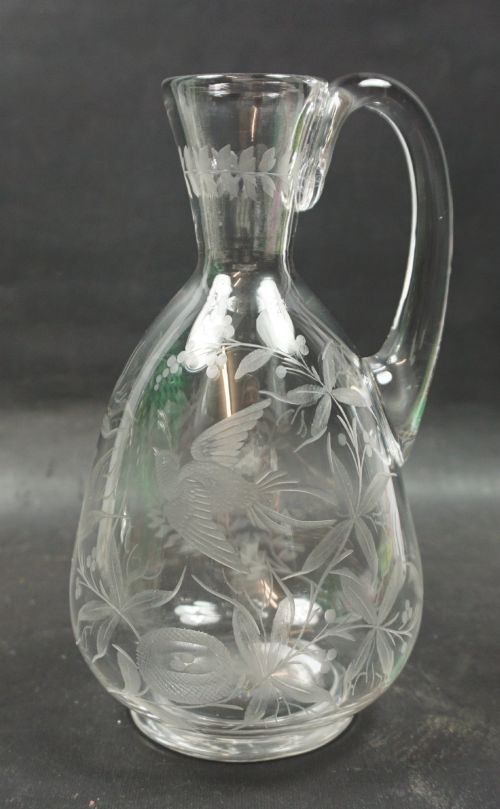
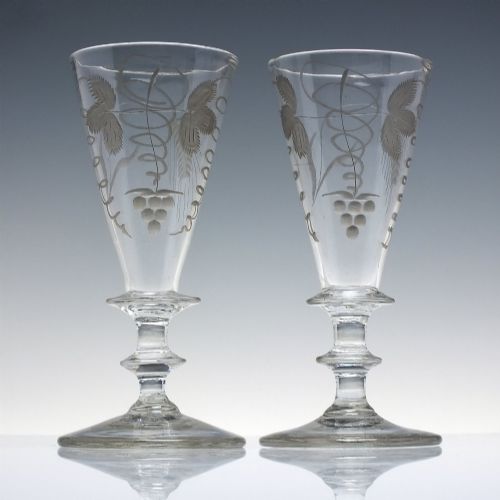
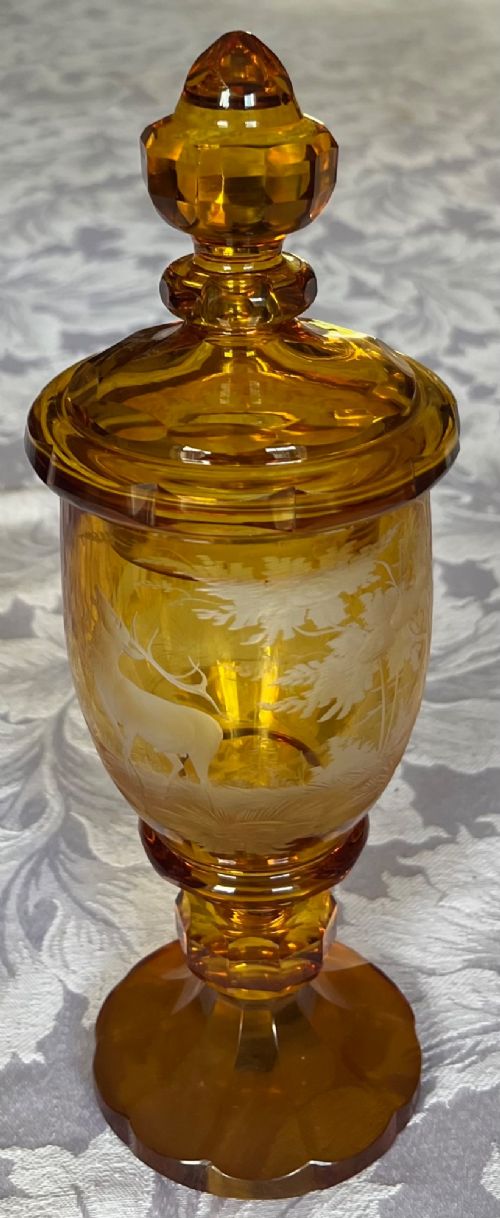
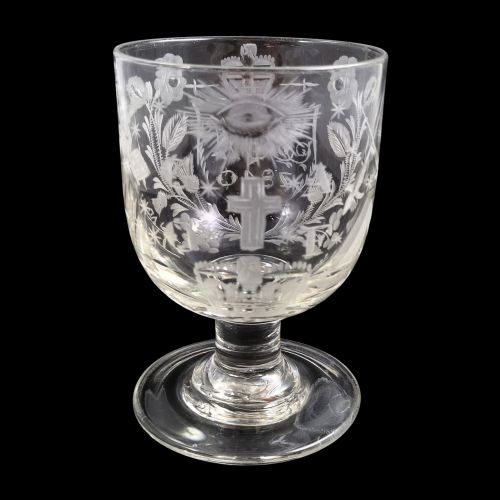
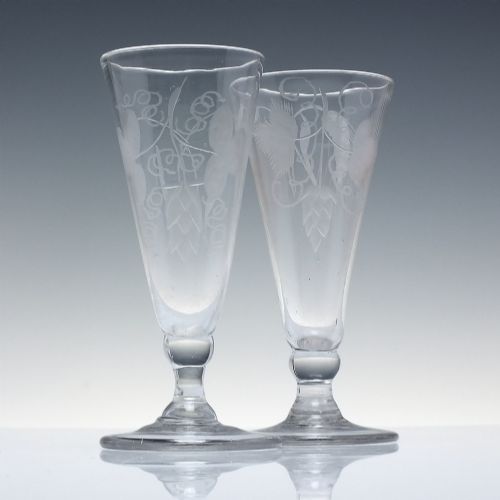
Origin points range across England, Spain, and Bohemia. English pieces often display hops, barley, birds, or native foliage, while Bohemian items show ruby and amber glass decorated with masonic or figural motifs.
How they were made
Glassmakers formed the vessel bodies using hand-blown techniques, producing lead crystal, flint glass, and clear glass bases that accepted deep manipulation. Molten material was shaped into heavy baluster stems, domed feet, folded rims, and structural bowls before cooling.
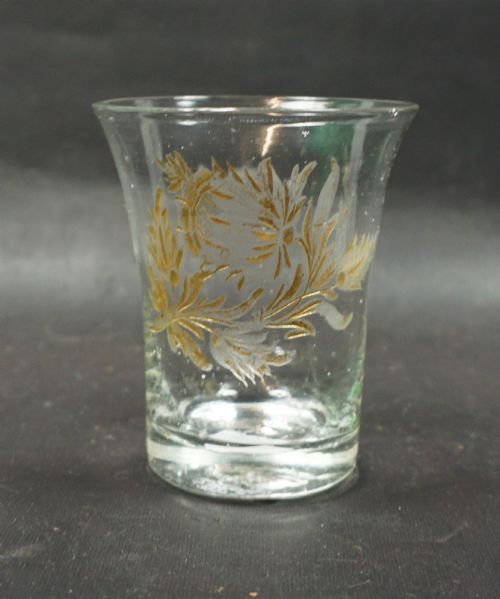
Engravers applied surface decoration by pressing the glass against the rotating edge of small copper or stone wheels fed with an abrasive slurry of oil and emery powder. This method allowed artisans to achieve fine lines, shading, and deep intaglio cutting across ruby red, amethyst, amber, and clear surfaces.
Antique Wheel Engraved Glass Retail Price Guide 2026
Typical asking prices for wheel engraved glass among the pieces listed under this phrase on Sellingantiques today, from the lower quarter to the upper quarter. They describe what is for sale here now, not the wider market.
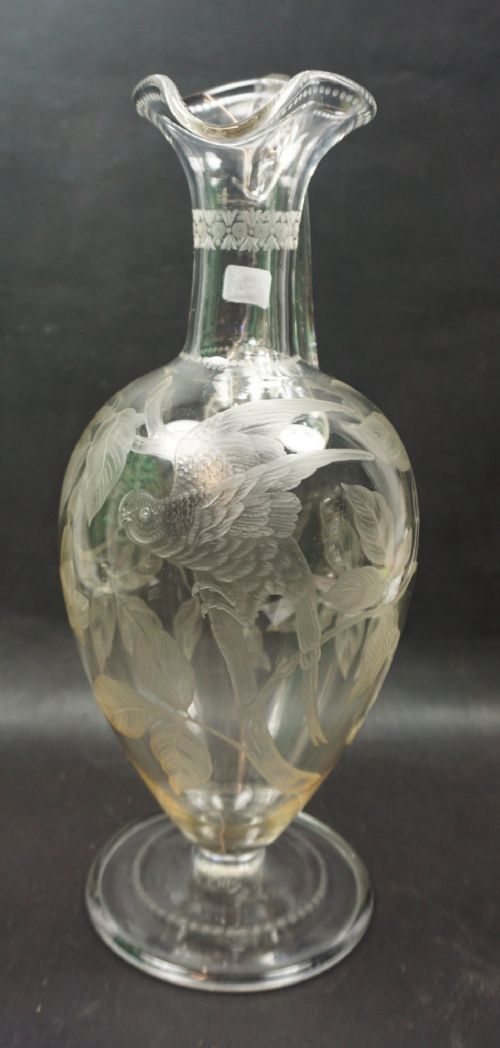
An eighteenth century wine glass records a parrot perched among leaves, proving that even stern drinkers appreciated exotic bird life.
What varies in quality
Quality rests on the depth, control, and clarity of the wheel work on the glass body. Fine execution shows precise control where the rotating tool bites into the material, creating crisp edges on birds, foliage, and armorial crests without slipping into the surrounding surface.
The weight and metal of the glass itself dictate the tier of the piece, with dense lead crystal and flint glass providing a superior refractive ring compared to lighter metal. The proportion between the turned stem, the foot, and the engraved bowl determines the harmony of the finished vessel.
Stevens and Williams·Webb Corbett·Ganthony of London
The Antique Wheel Engraved Glass Glossary
- Baluster stem
- A thick, turned glass stem found on drinking vessels, often featuring knops shaped like architectural balusters. This form provides substantial weight and balance to eighteenth century goblets.
- Intaglio
- A technique where the design is sunk below the surface of the glass rather than carved in relief. This creates a tactile, three dimensional image when viewed from the front.
- Rummer
- A large, capacious drinking glass introduced in the eighteenth century for ale, wine, or punch. These vessels typically sit on a short stem and sturdy foot.
- Firing glass
- A heavy bottomed drinking vessel designed to be slammed onto a table instead of set down during toasts. The thick base absorbs the impact without shattering.
Antique Wheel Engraved Glass: Frequently Asked Questions
How do I date antique wheel engraved glass?
Dating relies on the shape of the vessel, the composition of the glass metal, and the style of the cutting. Eighteenth century examples often feature heavy baluster stems and naive bird or floral motifs.
Later Victorian and Edwardian pieces show heavier machinery influence, brighter colours like ruby and amber, and more naturalistic depictions such as parrots and fruiting vines.
What is the difference between etching and wheel engraving?
Wheel engraving uses rotating metal discs fed with an abrasive paste to cut directly into the surface of the glass, creating deep grooves and polished facets.
Etched decoration is achieved by applying acid to eat away the exposed areas through a resist, resulting in shallower, more uniform lines.
Can I use antique drinking glasses for daily dining?
While these vessels were originally made for functional dining and drinking, their age and delicate engraved surfaces require careful handling today. Hand washing in lukewarm water with mild soap protects the antique lead glass and prevents thermal shock.
Many collectors prefer to display them or reserve them for occasional special toasts rather than everyday use.
Why do some glasses feature folded feet?
A folded foot is created by turning the outer edge of the glass under while the metal is still hot, forming a smooth, rounded rim around the base. This technique adds strength to the weakest part of the drinking vessel and provides extra weight for stability.