


Antique Gilded Settee
An antique gilded settee brings sculptural warmth to a room, offering grand French and English seating shaped by centuries of craftsmanship.
Antique Gilded Settee
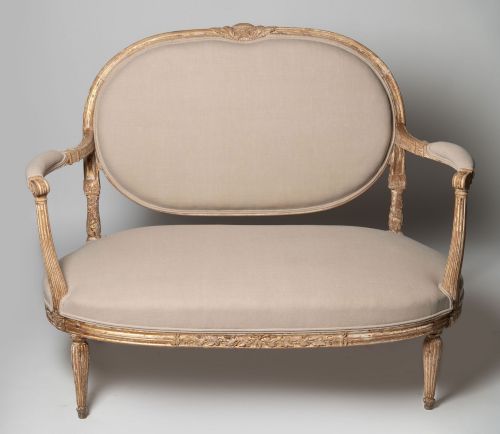
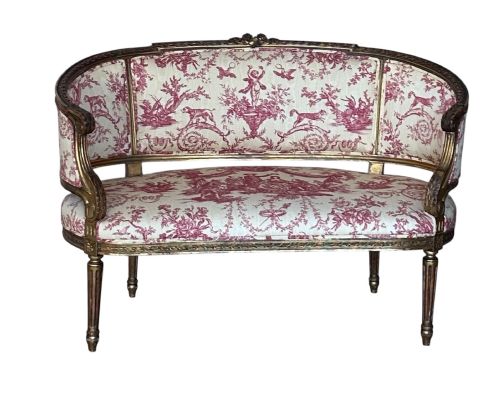
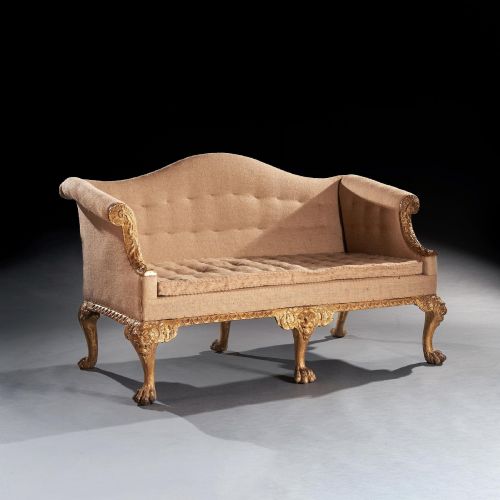
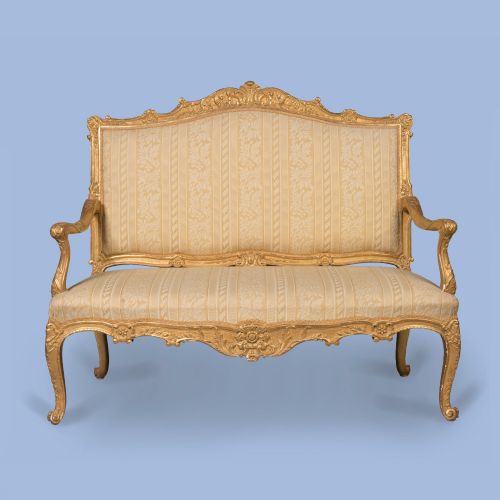
An antique gilded settee encompasses a range of formal seating from the eighteenth century onwards, including French canapés and English country house sofas. Most examples on this page hail from the nineteenth century, reflecting diverse continental and domestic tastes.
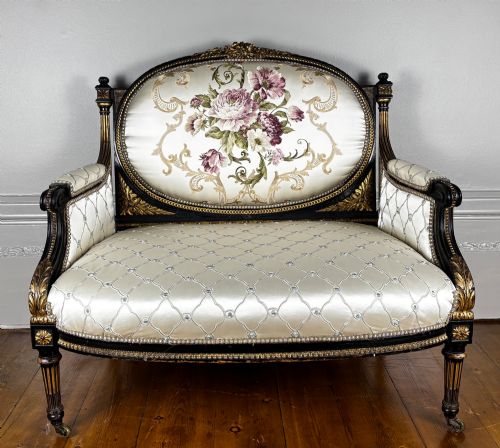
Makers drew heavily on historical idioms, producing pieces shaped in the Louis XV and Louis XVI styles, alongside Regency and Rococo Revival interpretations. These frames vary from intimate two-seat couches to larger salon suites designed for formal reception rooms.
Materials and Construction
Frames rely primarily on hardwoods such as beech and other timbers, carved extensively before receiving surface treatments. Craftsmen applied gold leaf, paint, or parcel gilt finishes directly onto the wooden structure.
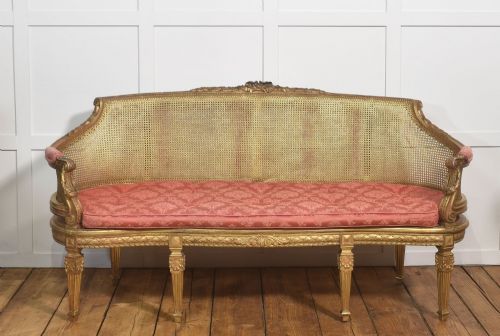
Upholstery techniques range from traditional textile coverings to woven cane panels set into wooden backs and seats. Certain pieces incorporate applied ornamentation, including ormolu mounts or enamel plaques.
Evaluating the Craft
Quality rests in the depth and crispness of the wood carving, where finer pieces display intricate floral or scroll motifs executed by skilled hands. The execution of the gilding itself distinguishes standard production from exceptional work.
Proportion and structural integrity dictate the standing of a settee, with superior examples maintaining balanced lines and robust joinery across expansive frames.
Giles Grendey·John Tesch
The Antique Gilded Settee Glossary
- Canapé
- A traditional French term for a decorative sofa or settee, usually featuring an exposed wooden frame and upholstered seat.
- Giltwood
- Timber that has been coated with gold leaf or powder, creating a bright metallic surface finish.
- Canework
- Woven cane material utilised for the backs or seats of lighter seating forms, often paired with painted or gilded frames.
- Ormolu
- Cast bronze mounted details finished with a gold wash, frequently applied as ornamental decoration on Empire furniture.
- Bergère
- An enclosed upholstered armchair or sofa style characterised by padded sides integrated into the main wooden frame.
Antique Gilded Settee: Frequently Asked Questions
How do I distinguish Louis XV from Louis XVI settees?
Louis XV frames utilise sweeping asymmetric curves and organic motifs, embodying the fluid lines of the rococo taste. In contrast, Louis XVI pieces adopt straight, neoclassical geometries with fluted legs and symmetrical detailing.
Examining the structural framework and ornamental carving reveals these stylistic shifts, which shifted from exuberant curves toward restrained classical balance over time.
Where should I place an antique gilded settee?
These settees suit formal drawing rooms, grand hallways, or spacious bedrooms where their decorative frames can serve as a focal point. They pair well with neutral walls that allow the gilded wood to stand out.
Positioning them away from direct sunlight helps protect delicate textiles and the underlying metallic leaf from fading or degradation.
What is the difference between a settee and a canapé?
A settee is a broad English term for a multi-seat bench with a back and armrests, spanning various periods and regional styles. A canapé specifically denotes a French upholstered sofa featuring an exposed, often carved and gilded wooden frame.
Both forms offer dual-seating capacity, though French canapés tend to display lighter proportions and pronounced stylistic carving compared to heavier English alternatives.
How do I care for antique giltwood frames?
Maintenance requires dusting gently with a dry, soft cloth to prevent particulate accumulation without disturbing the delicate metallic leaf. Avoid liquid cleaners and modern polishes, which can strip away historic surface finishes.
Keeping the furniture in a stable environment away from excess moisture preserves the integrity of both the wood and the applied gilding.