
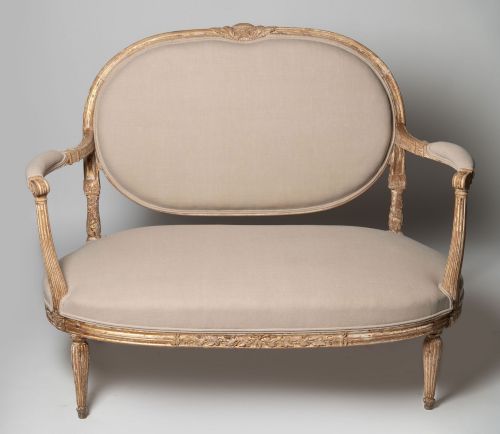
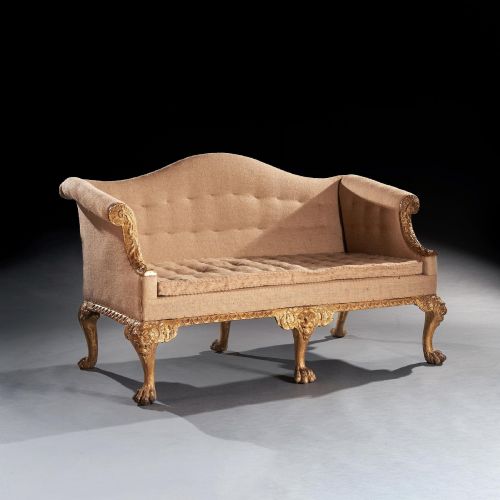


Gilded Wood Couch
These gilded wood couch examples range from eighteenth-century George II designs to French styles, offering decorative seating shaped by classical and revival periods.
Gilded Wood Couch
A gilded wood couch encompasses antique settees, day beds, and sofas finished with gold paint, giltwood, or gilt decoration. Buyers inspecting this selection encounter forms ranging from nineteenth-century French pieces and Victorian examples to English George II furniture.
The objects span multiple centuries, including eighteenth-century productions, nineteenth-century pieces from 1860 and the 1880s, and early twentieth-century items up to later than 1960. Styles represented include Louis XVI, Rococo Revival, Regency, and Maximalist interpretations.
Makers and origins vary across England, France, and Germany, utilising timber frames designed as sofas and settees. The most frequent meetings on this page are nineteenth-century French and English settees with carved wooden frames.
How they were made
Construction relies primarily on timber and beech wood frames carved into structural forms for sofas, settees, and day beds. Artisans shaped these wooden skeletons to support upholstered seating areas.
Surfaces receive giltwood finishes, gold paint, or gilt decoration applied directly to the carved wood. Upholstery incorporates fabric, velvet, textile, and linen components to complete the seating surface.
Lion mask hairy paw feet support at least one eighteenth-century sofa.
What varies in quality
Carving depth and precision separate standard framework from superior examples, particularly visible in detailed elements like lion mask hairy paw feet or intricate foliage. The crispness of the giltwood application dictates the visual refinement of the surface.
Frame integrity and material selection, such as solid beech versus general timber, influence the structural longevity of each settee. The historical fidelity of revival styles, from Louis XVI to Rococo, determines stylistic success.
Giles Grendey
The Gilded Wood Couch Glossary
- Giltwood
- Wood that has been coated with gold leaf or a gold-coloured finish. This material defines the primary aesthetic of the frames listed here.
- Settee
- A long upholstered seat with a back and arms, designed for multiple occupants. It shares functional similarities with the sofa and couch.
- Louis XVI Style
- A neoclassical design movement characterised by straight lines, symmetry, and classical motifs. Pieces in this style often feature painted and gilt wooden frames.
- Rococo Revival
- A nineteenth-century movement reviving eighteenth-century asymmetric curves and naturalistic ornamentation. This style appears frequently on Victorian and continental seating.
- Chaise Longue
- An upholstered long chair intended for reclining, functioning as a single-person day bed. Examples in this category incorporate carved wooden frames and textile coverings.
Gilded Wood Couch: Frequently Asked Questions
What is a giltwood couch?
A giltwood couch is an antique seating furniture piece constructed from wood and finished with a gold-leaf or gilded surface layer. These items function as decorative settees, day beds, or sofas.
They originate from periods such as the eighteenth and nineteenth centuries, reflecting styles like Louis XVI and Rococo Revival.
How do I identify a 19th-century settee?
Nineteenth-century settees are identified through specific stylistic markers, construction methods, and materials recorded in historical furniture design. Evidence points to French and English origins featuring carved wood and gilt finishes.
Details like Rococo Revival curves or Louis XVI painted frames help distinguish the era of manufacture.
Where were these sofas made?
These sofas were produced across several European regions, with specific pieces attributed to English, French, and German workshops. Craftsmanship varied by country, incorporating local timber and regional design tastes.
English examples include George II period pieces, while continental items often showcase French or German styling.
What materials cover these couches?
Upholstery materials on these couches include traditional textiles such as fabric, velvet, and linen. These soft coverings complement the rigid wooden frames.
The underlying structure relies on timber or beech wood to support the upholstered components.