
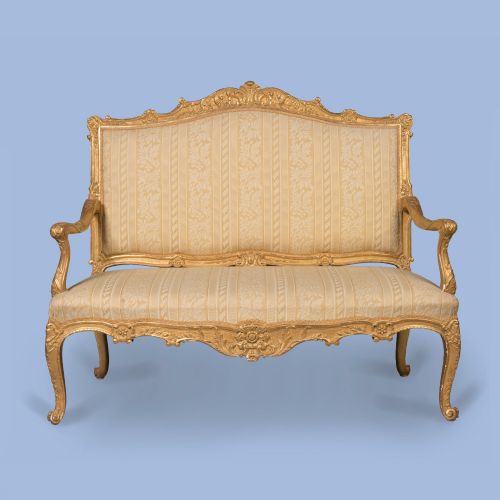


Carved Giltwood Settee
A carved giltwood settee brings monumental French and English seating into a room with rich gilding and carved detail.
Carved Giltwood Settee
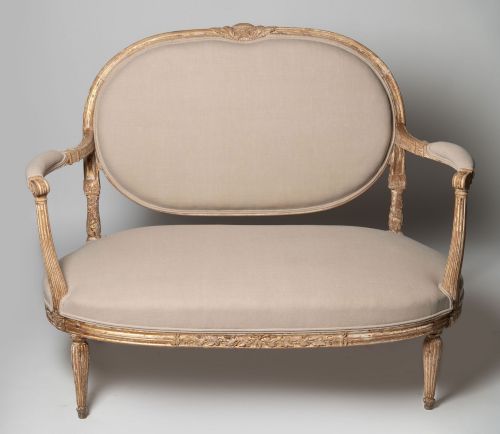
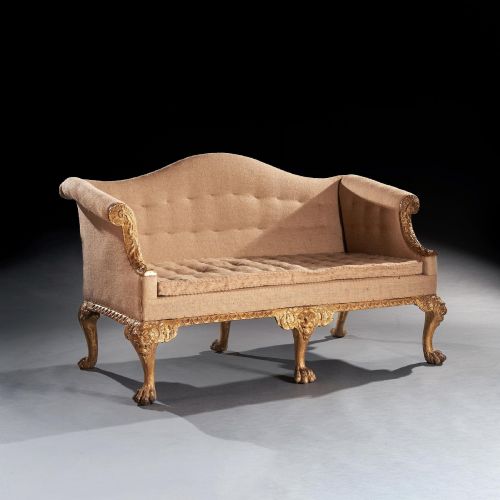
When you search for a carved giltwood settee, you meet grand salon seating designed for formal rooms, drawing rooms and boudoirs. The pieces span eighteenth-century English and Italian origins through to nineteenth-century French revival pieces and twentieth-century interpretations.
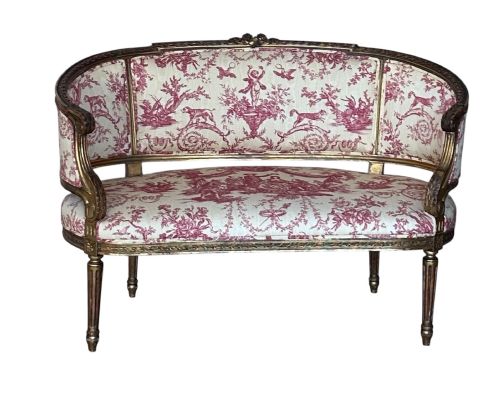
You will encounter various forms across the listings, ranging from large country house sofas to smaller window seats, canapés and love seats. French Louis XV and Louis XVI styles dominate the selection, alongside Rococo Revival, Neoclassical and Regency pieces.
The frames serve dual purposes as decorative showpieces and functional two or three-seat sofas. Many examples rely on classic continental aesthetics, while English and German makers produced parallel interpretations in local workshops.
Judgments of quality
Quality rests upon the crispness of the hand-carving in the wooden frame and the depth of the gilding. Sharply defined acanthus leaves, lion mask details and balanced proportions distinguish finer pieces from simpler decorative seating.
The integrity of the structural joinery and the authenticity of the surface finish dictate the standing of a piece. Original gold leaf or period paint surfaces hold greater interest than later repainting.
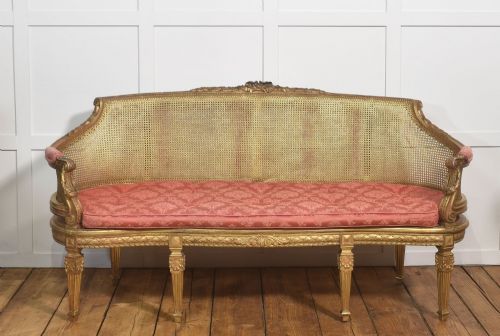
Listings feature periods from the 18th Century through to the 19th Century and early 20th Century, alongside materials like cane, velvet and gold leaf.
Giles Grendey
The Carved Giltwood Settee Glossary
- Giltwood
- Timber coated with gold leaf or metallic powder to imitate solid gold. This finish defines the reflective surface of the frame.
- Canapé
- A decorative French upholstered sofa with an exposed wooden frame. These seating forms typically feature open arms and padded backs.
- Rococo Revival
- A nineteenth-century design movement mimicking the asymmetrical scrolls and shell motifs of the eighteenth century. This style heavily influences many nineteenth-century salon pieces.
- Louis XVI Style
- A neoclassical design aesthetic characterised by straight tapered legs, rectilinear frames and classical ornamentation. Pieces from this tradition display restrained symmetry compared to earlier curves.
- Cane
- Woven rattan or plant material used for seat panels or backs. This breathable material appears on lighter framework designs.
Carved Giltwood Settee: Frequently Asked Questions
Where were these settees originally placed?
These seating pieces belonged in formal drawing rooms, grand reception spaces and private boudoirs. They functioned as primary seating for entertaining guests or relaxing in private quarters.
Their decorative gilt surfaces and upholstered finishes meant they were positioned to catch the light and command attention within a room's decorative scheme.
How do I distinguish Louis XV from Louis XVI style?
Louis XV pieces feature asymmetrical curves, cabriole legs and exuberant floral or shell carvings. The overall aesthetic leans toward organic fluidity and soft contours.
Louis XVI pieces introduce straight lines, fluted tapered legs and geometric neoclassical symmetry. The frames adopt a more architectural and restrained profile.
What is the difference between a settee and a canapé?
A settee is a broad term used for any wide wooden seat accommodating multiple people. English and continental workshops produced various regional interpretations under this designation.
A canapé specifically denotes a French-origin settee with exposed carved woodwork and upholstered back and seat panels. These pieces typically align with specific royal French design periods.
How should I care for giltwood frames?
Giltwood requires protection from direct sunlight, excess moisture and fluctuating temperatures to prevent the gold leaf from flaking or tarnishing. Dusting should be performed gently with a dry, soft brush.
Avoid using commercial chemical polishes or water on the gilded surface, as these substances can permanently damage the metallic leaf and underlying bole.