


French Upholstered Canape
A french upholstered canape brings grand salon seating into a room, offering deep proportions and classic curves.
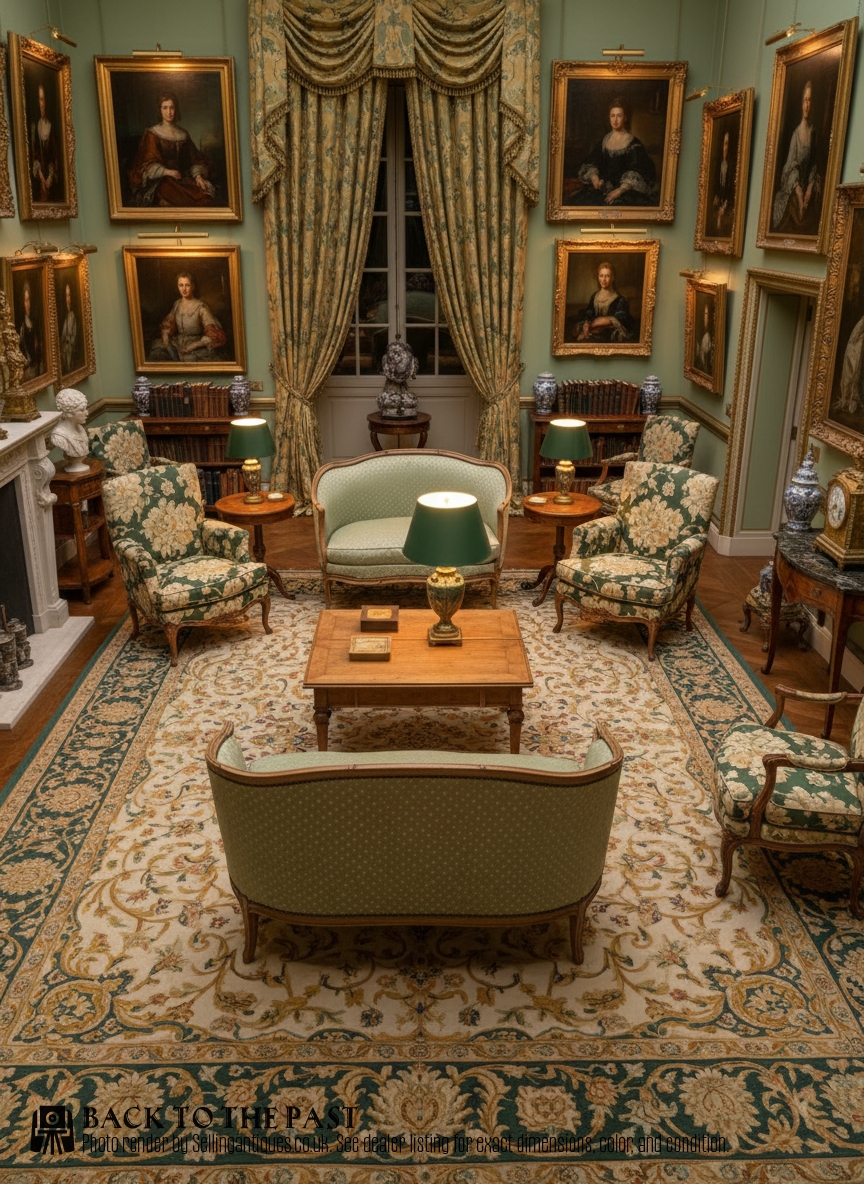
French Upholstered Canape
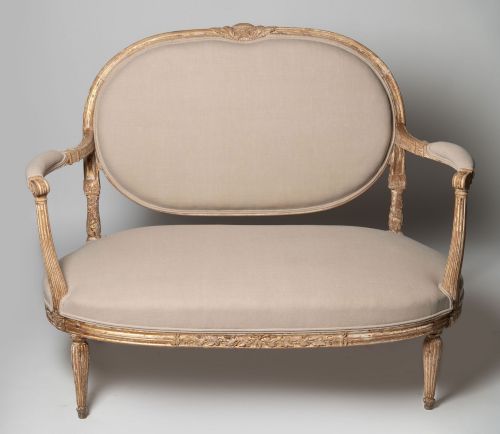
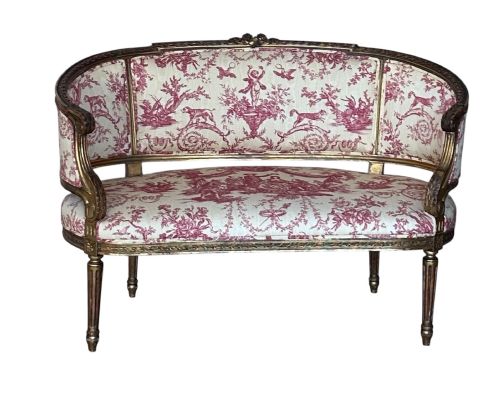
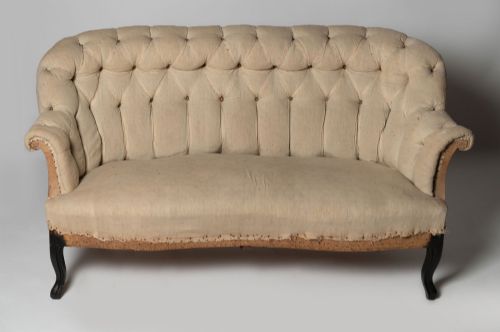
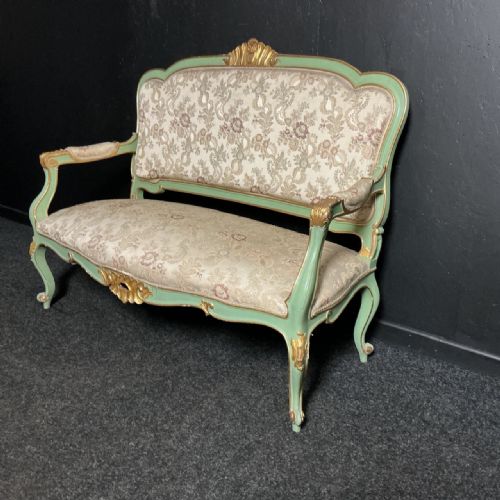
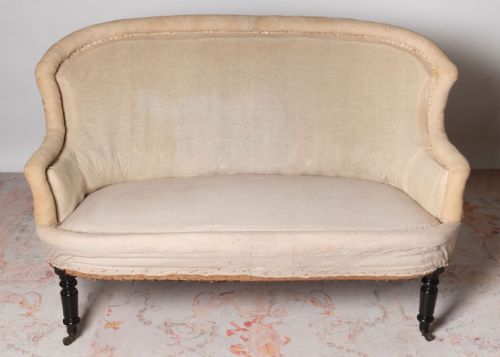
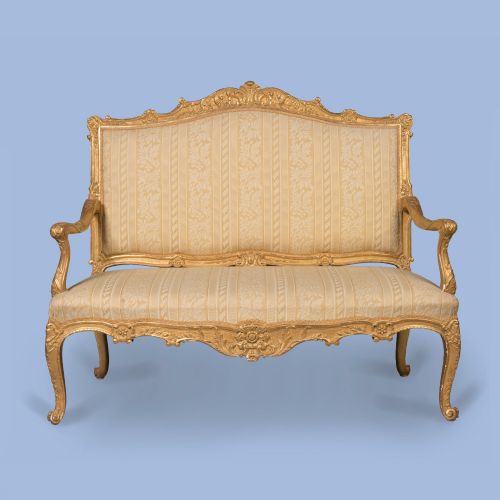
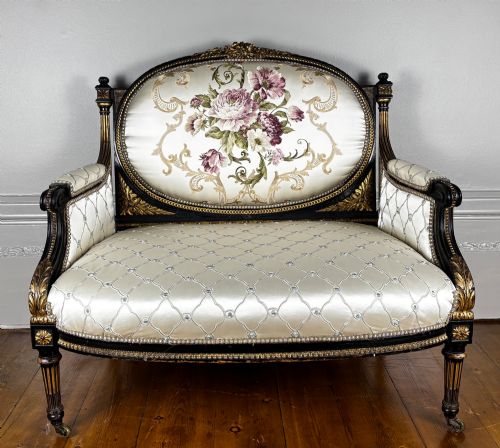
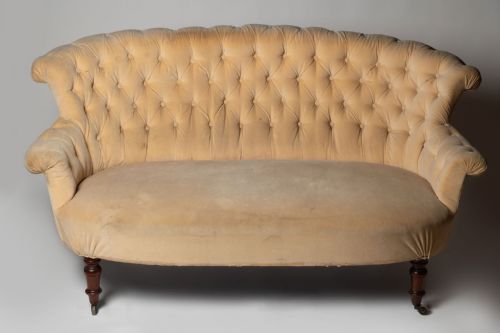
When you search for a french upholstered canape, you encounter large multi-seat salon seating designed with sweeping backs and generous armrests. These pieces appear primarily in nineteenth-century interpretations of Louis styles, ranging from compact boudoir love seats to substantial drawing room settees.
The most common versions on this page are carved walnut or giltwood frames bearing the distinct asymmetric flourishes of Louis XV revival or the straight-lined restraint of Louis XVI revival. Many arrive upholstered in velvet, silk, linen, or textiles suited to formal sitting rooms.
Makers and workshops across different eras adapted these French forms into matching salon suites, pairing the main sofa with open armchairs or smaller conversational seats. The structure often accommodates two or three occupants, functioning historically as a centrepiece for entertaining.
How they were made
Cabinetmakers shaped the structural frames from solid hardwoods like walnut, beech, and mahogany, often applying a coat of giltwood, paint, or ebonisation to the exposed timber. Carvers worked directly onto the wood to produce floral crests, scrollwork, and fluted legs characteristic of the period.
Upholsterers built the seating foundation using traditional webbing, springs, and stuffing before applying outer layers of fabric, velvet, or silk. Caning also appears on specific models, woven tightly into open wooden back panels.
Listings feature walnut, giltwood, and beech frames upholstered in velvet, silk, and linen across the nineteenth and early twentieth centuries.
What varies in quality
The crispness of the hand-carved wooden ornament separates finer pieces from simpler workshop productions, revealing the skill of the original artisan. Deep relief carving on the crest rail and cabriole legs indicates higher craftsmanship.
The integrity of the structural frame and the quality of the finish, whether original gilding or layered paintwork, determine the enduring value of the piece. Superior examples retain harmonious proportions and balanced seating dimensions.
The French Upholstered Canape Glossary
- Canapé
- An upholstered sofa or settee, typically featuring an exposed wooden frame and an expansive backrest. This term forms the core of French seating terminology.
- Giltwood
- Timber treated with a thin layer of gold leaf applied over a prepared gesso base. It brings a bright reflective quality to the carved frame.
- Louis XV Revival
- A nineteenth-century design movement copying the asymmetric curves, scrolls, and floral motifs of the mid-eighteenth-century French court. It dominates many salon seating designs.
- Salon Suite
- A matched set of reception room furniture comprising a central sofa alongside coordinating armchairs. These groupings unified the decor of formal drawing rooms.
French Upholstered Canape: Frequently Asked Questions
How were these sofas used originally?
These settees served as formal seating in nineteenth-century drawing rooms and salons, accommodating guests during social gatherings.
Their generous proportions allowed for comfortable conversation and display within high-status domestic interiors.
Can I place one in a modern bedroom?
These compact two-seat settees function well at the foot of a bed or within a dressing area.
Their low profile and carved wooden frames complement both traditional and contemporary interior schemes.
How do I identify a revival piece?
Revival pieces date primarily from the nineteenth century and draw heavily upon earlier eighteenth-century French design canons.
Inspect the timber construction, joinery methods, and carving style to determine the true manufacturing period.