

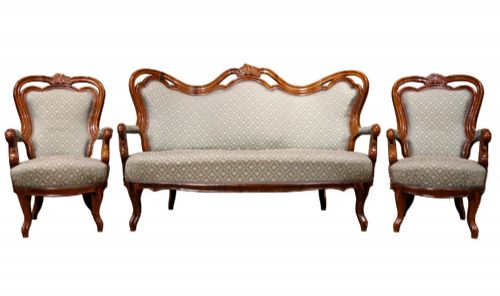


Louis XV Style Sofa
A louis xv style sofa brings curving woodwork and upholstered comfort into a room, drawing on eighteenth-century French design.
Defining the louis xv style sofa
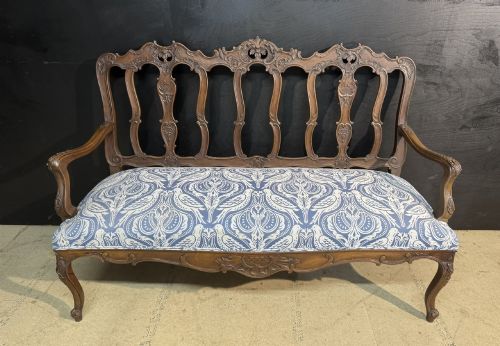
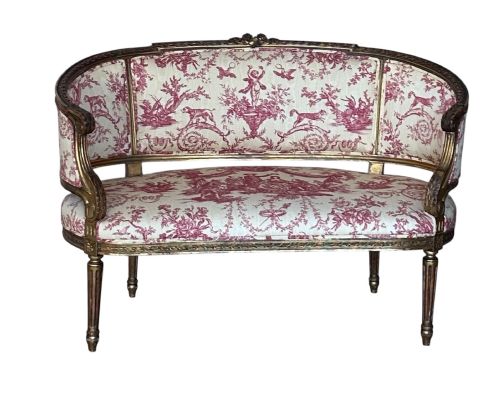
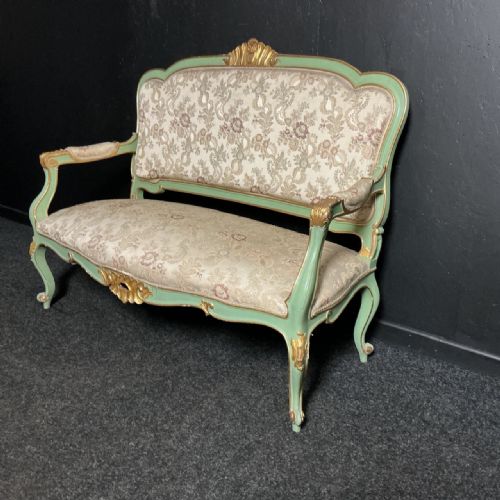
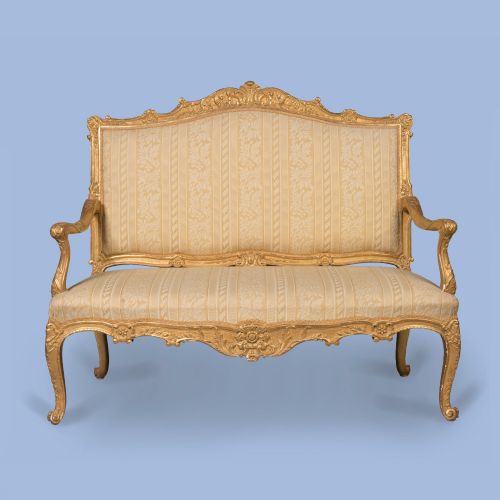
A louis xv style sofa is an upholstered seat designed with the curved lines and organic forms typical of French rococo revival furniture. These pieces appear as two-seater or three-seater settees, often called canapés, alongside wing settees and corbeille frames.
The version most commonly met on this page is the nineteenth-century French revival piece, though examples extend into the early twentieth century around nineteen-ten. Makers during these later periods returned to the asymmetric cartouche backs and cabriole legs of the original reign.
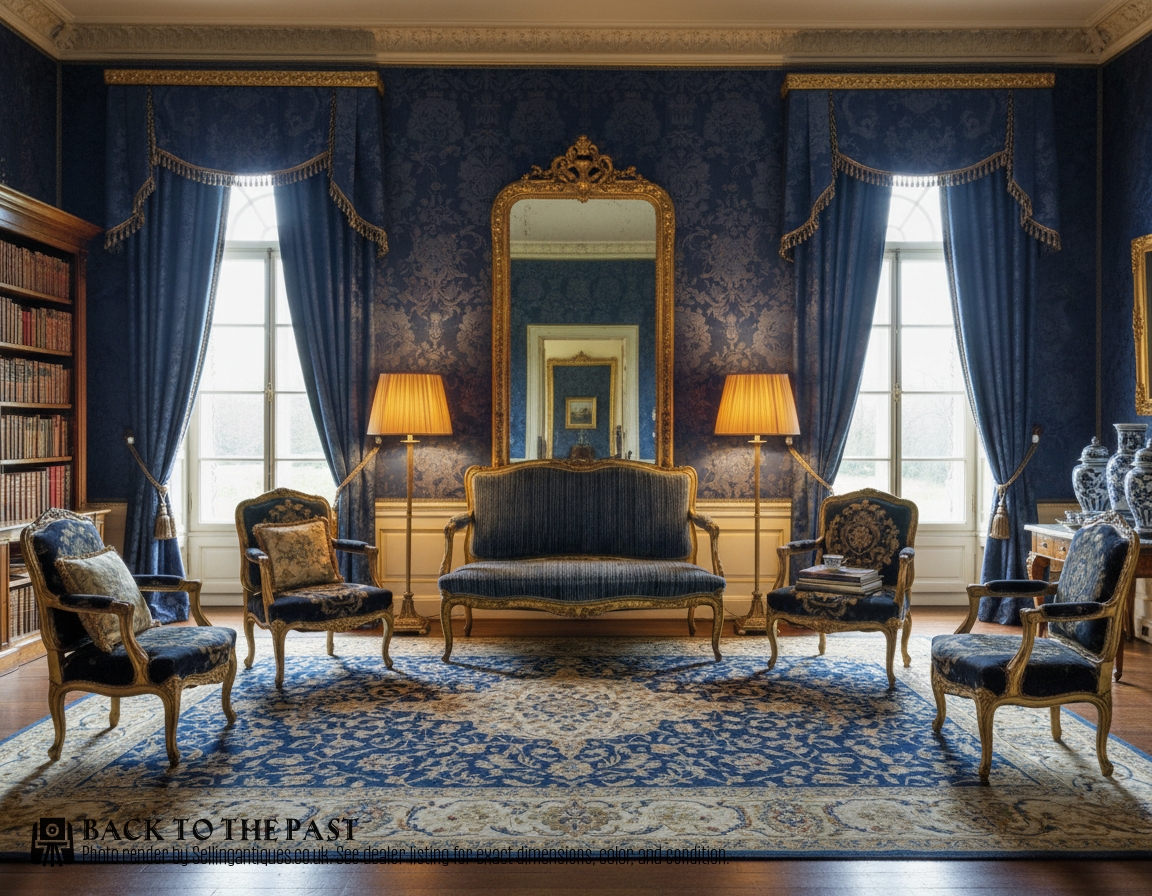
Objects on this page range from walnut and beech frameworks to gilded finishes, showing how nineteenth-century workshops reinterpreted earlier seating forms for Victorian and Edwardian salons.
Materials and construction
Frames are constructed from solid timber, predominantly walnut or beech, carved by hand with foliate motifs and asymmetrical shell patterns. Giltwood and gold leaf finishes were frequently applied over wood or gesso to achieve a reflective surface.
Upholstery relies on traditional textiles including velvet, tapestry fabric, toile de jouy, and pink silk, whilst alternative versions incorporate cane work into the back or sides of the settee.
Retail Price Guide 2026
Typical UK retail prices for louis xv style sofa, calculated from the Sellingantiques database of over a million retail prices indexed since 2003. This retail price guide relies exclusively on Sellingantiques data; no external sources or auction records are used, so the figures do not describe the wider market.
Some nineteenth-century makers offered canapés specifically designated for recovering, providing a blank textile canvas for future interior decorators.
Judging quality and execution
The distinction between tiers rests upon the depth and crispness of the wood carving, where deeply modelled acanthus leaves and flowing lines demonstrate skilled hand labour rather than mechanical shaping. Frames that retain their original gilding or early painted surfaces carry greater integrity than later repainted examples.
Structural refinement shows in the harmony of the cabriole leg and the proportion of the serpentine rail, ensuring the seating maintains both visual balance and physical stability across the span of a two-seat or three-seat frame.
The Louis XV Style Sofa Glossary
- Canapé
- An antique French settee or sofa featuring an exposed wooden frame and upholstered seat. These pieces form the principal seating type found in nineteenth-century salons.
- Giltwood
- Timber coated with gold leaf or a metallic finish to create a brilliant decorative surface. This treatment highlights the carved details of revival seating.
- Cane
- Woven rattan or plant material used to form supportive panels in the backrests and sides of seating furniture. Caned panels lighten the visual weight of the timber frame.
- Cabriole leg
- A furniture leg that curves outward and then tapers inward, finishing in a scroll or pad foot. It originates from classical animal forms adapted during the rococo period.
- Corbeille
- A basket-shaped upholstery style where the back and arms curve continuously in a rounded enclosure. This form provides a cocooning seat arrangement.
- Toile de jouy
- A traditional cotton fabric printed with pastoral scenes in a single colour. It frequently appears as period upholstery on French seating.
Frequently Asked Questions
What is a louis xv style sofa?
A louis xv style sofa is a nineteenth-century or early twentieth-century revival seating piece modelled after French rococo designs from the seventeen-fifties. They feature exposed carved wooden frames, curved cabriole legs, and serpentine seats designed for formal reception rooms.
These settees were built to accommodate multiple sitters while serving as ornamental centrepieces in period salons and drawing rooms.
How do I identify a revival sofa?
Identification relies on examining the timber species, carving style, and construction methods used in the frame. Nineteenth-century pieces typically utilise walnut or beech with machine-sawn components hidden beneath hand-finished decorative carving.
Checking for original textiles, giltwood surfaces, and traditional joinery helps distinguish nineteenth-century French work from later reproductions.
Were these sofas used in bedrooms?
While most settee forms furnished formal drawing rooms and salons, specific variations like the corbeille sofa were designed for intimate boudoirs. Their curved, enclosed backs offered shelter from draughts in private chambers.
Smaller two-seat canapés also suited smaller private apartments rather than grand entertaining spaces.
How do I care for antique upholstery?
Maintaining antique fabric requires gentle surface cleaning and protection from direct sunlight to prevent textile degradation. Original tapestry and velvet should be vacuumed cautiously through a mesh guard.
Preserving the underlying wooden frame involves maintaining stable indoor humidity to prevent timber splitting or gilt flaking.