
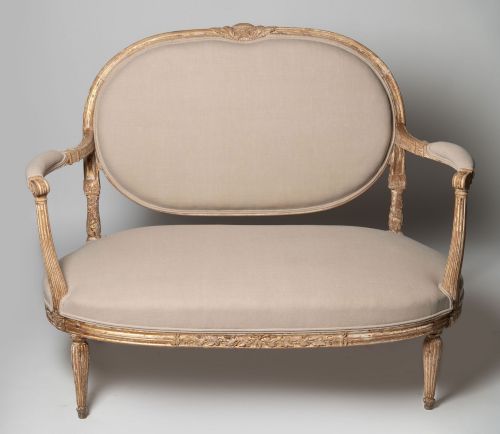
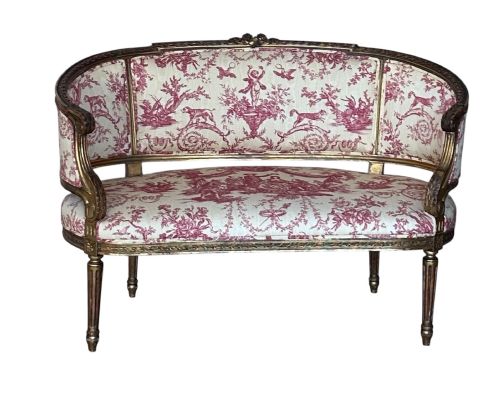
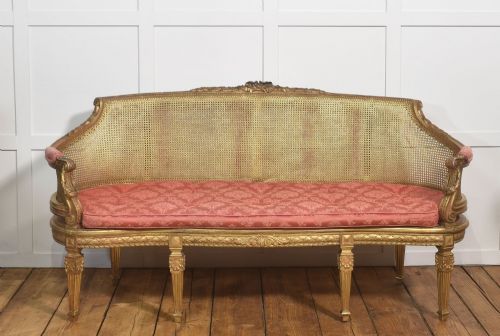
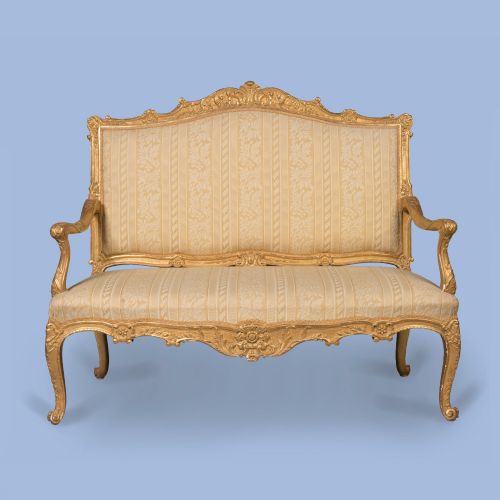


Giltwood French Canape
A giltwood french canape brings generous seating and grand scale to a room, drawing the eye with carved gilt frames and upholstered comfort.
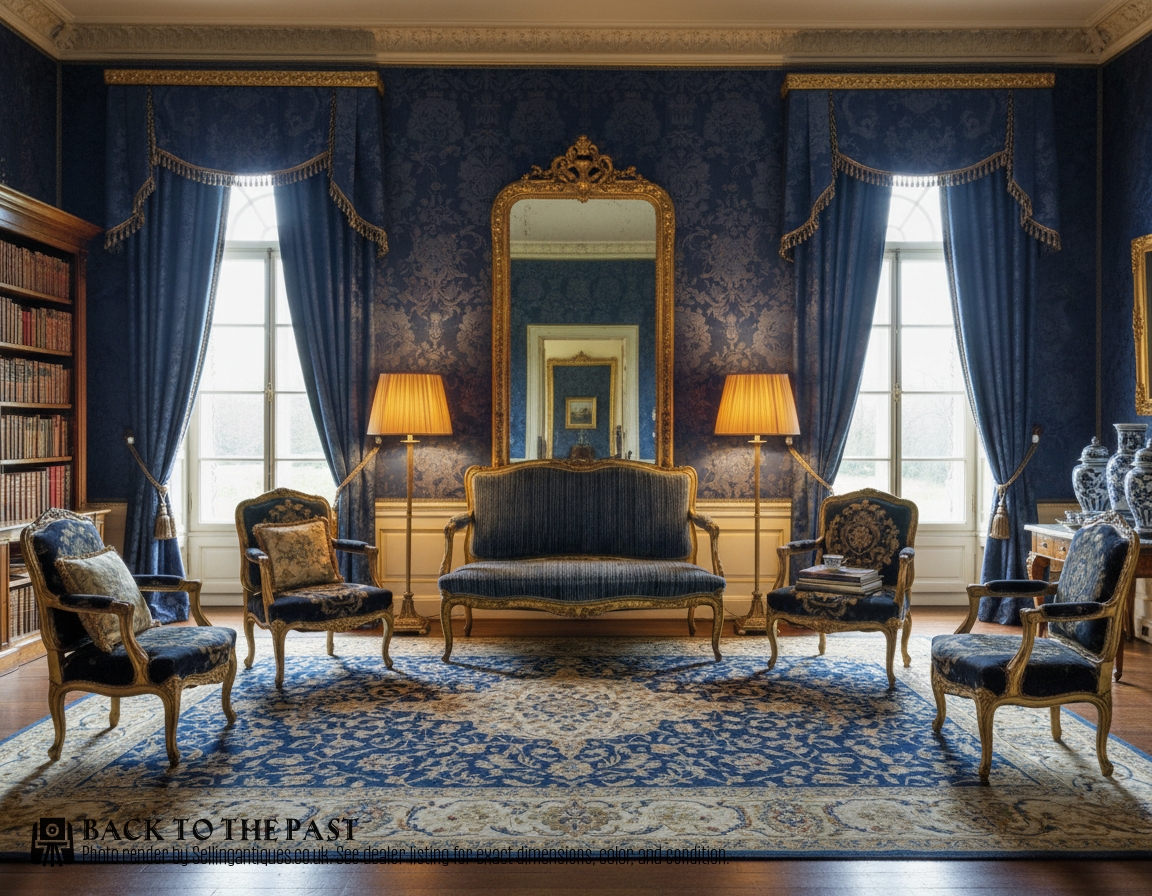
Giltwood French Canape
When you search for a giltwood french canape, you encounter grand seating forms originating from continental traditions, predominantly built as settees, sofas and salon suites.
The selections span the nineteenth century and early twentieth century, showing revival influences of Louis XV and Louis XVI styles alongside Regency and Rococo tastes.
These pieces function as principal seats in formal rooms, offering carved wooden frames finished in gold alongside textile, cane, linen or fabric upholstery.
How they were made
Artisans built the structural frames using timber such as beech, applying carved detail directly to the wood before laying down gold leaf or paint finishes.
Seating surfaces integrated traditional upholstery using textile, fabric, silk and linen, alongside cane panels on select frames.
Listings feature items built from beech and timber, finished with giltwood, textile, cane, linen and fabric across nineteenth-century and early twentieth-century periods.
What varies in quality
The crispness of the wood carving separates standard frames from finer examples, showing depth and precision in floral and scroll motifs.
The integrity of the gilding and the quality of the underlying timber frame determine the overall substance and longevity of the piece.
The Giltwood French Canape Glossary
- Giltwood
- Wood that has been coated with gold leaf or gold powder. This surface treatment gives the carved frames their characteristic metallic sheen.
- Louis XV Style
- A design aesthetic characterised by asymmetrical curves, cabriole legs and organic floral motifs. This style emerged during the eighteenth century and saw frequent revivals later.
- Louis XVI Style
- A neoclassical design movement marked by straight lines, symmetry, fluted columns and geometric precision. Frames from this aesthetic offer a more restrained appearance than their predecessors.
- Salon Suite
- A matching set of seating furniture comprising a canape and complementary armchairs. These ensembles furnished formal reception rooms in large residences.
Giltwood French Canape: Frequently Asked Questions
Where should a canape go?
These large seats suit principal reception rooms, large hallways or drawing rooms where their scale can be appreciated. They function well against a primary wall or as a central feature in a spacious interior.
Ensure adequate clearance around the piece so the carved gilt frame remains visible from multiple angles in the room.
How do I identify Louis XV style?
Louis XV style pieces display curved lines, cabriole legs and asymmetrical decoration inspired by natural plant forms. The framework avoids straight edges in favour of flowing contours.
Carvings on these pieces often incorporate foliage and scrolls rather than strict geometric patterns.
Are these pieces comfortable?
The seating depends on the internal stuffing and upholstery materials, which range from firm traditional pads to softer sprung interiors. Many pieces utilise textiles, linen or silk over padded frames designed for formal sitting.
Upholstery condition varies across surviving examples, with some retaining period fabric and others updated with modern textiles.
What is the difference between a sofa and a canape?
A canape is a specific historical form of settee originating in France, usually featuring an exposed carved wood frame and distinct stylistic adherence to periods like Louis XV or Louis XVI. Standard sofas may follow broader British or continental furniture traditions.
Both terms describe multi-seat furniture, but canape specifically denotes French stylistic lineage.