





French Country Salon Sofa
A french country salon sofa brings eighteenth-century elegance into modern rooms through curved frames and upholstered comfort.
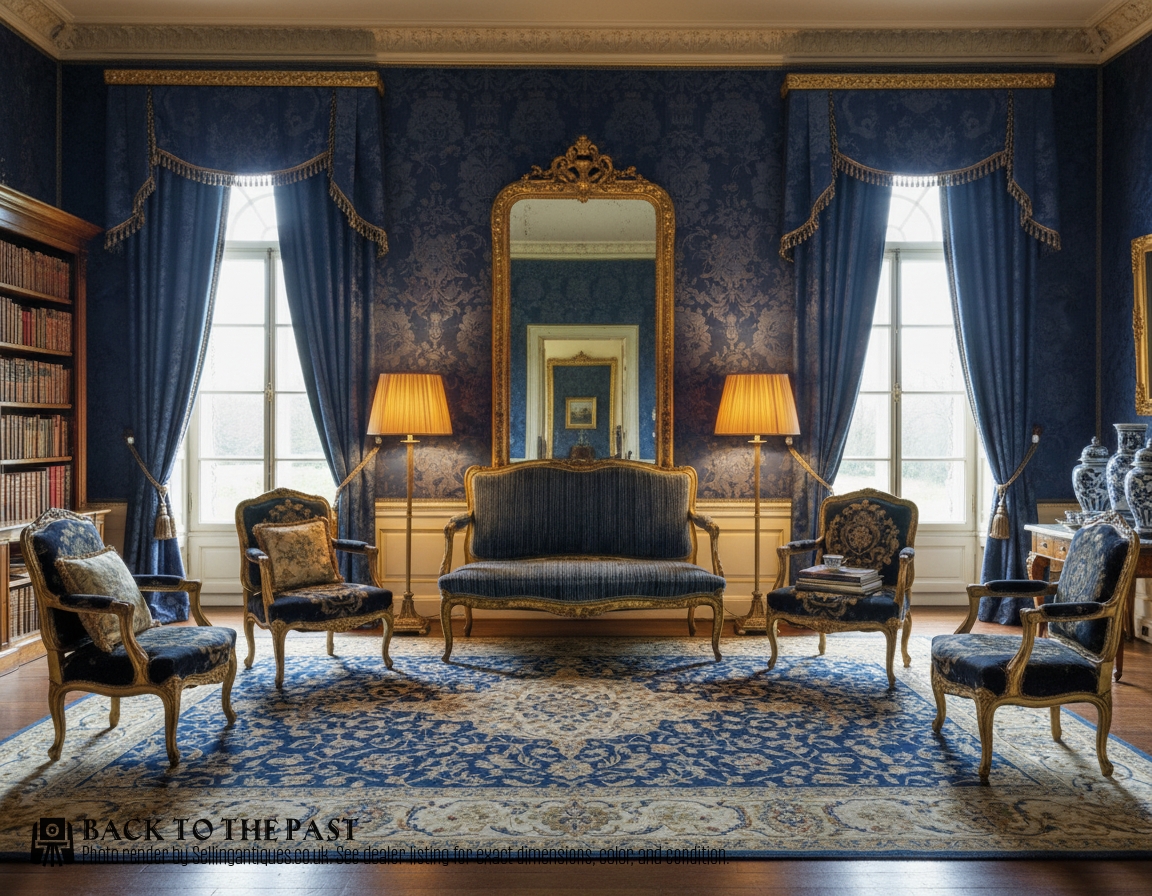
French Country Salon Sofa
A french country salon sofa encompasses seating pieces designed for formal reception rooms, ranging from compact two-seater settees to larger canapés and multi-piece suites. These seating arrangements emerge primarily from nineteenth-century periods, capturing revival aesthetics that draw heavily on historical French design traditions.
Buyers encounter forms categorised under various historical revivals, including Louis XV, Louis XVI, and Louis Philippe styles, alongside French Provincial and chateau interpretations. These objects function as central seating elements within domestic spaces, often appearing alongside matching armchairs as part of larger salon suites.
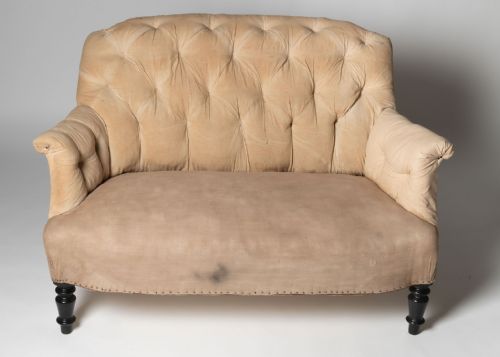
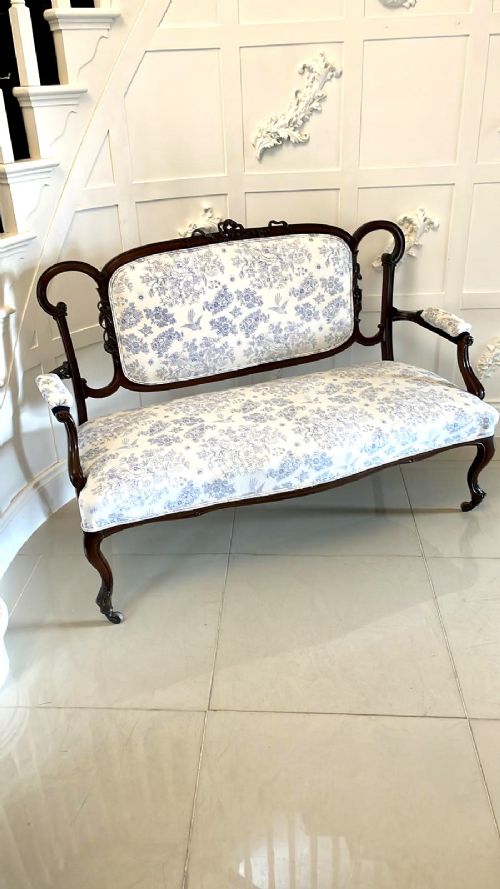
The construction typically manifests as settees and sofas featuring carved wooden frames paired with upholstered textiles. Origins span across the nineteenth and early twentieth centuries, offering traditional seating configurations designed for domestic reception spaces.
How They Were Made
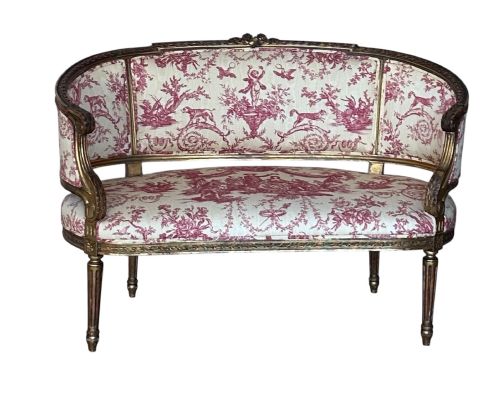
Frames rely on timber construction, utilising hardwoods such as walnut, beech, and general wood substrates shaped through carving techniques. Artisans applied surface finishes including gold leaf and giltwood to accentuate the decorative contours of the wooden structures.
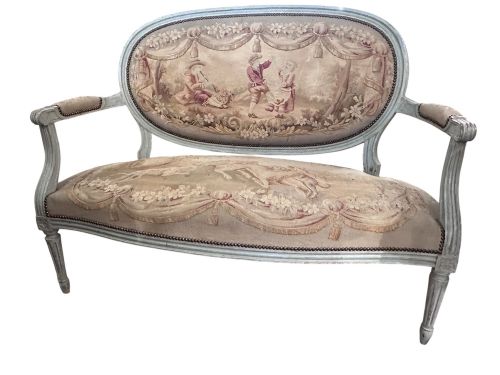
Upholstery forms an essential component of the manufacturing process, employing textiles, specific upholstery fabrics, and tapestry work secured to the wooden frames. The integration of carved woodwork with soft fabric surfaces defines the primary method of production recorded in the evidence.
French Country Salon Sofa Retail Price Guide 2026
Typical asking prices for french country salon sofa among the pieces listed under this phrase on Sellingantiques today, from the lower quarter to the upper quarter. They describe what is for sale here now, not the wider market.
Listings demonstrate pieces spanning from the mid-nineteenth century through to 1930, utilising beech, walnut, and giltwood finishes.
What Varies in Quality
The refinement of the carved wooden frame distinguishes examples, where hand-carved detail and the application of giltwood or gold leaf exhibit varying degrees of artisan skill. Finer pieces demonstrate intricate woodwork and substantial framing materials like walnut.
Textile selection and upholstery execution create distinctions across the range, with specialised fabrics and tapestry work marking out more elaborate creations from simpler variations.
The French Country Salon Sofa Glossary
- Canapé
- A traditional French term for a long upholstered settee or sofa. These pieces typically feature exposed carved wooden frames and upholstered seats and backs.
- Giltwood
- Timber that has been coated with a thin layer of gold leaf or gilt. This finish provides a reflective, ornate surface common on formal seating.
- Louis XV Style
- A design aesthetic characterised by asymmetric curves, natural motifs, and rococo influences. Furniture from this revival period emphasises flowing lines and carved ornamentation.
- Salon Suite
- A matched grouping of seating furniture intended for a reception room. These sets commonly include a sofa alongside several coordinating armchairs.
French Country Salon Sofa: Frequently Asked Questions
What is a French canapé?
A canapé is a traditional French term for a decorative sofa or settee, featuring an upholstered seat and back supported by a carved wooden frame. These seating pieces functioned as formal furniture in nineteenth-century reception rooms.
They serve similar purposes to modern sofas while maintaining historical revival aesthetics derived from Louis styles.
How do I identify a Louis XV style sofa?
Louis XV style sofas display characteristic curved woodwork, cabriole legs, and carved floral or natural motifs. The framing avoids straight lines in favour of flowing rococo contours.
These design traits separate them from later geometric revival styles.
Where were salon sofas used?
Salon sofas were placed in formal drawing rooms and reception spaces for entertaining guests and social gatherings. They formed the focal point of seating arrangements alongside matching armchairs.
Today, they function as statement seating in living rooms or bedrooms.
What materials make up these sofas?
These pieces combine wooden frames made from beech, walnut, or general timber with fabric upholstery. Surfaces frequently feature giltwood or gold leaf ornamentation applied to the carved wood.
Textiles range from standard upholstery fabrics to detailed tapestries.