

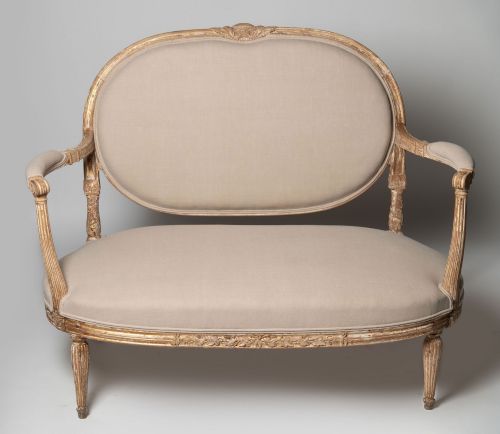


Carved Giltwood Couch
A carved giltwood couch brings gilded grandeur and stately seating to a room, spanning styles from George II to Louis XVI revival.
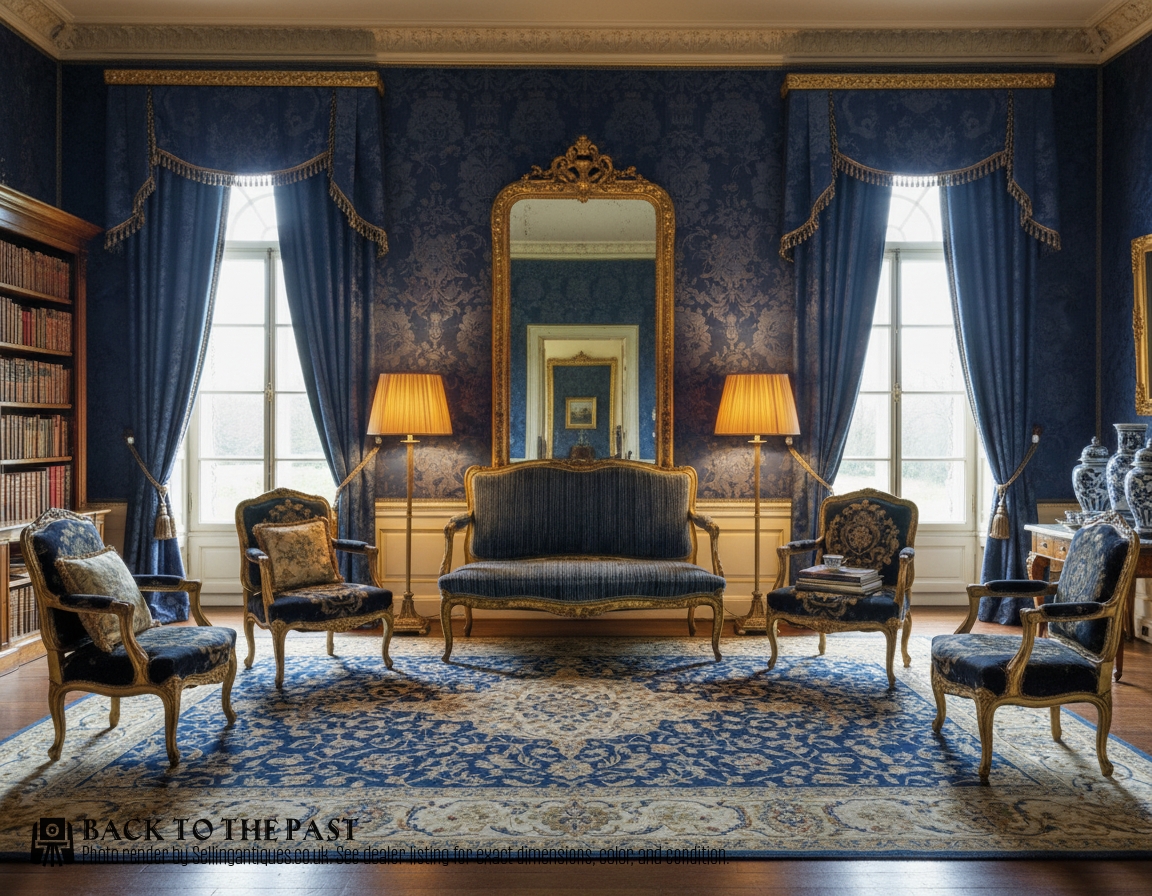
Carved Giltwood Couch
The selection here includes pieces from the eighteenth century up to later twentieth-century interpretations, with nineteenth-century French and English pieces appearing most frequently. Forms range from large giltwood sofas and day beds to silk love seats and settee frames.
Stylistic influences span Louis XVI, Rococo Revival, Regency, and George II designs. Many pieces incorporate painted or gilded wooden frames upholstered in velvet, linen, or silk textiles.
How they were made
The structural framework of these couches relies on timber such as beech and other woods, shaped and joined to support elaborate carving. Artisans applied thin layers of gold leaf to a prepared gesso surface over wood to create the characteristic gilt finish.
Upholstery techniques historically involved natural fibres, horsehair, and webbing secured to the wooden frame before finishing with top fabrics like velvet, silk, or linen. Carving details range from restrained classical lines to exuberant rococo scrolls and animal mask motifs.
Carved Giltwood Couch Retail Price Guide 2026
Typical asking prices for carved giltwood couch among the pieces listed under this phrase on Sellingantiques today, from the lower quarter to the upper quarter. They describe what is for sale here now, not the wider market.
Listings feature beech and various timbers alongside textile options including velvet, linen, and silk across multiple centuries.
What varies in quality
The crispness and depth of the hand-carving on the wooden frame distinguish finer examples from simpler production. Superior pieces exhibit confident execution in motifs like lion mask hairy paw feet or intricate foliage.
The integrity of the gilding and the quality of the underlying timber preparation affect the longevity and visual richness of the surface. Original upholstery treatments and period textile choices also elevate the historical significance of a piece.
Giles Grendey
The Carved Giltwood Couch Glossary
- Giltwood
- Timber coated with gold leaf or metal leaf applied over a prepared ground. This finish provides a reflective, opulent surface characteristic of formal European seating.
- Canape
- An upholstered French sofa or settee featuring an exposed wooden frame. These pieces typically display carved decorative elements along the crest rail and apron.
- Rococo Revival
- A nineteenth-century design movement inspired by eighteenth-century rococo aesthetics. It is recognised by asymmetrical scrolls, naturalistic plant motifs, and curved contours.
- Louis XVI Style
- An architectural and decorative style defined by neoclassical symmetry, straight tapered legs, and classical ornamentation. It contrasts with the preceding curved rococo forms.
- Regency
- An English period spanning the early nineteenth century noted for classical restraint and archaeological revival influences. Furniture from this era often incorporates clean architectural lines and bold gilding.
Carved Giltwood Couch: Frequently Asked Questions
How do I identify the period of a giltwood couch?
Dating relies on stylistic clues in the carving, frame geometry, and joinery methods. Eighteenth-century pieces often show heavier structural timber and distinct regional carving habits.
Nineteenth-century items frequently adopt revival styles, borrowing motifs from earlier reigns while employing nineteenth-century workshop practices.
Where were these couches traditionally placed?
These formal seats were designed for principal reception rooms, drawing rooms, and private boudoirs in grand houses. They served as both decorative statements and functional seating for entertaining guests.
Smaller settee variants and love seats were frequently positioned in private dressing rooms or intimate sitting areas.
What textiles are appropriate for these frames?
Historical examples utilise luxury fabrics such as silk, damask, velvet, and woven linen to complement the gilded woodwork. Many surviving pieces retain later reupholstery that reflects the tastes of subsequent decades.
Choosing a fabric often depends on whether you wish to maintain a period-accurate aesthetic or integrate the piece into a contemporary interior.
How should I care for giltwood furniture?
Giltwood surfaces require gentle maintenance to protect the delicate gold leaf layer from abrasion and moisture. Dusting should be done lightly with a dry, soft cloth without applying liquid polishes.
Keeping the couch away from direct sunlight and fluctuating humidity helps preserve both the timber frame and the historic upholstery.