



Rococo Giltwood Sofa
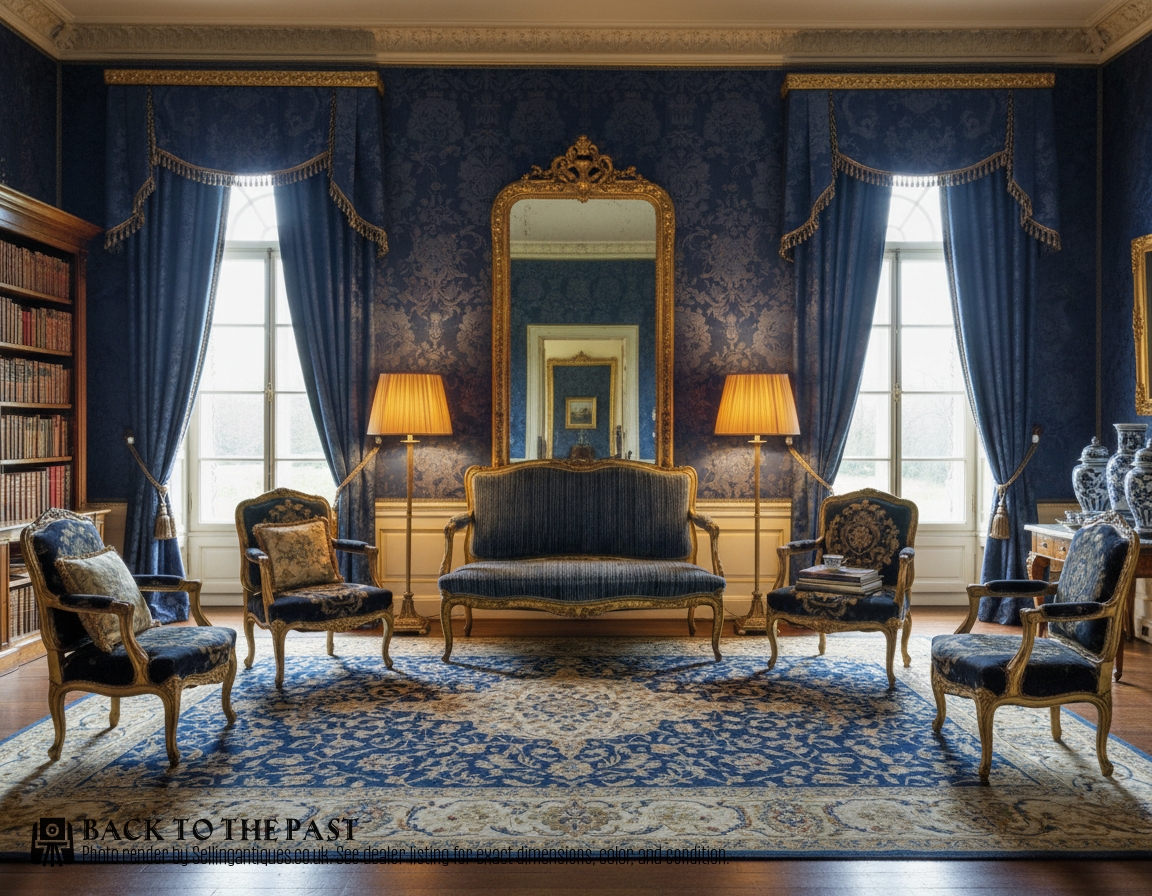
A rococo giltwood sofa brings theatrical curves and rich metallic warmth to a grand interior, offering both deep seating and sculptural presence.
Rococo Giltwood Sofa
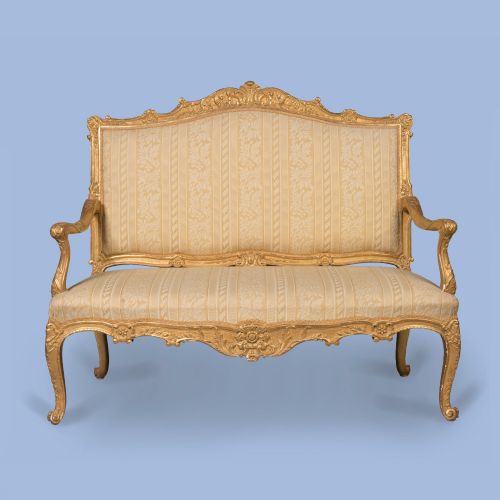
A rococo giltwood sofa embodies the flowing asymmetry and ornate natural motifs of the style, predominantly appearing in forms such as the French canapé, the daybed, and the multi-seater settee. Buyers seeking this phrase encounter pieces dating from the eighteenth century through to the revival periods of the nineteenth and early twentieth centuries. Originating primarily from French, Italian, and English workshops, these items serve as focal seating in formal reception rooms and boudoirs.
The most common versions met on this page belong to the nineteenth-century revival eras, channelling earlier Louis XV and Venetian aesthetics through carved wooden frames finished in gold. Forms range from compact window sofas and love seats to larger settees upholstered in silk or patterned fabric. Alongside traditional sofas, the listings occasionally encompass related seating and salon suites that share the characteristic giltwood treatment and carved ornamentation.
How they were made
Makers constructed the foundational frames using timber such as beech, walnut, and general hardwoods, selected for stability and suitability for intricate hand carving. Craftsmen shaped these wooden skeletons with flowing cabriole legs, serpentine rails, and C-scroll motifs characteristic of the style.
Surface finishing relied on applying thin gold leaf over a prepared gesso and bole ground on wood, producing the distinctive giltwood appearance. Upholstery techniques involved traditional stuffing secured with webbing and textiles such as silk, fabric, or cane work integrated into the wooden framework.
Some nineteenth-century makers quietly hid extra seating inside conversation pieces designed so companions could whisper without turning their heads.
What varies in quality
The depth, crispness, and three-dimensional character of the hand carving separate standard production from superior examples, with finer pieces exhibiting undercut foliage and deeply defined scrolls. The quality of the original gilding, including the warmth of the metallic leaf and its integration with the gesso beneath, dictates the visual richness of the surface.
Proportion and structural harmony also distinguish the tier of a piece, where master carvers achieved balanced curves that support the dynamic asymmetry of the style without appearing clumsy. The integrity of the underlying timber frame and the sympathetic choice of textile upholstery further influence the overall standard.
Holland + Son
The Rococo Giltwood Sofa Glossary
- Giltwood
- Wood that has been coated with gold leaf over a prepared base layer. This finish gives furniture a brilliant metallic sheen that catches ambient light in a room.
- Canapé
- A traditional French upholstered sofa with an exposed wooden frame. These pieces often feature ornamental carving along the crest rail and apron.
- Cabriole leg
- A furniture leg that curves outward in a convex arc and then bends inward in a concave arc, ending in a pad or scroll foot. This shape is fundamental to eighteenth-century design.
- Tete-a-tete
- A specialised double seat designed for two people to converse face-to-face in an S-shape configuration. Such seating forms an intimate conversation piece for a salon.
Rococo Giltwood Sofa: Frequently Asked Questions
Where should a giltwood sofa be placed?
These sofas suit formal reception rooms, drawing rooms, or spacious master bedrooms where their decorative frames can be viewed from multiple angles. Positioning them away from direct sunlight protects both the delicate gilded surface and the textile upholstery.
Because of their distinct aesthetic, they function well as standalone statement pieces rather than being pushed back against a neutral wall. Allowing space around the furniture lets the carved wooden contours and curves define the area.
How do I identify a revival period piece?
Nineteenth-century revival pieces often display machine-assisted precision in their carving alongside hand-finished details, reflecting the manufacturing methods of the Victorian era. Examining the underside of the frame and the joinery helps reveal the age of the timber and construction techniques.
Stylistic cues also point to the era of manufacture, as nineteenth-century makers frequently reinterpreted Louis XV and Venetian motifs with heavier proportions. Comparing the patination of the gilt surface with known period benchmarks aids in dating the item accurately.
What textiles work best on these sofas?
Traditional silk damasks, brocades, and fine woven fabrics complement the ornate nature of giltwood frames. These materials reflect historical interiors where upholstery matched the opulent character of the woodwork.
Subtle patterns prevent the fabric from competing with the heavy carving on the wooden structure. Cane panels also appear on certain models, introducing a lighter texture to the design.
How do I care for a giltwood surface?
Giltwood requires gentle maintenance using a soft, dry duster to remove surface dust without abrasive pressure. Avoiding moisture and chemical cleaning agents protects the delicate gold leaf layer from flaking or dulling over time.
Stable indoor humidity prevents the underlying wood and gesso from expanding or contracting, which can cause the surface finish to crack. Professional restoration should be consulted if the metallic leaf shows signs of separation from the base.