
Antique Geometric Chest
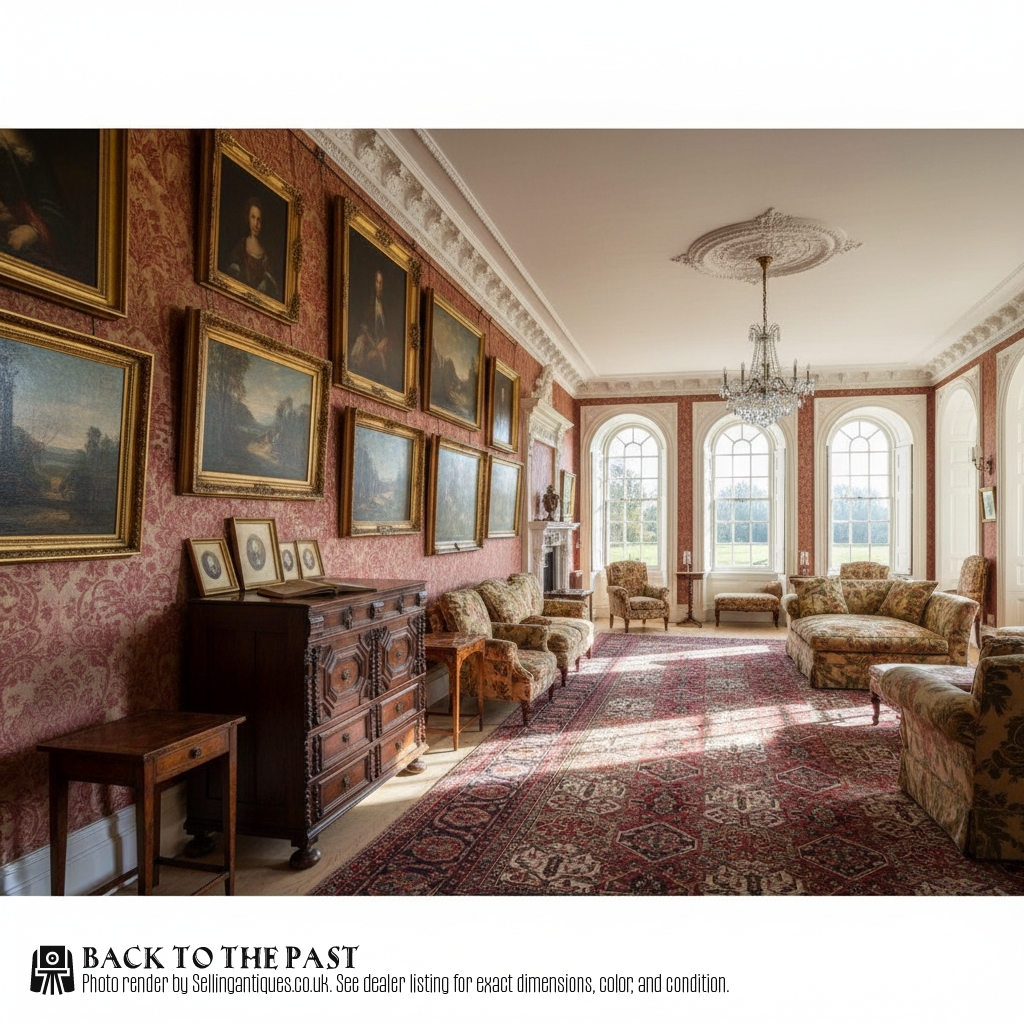
An antique geometric chest brings structured pattern to domestic storage, utilising raised mouldings on timber drawer fronts.
Antique Geometric Chest
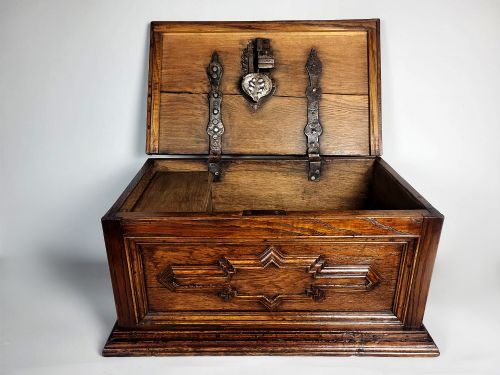
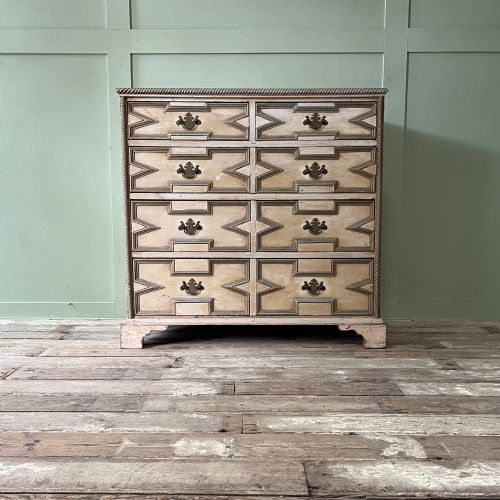
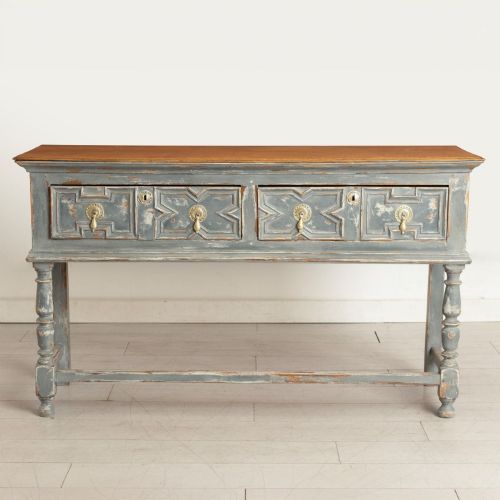
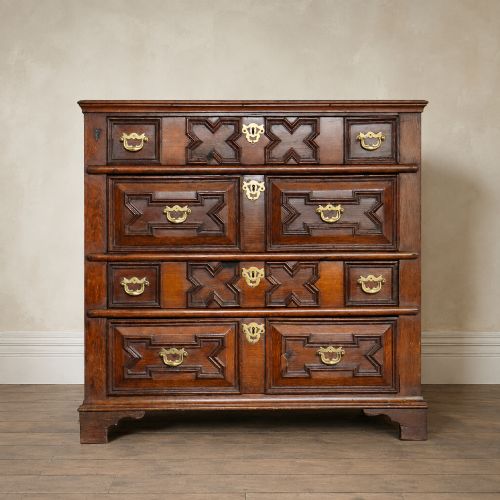
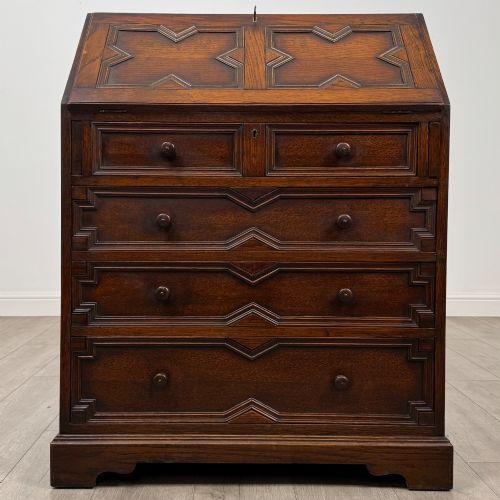
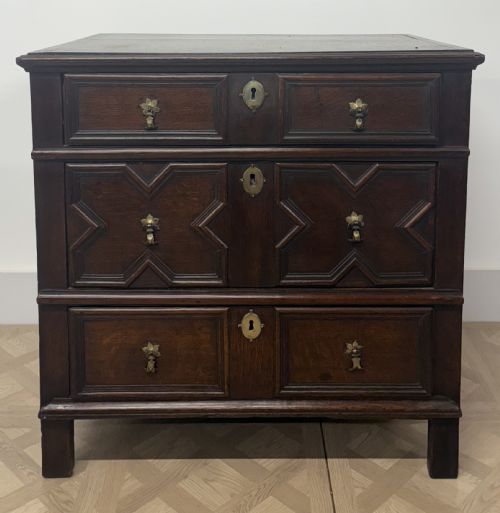
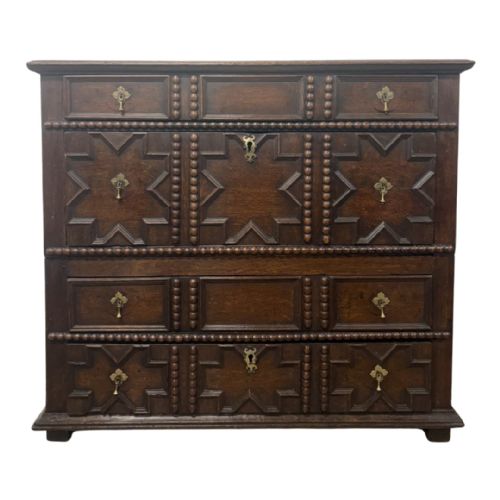
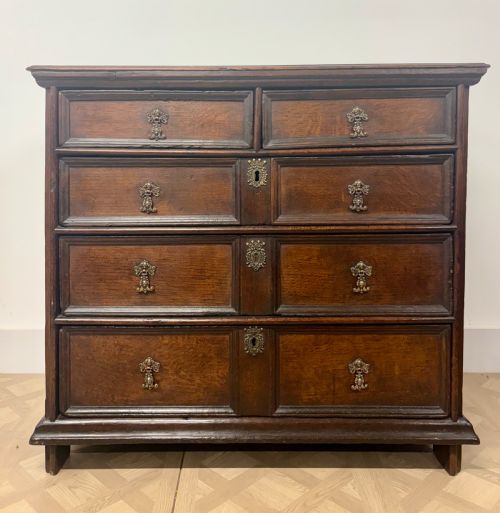
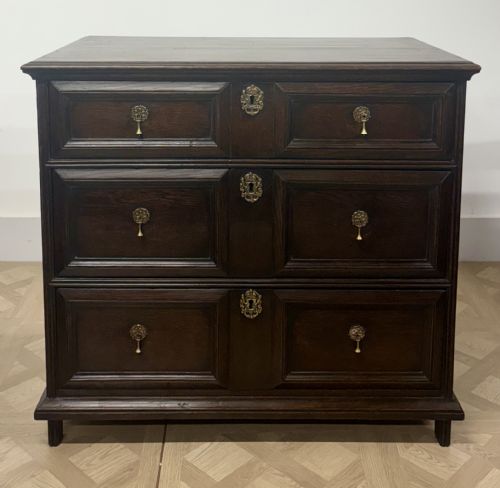
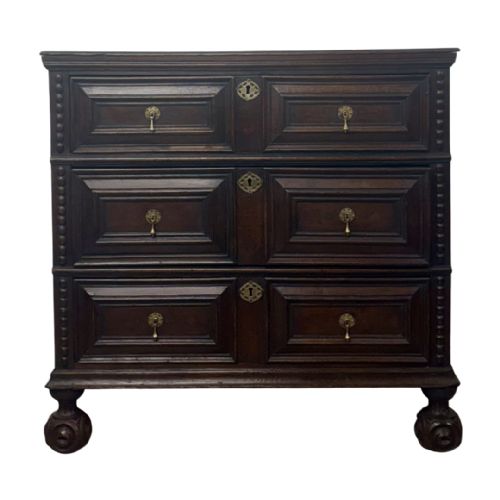
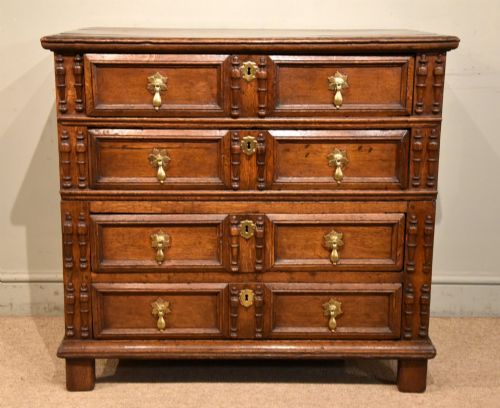
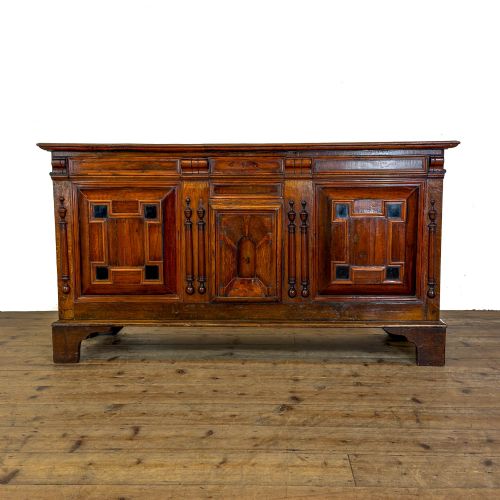
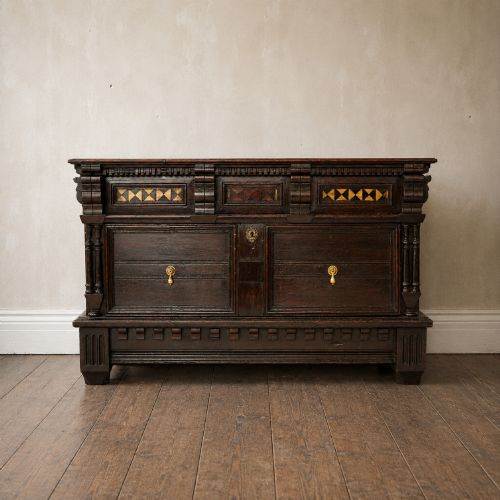
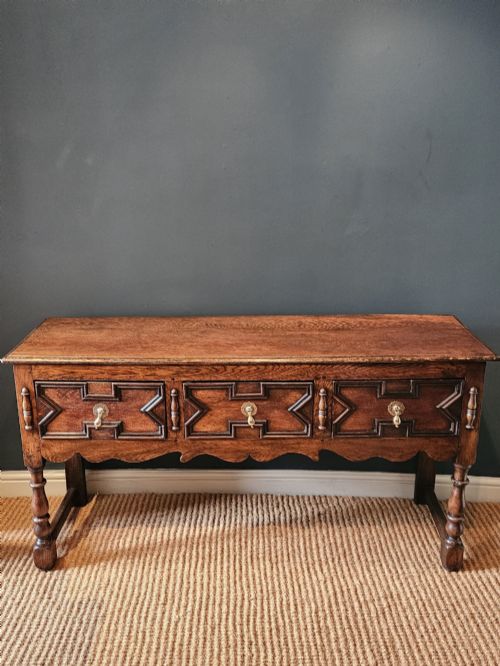
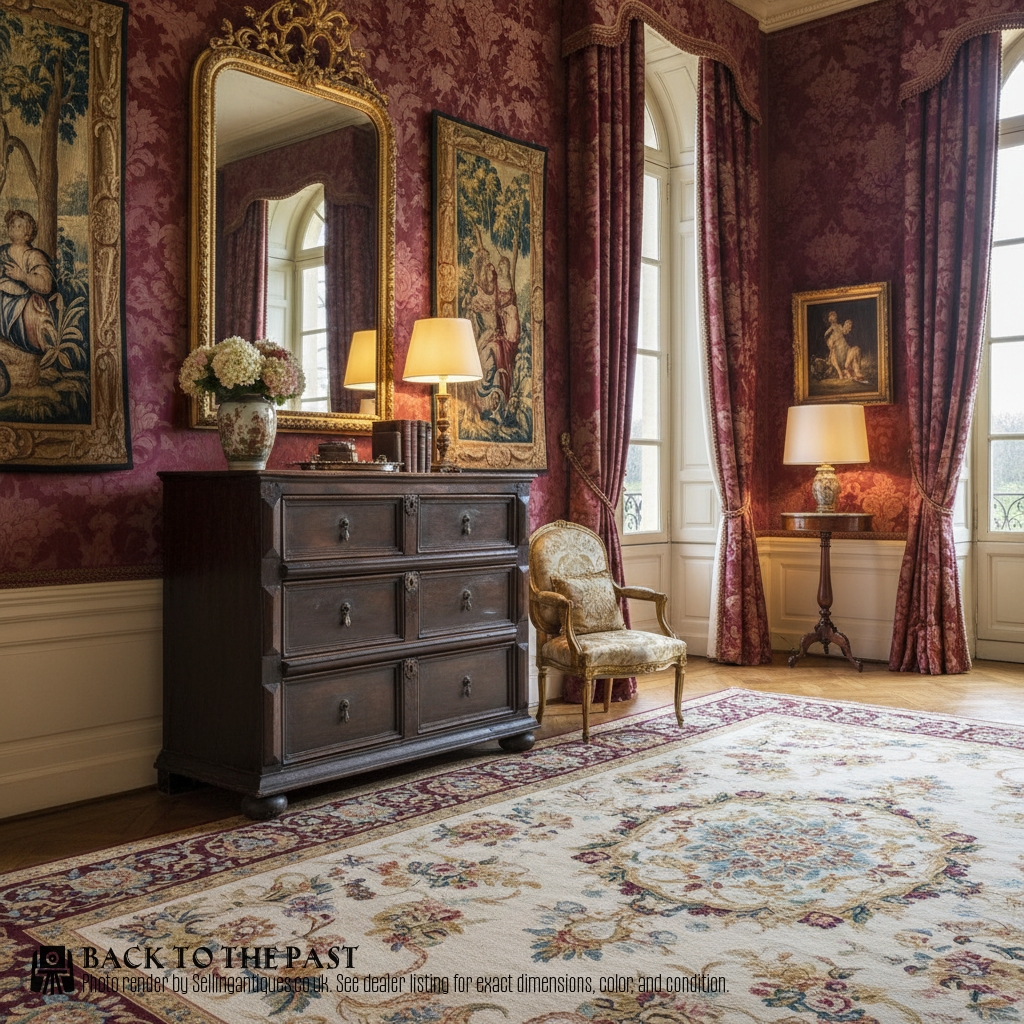
An antique geometric chest primarily takes the form of a seventeenth-century or William and Mary chest of drawers, defined by applied geometric mouldings across the drawer fronts. These pieces originated during periods when joiners moved beyond plain panels to create intricate raised patterns such as triangles, octagons, and rectangles.
The most common version met on this page is the two-part or single-section oak chest dating from the late seventeenth century, often showing pegged construction and side pilasters. Alongside these primary chests, the category encompasses related forms including mule chests, dressers, and smaller storage boxes sharing the same vocabulary of panel moulding.
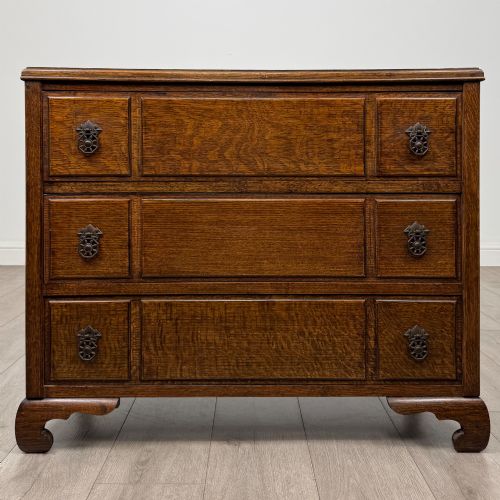
While seventeeth-century originals form the core of the selection, later revivals from the twentieth century also appear, constructed in similar styles but using twentieth-century timber preparation and fixings. Buyers encounter occasional variants incorporating walnut or fruitwood veneers alongside the heavier structural oak.
Materials and construction methods
Joiners relied heavily on solid oak for the structural carcase and drawer frames, frequently pairing it with walnut or fruitwood veneers on primary display surfaces. Timber selection governed both durability and the capacity to hold crisp lines when cutting decorative mouldings.
Construction involved hand-cut mortise and tenon joints, backed by thick pine or oak drawer linings assembled with hand-forged iron nails or early steel locks. Applied geometric patterns were individually shaped, glued, and pinned to the drawer fronts to create deep relief shadows.
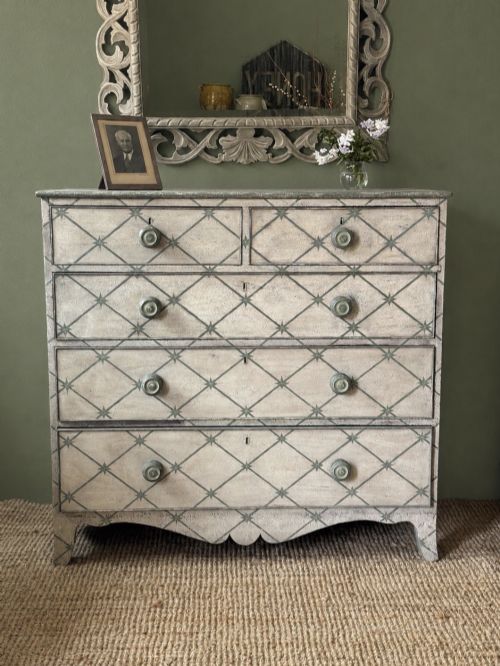
Materials recorded across the archive include solid oak, walnut, fruitwood, and pine with painted finishes.
Judging quality and period integrity
Quality rests upon the crispness of the applied mouldings and the degree of original surface survival, particularly the presence of a faded, untouched patina. Pieces retaining their original brass drop handles, escutcheons, and complex steel locks command greater interest than those with later replacements.
The structural integrity of the two-part carcase and the stability of the timber panels dictate long-term endurance. Superior examples demonstrate harmonious grain matching in walnut or oak veneers, whereas lesser pieces show mismatched timber patches or heavy, unsympathetic restoration.
Sir Clough Williams-Ellis
The Antique Geometric Chest Glossary
- Geometric moulding
- Raised wooden strips applied to furniture facades in repeating patterns such as octagons or triangles. This technique defined late seventeenth-century joinery.
- Mule chest
- A storage chest fitted with one or more drawers beneath the main lift-up compartment. They bridge the gap between traditional coffers and modern chests of drawers.
- Two-part chest
- A modular cabinet built in upper and lower sections to ease transport through tight spaces. This construction method is typical of late seventeenth-century case furniture.
- Patina
- The surface sheen and colour developed by timber over centuries of exposure to light, air, and handling. A dry, original patina indicates minimal harsh intervention.
- Escutcheon
- A protective plate surrounding a keyhole, frequently fashioned from brass on period case pieces. It prevents the timber surrounding the lock from splintering through repeated use.
Antique Geometric Chest: Frequently Asked Questions
How do I spot a true seventeenth-century chest?
Examine the drawer construction for hand-sawn timber boards, pegged joints, and oak linings that show hand-planed marks rather than modern machine finishing.
Check the backboards and carcase for signs of period hand-forged nails and the characteristic dry, patinated surface texture associated with early English joinery.
Were these chests used in bedrooms?
These storage pieces served primarily in principal chambers and entertaining rooms to store valuable textiles, table linens, and personal garments.
Because closets were uncommon in early homes, large case pieces provided the main domestic security for household goods and valuables.
How should I care for an antique oak surface?
Maintain the timber by applying traditional beeswax sparingly and buffing with a soft bristle brush to protect the dry finish.
Keep the piece away from direct heat sources and rapid humidity fluctuations to prevent the ancient oak panels from splitting.