
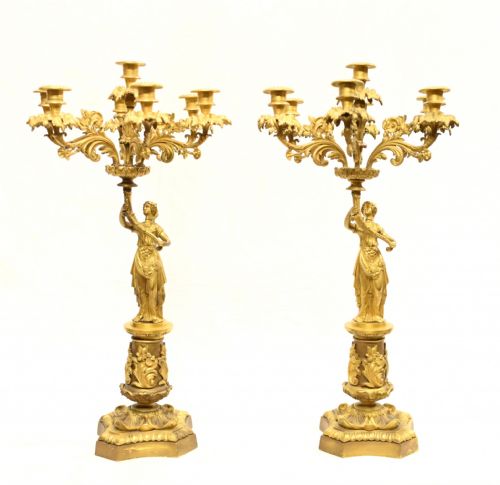


Antique French Candleholders
Antique French candleholders bring exceptional metalwork and classical proportion into a room, offering both decorative presence and warm illumination.
Antique French Candleholders
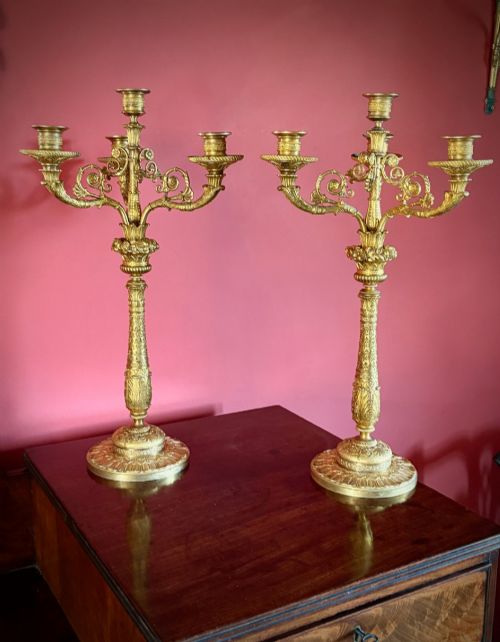
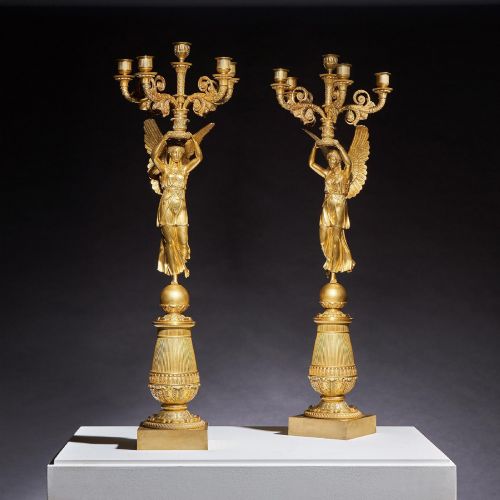
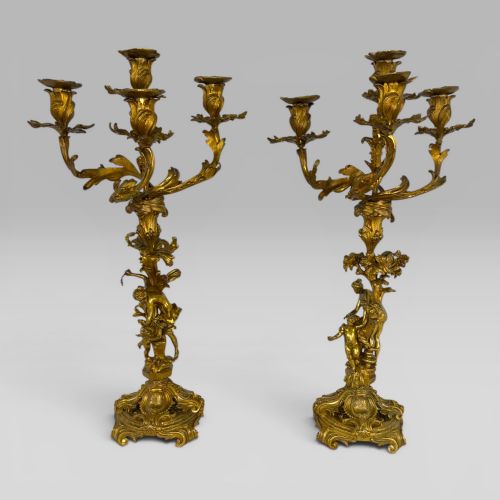
When searching for antique french candleholders, buyers encounter a diverse selection of lighting forms ranging from single candlesticks to multi-armed candelabra and wall sconces. The pieces available span the nineteenth century, including specific decades such as the 1860s, 1880s, and 1890s, alongside Regency and Victorian interpretations. Common aesthetic expressions include Louis XVI, French Empire, Rococo Revival, and Neoclassical styles.
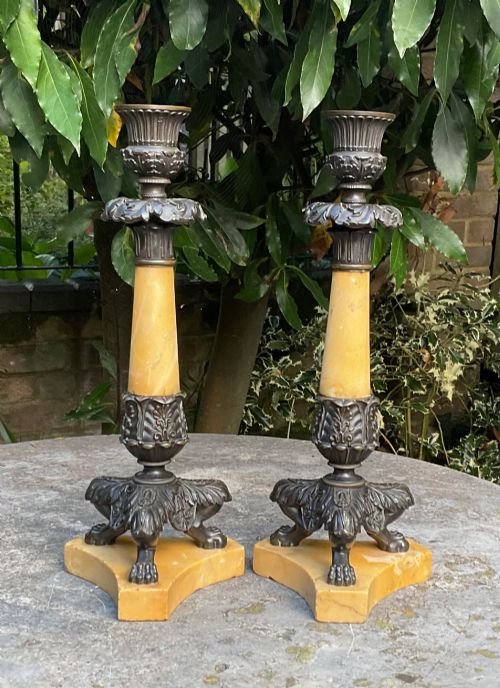
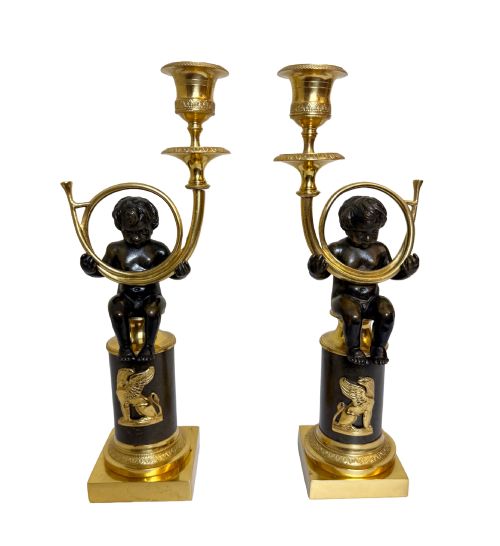
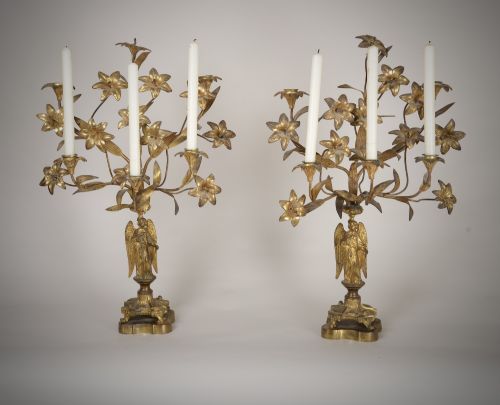
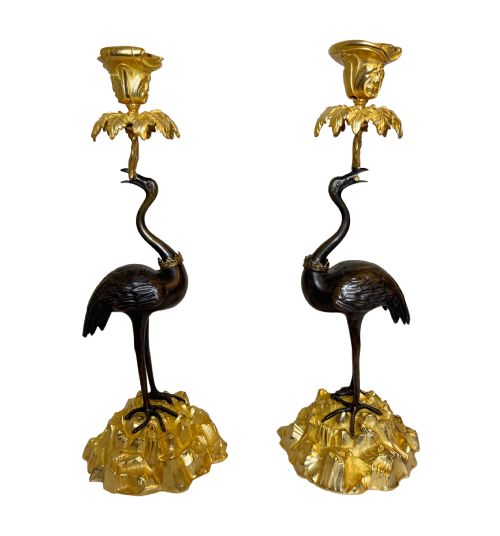
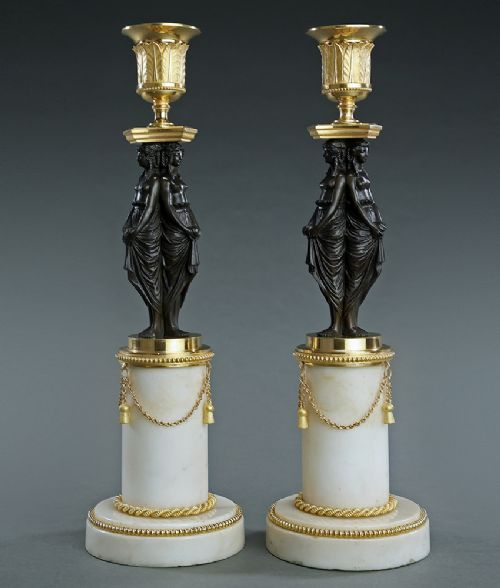
The objects appearing most frequently are pairs of candlesticks and candelabra fashioned from cast metals and stone. These often incorporate figural elements such as cherubs, caryatids, and birds, or draw upon specific motifs like the flamingo. Originating as functional domestic lighting for salons and mantelpieces, they now serve primarily as decorative accents.
Materials and construction
Metalworking forms the foundation of these pieces, utilising bronze, brass, ormolu, gilt bronze, and patinated bronze alongside cast spelter and metal. Artisans employed casting techniques to shape intricate figures, acanthus leaves, and structural arms, frequently applying gilding to highlight raised details. Patination was carefully managed on bronze surfaces to create depth and contrast against bright metallic highlights.
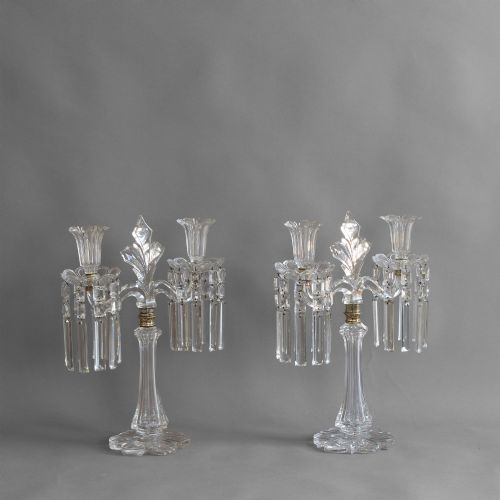
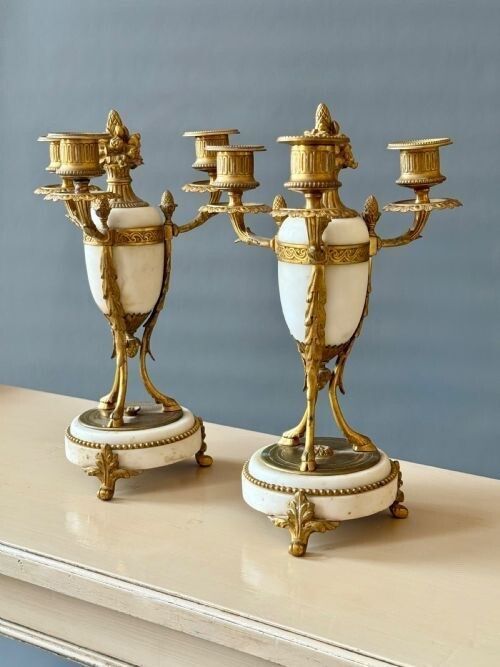
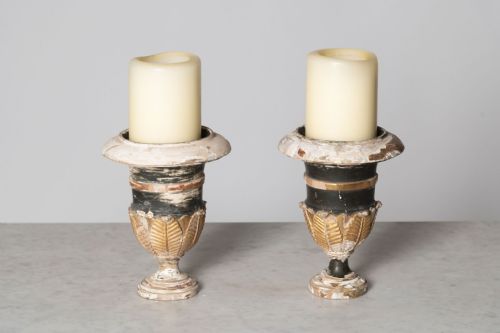
Combination with other materials defines many examples, particularly the integration of white or sienna marble bases that anchor the heavy metal components. Some designs incorporate porcelain elements, glass lustres, or carved wooden bodies to vary texture and colour. This mixed-media approach required precise joinery to secure heavy bronze mounts to stone plinths.
Listings feature nineteenth-century French pieces in gilt bronze, marble, and ormolu, spanning Empire, Rococo Revival, and Louis XVI styles.
Assessing quality and execution
The crispness of the chasing and the weight of the metal distinguish superior examples from standard production. Finely worked gilt bronze exhibits sharp details in hair, drapery, and foliage that weaker castings lack.
The quality of the secondary materials, such as the veining and polish of the marble bases or the clarity of incorporated porcelain, contributes significantly to a piece's standing. Attribution to known bronze-makers or adherence to documented designs by historical architects elevates the desirability of certain items.
Pierre Philippe Thomire·Rabiat·Galle·R Lalique
The Antique French Candleholders Glossary
- Ormolu
- A method of applying finely ground high-carat gold to a bronze object using a mercury amalgam. This technique produces a rich, durable golden finish characteristic of fine decorative arts.
- Candelabra
- A branched candlestick designed to hold multiple candles simultaneously. These fixtures often feature removable branches to allow conversion into single candlesticks.
- Caryatid
- A sculpted female figure serving as an architectural support instead of a column. They frequently appear on the stems of neoclassical candlesticks.
- Chamberstick
- A low candlestick fitted with a pan to catch dripping wax and a loop handle for carrying from room to room. These portable items were essential before fixed domestic lighting.
- Spelter
- An alloy of zinc and lead used as a cheaper alternative to bronze. It was widely utilised during the nineteenth century for figural decorative items.
Antique French Candleholders: Frequently Asked Questions
How do I clean gilt bronze?
Gilt bronze requires gentle dusting with a soft brush to remove surface particles. Avoid chemical polishes or abrasive cloths, which can strip away the delicate gold layer.
Moisture should be kept away from the metal and any adjoining marble or porcelain components. Professional conservation is recommended for pieces showing heavy tarnish.
Were these electrified later?
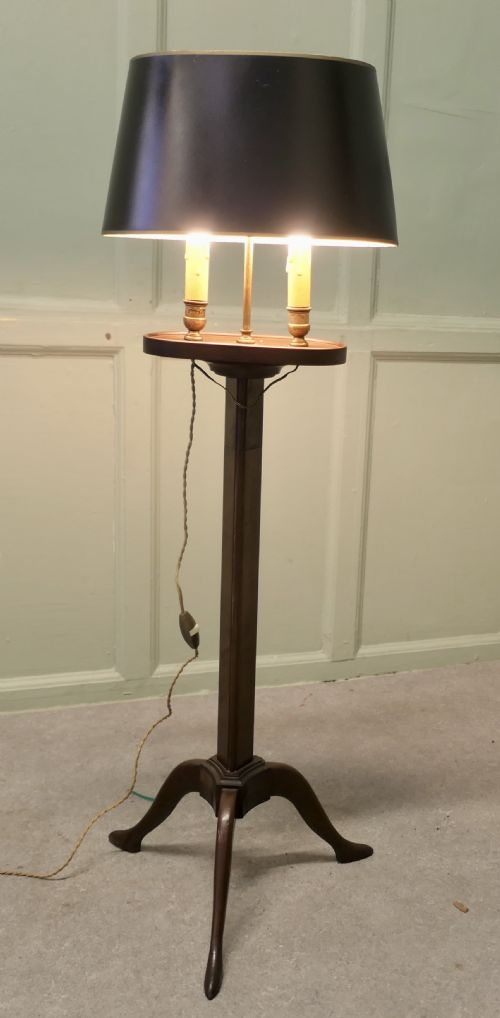
Many nineteenth-century lighting pieces were converted to electricity during the twentieth century. Collectors often seek out unconverted examples that retain their original wax pans and untouched form.
Conversion methods vary widely, and buyers should inspect the base and candle nozzles to determine whether wiring has altered the internal structure.
What is the difference between ormolu and gilt bronze?
Ormolu specifically describes the historical French process of mercury gilding bronze, known as bronze doré. The term is frequently used interchangeably with gilt bronze in modern trade.
True ormolu possesses a distinct warm lustre that does not tarnish in the manner of modern electroplated finishes.